The Cost Of The Tooth-Colored Filling?
Tooth-colored fillings have become the go-to choice for many people. They blend in with your natural teeth. They look better than silver fillings. They also bond well to the tooth structure. But how much do they cost?
If you have a cavity or a small crack, you may be wondering: what is the cost of a tooth-colored filling? The answer depends on several factors. These include the type of material, the size of the cavity, your dentist, and where you live. In this comprehensive guide, we will break down the real costs of tooth-colored fillings. We will look at average prices, what affects the fee, insurance options, and practical tips to save money. We will also cover the filling procedure, aftercare, and common questions.
Whether you are a child, a teenager, or an adult, this article will help you understand what to expect when you get a tooth-colored filling.
What Is a Tooth-Colored Filling?
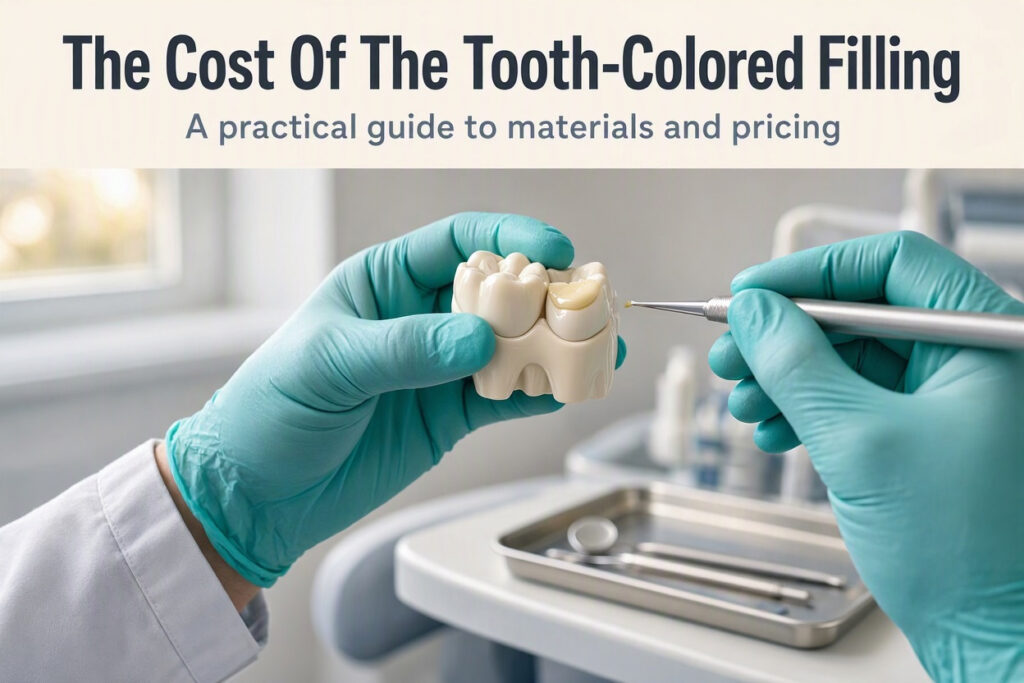
A tooth-colored filling is a dental restoration made from materials that match the color of your natural teeth. The most common type is composite resin. Composite is a mix of plastic and glass particles. It can be shaded to match your tooth exactly. Another type is ceramic, which is made of porcelain. Ceramic fillings are stronger and more stain-resistant than composite, but they cost more.
Tooth-colored fillings are popular for several reasons:
- Aesthetics: They look natural. No one will notice you have a filling.
- Bonding: They bond directly to the tooth. This means less tooth structure needs to be removed.
- Versatility: They can be used on front and back teeth.
- Safety: They do not contain mercury, unlike amalgam fillings.
- Temperature resistance: They do not expand and contract as much as metal fillings. This reduces the risk of cracks.
Tooth-colored fillings are a great option for many people. But they are not right for everyone. Your dentist will tell you if they are suitable for your situation.
Types of Tooth-Colored Fillings
There are two main types of tooth-colored fillings.
Composite Resin Fillings
Composite resin is the most common tooth-colored filling. It is made of a mixture of resin and glass. It is applied in layers and hardened with a special light. Composite fillings are affordable, natural-looking, and bond well to the tooth. They are best for small to medium cavities. They can chip or wear over time, especially on back teeth. They also stain more easily than ceramic.
Ceramic Fillings
Ceramic fillings are made of porcelain. They are custom-made in a lab and then cemented into the tooth. They are stronger and more stain-resistant than composite. They look very natural. They are also more expensive. Ceramic fillings are often used for larger cavities or for teeth that need extra strength. They can last 15 years or more with good care.
There are also glass ionomer fillings, which are tooth-colored and release fluoride. They are often used for children or for fillings near the gum line. They are less durable than composite or ceramic.
Average Cost of Tooth-Colored Fillings
The cost of a tooth-colored filling varies by type, size, and location. Here is a general overview.
| Type of Filling | Average Cost (USD) |
|---|---|
| Composite (1 surface) | $90 – $150 |
| Composite (2 surfaces) | $120 – $200 |
| Composite (3 surfaces) | $150 – $300 |
| Ceramic (1 surface) | $150 – $250 |
| Ceramic (2 surfaces) | $200 – $350 |
| Ceramic (3 surfaces) | $250 – $500 |
| Glass ionomer | $70 – $200 |
These prices are for one tooth. The cost increases if the cavity is large or if you need multiple fillings. For example, a large composite filling can cost $200 to $300. A small composite filling may cost only $90.
Prices also vary by location. In big cities like New York or San Francisco, fillings cost more. In smaller towns or rural areas, they cost less. The national average for a composite filling is around $150 to $200. For ceramic, the national average is $250 to $400.
Factors That Affect the Cost of a Tooth-Colored Filling
Several factors can change the final price you pay for a tooth-colored filling.
Type of Material
Composite is cheaper than ceramic. Glass ionomer is the cheapest. Your dentist will discuss the best option for your tooth and budget.
Size of the Cavity
A small cavity needs less filling material. It costs less. A large cavity needs more material and more time. It costs more. If the cavity is very large, you may need a crown instead of a filling.
Number of Surfaces
Fillings are classified by the number of surfaces they cover. A one-surface filling is cheaper. A three-surface filling is more expensive. For example, a one-surface composite filling may cost $100. A three-surface composite filling may cost $250.
Location of the Tooth
Fillings on front teeth are often more expensive because they need to look natural. Fillings on back teeth are less expensive because they are not as visible. However, back teeth are harder to reach, which can add time and cost.
Your Dentist’s Experience
A highly experienced dentist may charge more. A new dentist may charge less. Specialist dentists, like prosthodontists, charge more than general dentists.
Geographic Location
Prices vary by city and state. Urban areas with a high cost of living charge more. Rural areas charge less. The same is true across countries.
Additional Procedures
If you need X-rays, a cleaning, or a root canal before the filling, these add to the cost. A root canal can cost $500 to $1,000 or more. A dental exam and X-rays can cost $50 to $200.
Insurance Coverage
If you have dental insurance, your out-of-pocket cost will be lower. Insurance often covers 50% to 80% of the cost of a filling. However, there may be an annual maximum or a deductible.
Tooth-Colored Fillings vs. Amalgam Fillings: Cost Comparison
How do tooth-colored fillings compare to silver amalgam fillings? Here is a comparison.
| Filling Type | Average Cost (1 surface) | Average Cost (3 surfaces) |
|---|---|---|
| Amalgam (silver) | $50 – $100 | $100 – $200 |
| Composite (tooth-colored) | $90 – $150 | $150 – $300 |
| Ceramic (tooth-colored) | $150 – $250 | $250 – $500 |
| Glass ionomer | $70 – $120 | $120 – $200 |
Amalgam is the cheapest option. Composite is more expensive but looks better. Ceramic is the most expensive but is also the most durable and stain-resistant. Glass ionomer is a budget-friendly tooth-colored option, but it is less durable.
Many people choose tooth-colored fillings despite the higher cost because they look natural and do not contain mercury. The extra cost is worth it for many patients.
Tooth-Colored Filling Costs in Different Countries
How do tooth-colored filling costs compare around the world? Here is a comparison for a composite filling.
| Country | Average Cost (USD) |
|---|---|
| United States | $90 – $250 |
| Canada | $100 – $250 |
| United Kingdom | $80 – $200 |
| Australia | $120 – $280 |
| Germany | $100 – $220 |
| Thailand | $30 – $80 |
| Mexico | $25 – $70 |
| India | $15 – $50 |
The United States has some of the highest dental costs. Countries like Thailand, Mexico, and India offer much lower prices. Many people travel to these countries for dental care, including tooth-colored fillings. However, you need to consider travel costs and the quality of care.
Does Insurance Cover Tooth-Colored Fillings?
Yes, most dental insurance plans cover tooth-colored fillings. Fillings are considered a basic restorative service. Coverage is often 50% to 80% after you meet your deductible.
Here are some key points about insurance and tooth-colored fillings:
- Deductible: You must pay your deductible first. The deductible is usually $50 to $100.
- Annual maximum: Most plans have an annual maximum, such as $1,000 or $1,500. Fillings count toward this limit.
- Waiting period: Some plans have a waiting period for basic services. This can be 3 to 6 months.
- Pre-authorization: Most fillings do not require pre-authorization. However, some plans may require it for ceramic fillings.
- Medicaid: Medicaid may cover fillings for children and some adults. Coverage varies by state.
- No insurance? If you do not have insurance, ask your dentist about discounts, payment plans, or a dental discount plan.
Some insurance plans only cover amalgam fillings. If you want a tooth-colored filling, you may have to pay the difference. For example, if amalgam costs $100 and composite costs $150, insurance may pay for the amalgam portion, and you pay the extra $50. Always check with your insurance provider.
How to Save Money on Tooth-Colored Fillings
Tooth-colored fillings can be more expensive than amalgam. Here are practical ways to reduce the cost.
Use Insurance
If you have dental insurance, use it. It can cut your cost in half or more. Make sure you understand your coverage.
Ask About Discounts
Many dentists offer discounts for new patients, seniors, military members, or families. Ask if there are any current promotions.
Choose Composite Over Ceramic
Composite is cheaper than ceramic and still looks natural. If the tooth is not under heavy biting pressure, composite may be a good option.
Get a Second Opinion
If your dentist recommends a filling, get a second opinion. Another dentist may confirm the need or offer a different solution.
Consider a Dental School
Dental schools offer fillings at a reduced cost. Students perform the work under supervision. Treatment takes longer, but it is much cheaper. Look for a dental school near you.
Use FSA or HSA Funds
If you have a Flexible Spending Account (FSA) or Health Savings Account (HSA), you can use pre-tax dollars to pay for fillings. This saves you money on taxes.
Practice Good Oral Hygiene
The best way to save money on fillings is to avoid cavities. Brush twice a day, floss daily, and visit your dentist for regular check-ups. This can prevent the need for fillings.
Ask About Payment Plans
Many dentists offer payment plans. You can spread the cost over several months. Ask about interest rates and fees.
The Tooth-Colored Filling Procedure
If you need a tooth-colored filling, here is what you can expect.
Step 1: Examination and X-rays
Your dentist will examine your tooth and take X-rays. They will confirm the cavity and determine its size and location.
Step 2: Numbing
The dentist will numb your tooth and surrounding gum with local anesthesia. This ensures you do not feel pain during the procedure.
Step 3: Removing Decay
The dentist will use a drill or laser to remove the decayed part of the tooth. They will shape the cavity to prepare it for the filling.
Step 4: Cleaning
The dentist will clean the cavity to remove bacteria and debris. They will apply a gel or etching solution to help the filling bond.
Step 5: Applying the Filling
For composite fillings, the dentist applies the material in layers. They use a special light to harden each layer. For ceramic fillings, the dentist cements the custom-made piece into the tooth.
Step 6: Shaping and Polishing
The dentist will shape the filling to match your bite. They will polish it to make it smooth.
Step 7: Aftercare
Your dentist will give you instructions on how to care for your filling. You may need to avoid eating for a few hours until the anesthesia wears off.
Aftercare for Your Tooth-Colored Filling
A tooth-colored filling can last for many years if you take care of it. Here are some tips.
- Avoid chewing hard foods: Do not chew ice, hard candy, or popcorn kernels. These can crack your filling.
- Brush and floss regularly: Clean your filling just like your natural teeth.
- Avoid grinding: If you grind your teeth at night, wear a night guard. This protects your filling.
- Avoid staining foods and drinks: Coffee, tea, red wine, and tobacco can stain composite fillings. Ceramic is more resistant to stains.
- Visit your dentist regularly: Regular check-ups help catch problems early.
- Do not use your teeth as tools: Do not open packages or tear things with your teeth.
With good care, a composite filling can last 5 to 10 years. A ceramic filling can last 15 years or more.
Personal Experiences and Testimonials
Here are some illustrative experiences from people who got tooth-colored fillings. These are based on common patient feedback.
“I had two cavities filled with composite. It cost $180 per tooth. My insurance covered 80%, so I paid $72 total. The procedure was quick and painless. The fillings look just like my natural teeth.” — Sarah, USA
“I did not have insurance, so I went to a dental school. I paid $60 per composite filling. It took longer, but I saved a lot.” — Miguel, USA
“I needed a large filling on a back tooth. My dentist recommended a ceramic filling. It cost $400. It was expensive, but it will last a long time and it looks great.” — David, UK
“My daughter had a small cavity. The dentist used a composite filling. It cost $120. Our insurance covered half. She did not feel any pain.” — Priya, Canada
These stories show that tooth-colored fillings can be affordable with insurance or at a dental school. Results depend on the type of filling and the dentist’s skill.
Important Notes for Readers
- Prices change: The costs in this article are estimates. Always confirm with your dentist.
- Consult a professional: Only a licensed dentist can determine if you need a filling and what type is best.
- Read the treatment plan: Understand what is included and what is not.
- Ask about warranties: Some fillings come with a warranty. Ask about the terms.
- Check your insurance: Understand your coverage before you start treatment.
- Do not delay treatment: A small cavity can become a large cavity. Early treatment saves money and pain.
- Maintain good oral hygiene: This helps your filling last longer.
- Be patient: The filling procedure is quick, but you may need time to adjust to the new filling.
Frequently Asked Questions (FAQ)
1. How much does a tooth-colored filling cost?
The cost ranges from $90 to $500. Composite fillings are cheaper. Ceramic fillings are more expensive. The price depends on the size of the cavity and your location.
2. Is a tooth-colored filling worth the extra cost?
Yes, for many people. Tooth-colored fillings look natural and bond well to the tooth. They do not contain mercury. The extra cost is worth it for many patients.
3. Does insurance cover tooth-colored fillings?
Yes, most dental insurance plans cover tooth-colored fillings. Coverage is often 50% to 80% after your deductible. Some plans only cover amalgam, so you may pay the difference.
4. Can I get a tooth-colored filling without insurance?
Yes. You can pay out of pocket. Ask your dentist about discounts or payment plans. You can also visit a dental school for lower prices.
5. How long does a tooth-colored filling last?
Composite fillings last 5 to 10 years. Ceramic fillings last 15 years or more. Good oral hygiene helps them last longer.
6. Does getting a tooth-colored filling hurt?
The procedure is done with local anesthesia, so you should not feel pain. You may have some sensitivity afterward.
7. How long does it take to get a tooth-colored filling?
A simple filling takes about 20 to 30 minutes. A large filling may take up to an hour. Ceramic fillings require two visits.
8. Can I eat after a tooth-colored filling?
You should wait until the anesthesia wears off. Then you can eat soft foods. Avoid very hot or cold foods for a few days.
9. What if my tooth-colored filling falls out?
Contact your dentist right away. Do not try to fix it yourself. A lost filling can be replaced.
10. Can I get a tooth-colored filling on a front tooth?
Yes. Composite and ceramic fillings are used for front teeth. They look natural.
11. Are tooth-colored fillings as strong as silver fillings?
Composite fillings are not as strong as amalgam for large cavities on back teeth. Ceramic fillings are stronger. Your dentist will recommend the best option.
12. How can I prevent cavities?
Brush twice a day, floss daily, limit sugary foods and drinks, and visit your dentist regularly.
13. Does a tooth-colored filling count toward my annual maximum?
Yes. Fillings count toward your annual maximum. If you need multiple fillings, you may exceed your limit.
14. Can I use FSA or HSA funds for tooth-colored fillings?
Yes. Fillings are eligible expenses for FSA and HSA funds.
15. What is the difference between a tooth-colored filling and a crown?
A filling repairs a small cavity. A crown covers the entire tooth. Crowns are used when a tooth is too damaged for a filling.
Conclusion
Tooth-colored fillings cost between $90 and $500, depending on the material and size of the cavity. Composite is the most common and affordable option. Ceramic is more expensive but more durable and stain-resistant. Insurance often covers part of the cost. By using insurance, asking about discounts, and practicing good oral hygiene, you can save money on fillings. Always consult with a dentist to determine the best option for your tooth. Early treatment prevents bigger problems and higher costs.
Additional Resource
For more information about tooth-colored fillings and oral health, visit the American Dental Association website: https://www.ada.org