How Much Does The Nhs Cost For Dental Care?
The National Health Service (NHS) provides dental care to millions of people in the UK. Many people wonder: how much does the NHS cost for dental care? The answer depends on your age, your income, and the type of treatment you need. Some people pay nothing. Others pay a set fee for each course of treatment.
In this comprehensive guide, we will explain how NHS dental charges work. We will look at the three treatment bands, the current costs, who qualifies for free care, and what to do if you cannot find an NHS dentist. We will also compare NHS and private dental costs and offer practical tips to save money. Whether you are a patient or a parent, this article will help you understand your options.
How NHS Dental Charges Work
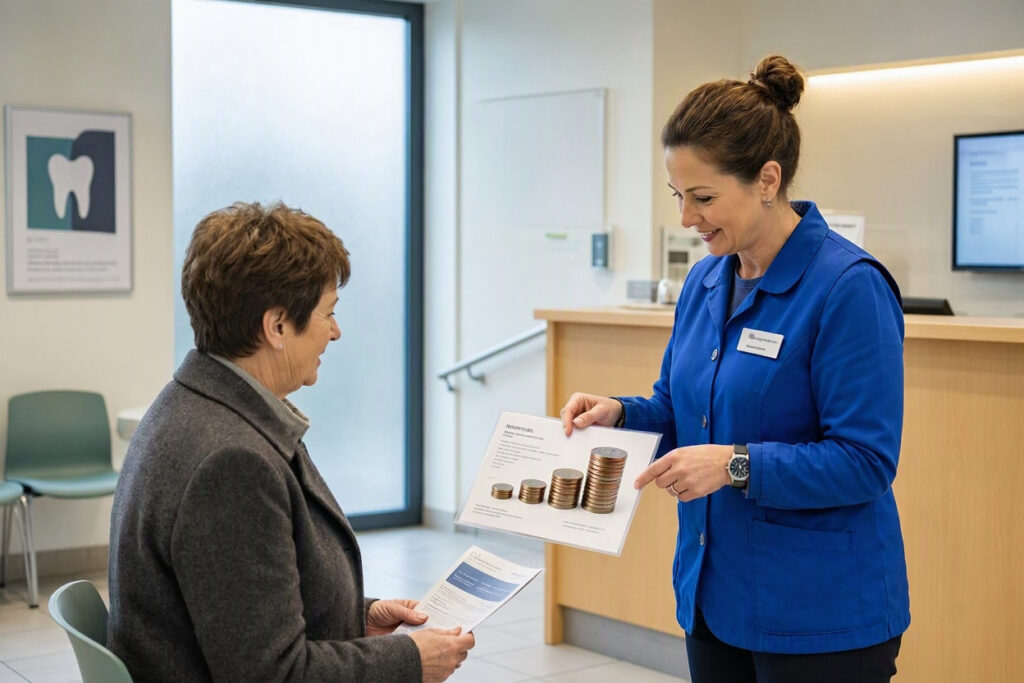
The NHS does not charge for each individual procedure. Instead, it groups treatments into three bands. You pay one charge for each course of treatment, no matter how many visits it takes. A course of treatment can include several procedures.
The three bands are:
- Band 1: Basic examination, diagnosis, and preventive care.
- Band 2: Additional treatments, such as fillings, root canals, and extractions.
- Band 3: More complex treatments, such as crowns, bridges, and dentures.
If you need treatments from more than one band, you pay the higher band charge. For example, if you need a filling (Band 2) and a crown (Band 3), you pay the Band 3 charge. The Band 3 charge covers all the treatment in that course.
Urgent dental treatment is a separate charge. It covers immediate care to relieve pain or prevent infection.
Current NHS Dental Charges
The NHS dental charges are updated each year. The charges below are for England. Scotland, Wales, and Northern Ireland have different systems. Some charges may be different.
| Band | What It Covers | Charge (England) |
|---|---|---|
| Band 1 | Examination, diagnosis, preventive advice, scale and polish (if clinically needed), fluoride varnish, fissure sealants | £26.80 |
| Band 2 | Everything in Band 1, plus fillings, root canal treatment, extractions, and other treatments | £73.50 |
| Band 3 | Everything in Band 1 and 2, plus crowns, bridges, dentures, and other laboratory-made appliances | £319.10 |
| Urgent | Immediate care to relieve pain or prevent infection | £26.80 |
These charges are for a single course of treatment. If you need more treatment later, you may need to pay again. The charges are reviewed annually, so they may change.
In Scotland, dental charges are different. NHS dental care is free for everyone under 26. Adults pay 80% of the cost, up to a maximum of £384 per course of treatment. In Wales, NHS dental care is free for everyone. In Northern Ireland, charges are similar to England but may vary slightly.
What Does Each Band Cover?
Understanding what each band covers helps you know what you will pay.
Band 1: Basic Care
Band 1 covers the essentials. This includes:
- A full dental examination
- Diagnosis and treatment planning
- Preventive advice, such as how to brush and floss
- Scale and polish, if clinically needed
- Fluoride varnish or fissure sealants, if needed
Band 1 is the most common charge. Most patients pay this for a routine check-up.
Band 2: Additional Treatments
Band 2 covers everything in Band 1, plus more involved treatments. This includes:
- Fillings
- Root canal treatment
- Extractions (tooth removal)
- Treatment for gum disease
- Other minor oral surgery
If you need a filling or a tooth removed, you will likely pay the Band 2 charge.
Band 3: Complex Treatments
Band 3 covers everything in Bands 1 and 2, plus complex treatments that involve a dental laboratory. This includes:
- Crowns
- Bridges
- Dentures
- Other laboratory-made appliances
Band 3 is the most expensive charge. It covers a full course of treatment that includes a crown, bridge, or denture.
Urgent Treatment
Urgent treatment is for immediate care. This includes:
- Relief of severe pain
- Treatment of infection
- Temporary fillings
- Emergency extractions
You pay a separate urgent charge. If you need further treatment after the urgent care, you may need to pay again.
Who Gets Free NHS Dental Care?
Not everyone pays for NHS dental care. Some people qualify for free treatment. You are entitled to free NHS dental care if you:
- Are under 18
- Are under 19 and in full-time education
- Are pregnant or have given birth in the last 12 months
- Are on certain benefits, such as Income Support, Jobseeker’s Allowance, or Universal Credit (in some cases)
- Have a low income and receive help through the NHS Low Income Scheme
- Are a prisoner
- Are a patient in a hospital and treated by a hospital dentist
You may also get help with costs if you have a valid HC2 certificate or HC3 certificate. These are issued through the NHS Low Income Scheme.
If you are not sure whether you qualify, ask your dentist or check the NHS website. You should be prepared to show proof of eligibility.
How to Find an NHS Dentist
Finding an NHS dentist can be difficult in some areas. Many dental practices have long waiting lists or are not accepting new NHS patients. Here are some tips to find an NHS dentist.
- Use the NHS website: The NHS “Find a Dentist” service lets you search by postcode. You can filter for practices accepting new NHS patients.
- Call around: Phone local dental practices and ask if they are accepting new NHS patients. Ask about waiting times.
- Ask your GP: Your doctor may know which local practices have availability.
- Check with NHS 111: If you have an urgent dental problem, call NHS 111. They can help you find urgent care.
- Consider travelling: You may need to travel to a neighbouring town or city to find an NHS dentist.
- Join a waiting list: If a practice is not accepting new patients, ask to be added to a waiting list.
- Check dental access centres: Some areas have dental access centres for people who cannot find a regular NHS dentist.
If you cannot find an NHS dentist, you may need to pay for private treatment. This can be more expensive.
NHS Dental Charges vs. Private Dental Costs
How do NHS dental charges compare to private dental costs? Here is a comparison.
| Treatment | NHS Charge | Private Cost (Average) |
|---|---|---|
| Examination | £26.80 (Band 1) | £50 – £100 |
| Filling | £73.50 (Band 2) | £100 – £250 |
| Root canal | £73.50 (Band 2) | £300 – £800 |
| Extraction | £73.50 (Band 2) | £100 – £300 |
| Crown | £319.10 (Band 3) | £500 – £1,500 |
| Bridge | £319.10 (Band 3) | £800 – £2,500 |
| Dentures | £319.10 (Band 3) | £600 – £2,000 |
NHS charges are much lower than private costs. However, NHS treatment may have longer waiting times and limited choices. Private treatment offers more flexibility and faster care.
NHS Dental Treatment in Scotland, Wales, and Northern Ireland
The NHS dental system is different in each UK nation.
Scotland
In Scotland, NHS dental care is free for everyone under 26. Adults pay 80% of the treatment cost, up to a maximum of £384 per course of treatment. Some treatments, such as examinations and preventive care, are free for everyone.
Wales
In Wales, NHS dental care is free for everyone. There are no charges for examinations, fillings, crowns, or dentures. However, finding an NHS dentist can be difficult in some areas.
Northern Ireland
In Northern Ireland, NHS dental charges are similar to England. There are three bands, and charges apply to most adults. Some people qualify for free care.
Emergency NHS Dental Care
If you have a dental emergency, you can get urgent NHS care. This includes severe pain, swelling, bleeding, or a broken tooth. You may need to pay the urgent charge.
To get emergency dental care:
- Call your regular dentist: If you have one, call them first. They may offer an emergency appointment.
- Call NHS 111: If you do not have a dentist or cannot get an appointment, call NHS 111. They can direct you to an urgent dental care service.
- Go to A&E: If you have a serious injury or severe swelling that affects your breathing or swallowing, go to your nearest A&E department.
Urgent dental care is usually available at some dental practices, community dental services, or urgent care centres.
How to Save Money on NHS Dental Care
Even with NHS charges, dental care can add up. Here are practical ways to save money.
Check If You Qualify for Free Care
Many people do not realise they qualify for free NHS dental care. Check the eligibility criteria. If you are pregnant, under 18, or on certain benefits, you may not need to pay.
Get an HC2 Certificate
If you have a low income, you may qualify for an HC2 certificate. This gives you full help with NHS dental costs. Apply through the NHS Low Income Scheme.
Attend Regular Check-Ups
Preventive care is cheaper than treating problems. Regular check-ups help catch issues early. You may only need Band 1 treatment.
Practice Good Oral Hygiene
Brush twice a day, floss daily, and limit sugary foods and drinks. This reduces the risk of cavities and gum disease.
Ask About Payment Plans
If you need private treatment, ask about payment plans. Many dentists offer interest-free credit.
Consider Dental Insurance
Some dental insurance plans cover private treatment. Compare plans to see if they are worth it for you.
Look for Dental Schools
Dental schools offer treatment at reduced costs. Students work under supervision. Treatment takes longer, but it is cheaper than private care.
Personal Experiences and Testimonials
Here are some illustrative experiences from people who used NHS dental care. These are based on common patient feedback.
“I needed a filling and paid £73.50 under Band 2. It was much cheaper than private. I had to wait a few weeks for an appointment, but it was worth it.” — Sarah, London
“I am pregnant, so I got free NHS dental care. I had a check-up and a cleaning. I did not pay anything. It was a great help.” — Maria, Manchester
“I could not find an NHS dentist in my area. I had to go private and paid £120 for a check-up and cleaning. It was expensive.” — David, Birmingham
“My son is under 18, so his braces were free on the NHS. We waited about a year, but the treatment was excellent.” — Priya, Glasgow
These stories show that NHS dental care can be affordable, but access can be difficult in some areas.
Important Notes for Readers
- Charges change: NHS dental charges are updated each year. Check the current charges before your appointment.
- One charge per course: You pay one charge for a course of treatment, no matter how many visits it takes.
- Free care: Check if you qualify for free NHS dental care. Many people do.
- Access problems: Finding an NHS dentist can be hard. Start looking early.
- Emergency care: Call NHS 111 if you have an urgent dental problem.
- Keep receipts: If you pay for treatment, keep your receipts. You may need them for reimbursement or tax purposes.
- Maintain good oral hygiene: Prevention is the best way to save money and stay healthy.
- Ask questions: If you are unsure about costs, ask your dentist for a clear explanation.
Frequently Asked Questions (FAQ)
1. How much does NHS dental care cost?
It depends on the band. Band 1 costs £26.80, Band 2 costs £73.50, and Band 3 costs £319.10. Urgent care costs £26.80. These charges are for England.
2. Is NHS dental care free?
It is free for some people, including under-18s, pregnant women, and those on certain benefits. Others pay the standard charges.
3. What is Band 1, 2, and 3?
Band 1 covers basic care like exams. Band 2 covers fillings and extractions. Band 3 covers crowns, bridges, and dentures.
4. How do I find an NHS dentist?
Use the NHS website, call local practices, and ask about waiting lists. You can also call NHS 111 for urgent care.
5. Can I get free NHS dental care if I am pregnant?
Yes. Pregnant women and those who have given birth in the last 12 months get free NHS dental care.
6. What if I cannot find an NHS dentist?
You may need to pay for private treatment or travel to another area. Some areas have dental access centres.
7. How do I get help with NHS dental costs?
If you have a low income, apply for the NHS Low Income Scheme. You may get an HC2 certificate for free care.
8. Are NHS dental charges different in Scotland?
Yes. In Scotland, under-26s get free care. Adults pay 80% up to a maximum of £384.
9. Are NHS dental charges different in Wales?
Yes. In Wales, NHS dental care is free for everyone.
10. What is urgent NHS dental treatment?
Urgent treatment is for immediate care to relieve pain or prevent infection. It costs £26.80 in England.
11. How long does a course of NHS treatment last?
A course of treatment usually lasts up to two months. If you need more treatment after that, you may pay again.
12. Can I choose my NHS dentist?
You can choose any NHS dentist that is accepting new patients. However, availability is limited in some areas.
13. What if I need a crown or bridge?
You will pay the Band 3 charge of £319.10. This covers the whole course of treatment.
14. Do NHS dentists offer cosmetic treatments?
Some cosmetic treatments, such as teeth whitening, are not available on the NHS. You may need to pay privately.
15. How can I save money on NHS dental care?
Check if you qualify for free care, get an HC2 certificate if eligible, and practice good oral hygiene to avoid costly treatments.
Conclusion
NHS dental care costs between £26.80 and £319.10 per course of treatment in England. Some people get free care, including under-18s, pregnant women, and those on certain benefits. Scotland, Wales, and Northern Ireland have different systems. Finding an NHS dentist can be difficult, but help is available. By understanding the bands, checking your eligibility, and maintaining good oral hygiene, you can manage your dental costs. Always check the current charges and ask your dentist for a clear explanation of costs before treatment.
Additional Resource
For more information about NHS dental charges and to find a dentist, visit the official NHS website: https://www.nhs.uk
You can also learn about help with health costs from the NHS Low Income Scheme: https://www.nhsbsa.nhs.uk/nhs-low-income-scheme