Can You Use Fluoride Toothpaste With Dental Implants?
Fluoride is a well-known cavity fighter, but patients with dental implants often wonder: is fluoride toothpaste safe for implants?
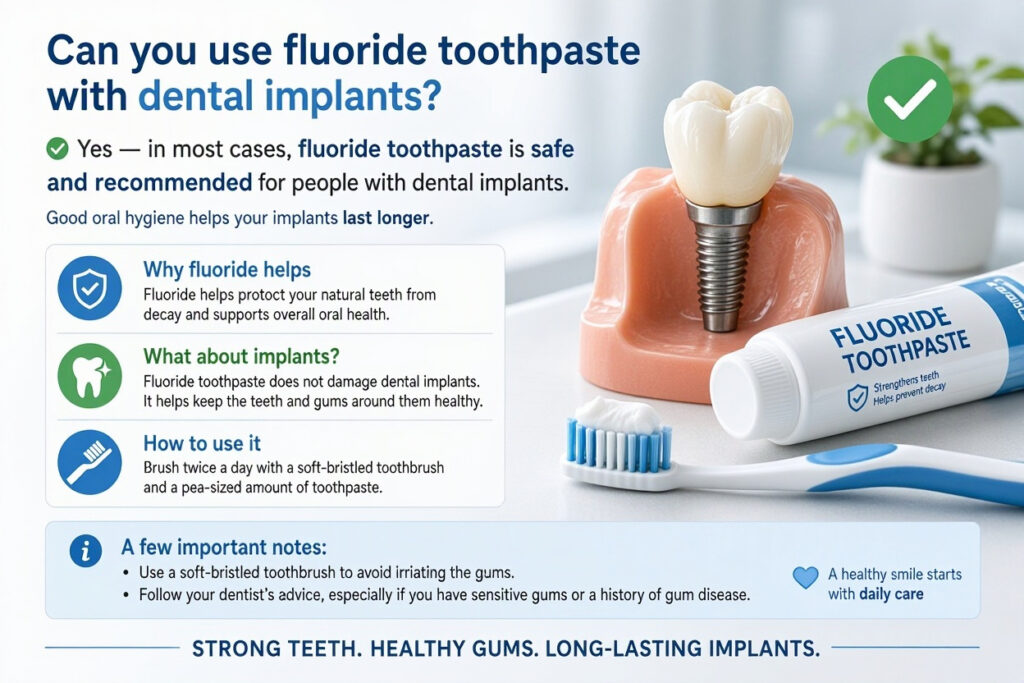
The short answer is yes. Fluoride toothpaste is safe and generally recommended for patients with dental implants. This article explains why, addresses common concerns, and provides guidance on choosing the right toothpaste.
What Is Fluoride and How Does It Work?
Fluoride is a mineral that occurs naturally in water and some foods. It strengthens tooth enamel, making it more resistant to acid attacks from bacteria. Fluoride also promotes remineralization—the process of restoring minerals to enamel that has been weakened by acid.
For natural teeth, fluoride is a proven cavity fighter. It is less relevant for implants because implants are made of titanium and ceramic, which do not decay.
Is Fluoride Safe for Dental Implants?
Yes, fluoride is safe for dental implants. Here is why:
Implants Are Not Affected by Fluoride
Titanium and ceramic—the materials used in implants—do not react to fluoride. Fluoride’s benefits and risks apply to natural tooth enamel, not to implant materials.
Fluoride Protects Natural Teeth
Most implant patients still have natural teeth. Fluoride toothpaste protects these teeth from decay, which is important for overall oral health.
No Evidence of Harm
Research does not show any negative effects of fluoride on dental implants. Dentists routinely recommend fluoride toothpaste for implant patients.
Why Dentists Recommend Fluoride Toothpaste for Implant Patients
Protecting Natural Teeth
Even if you have implants, you likely have natural teeth that need protection. Fluoride helps prevent cavities in these teeth.
Maintaining Oral Health
A healthy oral environment supports implant longevity. Preventing decay in natural teeth contributes to overall oral health.
Easy and Effective
Fluoride toothpaste is widely available, affordable, and easy to use. There is no reason to avoid it unless you have a specific allergy or sensitivity.
Common Concerns About Fluoride and Implants
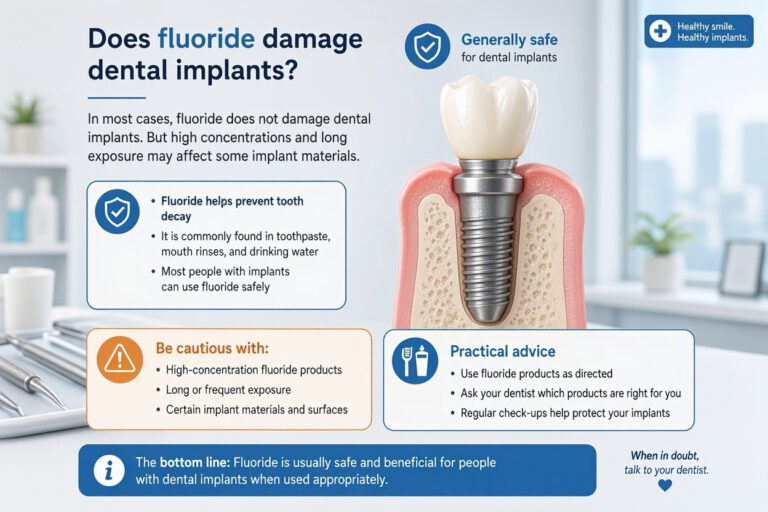
Concern: Fluoride Might Corrode Implants
Fact: Fluoride does not corrode titanium implants at the concentrations found in toothpaste. Implant materials are highly resistant to corrosion.
Concern: Fluoride Is Unnecessary for Implants
Fact: While fluoride does not benefit implants directly, it protects natural teeth. For patients with mixed dentition (natural teeth and implants), fluoride is beneficial.
Concern: High-Fluoride Toothpaste Might Be Harmful
Fact: Standard fluoride toothpaste is safe. High-fluoride prescription toothpastes should be used under dental supervision, but they are not harmful to implants when used as directed.
When Might Fluoride Toothpaste Not Be Recommended?
In rare cases, your dentist might advise against fluoride toothpaste:
- Fluoride allergy: Extremely rare, but some individuals may be allergic to fluoride.
- Specific medical conditions: Very few conditions require fluoride avoidance.
- Personal preference: Some patients prefer fluoride-free products for personal reasons.
If you have concerns, discuss them with your dentist.
Alternatives to Fluoride Toothpaste
If you cannot or choose not to use fluoride toothpaste, consider:
Fluoride-Free Toothpaste
These products clean teeth using other ingredients. They may include xylitol, which has some antibacterial properties, or herbal ingredients. However, they lack fluoride’s proven cavity-prevention benefits.
Hydroxyapatite Toothpaste
Hydroxyapatite is a mineral that makes up tooth enamel. Some studies suggest it can remineralize teeth similarly to fluoride. It is a popular alternative in some countries.
Herbal Toothpastes
Products containing aloe, neem, or other plant extracts offer natural cleaning. Their effectiveness varies, and they may not provide the same protection as fluoride.
Comparison Table: Fluoride vs. Fluoride-Free Toothpaste
| Feature | Fluoride Toothpaste | Fluoride-Free Toothpaste |
|---|---|---|
| Cavity prevention | Proven effective | Varies; less evidence |
| Safety for implants | Safe | Safe |
| Availability | Widely available | Increasingly available |
| Cost | Low | Varies |
| Taste | Varies | Varies |
| ADA acceptance | Common | Less common |
What Do Dentists Say?
“I recommend fluoride toothpaste to nearly all my implant patients. It protects their natural teeth, which is essential for long-term oral health. Implants themselves don’t need fluoride, but the teeth around them do.” — Dr. Robert Kim, DDS
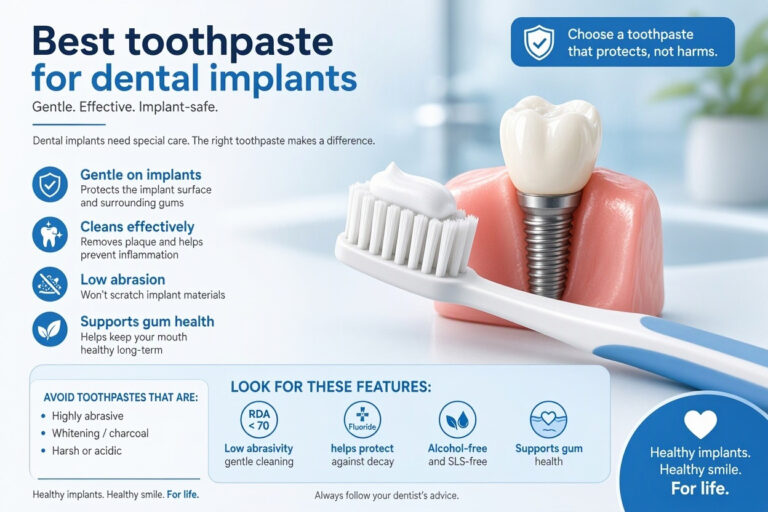
“The key is choosing a gentle, non-abrasive fluoride toothpaste. Some whitening formulas are too harsh for implant patients, but standard fluoride toothpaste is safe and beneficial.” — Dr. Patricia Lewis, DMD
Conclusion
Fluoride toothpaste is safe and recommended for most dental implant patients. It protects natural teeth without affecting implants. Choose a gentle, non-abrasive fluoride formula and use it as part of your daily oral care routine. If you have specific concerns, discuss them with your dentist.
FAQ: Fluoride Toothpaste and Dental Implants
Does fluoride damage dental implants?
No. Fluoride does not affect titanium or ceramic implant materials. It is safe for implants.
Should I use fluoride-free toothpaste if I have implants?
Not necessarily. Fluoride protects natural teeth. Unless you have a specific reason to avoid fluoride, it is recommended.
Can fluoride toothpaste stain implants?
No. Fluoride does not stain implants. Some toothpastes contain staining ingredients (like stannous fluoride in rare cases), but this affects natural teeth more than implants.
Is high-fluoride toothpaste safe for implants?
Prescription high-fluoride toothpaste is safe for implants when used as directed. It should be used under dental supervision.
What if I am allergic to fluoride?
If you have a confirmed fluoride allergy, choose fluoride-free toothpaste. Discuss alternatives with your dentist.
Additional Resource: Learn more about fluoride from the American Dental Association: https://www.ada.org.