Dental Implant After Jaw Surgery
Jaw surgery—whether for corrective, reconstructive, or trauma-related reasons—can significantly impact your oral health and dental options. If you are missing teeth and have undergone jaw surgery, you may wonder whether dental implants are possible.
The answer is often yes, but the process requires careful planning and coordination between your surgical and dental teams. This article explains what you need to know.
Understanding Jaw Surgery
Jaw surgery encompasses various procedures, including:
- Orthognathic surgery: Corrects jaw alignment and bite issues
- Reconstructive surgery: Rebuilds jawbone after trauma, tumor removal, or disease
- Bone grafting: Adds bone to areas with insufficient volume for implants
- TMJ surgery: Treats temporomandibular joint disorders
Each type of surgery affects the jaw differently, and implant planning must account for these changes.
Can You Get Dental Implants After Jaw Surgery?
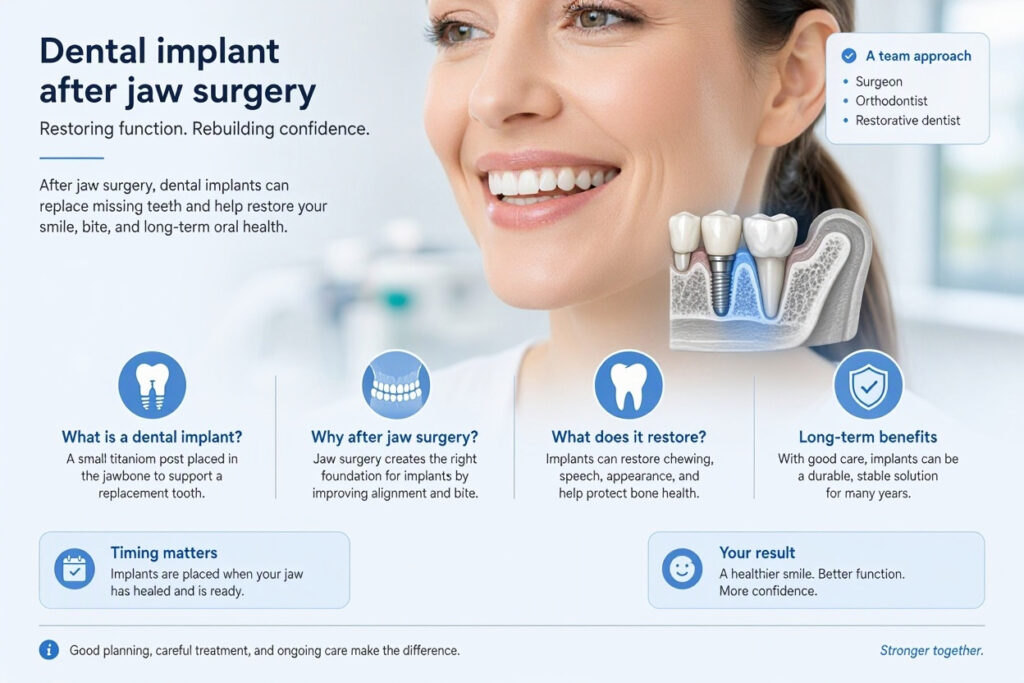
In most cases, yes. Dental implants can be placed after jaw surgery, but timing and planning are critical.
Factors That Affect Eligibility
- Bone healing: The jaw must be fully healed before implant placement
- Bone volume: Sufficient bone must be present to support implants
- Blood supply: Adequate blood flow is needed for healing
- Overall health: General health affects healing capacity
- Surgical outcomes: Success of the jaw surgery influences implant feasibility
Timing: When Can Implants Be Placed?
Timing depends on the type of jaw surgery and your healing progress.
After Orthognathic Surgery
Orthognathic surgery (jaw repositioning) typically requires 6-12 months of healing before implant placement. Your surgeon and dentist will coordinate to determine the optimal timing.
After Bone Grafting
Bone grafts need time to integrate with existing bone—usually 4-6 months. Implant placement occurs after the graft has healed and consolidated.
After Trauma or Reconstructive Surgery
Healing time varies based on the extent of surgery. Your care team will monitor healing and advise when implants can be placed.
General Guideline
Most surgeons and dentists recommend waiting at least 6 months after major jaw surgery before placing implants. However, individual circumstances vary.
The Implant Process After Jaw Surgery
Step 1: Comprehensive Evaluation
Your dental team will:
- Review your surgical history
- Take imaging (X-rays, CT scans) to assess bone volume and quality
- Evaluate gum health
- Discuss your goals and expectations
Step 2: Treatment Planning
A personalized plan is developed, considering:
- Number and location of implants
- Need for additional bone grafting
- Type of restoration (crown, bridge, denture)
- Coordination with your surgical team
Step 3: Implant Placement
The implant surgery is performed, often with careful attention to the altered anatomy from previous surgery.
Step 4: Healing and Osseointegration
The implants heal and integrate with bone over several months.
Step 5: Restoration
After healing, the final crown, bridge, or denture is attached.
Special Considerations After Jaw Surgery
Altered Anatomy
Jaw surgery changes the shape and position of your jaw. Implant planning must account for this new anatomy to ensure proper placement and function.
Bone Quality
Some jaw surgeries affect bone density and quality. Your dentist will assess bone quality before planning implants.
Nerve Considerations
Jaw surgery may affect nerves in the area. Implant placement must avoid damaging these nerves.
Coordination of Care
Close communication between your oral surgeon and implant dentist is essential. They must share records, imaging, and treatment plans.
Soft Tissue Health
Gum tissue may be affected by jaw surgery. Ensuring healthy soft tissue before implant placement improves outcomes.
Potential Challenges and Solutions
| Challenge | Solution |
|---|---|
| Insufficient bone volume | Bone grafting before implants |
| Altered anatomy | 3D imaging and careful planning |
| Nerve sensitivity | Precise imaging and surgical technique |
| Scar tissue | Soft tissue management |
| Delayed healing | Extended healing time before implants |
What to Expect: A Realistic Timeline
| Phase | Typical Duration |
|---|---|
| Initial jaw surgery healing | 6-12 months |
| Evaluation and planning | 1-2 months |
| Bone grafting (if needed) | 4-6 months healing |
| Implant placement | 1-2 hours per implant |
| Osseointegration | 3-6 months |
| Restoration placement | 2-4 weeks |
Finding the Right Team
Oral Surgeon
Your oral surgeon performs the jaw surgery and may also place implants. Choose a surgeon with experience in both areas.
Implant Dentist
Your implant dentist plans and restores the implants. They should have experience working with patients who have had jaw surgery.
Periodontist
A periodontist may be involved for soft tissue management and implant placement.
Coordination
Ideally, your team communicates regularly. Ask about their experience working together.
Questions to Ask Your Care Team
- How long should I wait after jaw surgery before getting implants?
- Do I have enough bone for implants, or will I need grafting?
- What type of implants are best for my situation?
- How will my altered anatomy affect implant placement?
- What are the risks and benefits in my specific case?
- How long will the entire process take?
- What is the expected outcome?
“Patients who have had jaw surgery can absolutely get dental implants. The key is careful planning and allowing adequate healing time. I always tell my patients that patience now pays off later.” — Dr. Andrew Bennett, DDS, Oral Surgeon
Conclusion
Dental implants are often possible after jaw surgery, but timing and planning are critical. Wait for adequate healing, work with an experienced team, and follow a personalized treatment plan. With proper coordination and care, implants can restore your smile and function even after significant jaw surgery.
FAQ: Dental Implants After Jaw Surgery
How long after jaw surgery can I get implants?
Typically 6-12 months, depending on the type of surgery and healing progress. Your care team will advise based on your specific situation.
Is it safe to get implants after jaw surgery?
Yes, when planned and timed appropriately. Implants are safe after adequate healing.
Will I need bone grafting after jaw surgery?
Possibly. Jaw surgery can affect bone volume. Your dentist will assess whether grafting is needed.
Can implants fail after jaw surgery?
Implant failure rates are generally low, but jaw surgery patients may have slightly higher risks due to altered anatomy. Proper planning minimizes risks.
How much does implant treatment after jaw surgery cost?
Costs vary widely based on complexity, number of implants, and need for grafting. Discuss costs with your dental team.
Additional Resource: For information on jaw surgery and implants, visit the American Association of Oral and Maxillofacial Surgeons: https://www.aaoms.org.