alpharetta periodontics & dental implants
Let’s be honest for a second. Nobody wakes up hoping to visit a periodontist. Most people get that referral from their regular dentist, and suddenly they have questions they never thought to ask. What does a periodontist actually do? Do I really need gum treatment? And what do dental implants have to do with any of this?
You are not alone if this feels confusing. The good news is that modern periodontics has come a very long way. Treatments are more comfortable, less invasive, and more predictable than ever before. And for people living in or near Alpharetta, access to high-quality gum care and implant dentistry is better than it has ever been.
This guide walks you through everything you need to know. No fluff. No scare tactics. Just honest, practical information to help you make smart decisions about your oral health.
What Is Periodontics and Why Does It Matter?
Periodontics is the branch of dentistry that focuses on the structures supporting your teeth. That means your gums, the bones beneath them, and the ligaments that hold everything in place. A periodontist is a dentist who has completed three additional years of specialized training beyond dental school.
Why does that matter? Because gum disease is surprisingly common. In fact, it is one of the leading causes of tooth loss in adults. But here is the tricky part: early gum disease often has no obvious symptoms. You might not feel pain. Your teeth might look fine. And by the time you notice a problem, the damage can already be significant.
Periodontists do more than treat gum disease, though. They also place dental implants, perform gum grafting, regenerate lost bone, and treat oral inflammation. Think of them as the specialists who keep your teeth anchored and stable.
The Connection Between Gums and Overall Health
Your mouth is not separate from the rest of your body. Scientists have known for years that chronic gum inflammation is linked to other health conditions. Heart disease, diabetes, stroke, and even pregnancy complications have all been associated with untreated periodontal disease.
That does not mean gum disease causes these conditions. But the inflammation from infected gums can make existing health problems worse. For example, people with diabetes who have gum disease often struggle more with blood sugar control. Treating the gums frequently improves the diabetes management as well.
So when you take care of your gums, you are not just protecting your teeth. You are supporting your entire body.
Common Signs You Might Need a Periodontist
How do you know if it is time to see a specialist? Here are some realistic warning signs. You do not need to have all of them. Even one or two is worth paying attention to.
- Gums that bleed when you brush or floss (this is never normal)
- Persistent bad breath or a bad taste in your mouth
- Gums that look red, swollen, or feel tender
- Gums pulling away from your teeth (making teeth look longer)
- Teeth that feel loose or seem to shift position
- Changes in your bite or how your dentures fit
- Pain when chewing
Some people also notice pus between their teeth and gums. That is a clear sign of infection and needs prompt attention.
Important note: Gum disease can be present even without pain. Many people assume no pain means no problem. That is simply not true. Regular dental exams are the only reliable way to catch early gum disease.
A Closer Look at Gum Disease
Gum disease progresses through stages. Understanding these stages helps explain why early treatment is so much simpler.
Gingivitis (The Early Stage)
Gingivitis is the mildest form of gum disease. At this point, only your gums are affected. The bone underneath is still healthy. You might notice bleeding when you brush, but there is no bone loss yet.
The good news? Gingivitis is completely reversible. A professional cleaning combined with better home care usually resolves it within a few weeks.
Periodontitis (Advanced Disease)
If gingivitis is not treated, it can advance to periodontitis. Now the inflammation spreads deeper, affecting the bone and ligaments. Your body’s immune response actually starts breaking down the bone around your teeth. This creates pockets between your teeth and gums—spaces where bacteria thrive.
Periodontitis comes in different levels of severity. Mild periodontitis involves early bone loss. Moderate periodontitis means more significant damage. Advanced periodontitis involves major bone loss and loose teeth.
The key takeaway: periodontitis is manageable but not reversible. Treatment can stop it from getting worse, but lost bone does not grow back on its own.
Non-Surgical Periodontal Treatments
Before anyone talks about surgery, periodontists always start with less invasive options. Most people respond very well to non-surgical care.
Scaling and Root Planing
This is the gold standard initial treatment for gum disease. Scaling removes plaque and tartar from above and below the gum line. Root planing smooths the tooth roots, making it harder for bacteria to stick there again.
The procedure is done with local anesthesia, so you stay comfortable. Your periodontist may use hand instruments, ultrasonic tools, or a combination of both.
Most patients notice a dramatic improvement within weeks. Gums become less red and swollen. Bleeding decreases. Pocket depths shrink.
Antibiotic Therapies
Sometimes your periodontist will place localized antibiotics directly into gum pockets. These are tiny fibers or gels that dissolve slowly, releasing medication over several days. This helps kill bacteria that regular cleaning cannot reach.
Oral antibiotics are rarely used for routine gum disease but may be prescribed for specific aggressive infections.
Ongoing Maintenance
Once your gums are healthy again, you are not done. Periodontal disease is chronic, like high blood pressure. It requires ongoing management. That means more frequent cleanings—usually every three to four months instead of every six.
These maintenance visits are not the same as regular cleanings. Your periodontist checks pocket depths, removes new deposits, and monitors for any signs of relapse.
Surgical Periodontal Procedures
When non-surgical treatment is not enough, surgery can help. But modern periodontal surgery is nothing like the scary stories you might have heard. Most procedures are minimally invasive, and healing times are shorter than ever.
Pocket Reduction Surgery
Also called flap surgery. Your periodontist makes small incisions to lift the gums away from the teeth. This provides access to clean deep bacteria and smooth damaged bone surfaces. Then the gums are sutured back in place, but now they fit tighter around the teeth.
Smaller pockets are much easier to keep clean at home. This surgery dramatically reduces the chance of future bone loss.
Gum Grafting
Receding gums expose tooth roots, which can be sensitive and vulnerable to decay. Gum grafting takes a small piece of tissue from the roof of your mouth (or uses donor tissue) and attaches it to the receded areas.
The result is thicker, healthier gum tissue that covers exposed roots. Many patients also like the cosmetic improvement. Teeth look more even and natural.
Crown Lengthening
Sometimes teeth are buried under too much gum tissue. Crown lengthening removes or reshapes excess gum tissue and sometimes underlying bone. This exposes more of the tooth structure.
Dentists often request crown lengthening before placing a crown on a broken tooth. It also can improve a “gummy smile” for cosmetic reasons.
Regenerative Procedures
When bone has been lost, periodontists can sometimes encourage new bone growth. They place bone grafts (synthetic, animal, or human donor bone) into the damaged areas. Membranes may be used to guide the new bone growth.
Not everyone is a candidate for regeneration. But when it works, it can rebuild lost support for teeth or prepare an area for a dental implant.
Dental Implants: A Modern Solution for Missing Teeth
Dental implants have changed tooth replacement forever. Unlike bridges or dentures, implants replace both the visible tooth and the root. That makes them incredibly stable and long-lasting.
A dental implant is a small titanium post surgically placed into your jawbone. Over several months, the bone fuses with the titanium—a process called osseointegration. Once fused, the implant can support a crown, bridge, or even a full arch of replacement teeth.
Why Choose Implants Over Other Options?
Here is a quick comparison to help you see the differences.
| Feature | Dental Implant | Traditional Bridge | Removable Denture |
|---|---|---|---|
| Replaces root | Yes | No | No |
| Affects adjacent teeth | No | Yes (shaves down healthy teeth) | No |
| Bone loss prevention | Yes | No | No |
| Removable for cleaning | No | No | Yes |
| Typical lifespan | 20+ years | 7–15 years | 5–10 years |
| Feels like natural teeth | Very close | Good | Fair |
Implants cost more upfront than bridges or dentures. But over a lifetime, they often become the more economical choice because they rarely need replacement. More importantly, they prevent the bone loss that happens when teeth are missing. That bone loss can change your facial shape over time, making you look older.
Who Is a Candidate for Implants?
Almost anyone who is healthy enough for a routine tooth extraction can get an implant. However, successful implants require enough bone to hold them. If you have lost bone from gum disease or long-term tooth loss, you may need a bone graft first.
Heavy smokers, people with uncontrolled diabetes, and patients who take certain medications may have higher risks. Your periodontist will review your full medical history before recommending implants.
Age is not a barrier. Healthy seniors get implants all the time.
The Implant Process from Start to Finish
Understanding the timeline helps reduce anxiety. Here is what a typical implant journey looks like.
Step 1: Comprehensive Exam and Planning
Your periodontist takes 3D images (CBCT scan) of your jaw. This shows exactly where your nerves, sinuses, and remaining bone are located. Using special software, they plan the implant placement digitally before you ever enter the operating room.
Step 2: Tooth Extraction (If Needed)
If you still have a damaged tooth, it is removed first. Sometimes the implant can go in immediately after extraction. Other times, the site needs time to heal first. Your periodontist will explain which approach is better for your situation.
Step 3: Bone Grafting (If Necessary)
If you lack enough bone, a graft is placed. This adds several months to the timeline because the graft needs to integrate before implant placement. Do not skip this step. Trying to place an implant without enough bone almost always leads to failure.
Step 4: Implant Placement
This is a surgical procedure, but it is done right in the office under local anesthesia. Many patients report less discomfort than a tooth extraction. Your periodontist makes a small incision in the gum, drills a precise hole, and inserts the implant. The gum is then sutured closed over or around the implant.
Step 5: Healing and Osseointegration
This waiting period is crucial. Over three to six months, your bone grows tightly around the implant surface. Rushing this step is the most common cause of implant failure. Follow all post-operative instructions carefully.
Step 6: Abutment Placement
Once the implant is stable, your periodontist uncovers it and attaches a small connector piece called an abutment. This sticks up through the gum and will hold your final tooth. Sometimes this is done at the same time as implant placement, but usually it is a separate minor procedure.
Step 7: Final Crown
Your dentist (often your general dentist, not the periodontist) takes impressions and creates your custom crown. The crown is screwed or cemented onto the abutment. Congratulations—you have a new tooth that looks, feels, and functions like a natural one.
Same-Day and Immediate Load Implants
Some situations allow for “teeth in a day.” That means the implant and a temporary crown are placed during the same appointment. You leave with a tooth already in place.
This is not for everyone. It requires excellent bone quality and an implant that gets very tight initial stability. Your periodontist will tell you honestly if you are a candidate.
Even with same-day implants, you still need to wait several months before putting full chewing force on the tooth. The temporary crown is mostly for looks and basic function.
Implant Complications and How to Avoid Them
Dental implants have a success rate of over 95% when placed by skilled periodontists. But things can go wrong. Knowing the risks helps you avoid them.
Peri-implantitis is the biggest threat. This is inflammation and infection around an implant, similar to gum disease around natural teeth. It can destroy the bone holding your implant. Prevention is straightforward: excellent home care and regular professional cleanings.
Implant failure can happen early (implant never fuses to bone) or late (bone loss develops over time). Smoking dramatically increases failure rates. So does uncontrolled diabetes and poor oral hygiene.
Nerve injury is rare but possible, especially in the lower jaw. Modern 3D imaging has made this complication very uncommon when proper planning is done.
The bottom line: choose an experienced periodontist, follow their instructions, and commit to good home care. Your implant can easily last several decades.
Home Care After Periodontal Treatment
Your periodontist can perform miracles in the office. But what happens at home matters just as much. Here is what effective home care looks like after treatment.
Brushing Technique
Use a soft-bristled brush. Hard bristles damage gums and exposed roots. Brush gently in small circles at the gum line, not aggressively back and forth. Spend a full two minutes twice per day.
Electric toothbrushes with pressure sensors are excellent for people who tend to brush too hard.
Flossing Is Non-Negotiable
Flossing removes plaque from between teeth where brushing cannot reach. If your gums bleed when you floss, that means you have inflammation. Keep flossing gently every day. The bleeding will stop within one to two weeks as your gums heal.
Water flossers are helpful for people with bridges, implants, or wide gum pockets. They do not replace string floss completely but make excellent additions.
Interdental Brushes
For people with larger spaces between teeth or exposed root furrows, small interdental brushes work better than floss. Ask your periodontist which size is right for you.
Antimicrobial Rinses
Your periodontist may recommend a prescription mouth rinse like chlorhexidine for short-term use after surgery. Over-the-counter rinses are fine for freshening breath but do not treat gum disease.
What to Expect at Your First Periodontal Visit
If you have never seen a periodontist before, knowing what happens can ease your nerves.
You will start with a thorough review of your medical history. Be honest about medications, supplements, and any health conditions. Gum treatments can affect and be affected by many systemic diseases.
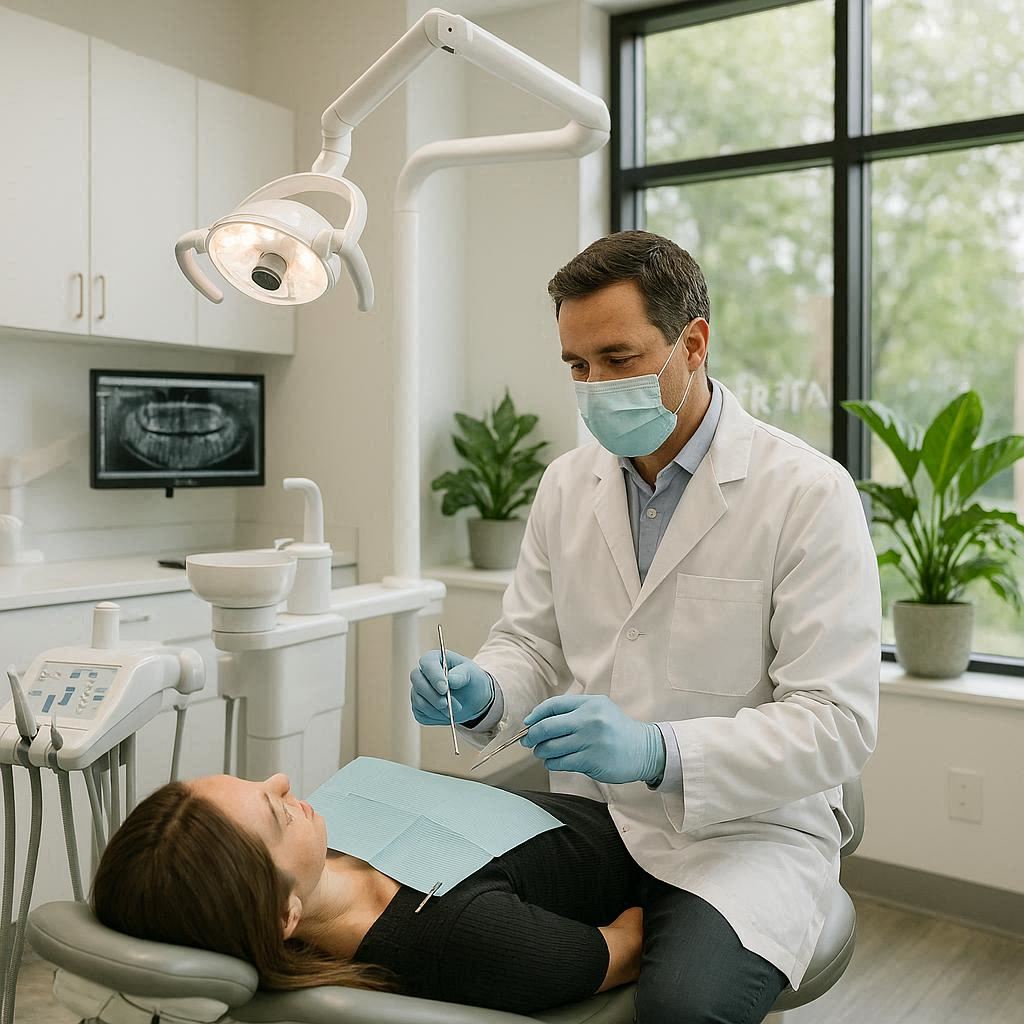
Next comes the examination. Your periodontist will look at your gums, check for bleeding, and measure pocket depths with a small probe. This does not hurt, but you may feel some pressure. They will also examine your bite, look for loose teeth, and review any X-rays or scans.
By the end of the visit, you should understand:
- Whether you have gum disease and how advanced it is
- What treatment options are available
- The timeline and costs involved
- What you can expect for results
Do not leave without asking questions. Write them down beforehand if that helps.
Cost and Insurance Considerations
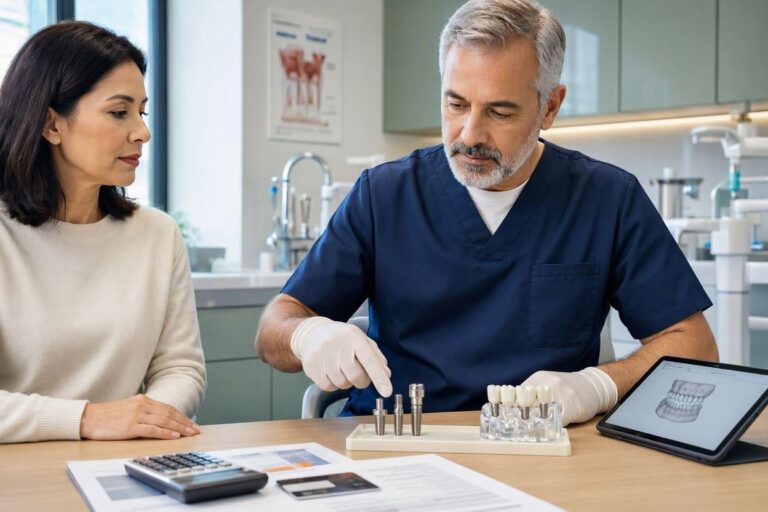
Let’s talk honestly about money. Periodontal treatment and dental implants are investments. They are not cheap. But neither is losing your teeth.
Most dental insurance plans cover some periodontal treatment, especially non-surgical care like scaling and root planing. Coverage for surgery varies widely. Implants are often considered “major” services with lower coverage limits or waiting periods.
Here is a rough idea of costs in the Alpharetta area. These are estimates and will vary by provider and complexity.
| Procedure | Typical Cost Range (without insurance) |
|---|---|
| Comprehensive periodontal exam | $150 – $350 |
| Scaling and root planing (per quadrant) | $250 – $500 |
| Pocket reduction surgery (per quadrant) | $800 – $1,500 |
| Gum graft (per area) | $1,000 – $2,500 |
| Single dental implant (post only) | $1,500 – $3,000 |
| Implant crown | $1,500 – $3,000 |
| Bone graft for implant site | $500 – $1,500 |
Many periodontists offer payment plans or financing options. CareCredit is a common healthcare credit card accepted by most specialists. Do not let cost stop you from getting a consultation. Most offices will provide a written treatment plan with all costs before you commit to anything.
Choosing the Right Periodontist in Alpharetta
Alpharetta has many excellent dental specialists. But not all periodontists are the same. Here is what to look for.
Board certification means the periodontist has passed rigorous written and oral exams beyond their basic training. It is not required, but it is a strong indicator of commitment to excellence.
Technology matters. Modern periodontists use 3D imaging, digital treatment planning, and sometimes lasers for gum surgery. These technologies make procedures more accurate and comfortable.
Experience with your specific problem. A periodontist who places hundreds of implants a year is different from one who places a few dozen. Ask how many similar cases they have treated.
Patient reviews give you a sense of bedside manner. Look for comments about pain management, clear communication, and follow-up care.
Consultation quality. Pay attention to how you are treated during the first visit. Does the periodontist listen? Do they explain things in plain English? Do they seem rushed? Trust your gut.
Frequently Asked Questions (FAQ)
Is periodontal treatment painful?
Most procedures are done with local anesthesia, so you should not feel sharp pain during treatment. Afterward, you may have soreness similar to a deep cleaning. Over-the-counter pain relievers usually handle it well.
How long do dental implants last?
With good home care and regular checkups, implants often last 20 years or more. Many patients keep their implants for life.
Can I get an implant if I have gum disease?
Not until the gum disease is controlled. Active infection greatly increases implant failure risk. Most periodontists treat the gum disease first, then place implants.
Do gum grafts hurt afterward?
The roof of your mouth where tissue was taken can be sore for about a week. Most patients describe it as more annoying than painful. Your periodontist will give you specific pain management instructions.
Will my insurance cover implants?
Some plans cover a portion, especially if the tooth was lost due to an accident or a covered medical condition. Many plans consider implants cosmetic or elective. Check your policy carefully.
Are mini implants as good as regular implants?
Mini implants are smaller and weaker. They work well for stabilizing lower dentures but are not recommended for replacing individual teeth in high-bite-force areas.
How soon can I return to work after implant surgery?
Most people take the day of surgery off. Many return to desk jobs the next day. If you have physical labor or lots of talking, you may want two to three days.
Can a periodontist whiten my teeth?
Generally no. Periodontists focus on gums, bone, and implants. Teeth whitening is usually done by a general dentist or cosmetic dentist.
Additional Resource
For reliable, research-backed information on gum disease and dental implants, visit the American Academy of Periodontology’s patient education page:
https://www.perio.org/for-patients/
This resource offers detailed guides, videos, and a specialist finder tool.
Conclusion
Healthy gums are the foundation of a healthy smile. Periodontal disease is common but treatable, especially when caught early. Dental implants offer a strong, natural-feeling solution for missing teeth that preserves bone and facial structure. By working with a skilled periodontist in Alpharetta, following recommended treatments, and committing to excellent home care, you can keep your smile comfortable, functional, and beautiful for life.