Are Dental Implants Covered By Humana PPO?
Dental implants are a significant investment in your health and confidence. It is natural to look for ways to manage the cost. One of the first questions people ask is about insurance. Specifically, many want to know: “Are dental implants covered by Humana PPO?” The answer is not a simple yes or no. It requires a closer look at how dental insurance works and the specific details of your plan. This guide will help you understand what to expect from a Humana PPO plan when it comes to dental implants.
Understanding the Basics of Dental Insurance
First, it is crucial to understand that dental insurance is different from medical insurance. Medical insurance is designed to protect you from catastrophic, unexpected costs. Dental insurance is more like a benefit for preventive care and basic procedures.
Most dental plans follow a 100-80-50 structure.
- 100% coverage for preventive care like cleanings and exams.
- 80% coverage for basic services like fillings.
- 50% coverage for major services like crowns, bridges, and dentures.
Dental implants fall into a unique category. For many years, insurance companies classified them as “cosmetic” and offered no coverage at all. This has slowly changed as implants have become the standard of care. However, coverage is still often limited and comes with many conditions.
Humana PPO and Dental Implants: A Complex Relationship
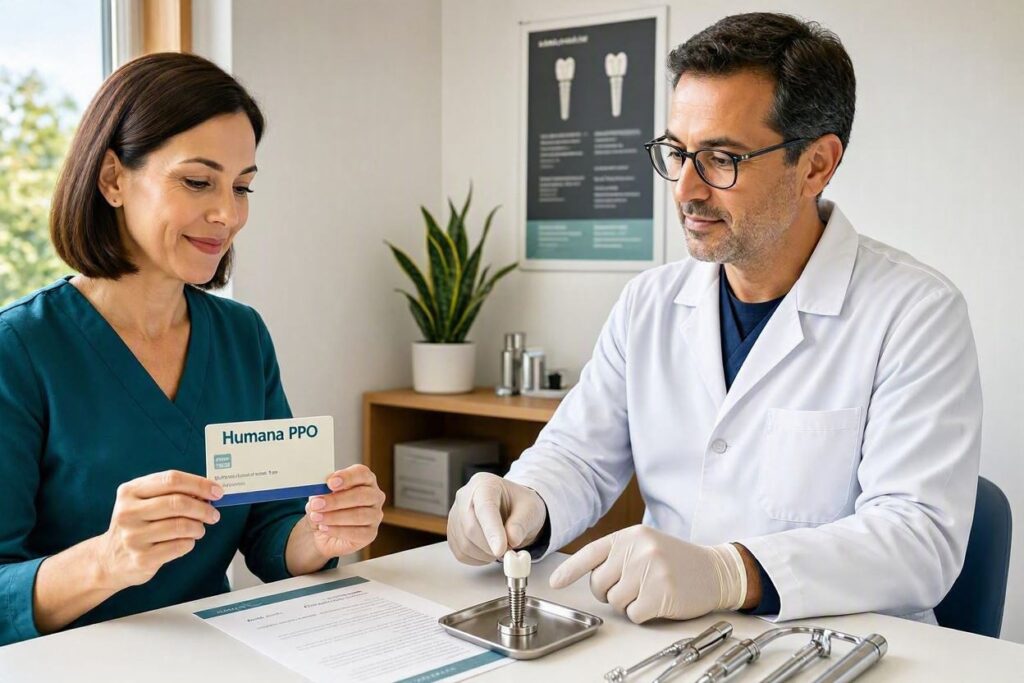
Humana is one of the largest dental insurance providers in the United States. They offer a variety of PPO (Preferred Provider Organization) plans. A PPO plan gives you the flexibility to see any dentist, but you save the most money by staying “in-network.”
So, does Humana PPO cover dental implants? The answer is: it depends on your specific plan. Humana offers many different plans to employers and individuals. Some of their higher-tier plans do include coverage for implants. Others do not.
The Role of Waiting Periods
If your plan does offer coverage for implants, you will almost certainly face a waiting period. This is a set amount of time you must be enrolled in the plan before you can use major benefits. For a Class III or Class IV procedure like implants, this waiting period is often 6 to 12 months. You cannot buy a plan today and get an implant covered next week.
The Annual Maximum
This is the most critical number to understand. Your dental insurance plan has an annual maximum. This is the total dollar amount the insurance company will pay for your care in a single year. For most Humana PPO plans, this maximum is between $1,000 and $2,000.
A single dental implant, including the surgery, the abutment, and the crown, can cost anywhere from $3,000 to $6,000 or more. Even with 50% coverage, your insurance benefit would likely be capped by your annual maximum. This means your insurance will only pay a small portion of the total cost, up to that maximum limit.
What a Typical Humana PPO Plan Might Look Like
To illustrate, let’s look at a hypothetical example of a common Humana PPO plan.
| Service Category | Coverage Level | Notes |
|---|---|---|
| Preventive (Cleanings, Exams) | 100% | No waiting period |
| Basic (Fillings, Simple Extractions) | 80% | 3-month waiting period |
| Major (Crowns, Dentures) | 50% | 6-month waiting period |
| Dental Implants | 50% (if included) | 12-month waiting period often applies |
| Annual Maximum Benefit | $1,500 | This is the total the plan pays per year |
As you can see, even with 50% coverage, the $1,500 annual maximum significantly limits the benefit for a multi-thousand-dollar procedure.
The “Missing Tooth Clause”
This is a common obstacle in dental insurance. Many plans include a “missing tooth clause.” This states that the plan will not cover the replacement of a tooth that was missing before you enrolled in the plan.
The insurance company’s logic is simple: you bought the plan to fix an existing problem, which is a higher risk for them. If you lost a tooth years ago and now want an implant, your Humana PPO plan may deny the claim for the implant and crown, even if the plan otherwise covers implants.
How to Find Out What Your Plan Covers
Do not rely on guesswork. You need to verify your specific benefits. Here is a step-by-step guide:
- Log in to your Humana member portal. Your online account will have a detailed breakdown of your benefits.
- Read your Evidence of Coverage (EOC) or Summary of Benefits. This is a legal document that explains exactly what is covered and what is excluded. Look for the words “dental implants,” “implant services,” or “oral surgery.”
- Call the number on the back of your insurance card. Speak with a Humana customer service representative. Ask them directly: “Does my plan provide coverage for dental implants?” and “Are there any waiting periods or exclusions I should be aware of?”
- Get a Pre-Treatment Estimate. This is the most important step. Have your dentist submit a treatment plan to Humana. Humana will then send you a written estimate outlining exactly what they will pay for and what your out-of-pocket responsibility will be. This avoids surprises.
Working with an In-Network Dentist
Choosing a dentist who is in the Humana network is vital. In-network dentists have agreed to accept lower, negotiated fees for services. This immediately reduces your cost, even before your insurance pays its portion.
A dentist who is out-of-network may charge higher fees. Your insurance will then pay a percentage of their “Usual, Customary, and Reasonable” (UCR) fee, which may be much lower than the actual fee. You would be responsible for the difference (balance billing). Always try to choose an in-network provider for major work like implants.
Strategies for Maximizing Your Benefits
Even with limited coverage, you can use your insurance strategically.
- Split the procedure across two years. The implant process takes months. You might have the surgical placement (the implant post) done in late fall. This will use up this year’s benefits. Then, after the new year begins and your annual maximum resets, you can have the abutment and crown placed. This allows you to use two years’ worth of maximum benefits for one implant.
- Pair with a Health Savings Account (HSA) or Flexible Spending Account (FSA). Use pre-tax dollars from these accounts to pay for your out-of-pocket costs. This can save you 20-30% on your portion of the bill.
- Consider a supplemental dental plan. Some companies offer supplemental insurance specifically designed for dental implants.
Important Notes for Readers
- Coverage is Never Guaranteed: Even if your plan covers implants, Humana must approve the procedure. They will review X-rays and your dentist’s narrative to determine if the treatment is “medically necessary.”
- Alternatives May Be Covered: Your plan may deny coverage for an implant but offer to cover a cheaper alternative, like a bridge or a partial denture. This is called the “Least Expensive Alternative Treatment” (LEAT) clause. You can still choose the implant, but the insurance will only reimburse you for the amount they would have paid for the bridge.
- Plans Change: Benefits change every year. A plan that covers implants this year might not cover them next year. Review your benefits annually.
- The Value Proposition: Even with limited insurance, many patients find that the long-term value, comfort, and health benefits of an implant justify the cost, especially when using the strategies above to offset the expense.
A Dentist’s Advice
“Patients often come in thinking their insurance will cover most of the implant. They are then disappointed when they see the final bill. That’s why we always do a pre-treatment estimate. It removes the guesswork and lets the patient make a financial decision based on facts, not hope.” – Dr. Alan Reed, DMD
The Bottom Line
So, can Humana PPO cover dental implants? Yes, it can, but with significant caveats. Your specific plan must include the benefit. You will likely face a long waiting period. Your annual maximum will limit the payout. And a missing tooth clause could lead to a denial. The best course of action is to thoroughly investigate your own plan and work with your dentist’s office to get a precise pre-treatment estimate. Treat insurance as a helpful discount, not a full payment, and you will be better prepared for the financial reality of dental implants.
Frequently Asked Questions (FAQ)
Q: Will Humana PPO cover a dental implant if I lost the tooth in an accident?
A: Possibly. If the tooth loss was recent and the result of an accident, your medical insurance might cover part of the cost. Your Humana dental plan may also cover it if you have a rider for it. You will need to provide documentation of the accident. Contact your provider to explain the situation.
Q: What if my Humana plan denies my implant claim?
A: You have the right to appeal. Your dentist can write a letter of medical necessity explaining why an implant is a better option than a bridge or denture for your specific oral health. The appeals process can be slow, but it is sometimes successful.
Q: Does Humana offer any plans specifically with better implant coverage?
A: Yes. Humana offers higher-tier PPO plans and some dental savings plus plans that offer discounted rates on implants. These plans have higher premiums but may offer more generous benefits for major services. Compare plans carefully before enrolling.
Q: Are there cheaper alternatives that Humana fully covers?
A: Humana will almost always cover a portion of a dental bridge or a removable partial denture. These are considered standard major services. While not as stable or bone-preserving as an implant, they are a viable option if budget is your primary concern.
Additional Resource
To explore the different types of dental insurance plans and how they work, you can visit the official government website for healthcare: https://www.healthcare.gov/dental-coverage/