Are Dental Implants Extremely Stable?
When you lose a tooth, you face a decision. You can choose to live with the gap, get a bridge, or consider dentures. But in modern dentistry, one solution stands out for its strength and longevity: the dental implant. A common question people ask is, “Are dental implants extremely stable?” The short answer is yes. In fact, they are widely considered the most stable tooth replacement option available today. But why is that? What makes them so secure? This guide will explore the science, the process, and the real-world experience of living with dental implants. We will look at why they feel so solid and what factors contribute to their remarkable stability.
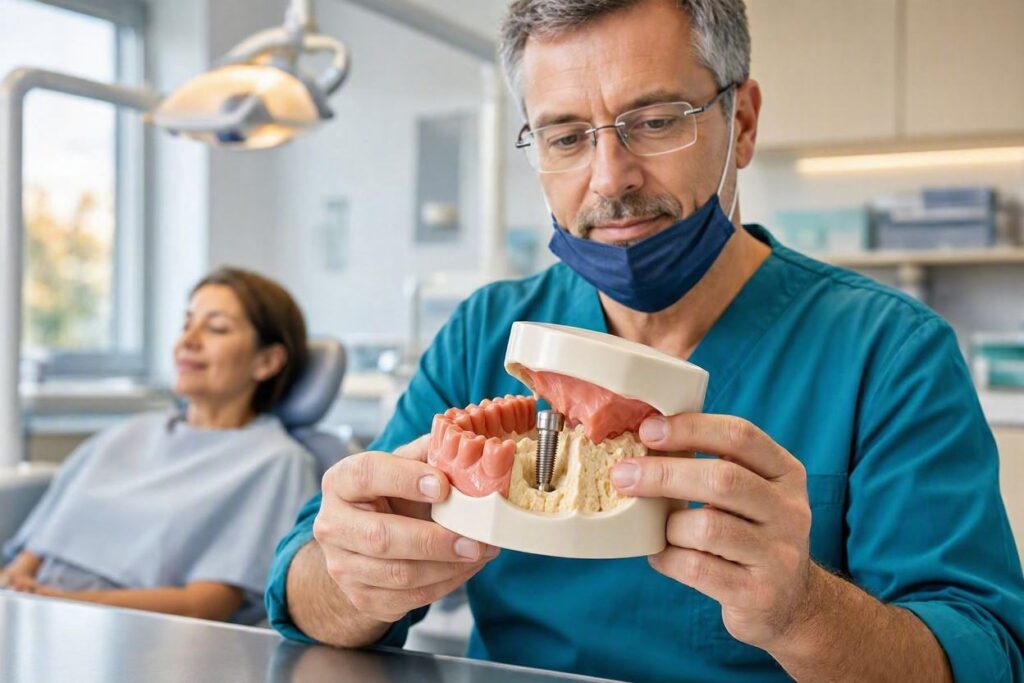
Understanding the Anatomy of Stability
To understand why a dental implant is stable, you need to understand its design. A traditional dental bridge relies on neighboring teeth for support. Dentures rest on your gums. A dental implant, however, replaces the tooth root itself. This is a crucial difference. It is the key to its superior stability.
The Titanium Post: Your New Root
The implant itself is a small, screw-shaped post. Surgeons make it from biocompatible materials, most often titanium. Biocompatible means your body accepts it. It does not see the implant as a foreign invader. Instead, the bone in your jaw treats it like a natural part of your body.
The Abutment: The Connector
Once the implant fuses with your jawbone, a small connector piece called an abutment attaches to the top. This piece sits just above the gum line. Its job is simple: it connects the implant post to your new, visible tooth.
The Crown: The Visible Tooth
The final piece is the crown. This is the prosthetic tooth, usually made of porcelain or ceramic. Your dentist custom-makes it to match the shape and color of your other teeth. It attaches securely to the abutment.
Osseointegration: The Secret to Success
The true secret behind the extreme stability of dental implants is a biological process called osseointegration. This is a fancy term for a simple concept: bone fusion.
When a surgeon places the titanium implant into your jawbone, the bone cells begin to grow. They grow directly onto the rough surface of the titanium. Over several weeks or months, the bone and the implant become locked together. They are not just touching; they are fused.
This creates a foundation that is as solid as a natural tooth root. It can withstand the immense forces of chewing and biting. A denture can slip. A bridge can weaken. But an osseointegrated implant is a permanent part of your body’s structure. This is why we can say with confidence that they are extremely stable.
Stability Compared to Other Options
How does an implant stack up against dentures or bridges? The difference is night and day for many patients. Dentures sit on the gums. They can move when you talk, laugh, or eat. Adhesives are messy and unreliable. They restore only a fraction of your natural chewing power.
A dental bridge is more secure than dentures, but it has drawbacks. To place a bridge, the dentist must file down the healthy teeth on either side of the gap. These teeth then support the bridge. This can weaken them. Food can get trapped underneath, leading to decay. The bridge does not replace the root, which means the jawbone beneath the empty space may begin to deteriorate.
Dental implants avoid these problems. They do not rely on other teeth. They stand alone. They provide a level of biting force that is very close to natural teeth. You can eat apples, steak, and corn on the cob with confidence.
Factors That Ensure Maximum Stability
While dental implants are designed for stability, several factors contribute to their long-term success. A good candidate will have healthy gums and adequate bone density in the jaw. If you have lost bone, a bone graft may be necessary to create a solid base.
The skill of your dental surgeon is another critical factor. Proper placement ensures the implant is in the strongest possible position. Your role is also important. Maintaining excellent oral hygiene protects the bone and gum tissue that support the implant. Avoiding smoking is also crucial, as it interferes with healing and osseointegration.
The Reality of Living with Implants
Imagine you are eating a sticky caramel candy. With dentures, this is a risky situation. The denture could dislodge. With an implant, you do not think twice. It feels like your own tooth. This is the feeling of stability.
Patients often report that after a while, they forget they even have an implant. It becomes a part of them. There is no clicking sound, no movement, and no pain from a healthy, healed implant. They brush and floss it like a natural tooth. This seamless integration is the ultimate goal.
Long-Term Success Rates
The data supports the experience. Dental implants have a reported success rate of over 95%. Many studies show that with proper care, implants can last a lifetime. This is far superior to bridges and dentures, which often need repair or replacement every 5 to 15 years. This long-term reliability is a testament to the enduring stability of the osseointegrated bond.
A Summary of Stability Factors
| Feature | Dental Implant | Dental Bridge | Removable Denture |
|---|---|---|---|
| Support System | Fuses to jawbone (Osseointegration) | Relies on adjacent teeth | Rests on gums |
| Biting Force | Nearly 100% of natural force | Reduced biting force | 20-30% of natural force |
| Jawbone Health | Stimulates bone, prevents loss | Does not stimulate bone | Accelerates bone loss |
| Stability Rating | Extremely Stable | Moderately Stable | Unstable |
| Longevity | Lifetime (with care) | 5-15 years | 5-10 years |
| Impact on Other Teeth | None | Requires filing down healthy teeth | Can cause wear on remaining teeth |
A Patient’s Experience
“I had a partial denture for years, and I hated it. It was always moving. I was afraid to eat in public. When I finally got a dental implant, it was life-changing. It feels exactly like my other teeth. I don’t even think about it anymore. It’s just solid.” – Mark T., Implant Patient
Important Notes for Readers
- Healing Takes Time: The stability is not instant. It develops over time as the bone fuses with the implant. The final crown is placed only after this process is complete.
- Not Everyone is an Immediate Candidate: If your jawbone is too soft or thin, your dentist will recommend a bone graft to improve the foundation.
- Maintenance is Key: Implants are highly stable, but they are not invincible. Gum disease (peri-implantitis) can destroy the bone around an implant, leading to failure. Good hygiene is non-negotiable.
- Beware of “Too Good to Be True” Deals: Extremely cheap implant offers may use lower-quality materials or skip crucial steps, which can compromise long-term stability. Always choose a qualified and experienced dental professional.
Conclusion
Dental implants are extremely stable because they uniquely replace the entire structure of a missing tooth, from root to crown. Through the process of osseointegration, the titanium implant becomes permanently fused with the jawbone, providing a foundation that no other tooth replacement option can match. This results in a solution that looks, feels, and functions like a natural tooth, offering a lifetime of confident smiles and unrestricted eating.
Frequently Asked Questions (FAQ)
Q: How long does it take for a dental implant to become stable?
A: The initial osseointegration process typically takes 3 to 6 months. The implant is considered fully stable once this fusion is complete and the final crown is placed. Your dentist will test the implant’s stability before attaching the final tooth.
Q: Can a stable dental implant still fail?
A: Yes, it is possible, though rare. The most common cause of late failure is peri-implantitis, a gum infection that destroys the supporting bone. Poor oral hygiene, smoking, and certain medical conditions can increase this risk.
Q: Does it hurt when the bone fuses with the implant?
A: No. The osseointegration process is painless. You will feel normal post-surgical soreness for a few days after the placement, but the actual fusion of bone to titanium happens at a microscopic level and is completely unnoticeable.
Q: Is a dental implant more stable than a natural tooth?
A: A healthy natural tooth is slightly more stable due to the periodontal ligament, which acts as a shock absorber. An implant is more rigid. However, for practical purposes, an implant provides a level of stability that feels identical to a natural tooth for the patient.
Additional Resource
For more in-depth information on the materials and safety of dental implants, you can refer to the U.S. Food and Drug Administration (FDA) page on dental implants: https://www.fda.gov/medical-devices/dental-devices/dental-implants