Are Dental Implants Permanent?
The word “permanent” is used heavily in dental advertising. You see billboards promising “Permanent Teeth in a Day.” You hear radio ads for “Permanent Dentures.” It sounds reassuring. It suggests you will never have to worry about your teeth again.
But is it true? Are dental implants truly permanent?
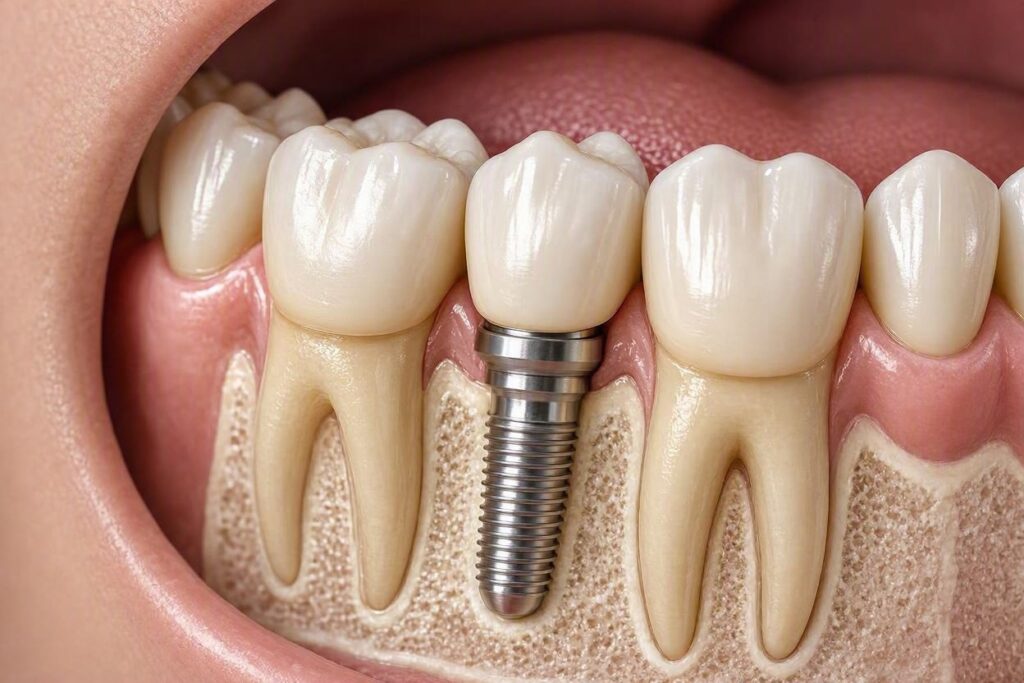
The answer requires nuance. The implant itself—the titanium post surgically placed in your jawbone—is designed to be a lifelong fixture. It is intended to be permanent. However, the restoration—the crown, bridge, or denture attached to that post—is not permanent. It is a wearable part that will likely need replacement at some point.
It is similar to a car. The engine block is built to last the life of the car, but the tires and brake pads wear out.
This guide will explain the reality of implant longevity. We will look at what lasts forever, what breaks, and how you can ensure your investment truly does last a lifetime. We will avoid the hype and give you the clinical truth.
Understanding “Permanent” in Dentistry
In medicine, very few things are truly permanent. Joint replacements wear out. Heart valves need replacing. Teeth—even natural teeth—are not permanent. They decay, break, and fall out.
When dentists say “permanent,” they usually mean “fixed” or “non-removable.” They mean the device does not come out of your mouth like a traditional denture. It is a crucial distinction.
The Three Layers of an Implant:
- The Fixture (The Screw): This is the root replacement.
- The Abutment (The Connector): This links the root to the tooth.
- The Crown (The Tooth): This is the part you chew with.
Each layer has a different lifespan.
The Implant Fixture: Built to Last a Lifetime
This is the part that is inserted into the bone. It is usually made of commercially pure titanium or a titanium alloy. Sometimes it is made of zirconia (a high-strength ceramic).
Why It Lasts
Titanium is biocompatible. The body does not recognize it as a foreign invader. Instead, the bone cells attach directly to the surface. This process, osseointegration, is the key to permanence.
Once the bone has fused to the implant, the implant is effectively part of your skeleton. It is shielded from the air, from bacteria, and from wear. It sits quietly under the gum, doing its job.
The Statistics:
Long-term studies tracking dental implants over 20 to 30 years show a survival rate of 92% to 95%. This is higher than the success rate of many hip replacements or knee replacements.
Can it fail?
Yes. While the metal itself does not “break down,” the bone around it can be lost.
- Peri-implantitis: This is gum disease affecting the implant. Just like natural teeth, if plaque builds up, the gum becomes inflamed. If left untreated, the inflammation destroys the bone holding the implant. The implant becomes loose.
- Overloading: If too much force is placed on the implant (often from grinding teeth or an ill-fitting bite), the bone can die back.
The Verdict on the Fixture: If you take care of your gums, and you have a healthy body, the titanium screw itself should last your lifetime. It is the most permanent part of the system.
The Abutment: The Silent Worker
The abutment is the small post that connects the implant to the crown. It is the middleman.
Does it last forever?
Abutments are incredibly strong. They are usually made of solid titanium or zirconia.
However, this is the part where mechanical failure often occurs. The small screw that holds the abutment to the fixture (or the crown to the abutment) can sometimes fracture or loosen.
- Loosening: This is common. The screw can vibrate loose over years of chewing. It is usually a simple fix: the dentist opens the crown, tightens the screw, and seals it back up.
- Fracture: If the patient grinds their teeth heavily, or if the implant was placed at an awkward angle, the abutment screw can snap. When this happens, the top part (the tooth) falls off. The implant fixture in the bone is usually still fine. The dentist must drill out the broken screw. This is a tedious repair but does not usually mean the implant has failed.
The Verdict on the Abutment: The abutment itself rarely breaks, but its connection screw is a consumable part. Think of it like a fan belt in a car. It may need replacing once or twice over a 20-year period.
The Crown or Denture: The Wear and Tear Zone
This is the part you see. It is made of porcelain, zirconia, or acrylic (for dentures). This part is not permanent.
Why It Wears Out
Imagine chewing with natural teeth. Over a lifetime, natural teeth flatten and wear down. The same happens to implant crowns. You are putting thousands of pounds of pressure on this porcelain every month.
Factors that shorten the life of the crown:
- Grinding (Bruxism): If you grind your teeth at night, you will sand down the porcelain quickly.
- Chipping: Biting down on a hard object (an olive pit, a bone, a fork) can chip the porcelain.
- Staining: While porcelain resists stains better than natural teeth, the edges can become dull over time.
The Lifespan of the Restoration
- Single Crowns: A well-made single crown on an implant can last 10 to 15 years. Some last 20+ years. However, the gums may recede, showing the metal edge, or the porcelain may chip, requiring replacement.
- Implant Dentures (Hybrids): The teeth and the acrylic gum tissue wear down much faster. The acrylic can stain and harbor bacteria. Most providers recommend replacing or refurbishing the “teeth” part of an implant denture every 7 to 10 years.
Important Note: When a dentist quotes you a price for an implant, they are often quoting the price for the surgery and the first set of teeth. They rarely discuss the future cost of replacing those teeth. You need to ask: “What is the long-term maintenance plan, and what does it cost?”
The “Permanent Teeth in a Day” Misconception
This is a marketing phrase that has caused a lot of confusion. It refers to a specific protocol (like All-on-4) where you get your failing teeth removed and a temporary fixed bridge attached to implants on the same day.
It means the teeth are “fixed” (you cannot remove them) immediately.
It does NOT mean:
- The treatment is finished. You must come back in 4-6 months for the final, stronger bridge.
- The bones and gums have healed. The temporary bridge is just that—temporary.
- The teeth will last forever. The first bridge is usually acrylic and is replaced within a year.
If a clinic implies that “Teeth in a Day” means “you are done forever after one day,” they are misleading you. The final, high-strength zirconia bridge takes months to fabricate and costs more money.
How to Make Your Implants Last a Lifetime
The “permanence” of dental implants is a partnership between the dentist and the patient. You cannot just get the surgery and forget about it.
1. The Hygiene Regime
You must brush and floss. But you need special tools.
- Water Flosser: Essential for cleaning under a fixed bridge.
- Interdental Brushes (Proxabrushes): To clean around the implant posts.
- Superfloss: To thread under the gum line.
If you do not clean the implant, plaque hardens into calculus (tartar). This triggers the body’s inflammatory response, which leads to bone loss. This is the number one cause of “permanent” implants failing.
2. Regular Maintenance Visits
You must see your dentist or periodontist at least once a year, preferably twice.
- They will take X-rays to check the bone levels around the implant.
- They will remove the crown or bridge (if it is screw-retained) to inspect the screws and clean the areas you cannot reach.
- They will check your bite. If your other teeth shift, they might put too much pressure on the implant.
3. A Night Guard
If you grind your teeth, you need a hard night guard. This plastic shield absorbs the force of grinding. Without it, you will crack the porcelain or loosen the screws.
The Verdict
So, are dental implants permanent?
The implant post is intended to be permanent. The titanium fixture in your bone is a lifetime solution in the vast majority of cases.
The teeth attached to them are not permanent. They are high-quality prosthetics that require care and eventual replacement.
Do not be scared away by the fact that the crowns need replacing. Even natural teeth require crowns, fillings, and repairs over a lifetime. The difference is that a titanium implant root will never get a cavity. It will never need a root canal. It is the most durable, reliable tooth replacement option modern medicine has ever produced.
If you are looking for a “forever” fix, dental implants are the closest thing dentistry can offer, provided you hold up your end of the bargain with daily cleaning and regular check-ups.
Frequently Asked Questions
Q: Can dental implants rust or corrode?
A: Titanium is highly resistant to corrosion. It does not rust in the way iron does. However, trace amounts of titanium particles can sometimes be found in the surrounding tissue, but this is generally considered safe and does not weaken the implant.
Q: What happens to dental implants when you get old?
A: The implants stay in the bone. As long as you can maintain oral hygiene (or have a caregiver help you), the implants remain functional. The challenge for the elderly is often dexterity—being able to clean them effectively.
Q: Is it possible to have an implant for 40 years?
A: Yes. The first dental implant patient (Gösta Larsson in 1965) lived for 40 years with his implants until he passed away. The implants were still functional and in place at the time of his death.
Q: Does insurance cover the replacement of the crown?
A: Some dental insurance plans cover a portion of the crown replacement if enough time has passed (usually 5+ years). However, many plans have a “missing tooth clause” or a low annual maximum. You should budget for the replacement yourself.
Additional Resource:
For long-term statistical data on implant survival rates, you can refer to the International Congress of Oral Implantologists: https://www.icoi.org/.