Dental Code D2941: A Complete Guide to Sedative Fillings
If you’ve ever visited the dentist with a nagging toothache, only to leave with a temporary-looking filling and a prescription for sensitivity toothpaste, you might have encountered a procedure known to insurance companies as Dental Code D2941.
For patients and dental professionals alike, the world of dental coding can feel like a maze of numbers and jargon. Understanding what these codes mean, however, is essential—not only for budgeting for your care but also for understanding exactly what treatment your dentist is recommending.
In this guide, we’re going to pull back the curtain on D2941. We’ll explore what it is, when it’s used, how it differs from a standard filling, and what you can expect regarding costs and insurance coverage. Whether you are a patient trying to decipher a treatment plan or a professional looking for a clear resource, you’re in the right place.

What is Dental Code D2941? The “Soothing” Filling
Let’s start with the basics. In the Current Dental Terminology (CDT), Dental Code D2941 is officially described as: “Interim therapeutic restoration (ITR) — primary dentition.” However, in common practice, it is often referred to by its function: a sedative filling.
Think of D2941 as the dental equivalent of first aid for a tooth. It is not the final, permanent solution (like a crown or a permanent composite filling), but rather a stabilizing treatment designed to calm an irritated nerve and protect the tooth from further decay in the short term.
The primary goal of this procedure is therapeutic. It aims to:
-
Sooth an irritated or inflamed pulp (nerve).
-
Seal the tooth to prevent new bacteria from entering.
-
Stabilize active decay in a tooth that cannot be treated definitively in a single visit.
Important Note: While the official CDT book definition specifies primary (baby) teeth, many general dentists use a similar technique on permanent teeth for therapeutic relief, often billing a related code or using D2941 based on payer policy. Always check with your specific insurance provider to see how they interpret the code.
The “Interim” Aspect: Why Not Just Do a Permanent Filling?
This is the most common question patients ask: “If my tooth hurts, why are you putting in a temporary filling instead of fixing it for good?”
The answer lies in the word interim. A sedative filling (D2941) buys time. There are several scenarios where a dentist cannot or should not place a permanent restoration immediately:
-
Irreversible Pulpitis? Let’s Wait and See: If a tooth is deeply decayed and close to the nerve, the dentist may not know if the nerve is infected or just inflamed. Placing a deep permanent filling on an angry nerve can sometimes cause more pain. By placing a sedative filling, the dentist gives the tooth time to “calm down.” If the pain subsides, a permanent filling can be placed later. If the pain worsens, it confirms the need for a root canal.
-
Medical Complexity: For patients with complex medical histories or severe dental anxiety, keeping the appointment time short is a priority. A sedative filling can be placed quickly to stabilize the decay, allowing the patient to return for a longer appointment when they are more comfortable.
-
Pediatric Patients: For young children who may have difficulty sitting still for a long procedure, an interim therapeutic restoration (ITR) is a fantastic way to halt decay and buy time until the child is ready for a traditional restoration or until the tooth is ready to exfoliate (fall out).
Clinical Scenario: The Step-by-Step Process
So, what actually happens when your dentist performs a D2941 procedure? It is generally faster and less invasive than a standard filling.
-
Assessment: The dentist identifies the tooth with active decay or deep sensitivity.
-
Anesthesia (Optional): Depending on the depth of the decay and the patient’s comfort level, local anesthetic may or may not be used. Because the procedure is less invasive than a full excavation, it sometimes requires no shots.
-
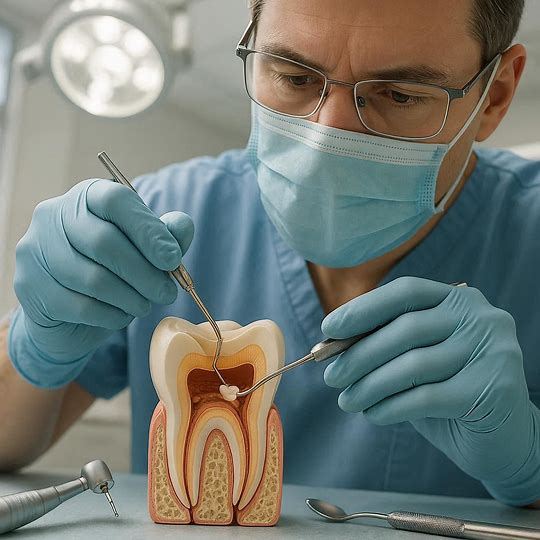
Selective Excavation: The dentist removes the soft, infected dentin (the layer under the enamel) using a hand instrument or a slow-speed drill. However, they do not necessarily remove all the decay. The goal is to remove enough to stop the active progression of the cavity and remove the soft, necrotic tissue, while leaving some firm dentin to protect the pulp.
-
Placement of the Material: A biocompatible, sedative material is placed into the prepared tooth. Historically, this was often zinc oxide eugenol (ZOE), known for its soothing properties. Today, it might be a glass ionomer or other therapeutic base.
-
Sealing: The material is shaped and left in place to harden. It seals the tooth, preventing saliva and food debris from leaking in and irritating the nerve further.
D2941 vs. Other Common Dental Codes
One of the biggest sources of confusion is how D2941 differs from other codes. Let’s clear that up with a simple comparison table.
| Feature | D2941 – Sedative Filling (Interim Restoration) | D2391 – Permanent Filling (Composite, 1 surface) | D1351 – Sealant |
|---|---|---|---|
| Purpose | Therapeutic; to soothe nerve and stop active decay temporarily. | Restorative; to restore form and function permanently. | Preventive; to protect grooves from future decay. |
| Longevity | Short-term (weeks to months). | Long-term (years). | Long-term (years). |
| Decay Removal | Partial (selective excavation). | Complete (removal of all decay). | None (placed on healthy enamel). |
| Material | Often sedative (ZOE) or glass ionomer. | Composite resin (tooth-colored) or amalgam. | Resin-based or glass ionomer. |
| Typical Patient | Patients with pulpitis, children, medically compromised. | General population. | Children and teens (primarily). |
D2940 vs. D2941: A Quick Clarification
You might also see a code called D2940 (Protective Restoration). While they sound similar, they are different.
-
D2940 is typically a small “filling” placed in a deep groove or pit to protect a weak area, often as a preventive measure or to cover a small area after a sealant has failed. It is not necessarily sedative.
-
D2941 is specifically aimed at teeth with active decay or symptomatic pulpitis and uses a therapeutic material to calm the nerve.
The Financial Side: Cost and Insurance Coverage for D2941
Understanding the cost of a dental procedure is often the most stressful part for patients. Here’s a realistic look at what to expect with a D2941.
Out-of-Pocket Costs
Because this is an interim procedure, the cost is generally lower than that of a permanent filling. Depending on your geographic location and the dentist’s fee schedule, you can expect to pay anywhere from $75 to $150 for a sedative filling. This is often significantly less than a permanent composite filling, which can range from $150 to $300+ per tooth.
Insurance Considerations
This is where things get tricky. Because D2941 is a therapeutic or interim service, insurance coverage varies wildly.
-
Not a Permanent Fix: Insurance companies are in the business of paying for permanent solutions. Since a sedative filling is temporary, some insurers view it as a step toward the final restoration rather than the final treatment itself.
-
Bundling: Some insurance plans may bundle the cost of the D2941 into the permanent restoration if they are done within a certain timeframe. For example, if you have a sedative filling in January and the permanent crown in February, the insurance might apply the cost of the sedative filling to your annual deductible but count the permanent crown as the primary benefit.
-
Frequency Limitations: You will almost never be reimbursed for two D2941 procedures on the same tooth. It is a one-and-done interim step.
Patient Tip: Before you leave the office, ask the front desk to run an insurance eligibility check. Ask specifically: “How does my plan cover code D2941, and will it affect my coverage if I need a permanent filling on the same tooth in a few months?”
Who Benefits Most from a D2941?
While it is a versatile code, certain groups of patients find this procedure particularly beneficial.
For Children and Special Needs Patients
The official ITR designation is a gift for pediatric dentistry. For a young child with multiple cavities, performing a full composite restoration on every tooth might require general anesthesia or multiple stressful visits. A D2941 allows the dentist to quickly arrest the decay, desensitize the tooth, and protect it until the child is more cooperative or until the tooth falls out naturally.
For Patients with “Hot” Teeth
If you have a tooth that is throbbing due to a deep cavity but you cannot afford or are not ready for a root canal and crown, a D2941 can be a lifeline. It provides relief by sealing the tooth from irritants, often reducing the pain significantly within 24 hours.
For Medically Complex Patients
Patients undergoing chemotherapy, radiation, or those with conditions that make long dental appointments risky can benefit from the speed and minimal invasiveness of a D2941 to manage dental disease during their treatment window.
The Pros and Cons You Should Know
Like any dental procedure, the sedative filling has its advantages and disadvantages.
Advantages
-
Pain Relief: It is highly effective at soothing irritated nerves.
-
Speed: The procedure is quick, often taking less time than a traditional filling.
-
Minimally Invasive: Less drilling often means less stress for the patient.
-
Cost-Effective: It is cheaper than a permanent restoration in the short term.
Disadvantages
-
Temporary Nature: It is not a permanent fix. It will wear down, fracture, or leak over time (usually within a year).
-
Potential for Two Visits: You may have to pay for this procedure and pay for the permanent restoration later, effectively doubling your co-pays for the same tooth.
-
Not a Cure: While it soothes symptoms, it doesn’t always “heal” the tooth. If the nerve was already dying, the pain may return, necessitating a root canal.
FAQ: Your Burning Questions Answered
To make this guide as useful as possible, here are answers to some of the most frequently asked questions about Dental Code D2941.
Q: Is a D2941 the same as a temporary crown?
A: No. A temporary crown (code D2970 or similar) is used to cover a tooth that has already been prepared for a permanent crown. D2941 is a filling material placed directly into a tooth with decay to sedate the nerve.
Q: Will my dental insurance cover 100% of D2941?
A: Unlikely. Most insurance plans cover preventive care at 100%, but restorative and therapeutic codes like D2941 usually fall under your basic restorative coverage (typically 70-80% after your deductible, depending on your plan).
Q: How long does a D2941 restoration last?
A: This depends on the material used and the location of the tooth. Generally, you can expect it to last anywhere from 3 to 12 months. If it lasts longer than that, it may simply be functioning as a permanent filling, but it is more prone to fracture or leakage than a standard composite.
Q: Can I eat on a tooth after a D2941 procedure?
A: It is wise to wait until the anesthetic wears off to avoid biting your cheek. Once you are numb-free, you can eat, but you should avoid very sticky or hard foods on that tooth, as the material may not be as strong as a permanent filling.
Q: Why did my dentist use this on my permanent molar?
A: If your permanent molar was deeply decayed and very sensitive, your dentist likely used this technique to “calm the nerve down” before committing to a deep permanent filling or a root canal. It is a conservative approach to diagnosis and treatment.
Q: Can a D2941 fall out?
A: Yes, it is possible. Because it is an interim restoration, the bond may not be as strong as that of a permanent filling. If it falls out, contact your dentist immediately, as the exposed tooth will be vulnerable to decay and pain.
Conclusion: A Valuable Tool in Modern Dentistry
Understanding Dental Code D2941 helps demystify a common and highly valuable dental procedure. It represents a thoughtful, conservative approach to dentistry—one that prioritizes patient comfort and diagnostic clarity over aggressive, irreversible treatment.
While it is often confused with a permanent filling, its role as an interim therapeutic restoration is unique. It buys time, soothes pain, and helps dentists and patients make better-informed decisions about long-term oral health. Whether it is used for a child with baby teeth or an adult with a sensitive molar, the sedative filling is a perfect example of how modern dentistry aims to be both effective and patient-friendly.
Additional Resource
For the most accurate and up-to-date information on dental coding and nomenclature, the definitive source is the American Dental Association (ADA). You can explore the current CDT manual or their dental code resources here:
American Dental Association – CDT (Code on Dental Procedures and Nomenclature)