Dental Code D3221: A Complete Guide to Pulpotomies (Partial Pulp Removal)
- On
- InDENTAL CODE
If you have ever looked at a dental treatment plan and wondered what all those numbers mean, you are not alone. Dental codes, or Current Dental Terminology (CDT) codes, are the standardized language that dentists use to describe the procedures they perform. They are essential for diagnosis, treatment planning, and, most importantly, insurance billing.
One code that often causes confusion for both patients and newer dental professionals is Dental Code D3221.
If you have been told you need a pulpotomy, or if you are a dental professional looking to clarify the nuances of this procedure, you are in the right place. This guide will walk you through everything you need to know about D3221: what it is, when it is used, how it differs from a root canal, and what to expect regarding cost and recovery.
Let’s demystify this common dental procedure.
Table of Contents
ToggleWhat is Dental Code D3221?
In the simplest terms, Dental Code D3221 is defined as a “therapeutic pulpotomy (excluding final restoration).”
Let’s break that down into plain English. “Pulpo-” refers to the dental pulp (the soft tissue inside your tooth containing nerves and blood vessels), and “-tomy” means to cut or remove. Therefore, a pulpotomy is the surgical removal of a portion of the pulp.
Think of your tooth as having a hollow center. This center, the pulp chamber, extends down into the roots. In a pulpotomy, the dentist removes only the pulp from the crown (the top part of the tooth) that is diseased or infected. The healthy, vital pulp in the root canals is left intact.
The key phrase in the code definition is “excluding final restoration.” This means that Code D3221 strictly covers the surgical procedure of removing the pulp and placing a medicated dressing to soothe the nerve. It does not include the filling or crown that goes on top of the tooth afterward.
Important Note: D3221 is a procedure code, not a diagnosis. It is the “what,” not the “why.” The “why” is typically a diagnosis of reversible pulpitis or a necessary step in preserving a tooth’s vitality.
When is a D3221 Pulpotomy Necessary?
Why would a dentist only remove part of the nerve instead of the whole thing? The decision hinges on the health of the pulp and the location of the infection.
A D3221 pulpotomy is typically performed in two specific scenarios:
-
Primary (Baby) Teeth with Deep Decay: This is the most common use. When a child has a large cavity that reaches the pulp, a pulpotomy is performed to save the baby tooth. By removing the infected portion of the nerve in the crown, the tooth can be saved from extraction. This is crucial for maintaining space for the permanent tooth to come in correctly.
-
Emergency Treatment for Irreversible Pulpitis in Permanent Teeth: Have you ever had a toothache that keeps you up at night? That might be irreversible pulpitis—an inflammation of the pulp that won’t heal on its own. In an emergency setting, a dentist might perform a pulpotomy on a permanent tooth as a palliative procedure. The goal is to quickly remove the inflamed tissue in the crown to relieve excruciating pain. This is a temporary fix to buy time until a more definitive treatment (like a root canal) can be scheduled.
The Goal: Maintaining Vitality
The underlying goal of a D3221 pulpotomy is pulp preservation. Unlike a root canal (which removes all the pulp), a pulpotomy leaves the living tissue in the roots untouched. This is particularly important in younger permanent teeth where the roots are still developing. The healthy pulp allows the roots to finish forming, creating a stronger tooth structure for the future.
D3221 vs. D3220 vs. D3310: Avoiding Confusion
The world of endodontic codes can be tricky. Here is a quick comparison to help you distinguish D3221 from its close relatives.
| Procedure | CDT Code | What is Removed? | Primary Goal | Typical Tooth Type |
|---|---|---|---|---|
| Therapeutic Pulpotomy | D3221 | Pulp from the crown only. | Remove infection while preserving vital root pulp. | Primary (baby) teeth; Emergency treatment on permanent teeth. |
| Pulp Cap | D3120 / D3110 | None. A protective dressing is placed. | Seal a small exposure to allow the pulp to heal itself. | Permanent or primary teeth with small, clean exposure. |
| Pulpectomy (Root Canal) | D3310 (anterior) | All pulp tissue (from crown and roots). | Clean out all infection, fill root canals, and save the non-vital tooth. | Permanent teeth with infected or necrotic pulp. |
| Diagnostic Pulpotomy | D3220 | Pulp from the crown only. | Remove pulp to inspect the canal for diagnosis, not as a final treatment. | Primarily diagnostic for permanent teeth. |
The D3220 vs. D3221 Distinction:
This is a frequent point of confusion. Both involve removing pulp from the crown. The difference lies in the intent.
-
D3220 (Diagnostic Pulpotomy): This is exploratory. The dentist removes the pulp to see what is going on in the canal, often before deciding on a root canal.
-
D3221 (Therapeutic Pulpotomy): This is a treatment. The goal is to medicate the remaining root pulp so it stays healthy and vital. This is the code used for the vast majority of pediatric pulp treatments.
The Step-by-Step Procedure: What Happens During a D3221?
If you or your child needs this procedure, knowing what to expect can ease a lot of anxiety. Here is a realistic walkthrough of a typical D3221 pulpotomy.
-
Numbing the Area: The dentist will first apply a topical gel to numb the gums, followed by a local anesthetic (like lidocaine). You will be awake, but the tooth and surrounding area will be completely numb. For children, a calm and reassuring approach is key.
-
Isolating the Tooth: To keep the area clean and dry, the dentist will place a small rubber dam over the tooth. This looks like a small sheet of latex or non-latex material that isolates the tooth from the rest of your mouth.
-
Removing Decay: The dentist uses a high-speed drill to remove all the decay (cavity) from the tooth.
-
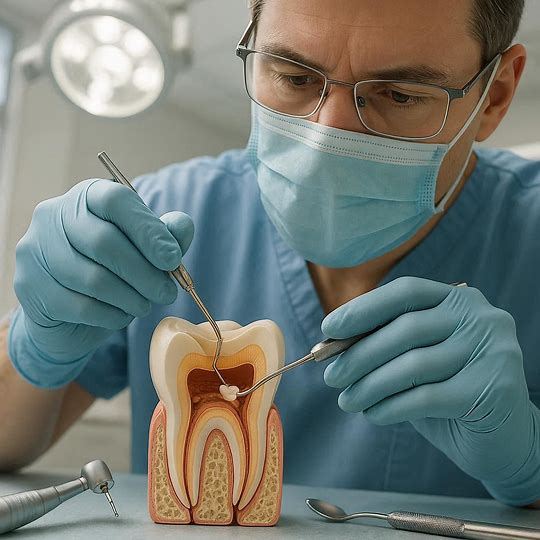
The Pulpotomy: Once the decay is gone, the top of the pulp chamber is exposed. Using a different, slower-speed bur or a specialized spoon instrument, the dentist carefully removes the coronal pulp (the pulp in the crown). You may feel some pressure, but no sharp pain.
-
Controlling Bleeding: A small pellet of medication (often formocresol, ferric sulfate, or a more modern alternative like MTA) is placed against the remaining pulp tissue in the root canals to stop any bleeding and sterilize the area. This is a critical step to ensure the remaining pulp is healthy.
-
Placing the Medicament: After a few minutes, the pellet is removed. If the bleeding has stopped as expected (indicating healthy tissue), a final medicated paste is placed directly over the healthy root pulp stumps.
-
The Final Restoration (Separate Code): The tooth is now ready for its final restoration. For a baby tooth, this is usually a stainless steel crown (code D2930). For a permanent tooth, it might be a temporary filling until the root canal is completed. Remember, this restoration is billed separately from the D3221 code.
Patient Experience: Pain, Recovery, and Aftercare
One of the biggest questions patients have is, “Will this hurt?” Here is the honest truth about the recovery process.
During the Procedure
Thanks to modern anesthetics, the procedure itself should be pain-free. The most uncomfortable part is usually the numbing shots. Once you are numb, you will only feel vibrations and pressure.
After the Procedure
Once the anesthesia wears off (usually after 2-4 hours), it is normal to experience some mild soreness or tenderness in the gums and the tooth.
-
Pain Level: This is typically very mild and easily managed.
-
Medication: An over-the-counter pain reliever like ibuprofen or acetaminophen is usually sufficient to alleviate any discomfort. Always follow the dosage instructions for your age and weight.
-
Eating: Wait until the numbness is completely gone before eating to avoid accidentally biting your cheek or tongue. Stick to soft foods for the first 24 hours.
Signs of Success vs. Complications
A successful D3221 pulpotomy means the tooth is comfortable and the remaining pulp stays healthy. In baby teeth, the tooth will eventually fall out naturally when the time is right.
However, there are rare occasions when a pulpotomy fails. Contact your dentist immediately if you experience:
-
Severe, throbbing pain that gets worse, not better.
-
Swelling in your gums or face.
-
A fever.
-
An allergic reaction to medications (rash, hives).
In these cases, the infection may have spread to the root pulp, necessitating a pulpectomy (root canal) or extraction.
Cost and Insurance Considerations for D3221
Dental treatment can be expensive, so understanding the financial side of Code D3221 is essential.
Average Out-of-Pocket Costs
The cost of a D3221 pulpotomy varies significantly based on your geographic location, the dentist’s experience, and the complexity of the case. However, you can generally expect the following range:
-
Without Insurance: The fee for a pulpotomy typically ranges from $150 to $350.
-
With Insurance: If you have dental insurance, your plan will usually cover a significant portion. Most plans follow a “100-80-50” structure. Preventive care is covered at 100%, basic procedures at 80%, and major procedures at 50%. Pulpotomies are almost always classified as basic restorative procedures.
-
This means if your plan covers basic procedures at 80%, you would be responsible for the remaining 20% (co-insurance) after you meet your annual deductible.
-
The “Excluding Final Restoration” Trap
This is the most important financial detail to understand. The D3221 code only covers the pulpotomy itself. The final restoration (the filling or crown) is billed separately.
This means your total bill for the appointment will likely include:
-
Code D3221: Therapeutic Pulpotomy ($150 – $350)
-
Code D2930 (or similar): Stainless Steel Crown (for a baby tooth) ($200 – $400)
Total Estimated Cost: You could be looking at a total of $350 to $750 or more for the complete treatment of a single tooth. Always ask your dentist’s office for a “predetermination of benefits” to send to your insurance company so you know your expected out-of-pocket costs before treatment begins.
Conclusion
Dental Code D3221, the therapeutic pulpotomy, is a vital tool in modern dentistry. It serves a dual purpose: saving primary teeth from premature extraction and providing emergency pain relief for permanent teeth. By understanding that this procedure removes only the infected pulp from the crown while preserving the healthy nerve in the roots, both patients and professionals can appreciate its role in conservative tooth preservation. Remember, this code covers the surgical treatment of the pulp, and the final restoration, such as a crown, is a separate and essential part of the complete treatment plan.
Frequently Asked Questions (FAQ)
1. Is a D3221 pulpotomy the same as a “baby root canal”?
Yes, that is a common layman’s term for it. While technically different from an adult root canal (which cleans the roots), a pulpotomy is the standard endodontic treatment to save a baby tooth with a deep cavity.
2. How long does a tooth last after a D3221 pulpotomy?
For a baby tooth, it should last until the tooth naturally exfoliates (falls out). For a permanent tooth treated as an emergency, the pulpotomy is a temporary measure meant to last a few weeks until a root canal can be performed.
3. Does insurance always cover D3221 for adults?
Insurance covers procedures that are deemed medically necessary. If an adult has a painful tooth with reversible pulpitis or needs the procedure as part of a vital pulp therapy plan, it will likely be covered according to your plan’s basic procedure benefits. It is less common for adults but is covered when clinically indicated.
4. What happens if the bleeding doesn’t stop during the procedure?
During a pulpotomy, the dentist checks the bleeding from the root canals. If the bleeding is excessive and cannot be controlled, it suggests that the infection has already spread to the root pulp. In this case, the dentist will likely proceed directly to a pulpectomy (complete pulp removal) to ensure all infection is cleared.
Additional Resource
For the most up-to-date information on CDT coding and guidelines, the definitive source is the American Dental Association (ADA). You can explore their resources on dental procedures and coding practices here: American Dental Association – CDT Coding (This link leads to the official ADA page for the most authoritative information).

dentalecostsmile
Newsletter Updates
Enter your email address below and subscribe to our newsletter