Dental Implants Gold Teeth: A Complete Realistic Guide
When you think of a trip to the dentist, gold probably isn’t the first color that comes to mind. Silver, white, and natural shades usually dominate the conversation.
But gold has been used in dentistry for thousands of years. Today, combining dental implants with gold teeth is a unique choice. It is not for everyone. Yet, for the right person, it offers unmatched durability and a distinctive look.
This guide will walk you through everything you need to know. We will cover the real benefits, the honest downsides, the costs, and the step-by-step procedure. No hype. Just practical, reliable information to help you decide.
Let’s explore if gold implant crowns are the right solution for your smile.
Important Note: This article is for informational purposes only. Always consult with a licensed dental professional for medical advice tailored to your specific situation.
What Exactly Are Dental Implants with Gold Teeth?
First, let’s clear up a common confusion. A “gold tooth implant” is not a screw made of solid gold.
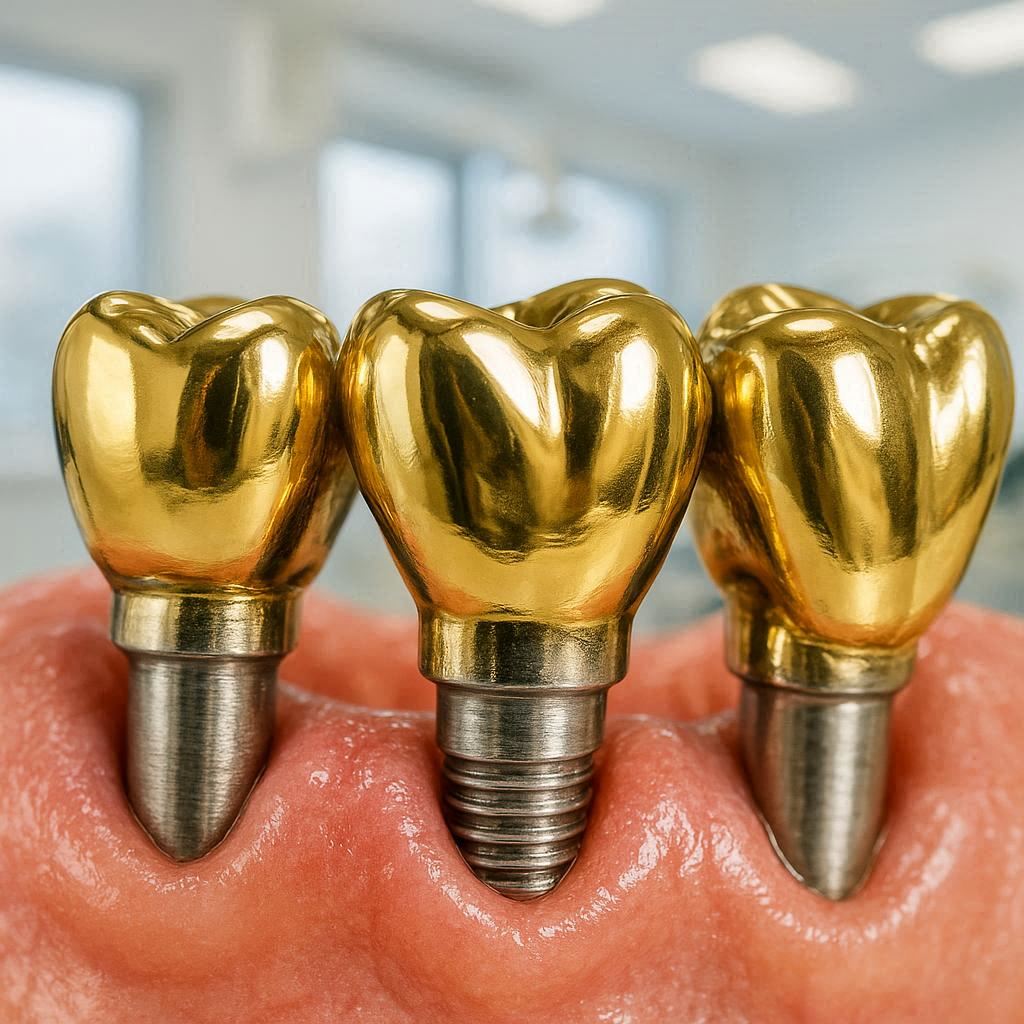
The implant itself—the part placed into your jawbone—is almost always made of medical-grade titanium. Titanium is biocompatible. Your bone fuses to it like it was natural. Gold cannot do this as effectively.
The “gold” part refers to the visible crown. This is the artificial tooth that attaches to the titanium implant.
So, a more accurate name is: a titanium dental implant with a gold alloy crown.
What is a Gold Alloy Crown?
Pure gold is too soft for chewing. That is why dentists use a gold alloy. This is a mixture of gold and other metals like copper, platinum, or palladium.
These alloys are incredibly strong. They do not corrode. They also fit your gum tissue very well.
| Feature | Gold Alloy Crown | Porcelain Crown (Tooth-Colored) |
|---|---|---|
| Durability | Excellent. Can last 20+ years. | Good. May chip or crack. |
| Wear on opposing teeth | Gentle. Similar to natural enamel. | Can cause wear on natural teeth. |
| Aesthetics | Metallic, visible. | Natural, invisible. |
| Cost | Moderate to high. | Moderate to high. |
| Bacterial plaque | Less adhesion. | Slightly more adhesion. |
A Brief History: Why Gold in Dentistry?
Gold has a long, respectable history in your mouth.
Ancient civilizations used gold wire to tie loose teeth together. In the 19th and 20th centuries, gold fillings and crowns were a sign of quality dentistry.
Why? Because gold is kind to your mouth. It does not trigger allergic reactions in most people. It also forms a perfect seal against decay.
In the last 30 years, tooth-colored ceramics became popular for aesthetic reasons. But many dentists still consider gold the “gold standard” for posterior teeth (molars and premolars). These teeth handle the most chewing force.
Now, with dental implants, gold crowns are making a quiet comeback. People want something that lasts. And gold lasts.
“In my 25 years of practice, I have never seen a gold crown break. I have replaced hundreds of broken porcelain crowns. Gold is simply stronger.” — Dr. James R., Prosthodontist.
The Real Advantages of Choosing Gold Implant Crowns
Why would someone choose a shiny gold tooth in an age of natural-looking ceramics? The reasons are very practical.
1. Unmatched Longevity
A well-made gold crown on a dental implant can last a lifetime. You might never need to replace it. Porcelain crowns often need replacement every 10 to 15 years due to chipping or wear.
2. Gentle on Natural Teeth
Gold is soft. Not soft like butter, but softer than porcelain. When you chew, a gold crown will not wear down the natural teeth it touches. Porcelain can be like glass—hard and abrasive.
3. Perfect Fit and Seal
Gold alloys are malleable. This means the dentist can mold them to fit the implant abutment perfectly. A perfect fit means no gaps for bacteria. This protects your implant from infection (peri-implantitis).
4. Biocompatible
Gold is one of the most biocompatible metals. Your gum tissue accepts it very well. Inflammation is rare. This is especially good for implant patients because healthy gums keep the implant stable.
5. No Chipping or Cracking
This is the biggest practical benefit. You can eat nuts, ice, or hard candies without fear. A gold crown simply will not break. Porcelain can chip if you bite a popcorn kernel the wrong way.
6. Less Plaque Buildup
Gold has a very smooth surface. Bacteria and plaque find it harder to stick to gold compared to rougher ceramic surfaces. This means easier cleaning and healthier gums around your implant.
The Honest Disadvantages
No solution is perfect. Gold teeth on implants have real downsides you must consider.
1. The Look (Aesthetics)
This is the number one reason people say no. A gold tooth is visible. It does not look natural. For a front tooth, this is a dealbreaker for most people. For a back molar, you might not care.
2. Cost
High-quality gold alloys are expensive. A gold crown often costs more than a porcelain one. The metal itself has real value. You are paying for precious materials.
3. Galvanic Shock (Rare but Real)
If you have other metal fillings or crowns, you might experience “galvanic shock.” This is a sudden, sharp pain when two different metals touch (like a battery). Saliva acts as the conductor. It is rare with modern alloys, but possible.
4. Temperature Sensitivity
Metal conducts heat and cold faster than ceramic. You might feel hot or cold foods more intensely on a gold crown. Over time, most people adjust.
5. Not Reversible
Once you commit to a gold crown on an implant, changing to ceramic later is possible but expensive. You would need to replace the entire crown.
| Pros | Cons |
|---|---|
| Lasts 20+ years, often a lifetime | Very noticeable (not natural-looking) |
| Will not chip or crack | Higher upfront cost |
| Gentle on natural teeth | Possible galvanic shock with other metals |
| Less plaque buildup | Conducts temperature more |
| Biocompatible, gum-friendly | Not ideal for front teeth |
The Step-by-Step Procedure: From Start to Gold Smile
If you decide to move forward, here is what the process looks like. The procedure is the same as for any implant crown, except the final crown material is gold.
Step 1: Initial Consultation
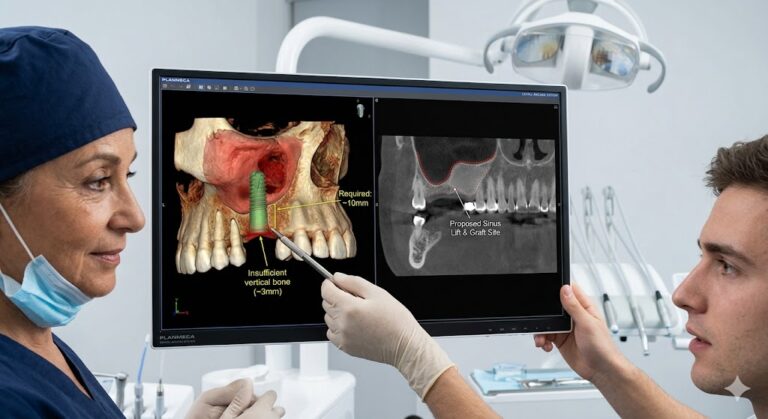
Your dentist will examine your mouth. They will take X-rays or a CT scan. They need to check your jawbone density. You need enough bone to hold the implant.
Step 2: Treatment Plan
You will discuss options. The dentist will explain the timeline, cost, and whether you need a bone graft. If you choose gold, they will note it for the laboratory.
Step 3: Implant Placement (Surgery)
This is a minor surgical procedure. The dentist numbs the area. They make a small cut in your gum. Then, they drill a precise hole into the jawbone and place the titanium implant. The gum is stitched closed over the implant.
Healing time: 3 to 6 months. This is called osseointegration. Your bone grows tightly around the titanium.
Step 4: Abutment Placement
Once healed, a second small surgery exposes the implant. An abutment (a connector piece) is screwed into the implant. This will hold the gold crown.
Step 5: Impressions and Gold Crown Fabrication
The dentist takes a mold of your mouth. They send it to a dental lab. Skilled technicians create your custom gold alloy crown. This takes 2 to 4 weeks.
Step 6: Fitting the Gold Crown
You return for a final visit. The dentist checks the fit and color (shade of gold). They cement or screw the gold crown onto the abutment. They will check your bite to ensure comfort.
Done. You now have a functional, durable gold tooth.
Important Note: The process requires patience. The healing time between steps cannot be rushed. Rushing leads to implant failure.
Who Is a Good Candidate for Gold Implant Crowns?
Gold is not for everyone. You are a good candidate if:
- You need a molar or premolar replaced. These are back teeth. No one sees them.
- You grind your teeth (bruxism). Gold wears slowly. It will not crack like porcelain.
- You have a limited budget for future repairs. You prefer to pay more now and never pay again.
- You like the look. Some people genuinely enjoy the aesthetic of gold. That is perfectly fine.
- You have allergies to ceramic materials. Rare, but it happens.
You are not a good candidate if:
- The tooth is in your smile line. Front teeth, canines, or first premolars. Natural-looking ceramic is better here.
- You hate the look of metal. Simple as that.
- You have other metal restorations in your mouth. The risk of galvanic shock is low but real.
Cost Breakdown: What Will You Pay?
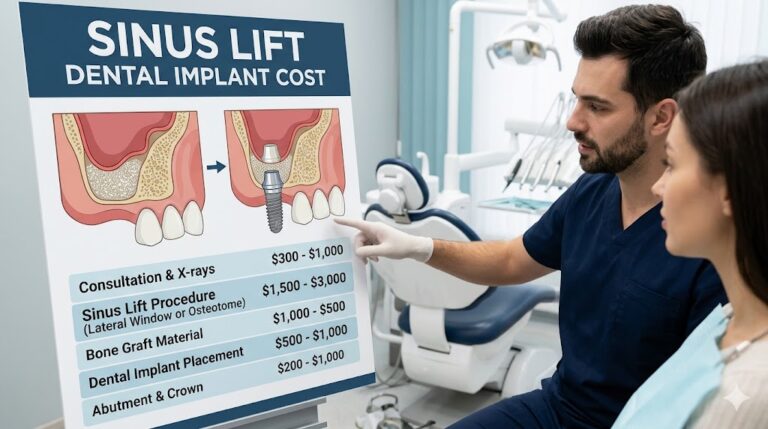
Let’s talk money. Prices vary widely by location and dentist experience. This table gives you a realistic range in US dollars.
| Procedure Component | Estimated Cost (USD) |
|---|---|
| Initial consultation & CT scan | $150 – $500 |
| Bone graft (if needed) | $300 – $1,500 |
| Titanium implant placement | $1,500 – $2,500 |
| Abutment | $300 – $600 |
| Gold alloy crown (fabrication) | $1,000 – $2,500 |
| Final fitting & placement | $200 – $400 |
| Total estimated cost | $3,450 – $8,000 |
Note: A standard porcelain crown on an implant usually costs $1,000 – $2,000. The gold crown adds approximately $500 – $1,000 extra due to the precious metal content.
Does Insurance Cover Gold Implant Crowns?
Sometimes, but not fully.
Most dental insurance covers a portion of the implant crown (usually 50% of the cost of a standard crown). However, they may only pay the cost of a basic porcelain crown. You pay the extra for gold.
Always ask your insurance for a pre-determination of benefits.
Gold vs. Porcelain vs. Zirconia: A Comparison
You have three main options for your implant crown. Here is how gold compares.
| Material | Durability | Aesthetics | Cost | Best for |
|---|---|---|---|---|
| Gold Alloy | Excellent (20+ years) | Low (visible metal) | High | Molars, bruxism, longevity seekers |
| Porcelain fused to metal | Good (10-15 years) | Medium (can show metal line) | Medium | General use, compromise |
| Zirconia (full ceramic) | Very good (15+ years) | Excellent (natural) | High | Front teeth, allergy patients |
Simple advice:
- Front teeth? Choose zirconia or high-translucency ceramic.
- Back teeth with heavy bite? Choose gold.
- Back teeth, normal bite, want natural look? Choose zirconia.
Caring for Your Gold Implant Crown
Good news: gold is low-maintenance. But you must still care for the implant itself.
Do:
- Brush twice daily. Use a soft toothbrush. Gold does not scratch easily, but the abutment area needs gentle cleaning.
- Floss daily. Use implant-specific floss or a water flosser. Clean around the gum line.
- Visit your dentist every 6 months. They will check the crown’s fit and the implant’s health.
- Use a night guard if you grind your teeth. Gold is tough, but your natural teeth and implant need protection.
Don’t:
- Don’t use abrasive toothpaste. It can scratch the gold’s surface over many years.
- Don’t ignore gum bleeding. Red, swollen gums around an implant are an emergency. See your dentist immediately.
Important Note: The implant itself can fail if you neglect gum health. The gold crown will last forever. The titanium screw in your bone needs your attention.
Common Myths About Gold Teeth Implants
Let’s bust some fake news.
Myth 1: “Gold implants are fake and cheap.”
Truth: High-karat gold alloys are expensive. They are a premium choice, not a cheap one.
Myth 2: “Gold is outdated.”
Truth: Gold is old, but not outdated. It is still one of the most advanced materials for durability. Many top prosthodontists prefer gold for back teeth.
Myth 3: “The whole implant is gold.”
Truth: Only the crown is gold alloy. The implant post is titanium.
Myth 4: “Gold crowns are dangerous because of metal toxicity.”
Truth: Gold is inert. It does not react with your body. It is one of the safest dental materials available.
Realistic Scenarios: When People Choose Gold
Scenario A: The Heavy Grinder
Mark, 52, grinds his teeth at night. He has broken three porcelain crowns in ten years. His dentist recommends a gold crown on a new implant for his lower left molar. Mark pays $4,500 total. After five years, the gold crown looks new. He has had zero issues.
Scenario B: The Practical Patient
Linda, 68, needs a back tooth implant. She does not care about looks. She wants a “fix it and forget it” solution. Her dentist explains gold vs. porcelain. Linda chooses gold. She is happy because she never worries about chipping.
Scenario C: The Fashion Choice
Jake, 34, is a musician. He likes the look of a gold tooth. He asks for a gold crown on his upper premolar. It is partially visible when he smiles. He loves it. It is part of his personal style.
Questions to Ask Your Dentist
Before you decide, have an honest conversation. Ask these questions:
- “Do you regularly work with gold alloys for implants?”
- “What karat of gold do you recommend? (e.g., 16k, 19k, 22k)”
- “Can you show me before-and-after photos of gold implant crowns you have done?”
- “What is the warranty on the gold crown?”
- “If I change my mind later, can I replace the gold crown with ceramic?”
- “Do I have any existing metal fillings that could cause a galvanic reaction?”
Conclusion (Summary in Three Lines)
Gold dental implants combine a titanium root with a durable gold alloy crown for unmatched longevity. They are ideal for back molars, heavy grinders, and anyone prioritizing function over natural aesthetics. While expensive and visible, a gold crown can last a lifetime without chipping or cracking.
Frequently Asked Questions (FAQ)
1. Can I get a gold implant for my front tooth?
Yes, technically. But most dentists will advise against it for aesthetic reasons. A gold front tooth is very noticeable and looks unnatural to most people.
2. Do gold teeth implants smell?
No. Gold does not hold odor. If you smell something bad around your implant, it is likely due to poor hygiene and bacterial buildup, not the gold itself.
3. How long does a gold crown last on an implant?
A high-quality gold alloy crown can last 20 to 40 years, often a lifetime. The implant itself can last a lifetime with proper care.
4. Are gold teeth implants safe for MRI scans?
Gold is non-ferromagnetic. It is safe for MRI. However, the titanium implant may cause minor image distortion near the area. Always inform the MRI technician.
5. Can I be allergic to gold dental implants?
True gold allergy is extremely rare. Gold is one of the most hypoallergenic metals. Most “metal allergies” are to nickel, which is not in high-quality dental gold alloys.
6. Is a gold crown cheaper than porcelain?
No. Gold crowns are typically more expensive due to the precious metal content. Expect to pay $500 to $1,000 more for gold.
7. Will my gold crown set off metal detectors?
Very unlikely. The amount of gold is small and low in conductivity for most airport detectors. Titanium usually does not set them off either.
Additional Resource
For more detailed, science-backed information on dental implant materials and gold alloys in dentistry, visit the National Library of Medicine’s PubMed Central (PMC). Search for “dental gold alloys biocompatibility” to find peer-reviewed studies.
Link: https://pubmed.ncbi.nlm.nih.gov/ (Search for “gold alloy crown implant”)