Dental Implants in Closter: A Complete Guide to Restoring Your Smile
Losing a tooth can feel frustrating. It might affect how you eat, speak, or even smile in photos. Fortunately, modern dentistry offers a long-term solution that looks and feels natural. If you live in or near Closter, you have access to excellent implant options.
This guide walks you through everything you need to know about dental implants in Closter. We will cover costs, the step-by-step procedure, recovery tips, and how to choose the right dentist for you. No fluff. No fake promises. Just honest, practical information.
What Are Dental Implants? A Simple Explanation
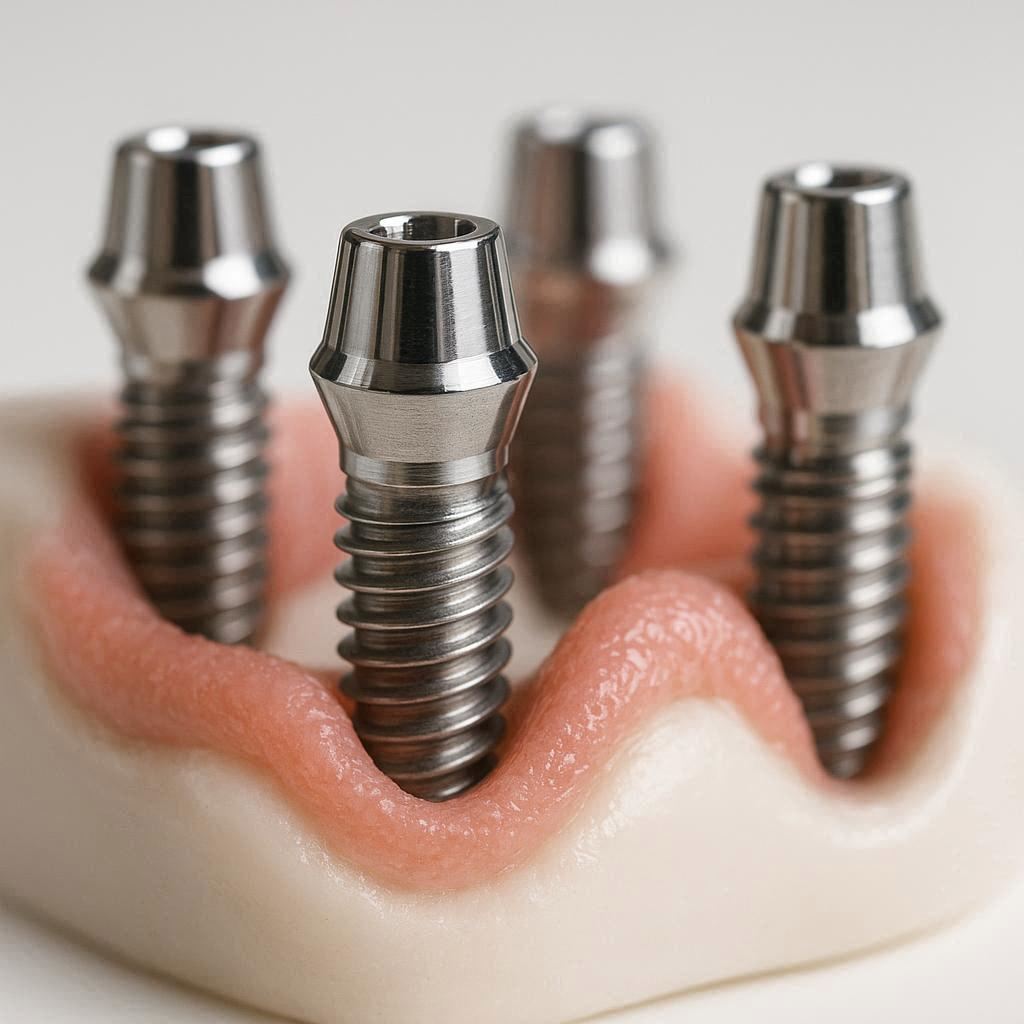
Let us start with the basics. A dental implant is an artificial tooth root. A surgeon places it into your jawbone. After healing, your dentist attaches a crown on top. The result looks like a natural tooth.
Unlike dentures or bridges, implants do not slip or move. They also help keep your jawbone strong. When you lose a tooth, the bone can shrink over time. Implants prevent that.
The Three Main Parts of a Dental Implant
| Component | Purpose | Material |
|---|---|---|
| Implant post | Acts as the artificial root | Titanium or zirconia |
| Abutment | Connects the post to the crown | Titanium or ceramic |
| Crown | The visible “tooth” part | Porcelain or ceramic |
Note: Some dentists in Closter offer same-day implants, but traditional implants often require more healing time for better long-term results.
Why Choose Dental Implants Over Other Options?
Many people ask: “Are implants really better than bridges or dentures?” The answer depends on your situation. But here is a fair comparison.
| Feature | Dental Implants | Traditional Bridge | Dentures |
|---|---|---|---|
| Looks natural | Yes | Good | Fair |
| Bone loss prevention | Yes | No | No |
| Affects nearby teeth | No | Yes (shaves down healthy teeth) | No |
| Removable | No (fixed) | No | Yes |
| Longevity | 20+ years | 5–15 years | 5–10 years |
| Initial cost | Higher | Moderate | Lower |
Quotation from a Closter restorative dentist:
“Patients who choose implants often tell me they forgot they even have an artificial tooth. That is the level of comfort we aim for.”
The Step-by-Step Process of Getting Dental Implants in Closter
Understanding the timeline helps reduce anxiety. Most implant treatments take three to nine months from start to finish. Here is what happens at each stage.
Step 1: Initial Consultation and Exam
Your dentist will take X-rays or a 3D CT scan. This shows bone density and nerve positions. Not everyone qualifies immediately. If you have low bone density, you might need a bone graft first.
Step 2: Bone Grafting (If Needed)
Some patients have lost too much jawbone. In that case, the dentist adds bone material to the area. Healing takes about four to six months. Do not skip this step. A solid foundation leads to a stable implant.
Step 3: Implant Placement Surgery
This is a minor surgical procedure. The dentist numbs the area. Then they make a small cut in the gum. Next, they drill a precise hole and place the implant post. You may feel pressure but not pain.
Step 4: Osseointegration (Healing Period)
This is the most important phase. Your jawbone grows around the implant. It locks the post in place. This takes three to six months. During this time, you will wear a temporary crown or partial denture.
Step 5: Abutment Placement
Once the implant is secure, the dentist attaches a small connector piece. This is the abutment. It sticks out slightly above the gum line.
Step 6: Crown Fabrication and Attachment
Your dentist takes impressions. A lab creates your custom crown. The shade will match your surrounding teeth. Finally, the dentist screws or cements the crown onto the abutment.
Total appointments: Usually 3 to 5 visits over several months.
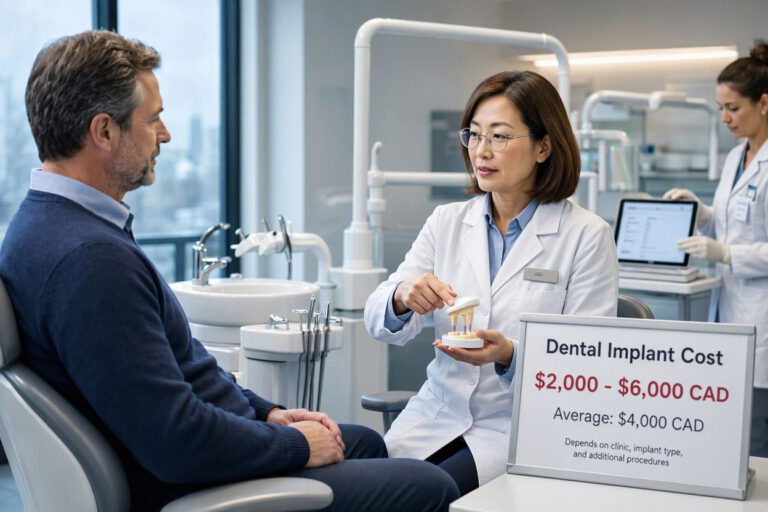
Average Cost of Dental Implants in Closter (2026 Update)
This is the question everyone wants to ask but hesitates to say out loud. Let us be transparent.
Typical Price Breakdown for a Single Implant
| Service | Estimated Cost |
|---|---|
| Consultation and CT scan | 150–350 |
| Implant post placement | 1,500–2,500 |
| Abutment | 300–600 |
| Custom crown | 1,000–2,000 |
| Total without bone graft | 2,950–2,950–5,450 |
If you need a bone graft, add 500to1,500. If you need a sinus lift (common for upper back teeth), add 1,000to2,500.
Important Note: These are estimates. Actual prices in Closter vary by provider, implant brand (Nobel Biocare, Straumann, Zimmer, etc.), and insurance coverage.
Multiple Implants and Full Arch Costs
| Case | Approximate Range |
|---|---|
| Two adjacent implants | 5,000–9,000 |
| Implant-supported bridge (3–4 teeth) | 6,000–12,000 |
| Full arch (All-on-4) per arch | 15,000–25,000 |
| Full mouth implants (both arches) | 30,000–50,000 |
Does insurance help? Some dental plans cover a portion of the crown. Medical insurance may help if tooth loss resulted from an accident. Always ask for a pre-treatment estimate.
Finding the Right Implant Dentist in Closter
Not all general dentists place implants. Some refer patients to specialists. Here is how to decide.
Types of Professionals Who Place Implants
- Oral surgeon: Best for complex cases or low bone volume.
- Periodontist: Gum and bone specialist. Excellent for aesthetic cases.
- General dentist with implant training: Convenient for single, straightforward cases.
Questions to Ask Before Booking
- How many implants have you placed?
- What is your success rate?
- Do you handle the entire process (surgery and crown) or refer out?
- What brand of implants do you use?
- Do you offer sedation options?
- What happens if the implant fails?
Pro tip: Ask to see before-and-after photos of actual patients treated in Closter. Real results tell you more than any brochure.
Local Closter Resources
You can start your search here:
- Closter Dental Associates (general dentistry with implant services)
- Hackensack Meridian Health – Pascack Valley Medical Center (nearby for complex cases)
- Bergen County Dental Society (referral directory)
Disclaimer: This is not a paid endorsement. Always verify credentials independently.
Recovery, Healing, and Aftercare Tips
Healing after implant surgery is usually mild compared to tooth extraction. Most people return to work the next day. Here is what to expect.
The First 24 Hours
- Bite on gauze to stop bleeding.
- Do not spit or use a straw (this can dislodge the blood clot).
- Apply ice packs on your cheek (15 minutes on, 15 minutes off).
- Eat soft, cool foods like yogurt, smoothies, or mashed potatoes.
Days 2 to 10
- Swelling peaks around day two or three, then goes down.
- Rinse gently with warm salt water after 24 hours.
- Avoid the surgical area when brushing.
- Do not smoke. Smoking dramatically increases implant failure.
Long-Term Care (After Crown Placement)
Implants do not get cavities. But they can get gum disease. Clean them like natural teeth.
Daily cleaning checklist:
- Brush twice a day.
- Floss daily (use superfloss or implant-specific floss).
- Use a water flosser for hard-to-reach areas.
- Visit your dentist every six months for checkups.
Reminder: Even with perfect care, implants can fail if you grind your teeth. Ask your dentist about a nightguard if you clench or grind.
Risks and Realistic Expectations
Let us be honest. Implants have a high success rate (95% to 98% over 10 years), but nothing medical is 100% guaranteed.
Possible Complications
- Infection at the implant site (peri-implantitis)
- Nerve damage (rare, but can cause tingling or numbness)
- Implant failure (the bone does not fuse to the post)
- Sinus problems (upper implants that protrude into sinus cavity)
Factors That Increase Risk
- Heavy smoking
- Uncontrolled diabetes
- Gum disease
- Osteoporosis medications (bisphosphonates)
- Radiation therapy to the head or neck
What happens if an implant fails? Your dentist can usually remove it, let the bone heal, and try again after a few months. Some offices offer a warranty or replacement guarantee.
Alternatives to Dental Implants (When to Choose Something Else)
Implants are not for everyone. Here are honest alternatives.
1. Fixed Dental Bridge
A bridge uses the two neighboring teeth as supports. The dentist shaves those teeth down and places a three-unit bridge.
Best for: Healthy adjacent teeth, limited budget, or faster treatment (3 weeks instead of 6 months).
Downside: You damage healthy teeth. Bridges last 5–15 years.
2. Removable Partial Denture
A plastic or metal framework with a false tooth. It clips onto nearby teeth.
Best for: Multiple missing teeth on a tight budget.
Downside: Can feel bulky. It moves when you eat. No bone preservation.
3. No Treatment
Some people simply leave a gap. This is an option, but you should know the risks:
- Adjacent teeth shift and tilt.
- Bone loss accelerates.
- Chewing becomes uneven.
- Your smile appearance changes over time.
Quick Comparison Table
| Option | Cost (Closter range) | Longevity | Bone Loss Prevention | Comfort Level |
|---|---|---|---|---|
| Implant | 3,000–5,500+ | 20+ years | Yes | Excellent |
| Bridge | 2,000–4,000 | 5–15 years | No | Good |
| Partial denture | 700–1,800 | 5–10 years | No | Fair |
| Do nothing | $0 | N/A | No (bone resorbs) | Poor |
Frequently Asked Questions (FAQ)
1. Are dental implants painful?
The procedure itself is not painful because of local anesthesia. Afterward, most people compare the soreness to a tooth extraction. Over-the-counter pain relievers usually suffice.
2. How long do dental implants last?
With good care, 20 years to a lifetime. The crown may need replacement after 10–15 years due to normal wear.
3. Can I get dental implants if I have gum disease?
No. You must treat gum disease first. Active infection leads to implant failure.
4. Is Closter a good place for affordable implants?
Closter has several experienced providers. Prices are typical for Bergen County. For lower costs, some travel to nearby Hackensack or Paterson, but consider travel time for multiple visits.
5. Do implants look fake?
Modern crowns match your natural tooth shade, translucency, and shape. Most people cannot tell the difference.
6. Can seniors get implants?
Age is not a barrier. Health is. Many patients in their 70s and 80s successfully receive implants.
7. What is the success rate for dental implants in Closter?
At reputable offices, success rates exceed 95% for non-smokers with good bone density.
8. How do I clean implant crowns?
Brush normally. Floss with a soft pick or implant floss. A water flosser is highly recommended.
9. Will my insurance cover any part?
Some plans cover the crown portion (50% after deductible). Implant post coverage is less common. Ask your provider.
10. What is the cheapest implant option in Closter?
Mini dental implants are smaller and less expensive (1,500–2,500 total), but they are not as durable for molars. Discuss pros and cons with your dentist.
Additional Resource: Free Guide and Local Dentist Locator
For a verified list of implant providers in Closter and nearby Bergen County, visit:
🔗 American Academy of Implant Dentistry (AAID) – Find a Dentist Tool
https://www.aaid.com/find-a-dentist/
This free, non-commercial directory only includes members who meet continuing education standards. You can filter by zip code (07624 for Closter) and procedure type.
Conclusion
Dental implants in Closter offer a reliable, natural-looking way to replace missing teeth. They cost more upfront than bridges or dentures, but they last much longer and protect your jawbone. Choose an experienced local dentist, follow the healing instructions carefully, and clean your implants daily. With realistic expectations and good oral hygiene, you can enjoy a functional, beautiful smile for decades.
Disclaimer: This article is for informational purposes only and does not constitute medical or dental advice. Always consult a licensed dentist in Closter for a personal examination and treatment recommendation. Individual results vary. The author and publisher are not responsible for any actions taken based on this content.