Dental Implants in Montrose: A Complete, Honest Guide for Local Residents
Losing a tooth can feel uncomfortable. It affects your smile, your confidence, and even the way you chew your food. But you have options. Among the most effective solutions available today, dental implants stand out as a long-term answer.
If you live in or near Montrose, you are probably looking for reliable information. You want to know what implants cost, how they work, and whether they are right for you.
This guide gives you exactly that. No hype. No fake promises. Just a realistic, detailed walkthrough of everything related to dental implants in Montrose.
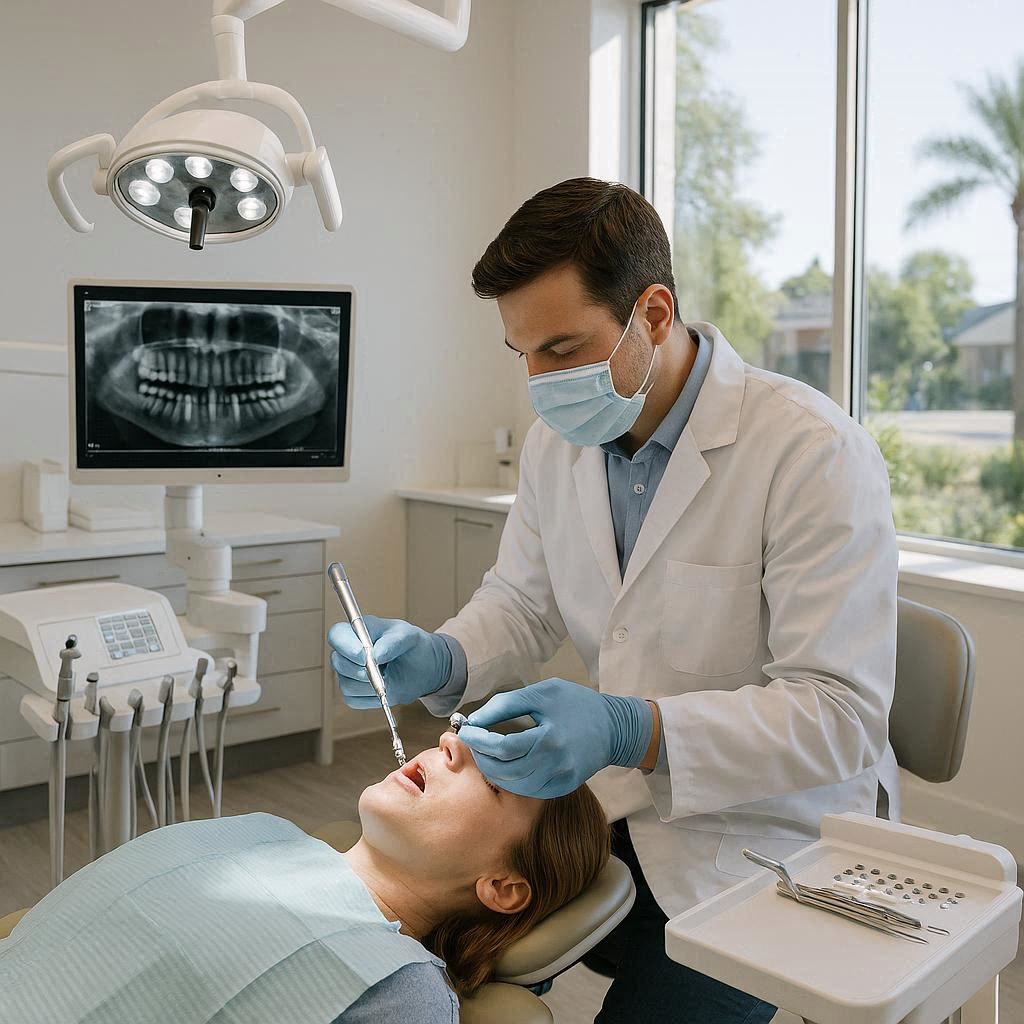
What Exactly Is a Dental Implant?
A dental implant is not a natural tooth. But it comes very close. Think of it as a small, sturdy post made of titanium. A dentist surgically places this post into your jawbone. Over time, the bone grows around the post. This creates a rock-solid foundation.
On top of that post, the dentist attaches a custom-made crown. That crown looks and feels like a real tooth.
Here is a simple breakdown:
| Component | What it is | Purpose |
|---|---|---|
| Implant post | Titanium screw | Replaces the tooth root |
| Abutment | Connector piece | Links post and crown |
| Crown | Artificial tooth | Restores appearance and function |
Note: Not every missing tooth needs an implant. Sometimes a bridge or partial denture works fine. But implants offer unique benefits, especially for long-term health.
Why People Choose Dental Implants in Montrose
Montrose residents choose implants for many reasons. Some have lost a tooth due to injury. Others suffer from severe decay. Many simply want to stop wearing uncomfortable dentures.
Here are the most common reasons:
- Natural feel: Implants behave like real teeth. You can chew, speak, and laugh without worry.
- Bone preservation: When you lose a tooth, your jawbone slowly shrinks. Implants stop that process.
- No damage to neighboring teeth: Unlike bridges, implants do not require grinding down healthy teeth.
- Long lifespan: With good care, implants can last 20 years, 30 years, or even a lifetime.
- Confidence boost: A complete smile changes how you feel in social situations.
Are You a Candidate for Dental Implants?
Not everyone qualifies for implants right away. And that is completely normal. A responsible dentist will never recommend implants without a thorough evaluation.
You are likely a good candidate if:
- You have one or more missing teeth
- Your jawbone is dense enough to hold the implant
- Your gums are healthy (no active gum disease)
- You do not smoke heavily (smoking slows healing)
- You are committed to good oral hygiene
If your jawbone is too thin or soft, you may need a bone graft first. That adds time and cost, but it makes implants possible for almost everyone.
Who should think twice?
Some medical conditions make implants riskier. These include uncontrolled diabetes, severe immune disorders, and certain cancer treatments. Always share your full medical history with your dentist.
The Step-by-Step Process of Getting Dental Implants in Montrose
Understanding the timeline helps you plan ahead. Getting an implant is not a one-day procedure. It takes several months from start to finish. But the result is worth the wait.
Step 1: Initial Consultation (1 hour)
You meet with a dentist or oral surgeon. They examine your mouth, take X-rays or a CT scan, and discuss your goals. This is also the time to ask about costs and payment plans.
“A good consultation answers three questions: Can I get implants? How much will it cost? How long will it take?” – Local Montrose implant dentist
Step 2: Treatment Planning (1–2 weeks)
The dentist creates a custom plan for your case. They decide how many implants you need, whether you need bone grafting, and the exact placement angles.
Step 3: Implant Placement Surgery (1–2 hours per implant)
This is the surgical step. The dentist numbs your mouth completely. Many people choose sedation for extra comfort. The dentist makes a small cut in your gum, drills a tiny hole in the bone, and places the titanium post.
Then they stitch the gum closed. You go home the same day.
Step 4: Osseointegration (3–6 months)
This is the waiting period. Your jawbone grows around the implant. This process is called osseointegration. It is what makes implants so strong. You can wear a temporary tooth during this time if needed.
Step 5: Abutment Placement (1 visit)
Once the implant is fully fused to the bone, the dentist reopens the gum slightly and attaches a small connector piece: the abutment. Healing takes another 2 weeks.
Step 6: Crown Fabrication (2–4 weeks)
The dentist takes impressions of your mouth. A dental lab creates your custom crown. The crown matches the color, shape, and size of your natural teeth.
Step 7: Final Attachment (1 visit)
The dentist screws or cements the crown onto the abutment. You walk out with a complete, functional smile.
Here is a quick timeline for a single implant:
| Stage | Duration |
|---|---|
| Consultation | 1 day |
| Surgery | 1 day |
| Bone healing | 3–6 months |
| Abutment healing | 2 weeks |
| Crown fabrication | 2–4 weeks |
| Total | Approx. 4–7 months |
Costs of Dental Implants in Montrose (Realistic Estimates)
Let us talk money. Dental implants are an investment. They cost more upfront than bridges or dentures. But they often cost less over a lifetime because they rarely need replacement.
Here is what you can expect to pay in Montrose. These are realistic averages based on local pricing.
| Procedure | Low estimate | High estimate |
|---|---|---|
| Single implant (post + crown) | $3,500 | $6,000 |
| Implant-supported bridge (3 teeth) | $6,000 | $12,000 |
| Full arch (All-on-4, one jaw) | $15,000 | $30,000 |
| Bone graft (if needed) | $500 | $2,500 |
| Sinus lift (upper jaw) | $1,500 | $3,000 |
| CT scan | $250 | $500 |
Important note: These prices usually do not include the initial consultation, extractions, or temporary restorations. Always ask for a written treatment plan with all fees included.
Does Insurance Cover Dental Implants?
It varies. Many dental insurance plans call implants a “major service.” Some cover 30% to 50% of the cost. Others exclude them entirely. Medical insurance sometimes covers implants if tooth loss resulted from an accident or illness.
Your best move: call your insurance company and ask two questions:
- Do you cover dental implants?
- What is my annual maximum?
If your coverage is limited, ask your Montrose dentist about in-house membership plans or third-party financing like CareCredit.
Dental Implants vs. Other Tooth Replacement Options
You owe it to yourself to compare all options. Implants are not the only solution. Here is an honest comparison.
| Feature | Dental Implant | Fixed Bridge | Removable Denture |
|---|---|---|---|
| Looks like natural tooth | Excellent | Good | Fair |
| Feels like natural tooth | Excellent | Good | Poor |
| Preserves jawbone | Yes | No | No |
| Requires special cleaning | No | Yes (floss threaders) | Yes (soaking) |
| Affects adjacent teeth | No | Yes (shaved down) | Sometimes |
| Average lifespan | 20+ years | 10–15 years | 5–10 years |
| Upfront cost | Higher | Moderate | Lower |
If you are missing a single tooth, an implant is usually the best choice. If you are missing several teeth in a row, a bridge or partial denture may work well. If you are missing all teeth in one jaw, implant-supported dentures offer a middle ground.
Finding the Right Dental Implant Provider in Montrose
Not all dentists place implants. Some general dentists do. Others refer patients to specialists. Here are the types of providers you may encounter:
- Oral surgeons: Focus on surgery. Excellent for complex cases or bone grafting.
- Periodontists: Gum and bone specialists. Ideal if you have gum disease.
- Prosthodontists: Experts in replacing teeth. Best for complex full-mouth cases.
- General dentists with implant training: Convenient. Often more affordable.
Questions to ask before choosing a provider
Ask these during your consultation:
- How many implant procedures have you performed?
- What is your success rate?
- Do you use 3D imaging (CBCT) for planning?
- What happens if the implant fails?
- Do you provide sedation options?
- Can you show me before-and-after photos of local patients?
Pro tip: Read Google reviews specifically for implants, not just general cleanings. Look for comments about pain management, follow-up care, and final aesthetics.
Recovery and Aftercare: What to Expect
Recovery from dental implant surgery is usually easier than people fear. Most patients return to work the next day. Some take a long weekend off.
First 24 hours
- Bite on gauze to control bleeding
- Do not spit or use a straw
- Apply ice packs to reduce swelling
- Eat soft foods only (yogurt, soup, smoothies)
- Take prescribed or over-the-counter pain medication
First week
- Swelling peaks on day 2–3, then subsides
- Stick to soft foods
- Brush other teeth gently
- Rinse with warm salt water after 24 hours
- Avoid the surgical site completely
First month
- Do not chew directly on the implant area
- Avoid smoking and alcohol
- Attend your follow-up appointment
Long-term care
Once your final crown is attached, care is simple:
- Brush twice daily (electric toothbrush works great)
- Floss normally. Water flossers help around implants.
- Visit your dentist every 6 months for checkups
- Avoid chewing ice or hard candy (this applies to natural teeth too)
Risks and Complications (Honest Talk)
No medical procedure is risk-free. Dental implants have a success rate of 95% to 98% over 10 years. But complications can happen.
Possible risks include:
- Infection at the implant site
- Nerve damage (rare, causes numbness)
- Implant failure (bone does not fuse)
- Sinus problems (with upper jaw implants)
- Gum recession around the crown
Signs of a problem:
- Pain that worsens after 5 days
- Pus or bad taste
- Implant feels loose
- Crown spins or clicks
If you notice any of these, call your dentist immediately. Early intervention saves most failing implants.
Frequently Asked Questions (FAQ)
Do dental implants hurt?
Most people say the procedure hurts less than a tooth extraction. You receive local anesthesia for surgery. Afterward, over-the-counter pain relievers usually suffice.
How long do dental implants last?
With proper care, the titanium post lasts a lifetime. The crown on top lasts 10–20 years before needing replacement due to normal wear.
Can I get dental implants if I smoke?
Yes, but smoking significantly increases failure risk. Many dentists ask smokers to quit for at least two weeks before and after surgery. Heavy smokers see failure rates double.
Are dental implants safe for seniors?
Absolutely. Age alone is not a barrier. Many people in their 80s and 90s get implants successfully. Health status matters much more than age.
What if I cannot afford a full implant?
Ask your Montrose dentist about mini dental implants. They cost less (around 1,500–2,500 each) but are not as strong or long-lasting. Another option: start with a bridge or denture and save for implants later.
Can one implant replace two teeth?
Usually no. One implant supports one crown. However, two implants can support a three-unit bridge (replacing two missing teeth with one fake tooth in between).
Additional Resources
For more unbiased, patient-friendly information about dental implants, visit the American Academy of Implant Dentistry (AAID) patient education section.
🔗 Resource link: https://www.aaid.com/patients/index.html (Open in new tab – official AAID patient guide)
Conclusion
Dental implants in Montrose offer a reliable, long-lasting solution for missing teeth. They look natural, preserve your jawbone, and do not damage neighboring teeth. The process takes several months and costs more upfront than alternatives, but many patients find the investment worthwhile. Start with a consultation from a qualified local provider, ask the right questions, and take your time deciding.
Final Summary
Dental implants replace missing teeth with titanium posts and custom crowns. The process takes 4–7 months and costs 3,500–6,000 per tooth in Montrose. Success rates are very high, but honest expectations and good oral hygiene are essential.
Disclaimer: This article provides general educational information about dental implants in Montrose. It does not replace professional medical or dental advice. Every patient’s situation is unique. Always consult a licensed dentist or oral surgeon for a personal evaluation before making any treatment decisions.