Dental Implants Specialist
Losing a tooth can feel like a small disaster. You might worry about your smile, your ability to chew your favorite foods, or even the long-term health of your remaining teeth. The good news is that modern dentistry offers a reliable, long-lasting solution: the dental implant.
But here is where most people get confused. They search for a “dental implants specialist” and find dozens of clinics, all claiming to be experts. Some are general dentists who place implants occasionally. Others are surgeons who do nothing but implants all day.
Which one is right for you?
This guide is designed to cut through the marketing noise. We will look at what a true specialist actually does, the training they receive, and how to choose someone who will give you a safe, beautiful, and functional result. No hype. No confusing jargon. Just honest, practical advice to help you make one of the best investments in your health.
Important note: Dental implants are a medical procedure. While complications are rare in healthy patients, choosing the wrong provider can lead to infection, implant failure, or unnecessary bone loss. Take your time. Do your research.
What Exactly Is a Dental Implants Specialist?
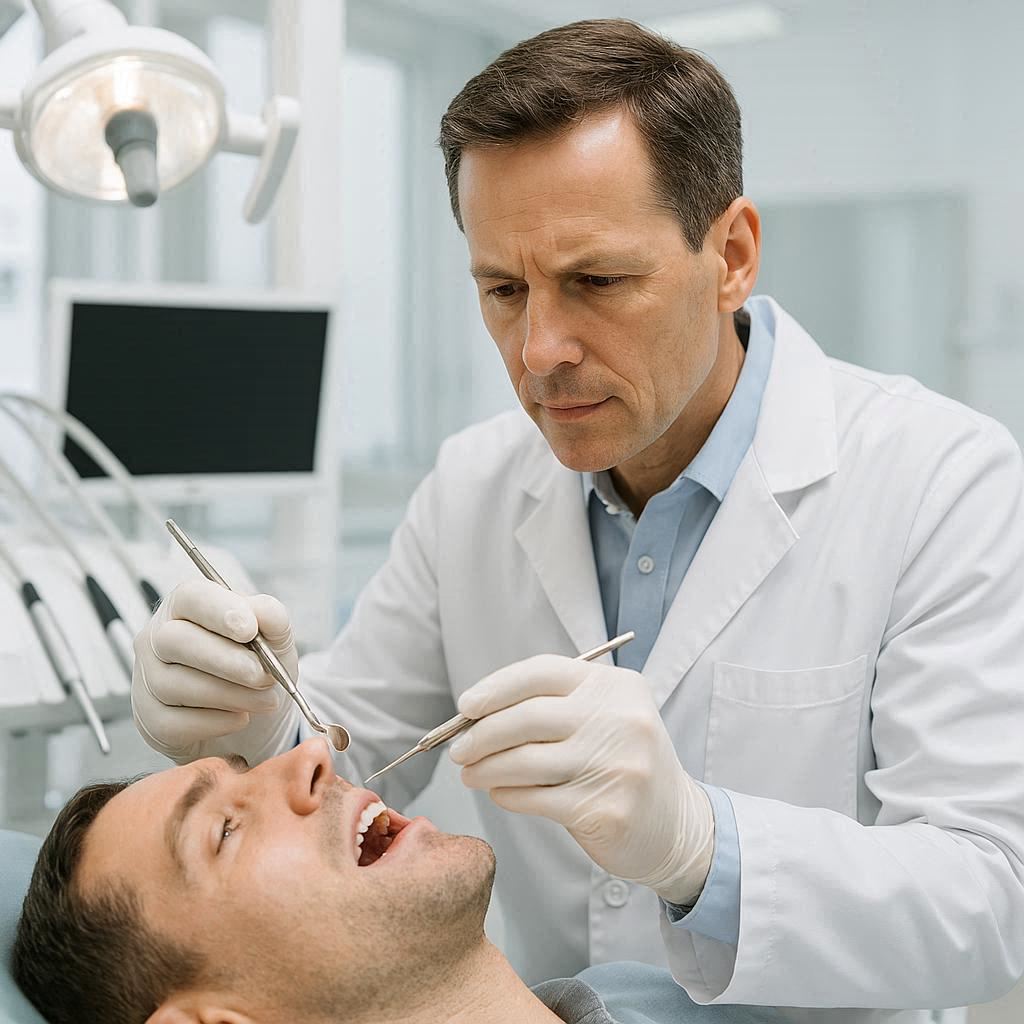
Let us start with a clear definition. A dental implants specialist is not just a dentist who owns an implant kit. A true specialist has completed years of additional, full-time training beyond dental school.
Think of it this way. Your general dentist is like your family doctor. They are excellent at checkups, fillings, crowns, and basic oral health. But when you need a complex knee surgery, you see an orthopedic surgeon. Dental implants are similar. They involve surgery, bone biology, and careful planning.
The Three Main Types of Implant Specialists
There are three types of dental professionals who can legally place implants. Each has a different level of training.
| Type of Specialist | Years of Extra Training | Focus Area | Best For |
|---|---|---|---|
| Oral and Maxillofacial Surgeon | 4-6 years (hospital-based) | Bone, gums, nerves, full arch reconstruction | Complex cases, heavy bone grafting, multiple implants |
| Periodontist | 3 years | Gum health, soft tissue, bone around teeth | Single implants, smile zone, patients with gum disease history |
| General Dentist with Implant Training | Weekends or short courses (varies) | Basic placement | Very simple cases, healthy bone, single tooth replacement |
An oral surgeon or a periodontist is what most people would call a “true” dental implants specialist. They have dedicated their entire careers to surgical procedures. A general dentist who places implants can be excellent, but you must check their number of cases and complication rates.
Why Training and Experience Matter More Than You Think
Imagine you need a new window installed in your brick house. You could hire a handyman who has done it twice before. Or, you could hire a master mason who builds window frames every single day. Both might get the job done. But who will you trust when the winter wind starts blowing?
Your mouth is far more complex than a brick wall.
The Hidden Danger Zones
Underneath your gums lie critical structures that you cannot see on an X-ray alone. A specialist knows how to navigate:
- The inferior alveolar nerve: This nerve runs through your lower jaw. If damaged, you can experience permanent numbness in your lip, chin, and gums. It feels like Novocaine that never wears off.
- The maxillary sinus: In the upper jaw, implants can poke into your sinus cavity. This can lead to chronic sinus infections, pain, and implant failure.
- Blood supply issues: Certain areas of the jaw have poor blood flow. A specialist knows exactly where to place implants for optimal healing.
A general dentist with minimal training might miss these subtleties. A specialist sees them in their sleep.
“I see at least one patient per month who had an implant placed by a non-specialist, and it failed within two years,” says Dr. Elena Vasquez, a board-certified periodontist in Austin, Texas. “Ninety percent of those failures were preventable with proper bone assessment and surgical technique.”
Step-by-Step: What Happens When You Visit a Specialist?
If you decide to see a dental implants specialist, the process is very different from a standard dental visit. Here is what a realistic timeline looks like.
Phase 1: The Deep Dive Consultation (Day 1)
Do not expect to walk in and get an implant on the same day. A responsible specialist will spend 45 to 90 minutes just examining you.
During this visit, they will:
- Review your full medical history (diabetes, heart disease, and osteoporosis medications all affect implant success).
- Take a 3D CBCT scan. This is not a normal X-ray. It creates a three-dimensional map of your jaw, nerves, and sinuses.
- Evaluate your bone density. If you do not have enough bone, you will need a graft before the implant.
- Discuss your budget and timeline openly.
Red flag: Any provider who offers to place an implant without a 3D scan. That is like building a house without a blueprint.
Phase 2: Preparation (1 to 9 months later)
If you need bone grafting or treatment for gum disease, the specialist will handle that first. A graft is a small procedure where the surgeon adds artificial or natural bone to your jaw. It sounds scary, but it is very common. About 50% of implant patients need some form of bone grafting.
During this healing phase, you will wear a temporary partial denture or a flipper tooth. You will not be toothless.
Phase 3: Implant Placement Surgery (1 to 2 hours)
On the day of surgery, the specialist will:
- Numb the area completely. For anxious patients, IV sedation is often available.
- Make a small incision in your gum.
- Drill a precise hole using computer-guided templates (this is the gold standard).
- Screw the titanium implant into the bone.
- Suture the gum closed over the implant or attach a healing cap.
You will drive home the same day. Most patients compare the recovery to a simple tooth extraction.
Phase 4: Osseointegration (3 to 6 months of patience)
This is the most critical period. Your bone needs to grow into the surface of the titanium implant. The word for this is osseointegration. You cannot rush biology.
During this time, you will eat soft foods and keep the area very clean. A specialist will schedule checkups every 4 to 6 weeks to monitor healing.
Phase 5: The Crown (2 visits, 2 weeks apart)
Once the implant is solidly fused to your bone, your general dentist or the specialist will attach an abutment (a small connector) and then a custom-made crown. This crown will match the color, shape, and size of your natural teeth.
Total time from start to finish: 4 to 9 months for a simple case. 12 to 18 months if bone grafting is needed.
The Cost Reality: What a Specialist Charges vs. a General Dentist
Let us talk money honestly. Dental implants are expensive. A specialist charges more per procedure than a general dentist. There is a reason for that.
| Service | General Dentist (ballpark) | Specialist (Oral Surgeon/Perio) |
|---|---|---|
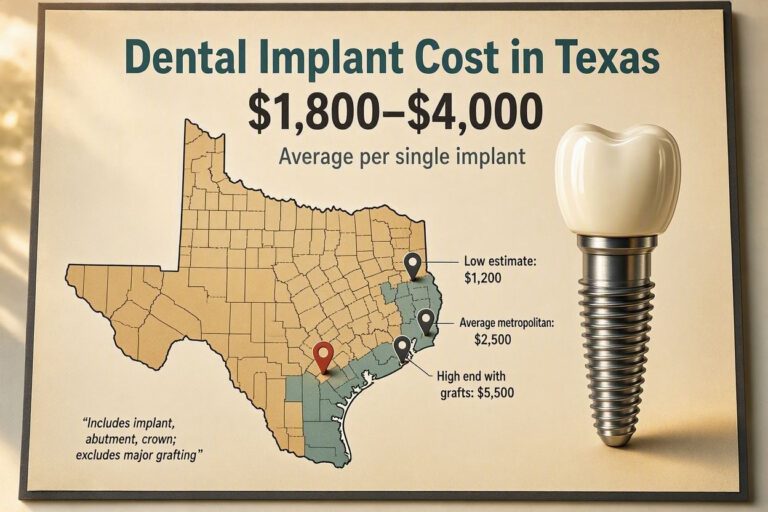
| Single implant + crown | $3,000 – $4,500 | $4,500 – $6,500 |
| Full arch (All-on-4) | $15,000 – $20,000 | $20,000 – $30,000 |
| Bone grafting (simple) | $500 – $1,000 | $800 – $1,500 |
| Sinus lift | Not typically offered | $1,500 – $3,000 |
Why pay more? You are paying for lower risk. A specialist has hospital privileges, emergency backup plans, and a 95%+ success rate even in complex cases. A failed implant costs you double: removal, bone graft, and a second placement.
Insurance and Payment Options
Most dental insurance plans do not cover implants. However, they may cover the crown portion or the bone graft. Always ask for a “pre-treatment estimate.”
- CareCredit: A medical credit card with 6 to 12 months interest-free financing.
- FSAs and HSAs: You can use pre-tax dollars for implants.
- Dental schools: If budget is a major issue, university implant programs offer specialist-supervised care at 50% less cost.
Important note: Never choose an implant provider based on price alone. The cheapest option often becomes the most expensive one in the long run.
10 Critical Questions to Ask Before Hiring a Specialist
You are the consumer. You have the right to interview your surgeon. Print this list and bring it to your consultation.
- How many implants have you placed in the last 12 months? (Look for 100+ for a specialist, 50+ for a general dentist).
- What is your failure rate? (Honest answer: 1-3% for lower jaw, 5-8% for upper jaw).
- Do you use a CBCT scan and guided surgery? (Yes is the only correct answer).
- What happens if the implant fails? (They should offer a free replacement or refund).
- Are you board certified? (For oral surgeons: ABOMS. For periodontists: ABP).
- Do you have hospital privileges? (Sign of a highly trained surgeon).
- Do you treat my whole case, or will I need a separate dentist for the crown?
- What sedation options do you offer for nervous patients?
- Can I speak to three former patients who had the same procedure?
- What does your warranty cover and for how long? (5 to 10 years is standard from a specialist).
If a specialist hesitates or gives vague answers to any of these questions, walk away.
Signs You Are in the Wrong Place (Red Flags)
Not every clinic that says “dental implants specialist” on the door is telling the truth. Watch for these warning signs.
- Same-day implants for everyone. This is a marketing gimmick. Only 10-15% of patients qualify for immediate implants.
- No CBCT machine on site. They are sending you elsewhere for scans. This means they do not place enough implants to justify owning one.
- Pressure to sign today. “This price is only valid if you book surgery right now.” A true specialist never uses high-pressure sales.
- They place implants and do root canals and wisdom teeth extractions. A real specialist focuses on one or two procedures exclusively.
- You cannot find their before-and-after photos. Ask for 10 cases similar to yours. If they cannot show them, they do not have them.
*”I have replaced over 200 implants placed by non-specialists,”* shares Dr. Marcus Chen, an oral surgeon in Seattle. “The most common problem? Poor angulation. The implant was placed at the wrong angle, so a normal crown could not be attached. The patient paid twice.”
Recovery: What Is Normal and What Is Not
You will experience some swelling and mild discomfort after implant surgery. That is normal. Here is how to tell the difference between standard healing and a real problem.
Normal (Do not panic)
- Swelling: Peaks at 48 hours, then goes down.
- Bruising: Yellow or purple marks on your cheek or chin.
- Minor oozing: Pink saliva for the first 24 hours.
- Sore throat: From the tube used during sedation.
- Difficulty opening wide: Your jaw muscles are angry. This resolves in 5 to 7 days.
Not Normal (Call your specialist immediately)
- Bleeding that soaks a gauze pad every 10 minutes for more than 3 hours.
- Fever over 101°F (38.3°C).
- Swelling that worsens after day 3.
- Numbness that extends to your lip or chin after the anesthesia should have worn off (12+ hours).
- A foul taste or smell accompanied by pain. This can indicate an infection.
Your specialist should give you a 24-hour emergency number. If they do not offer one, choose a different provider.
Week-by-Week Healing Guide
| Time Period | What You Can Do | What to Avoid |
|---|---|---|
| Days 1-3 | Rest. Ice packs (20 min on, 20 off). Soft, cold foods (smoothies, yogurt, pudding). | Spitting, using a straw, hot food, smoking, exercise. |
| Days 4-7 | Warm compresses. Soft warm foods (mashed potatoes, scrambled eggs, soup). Gentle salt water rinses. | Chewing on the surgery side. Lifting heavy objects. |
| Weeks 2-4 | Most swelling gone. Return to desk work. Start gentle chewing on the opposite side. | Crunchy, sticky, or hard foods. Nuts, chips, candy. |
| Months 1-3 | Eat normally but carefully. Return to exercise fully. | Direct trauma to the area (sports without a mouthguard). |
| Months 4-6 | Normal life. The implant is fusing. | Smoking. It cuts blood flow by 40% and is the #1 cause of late failure. |
Long-Term Success: How to Make Your Implant Last 30+ Years
A well-placed implant by a true specialist can outlive you. But only if you take care of it. Implants themselves do not get cavities, but the gum tissue around them is fragile.
The Daily Cleaning Routine for Implant Owners
- Special floss or superfloss: You must clean underneath the crown where it meets the gum.
- Water flosser (Waterpik): Use on a low setting to flush out food debris.
- Soft nylon brush: Never use metal scalers or hard-bristle brushes on the crown.
- Avoid whitening toothpaste: It can roughen the crown’s surface, allowing bacteria to stick.
Professional Maintenance Schedule
| Time | Action | Who Does It |
|---|---|---|
| Every 3-4 months (first year) | Check implant stability, measure pocket depths around the implant. | Specialist or periodontist |
| Every 6 months after year one | X-ray to check bone levels, professional cleaning with plastic instruments. | General dentist or hygienist trained in implant maintenance |
| Annually | Full exam and bite check. | Specialist |
Important note: Regular dental hygienists use metal scalers. Metal can scratch the surface of your implant crown and abutment. Always confirm that your hygienist uses plastic or titanium instruments on your implant.
Habits That Kill Implants (Even Good Ones)
- Smoking or vaping: Nicotine constricts blood vessels. Your bone cannot heal. Failure rate triples.
- Teeth grinding (bruxism): The implant is rigid. Your natural tooth flexes. Grinding can fracture the crown or the screw.
- Using your teeth as tools: Opening bottles, tearing packages, biting nails. This is how crowns break.
- Skipping checkups for 2+ years: Peri-implantitis (bone loss around the implant) is silent until it is too late.
Specialist vs. General Dentist: A Detailed Comparison
Many readers ask: Do I really need a specialist? Let us break this down by your specific situation.
You Probably Need a Specialist If:
- You need multiple implants (3 or more).
- You have significant bone loss from dentures or gum disease.
- You have a medical condition like uncontrolled diabetes, osteoporosis, or an autoimmune disorder.
- You want a full arch replacement (All-on-4, fixed bridge).
- You have been told you need a sinus lift or nerve repositioning.
- Another implant has already failed on you.
A Highly Experienced General Dentist May Be Fine If:
- You need a single implant in the lower jaw (which has denser bone).
- Your CBCT scan shows thick, healthy bone (8mm+ width, 12mm+ height).
- You do not smoke, and you have no medical complications.
- The dentist has placed over 500 implants and can document their success rate.
- They use guided surgery and work closely with a surgeon for backup.
The Hybrid Model (Best of Both Worlds)
Increasingly, you will find “implant teams.” An oral surgeon places the implant (surgical phase), and your general dentist makes and places the crown (restorative phase). This is often the ideal setup. You get the surgeon’s safety and the restorative dentist’s artistry.
Ask your general dentist: “Who is your preferred surgical specialist?” If they cannot name one, or if they insist on doing everything themselves without advanced training, be cautious.
The Psychological Side: Fear, Anxiety, and Trust
Let us be honest with each other. Dental fear is real. Up to 15% of Americans avoid the dentist entirely because of anxiety. The idea of a “screw in your jawbone” sounds terrifying to many people.
A true dental implants specialist understands this. Their office should feel different from a normal dental clinic.
What a Specialist’s Office Should Offer for Anxious Patients
- A separate consultation room away from the sounds of drills.
- Options for sedation: Nitrous oxide (laughing gas), oral sedatives (a pill), or IV sedation (twilight sleep).
- A “stop signal.” You raise your hand, and they stop immediately. No questions asked.
- Transparent explanations without using scary words like “drill” or “cut.”
*”I have placed implants in a 92-year-old woman and in a man who sobbed through his first three consultations,”* says Dr. Vasquez. “The key is patience. We never move faster than the patient’s comfort level.”
Do not be ashamed of your fear. A good specialist has seen it all. They will work with you, not against you.
Geographic Differences: Where to Find the Best Specialists
Implant quality varies by region and country. If you are considering traveling for cheaper implants (dental tourism), read this section carefully.
United States and Canada
- Cost: Highest. But also the strictest regulations and best emergency recourse.
- Training: Board certification is rigorous. Malpractice laws protect you.
- Downside: You will wait longer for appointments. Costs can be prohibitive.
Mexico and Costa Rica
- Cost: 50-70% less than the US.
- Quality: Excellent specialists exist, especially near border towns and in capital cities. Many are US-trained.
- Risk: If the implant fails, you are traveling back for repairs. Language barriers can complicate communication.
- What to do: Look for specialists with “AAID” or “ICOI” memberships. These are international implant organizations with high standards.
Eastern Europe (Hungary, Poland, Turkey)
- Cost: 60-80% less than Western Europe or US.
- Quality: Highly variable. Turkey has excellent and terrible clinics. Research obsessively.
- Risk: Air travel after surgery increases swelling and blood clot risk. Do not fly within 5 days of surgery.
- What to do: Only go if you can stay for 10-14 days minimum. Get three independent reviews from previous patients in your home country.
Southeast Asia (Thailand, Philippines)
- Cost: Very low. But travel costs balance the savings.
- Quality: Top-tier hospitals (Bumrungrad in Bangkok) are world-class. Small clinics are very risky.
- Risk: Very long flights (increased DVT risk). Different infection control standards.
- What to do: Stick to JCI-accredited hospitals only.
Important note: If you travel for implants, you must find a local specialist willing to manage complications. Call three local specialists and ask: “Will you treat a failed implant from [country]?” Many will say no.
The Future of Implant Dentistry: What Specialists Are Doing Now
The field evolves quickly. Today’s specialist uses tools that did not exist five years ago. Here is what cutting-edge looks like.
1. Computer-Guided and Robotic Surgery
A CBCT scan and intraoral scan are merged into a 3D model. The specialist designs the implant placement on a computer screen before you arrive. Then, during surgery, a robotic arm or 3D-printed guide ensures the implant goes exactly where planned.
Benefit: Accuracy within 0.2mm. Faster surgery. Less swelling.
2. Immediate Loading “Teeth in a Day”
This is not for everyone. But for patients with excellent bone, some specialists can place implants and attach a temporary fixed bridge in a single appointment. You never walk out without teeth.
Catch: The temporary bridge is acrylic. You eat only soft foods for 4 months. Then you get the permanent bridge.
3. Zirconia (Metal-Free) Implants
A small percentage of patients are allergic to titanium. Zirconia implants (ceramic) are metal-free and white, so they look more natural. However, they are more brittle and have a slightly higher failure rate in early studies. Most specialists still recommend titanium for molars.
4. Platelet-Rich Fibrin (PRF)
The specialist draws a small amount of your blood before surgery. They spin it in a centrifuge to concentrate your own healing factors. This gel is placed over the implant site. It accelerates soft tissue healing by 30-40%.
Ask your specialist: “Do you offer PRF?” It is low-cost and side-effect free.
Frequently Asked Questions (FAQ)
1. How painful is dental implant surgery?
Most patients rate the pain as 2-3 out of 10, less than a tooth extraction. You will be numb during the procedure. Over-the-counter ibuprofen usually controls post-op pain. Severe pain is not normal.
2. How long do dental implants last?
With proper home care and regular checkups, 90-95% of implants last 25+ years. Many last a lifetime. The crown on top may need replacement after 10-15 years due to normal wear.
3. Can I get an implant if I have gum disease?
Yes, but only after the gum disease is treated and controlled. An active infection will immediately reject the implant. A periodontist will treat your gums first (3-6 months), then place the implant.
4. Am I too old for implants?
Age is not a barrier. Specialists place implants in patients in their 80s and 90s successfully. More important is your general health. Uncontrolled diabetes, heavy smoking, and certain medications (bisphosphonates) are bigger concerns.
5. What is the success rate for dental implants?
Lower jaw: 95-98%. Upper jaw: 90-95%. Success rates drop by 10-15% for smokers and poorly controlled diabetics. A specialist’s success rate should be at or above these numbers.
6. Will insurance cover any part of an implant?
Some plans cover the crown and abutment (restorative portion) but not the surgical implant. Others have a “missing tooth clause” that excludes implants entirely. Always call your insurance before your consultation.
7. Is it dangerous to have an MRI with a dental implant?
No. Titanium is non-magnetic and completely safe for MRIs. Zirconia is also safe. However, the crown material (porcelain fused to metal) can cause minor image distortion in the head and neck region. Tell your MRI technician.
8. What is peri-implantitis?
It is the implant version of gum disease. Bacteria cause inflammation and bone loss around the implant. It is treatable in early stages with specialized cleaning. In late stages, the implant may need removal. Prevent it with excellent home care and regular cleanings.
Additional Resource
For an independent, non-commercial directory of board-certified dental implant specialists in your area, visit:
The American Academy of Implant Dentistry (AAID) Referral Service
This resource allows you to search for specialists who have passed rigorous credentialing exams. It is free for patients. Note: Not every good specialist is listed, but every listed specialist has met minimum educational standards. Always verify with a second resource.
Conclusion
Choosing a dental implants specialist is one of the most important health decisions you will make. A true specialist—either an oral surgeon or a periodontist—brings years of advanced training, a lower risk of complications, and a higher long-term success rate. Do not rush. Ask the ten critical questions, look for red flags, and prioritize safety over price. Your future smile depends on the foundation you build today.
Disclaimer: This article is for informational purposes only and does not constitute medical advice. Dental implant outcomes vary based on individual health, anatomy, and adherence to post-operative care. Always consult with a licensed dental professional in your jurisdiction before making any treatment decisions. The author and publisher disclaim any liability for any adverse effects arising directly or indirectly from the use of the information contained herein.