Dental Implants Tempe: A Realistic Guide to Replacing Missing Teeth
Losing a tooth can feel frustrating. Maybe it happened suddenly. Maybe you have been dealing with it for years. Either way, you are not alone.
Many people in Tempe face the same decision. Should you get a bridge? A partial denture? Or should you consider dental implants?
This guide is here to help. We will walk through the entire process. No confusing jargon. No unrealistic promises. Just clear, practical information to help you decide what is best for your mouth and your budget.
What Exactly Are Dental Implants?
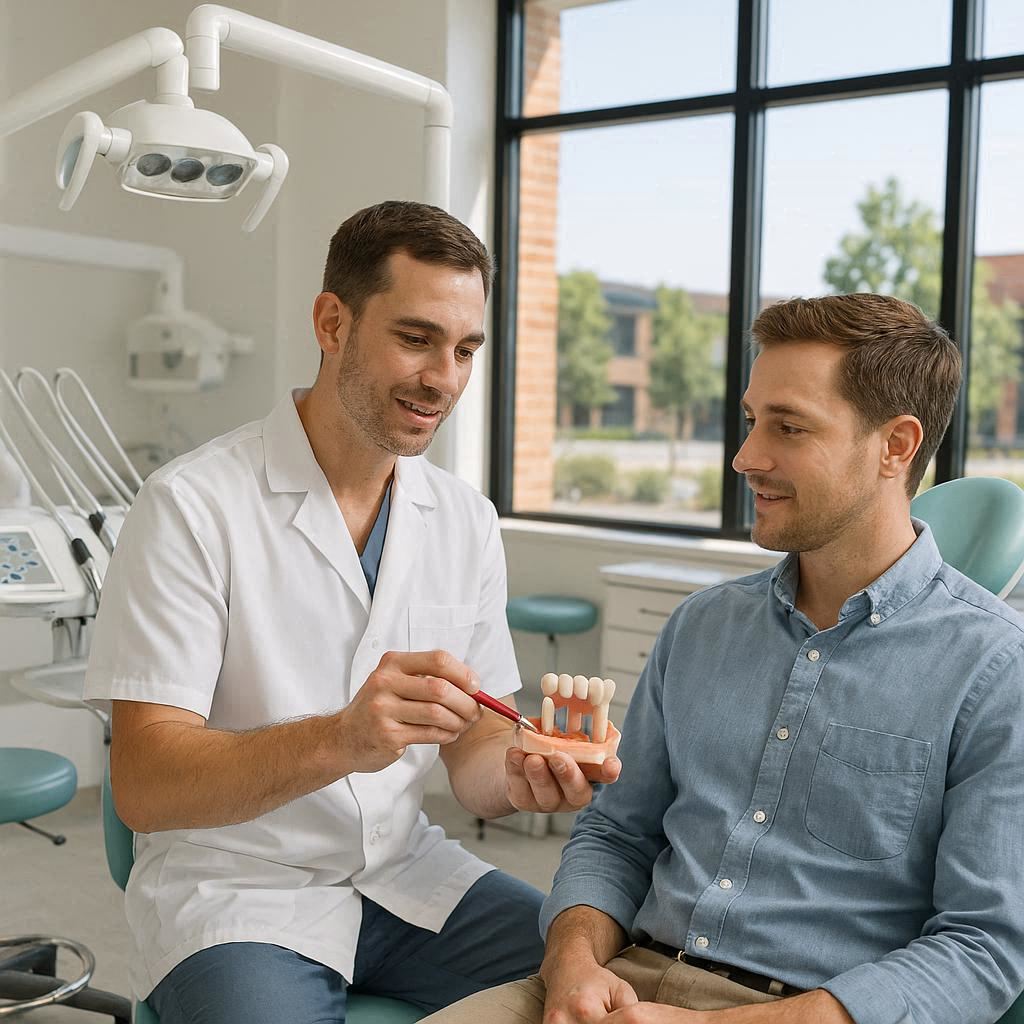
A dental implant is a small post. It is usually made of titanium. A surgeon places this post into your jawbone. It acts like the root of a natural tooth.
After the implant heals, we attach a crown on top. That crown is the part you see. When done correctly, no one can tell the difference.
Here is the honest truth. Implants are not “new teeth.” They do not feel exactly like your original ones. But for most people, they come very close. And they are much more stable than dentures.
The Three Main Parts of an Implant
| Part | What It Does | Material |
|---|---|---|
| Implant post | Replaces the root | Titanium (or zirconia) |
| Abutment | Connects post and crown | Titanium or gold alloy |
| Crown | The visible tooth | Porcelain or ceramic |
Most people focus on the crown. That makes sense. But the real magic is the post. That post fuses with your bone. Dentists call this “osseointegration.” It is a fancy word for a simple idea: your bone grows around the implant. That makes it rock solid.
Note from your Tempe dentist: Not everyone is a candidate for implants right away. Bone health matters. We will talk more about that later.
Why So Many Tempe Residents Are Choosing Implants Over Bridges
Walk into any dental office in Tempe, and you will see a shift. Ten years ago, bridges were the standard. Today, implants are becoming the first choice.
Why? Because bridges have a hidden problem.
The Problem with Traditional Bridges
A bridge usually requires shaving down the two teeth next to the missing one. Those teeth might be perfectly healthy. But we have to grind them down to hold the bridge. That is permanent damage.
Implants do not touch your healthy teeth. That is a huge advantage.
A Quick Comparison: Implants vs. Bridges vs. Dentures
| Feature | Dental Implant | Bridge | Partial Denture |
|---|---|---|---|
| Affects healthy teeth? | No | Yes (shaving) | No |
| Removable? | No | No | Yes |
| Average lifespan | 20+ years | 5–10 years | 5–8 years |
| Bone loss prevention | Yes | No | No |
| Comfort level | Very high | High | Medium |
As you can see, implants win on longevity. But they also cost more upfront. Let us talk about that honestly.
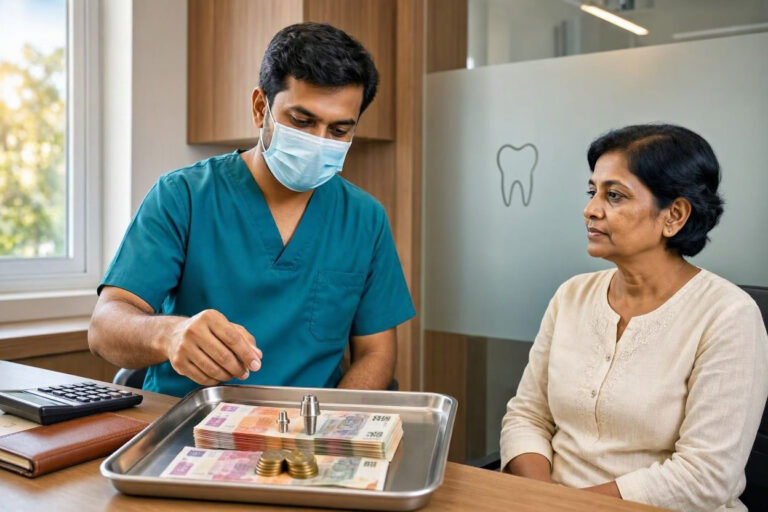
The Real Cost of Dental Implants in Tempe
Money is uncomfortable to talk about. But ignoring it does not help.
Here is the range you can expect in the Tempe area:
- Single implant with crown: 3,000–6,000
- Implant-supported bridge (3–4 teeth): 6,000–10,000
- Full arch implant (All-on-4): 15,000–30,000 per arch
These numbers might scare you. That is fair. But let us put them in perspective.
Why Implants Are an Investment, Not Just an Expense
A bridge might cost 2,500.Butyouwillreplaceittwicein15years.Thatis7,500 total. Plus, you lose bone over time. That changes your face shape. It makes you look older.
An implant costs more today. But you will likely never replace it. The crown might need a new one after 15–20 years. The implant post usually lasts a lifetime.
“I hesitated for two years because of the price. Now I tell everyone: just do it. My implant has paid for itself twice over in peace of mind.” — David, Tempe resident
Insurance and Payment Options
Most dental insurance does not fully cover implants. But they often cover part of the crown. Many plans pay 50% of the crown cost.
Some Tempe dentists offer in-house payment plans. Others work with third-party financing like CareCredit. Do not be afraid to ask. A good office will be upfront about this.
The Step-by-Step Process of Getting an Implant in Tempe
Let me walk you through what actually happens. No secrets. No surprises.
Step 1: The Consultation (Day 1)
You sit down with a dentist or oral surgeon. They take X-rays or a CT scan. This shows your bone level. They ask about your health history.
Common questions they ask:
- Do you smoke?
- Do you have diabetes or heart disease?
- Are you on any blood thinners?
- Have you had gum disease?
Be honest. These factors affect success rates.
Step 2: Bone Graft (If Needed)
Here is a reality check. Many people need a bone graft first. If you lost your tooth years ago, your bone likely shrank. No bone = no implant.
A bone graft adds material to your jaw. It comes from a donor, a cow, or your own bone. It sounds scary. It is actually routine. Healing takes 3–6 months.
Step 3: Implant Placement
This is surgery. But it is usually done in the office with local anesthesia. You are awake but numb. The dentist drills a small hole and places the post. Then they stitch the gum closed.
How long does it take? About 45–90 minutes per implant.
Step 4: Healing (Osseointegration)
Now you wait. The bone grows around the implant. This takes 3–6 months. During this time, you might have a temporary tooth. Or you might just have a gap. It depends on the location.
Step 5: Abutment Placement
A small second surgery. The dentist reopens the gum and attaches the abutment. This is quick. Healing takes about two weeks.
Step 6: Crown Placement
Your dentist takes an impression. A lab makes your custom crown. Two weeks later, they screw or cement it onto the abutment. Done.
Total timeline: 4–9 months. Sometimes longer if you need a bone graft.
Recovery and What to Expect After Surgery
Let me be honest. The first 48 hours can be uncomfortable. You will have swelling. You might need over-the-counter pain meds. Some people need prescription ones.
But most patients say: “It was not as bad as I expected.”
A Realistic Recovery Timeline
| Time After Surgery | What You Feel | What You Can Eat |
|---|---|---|
| Day 1–3 | Swelling, mild to moderate pain | Cold liquids, smoothies, yogurt |
| Day 4–7 | Less swelling, minor discomfort | Soft foods (eggs, pasta, soup) |
| Week 2 | Almost normal | Most soft foods |
| Week 3+ | No pain | Normal diet (avoid hard nuts) |
Important note: Avoid straws for two weeks. The suction can dislodge the blood clot. That leads to a painful condition called dry socket.
Signs You Should Call Your Dentist
- Fever over 101°F (38.3°C)
- Bleeding that does not stop
- Pain that gets worse after day 3
- A bad taste that does not go away
These are rare but possible. Do not ignore them.
Finding the Right Implant Dentist in Tempe
Not all dentists place implants. Some refer you to an oral surgeon or periodontist. Both are fine. What matters is experience.
Questions to Ask Before You Choose
- How many implants do you place per year? (Look for 100+)
- What is your success rate? (Should be 95% or higher)
- Do you use 3D imaging? (Yes = better planning)
- What happens if the implant fails? (Some offer free replacement)
- Can I talk to a past patient? (A good dentist will say yes)
Red Flags to Watch For
- Prices that seem too good to be true (under $2,000 for everything)
- No mention of bone grafting (they either skip it or ignore it)
- Guarantees of same-day teeth without explaining the risks
- Heavy pressure to decide right away
A trustworthy dentist explains both pros and cons. They do not rush you.
Who Is a Good Candidate for Implants?
Let me be direct. Implants are not for everyone. And that is okay.
Good Candidates
- Have one or more missing teeth
- Have enough jawbone (or willing to get a graft)
- Do not smoke heavily (or willing to quit during healing)
- Have controlled medical conditions like diabetes
- Are willing to wait 4–9 months
Poor Candidates (Usually)
- Children or teens (jaw still growing)
- Heavy smokers who will not quit
- People with untreated gum disease
- Those who cannot stop certain blood thinners
- People who clench or grind severely without a nightguard
That last one matters. Grinding can crack implants. They are strong, but not indestructible.
Smoking and Implants: The Hard Truth
Tempe has many outdoor lifestyles. And many people smoke. If you smoke, listen carefully.
Smoking reduces blood flow to your gums. That means slower healing. It also increases your risk of implant failure.
The numbers:
- Non-smokers: 95–98% success rate
- Light smokers (less than 10 per day): 85–90% success rate
- Heavy smokers (20+ per day): 70–80% success rate
If you smoke, you have two choices:
- Quit for 2–4 weeks before and after surgery
- Accept a higher risk of failure
Some dentists will not place implants in smokers at all. Others will but with clear warnings.
“I smoked a pack a day when I got my implant. It failed after eight months. The second time, I quit for one month. It worked perfectly. The choice was mine.” — Anonymous patient
How Long Do Dental Implants Actually Last?
You see ads saying “lifetime implants.” That is misleading.
The implant post can last 30+ years. Many last a lifetime. But the crown on top wears down. Crowns last 10–20 years with good care.
After that, you replace just the crown. The post stays.
What Reduces Implant Lifespan?
- Poor oral hygiene (leading to peri-implantitis)
- Smoking
- Teeth grinding
- Skipping dental checkups
- Uncontrolled diabetes
What Extends Implant Lifespan?
- Brushing twice daily (soft bristles)
- Flossing around the implant
- Using a water flosser (highly recommended)
- Wearing a nightguard if you grind
- Seeing your dentist every 6 months
Think of an implant like a car. It lasts a long time. But you still need to change the oil.
Alternatives to Implants: When They Might Make Sense
Implants are great. But they are not always the best answer.
Alternative 1: Fixed Bridge
Good for: People who want something faster (3 weeks vs 6 months). Also good for those who cannot have surgery for medical reasons.
Bad for: Healthy teeth next to the gap. They get damaged forever.
Alternative 2: Removable Partial Denture
Good for: Tight budgets. A partial denture costs 500–1,500.
Bad for: Comfort and confidence. Many people hate how they feel. They also wobble when you eat.
Alternative 3: Do Nothing
Good for: People with no functional issues. If the missing tooth is in the back and does not bother you, waiting is an option.
Bad for: Your other teeth. Gaps cause shifting. Your teeth will drift over time. You also lose bone.
Decision Helper: Which Is Right for You?
| If you want… | Choose… |
|---|---|
| The longest-lasting solution | Implant |
| The fastest solution | Bridge (3 weeks) |
| The cheapest solution | Partial denture |
| No surgery | Bridge or denture |
| To keep healthy teeth untouched | Implant |
Common Fears and Concerns (Addressed Honestly)
“I am afraid of the pain.”
Most people rate implant surgery a 2 or 3 out of 10. A tooth extraction is often worse. You are numb during the procedure. Afterward, ibuprofen usually works fine.
“What if my body rejects it?”
Your body does not “reject” titanium like an organ transplant. But infection can cause failure. That is not rejection. That is an infection. Good oral hygiene prevents most cases.
“I have old crowns and fillings. Is that a problem?”
Not at all. Implants work alongside existing dental work. Your dentist just needs a full picture of your mouth.
“I am over 70. Am I too old?”
Age alone does not matter. Health matters. Many 80-year-olds get implants. The key question is: can you heal? If you are generally healthy, yes.
Special Situations: Full Arch and All-on-4
What if you are missing all your upper or lower teeth? Single implants would cost $60,000. That is unrealistic for most people.
Enter All-on-4.
How All-on-4 Works
Four implants support a full arch of teeth. The dentist places them at angles. That maximizes bone contact. You get a full set of fixed teeth in one day.
The process:
- Surgery day: Place 4 implants and attach a temporary bridge
- Heal for 4–6 months
- Final bridge placement
Cost: 15,000–30,000 per arch
That is still expensive. But it is far less than 14 individual implants (40k–80k).
Who Is a Good Candidate for All-on-4?
- People with significant bone loss
- Those who hate removable dentures
- People who want permanent, non-removable teeth
- Those with a budget of at least $15,000 per jaw
The Hidden Benefit You Did Not Consider
Here is something most websites do not tell you.
Implants preserve your facial structure. When you lose a tooth, the bone dies. Over years, your jaw shrinks. Your cheeks sink in. Your chin rotates forward. You look older.
Implants stop this process. The bone stays alive because the implant gives it a job.
A friend of mine got a single implant for a front tooth. She said: “It is not just about the tooth. My whole face looks like me again.”
That is real. And you cannot put a price on it.
Step-by-Step Checklist for Your Implant Journey in Tempe
Use this list to stay organized.
- Step 1: Research 2–3 Tempe implant dentists
- Step 2: Schedule consultations (often free or low cost)
- Step 3: Ask each dentist about their experience and pricing
- Step 4: Get a CT scan (required for planning)
- Step 5: Discuss bone grafting if needed
- Step 6: Review payment options and insurance coverage
- Step 7: Schedule implant placement surgery
- Step 8: Arrange time off work (1–2 days recommended)
- Step 9: Buy soft foods before surgery
- Step 10: Follow all aftercare instructions carefully
- Step 11: Attend all follow-up appointments
- Step 12: Enjoy your new smile for decades
Frequently Asked Questions (FAQ)
Q: Do dental implants hurt?
A: The procedure itself does not hurt because you are numb. Afterward, most people have mild to moderate discomfort for 2–3 days. Over-the-counter pain relievers usually work fine.
Q: How long does the entire process take?
A: Typically 4–9 months from start to finish. Bone grafting adds 3–6 months. Same-day implants exist but are not for everyone.
Q: Can I get implants if I have gum disease?
A: You must treat gum disease first. Active infection will cause implant failure. Your dentist will treat the gum disease, then place the implant.
Q: Are dental implants covered by Arizona Medicaid (AHCCCS)?
A: Generally, no. AHCCCS covers very limited dental services. Extractions and dentures for some adults. Implants are almost never covered.
Q: How do I clean my implant?
A: Brush normally. Floss around the implant base. Many people add a water flosser. Regular checkups let your dentist clean the hard-to-reach areas.
Q: What happens if an implant fails?
A: The dentist removes it. After healing, you can try again. Some dentists offer a warranty or free replacement. Always ask before surgery.
Q: Can I eat normally with implants?
A: Yes, once healed. Steak, apples, corn on the cob — all fine. Just avoid biting hard objects like ice or pens.
Q: Do implants feel like real teeth?
A: Very close. The main difference is that you do not feel temperature as strongly. Many people forget they even have an implant.
Additional Resource
For a deeper dive into the science of osseointegration and long-term implant care, visit the American Academy of Implant Dentistry’s patient education page:
https://www.aaid.com/patients/
Note: This is an external resource. Always consult your own dentist before making medical decisions.
Conclusion
Dental implants in Tempe offer one of the most reliable ways to replace missing teeth. They last longer than bridges, protect your bone, and leave your healthy teeth untouched. The upfront cost is real, but so are the long-term benefits. If you have good general health and reasonable expectations, implants can give you back a stable, confident smile for decades to come.
Disclaimer: This article is for educational purposes only. It does not constitute medical advice. Dental implant outcomes vary based on individual health, anatomy, and aftercare. Always consult a licensed dentist or oral surgeon in Tempe for a personal evaluation. The author and publisher are not responsible for any decisions made based on this content.