Full Mouth Mini Dental Implants: A Realistic Guide to a Smaller Solution
Losing most or all of your teeth changes your life. It affects how you eat, smile, and even feel about yourself. You have probably heard about traditional implants. But they often require a lot of bone and a long healing time. That is where mini dental implants come into the picture.
You might have seen ads promising a new smile in one day. It sounds tempting. But is it realistic? In this guide, we will walk you through everything you need to know about full mouth mini dental implants. We will look at the good, the possible downsides, and the real facts. No confusing medical terms. Just clear, honest information.
What Exactly Are Mini Dental Implants?
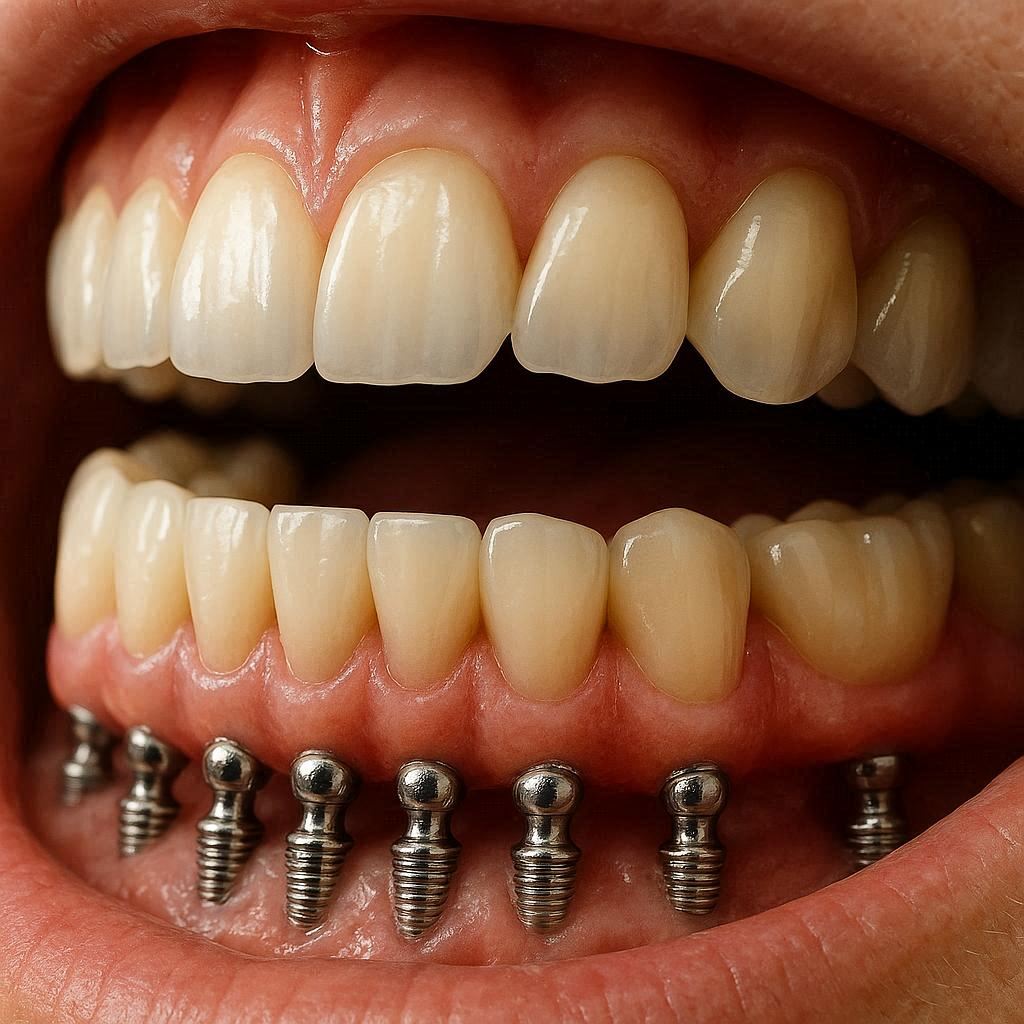
Before we talk about a whole mouth, let us focus on a single mini implant. Imagine a traditional implant. It is usually about 3.5 to 5 millimeters wide. Now, imagine a much thinner version. A mini implant is less than 3 millimeters in diameter. Often, it is closer to 1.8 to 2.4 millimeters.
Think of it like this:
- Traditional implant: a thick screw.
- Mini implant: a small, sturdy nail.
These mini implants are made of titanium. They have a special ball-shaped top or a small O-ring attachment. This design helps hold a denture or a bridge in place.
One Important Difference
Traditional implants go deep into the jawbone. They fuse with the bone over months. Mini implants are smaller. They often sit slightly above the bone or just penetrate the top layer. They still offer good stability. But they are not meant for the same heavy chewing forces as traditional ones.
Reader Note: Do not confuse mini implants with “implant dentures.” Mini implants are a specific product with a specific use case. They are not a cheaper copy of traditional implants. They are a different tool for different situations.
Full Mouth Mini Dental Implants: What Does “Full Mouth” Mean?
When we say “full mouth,” we are talking about either the upper arch, the lower arch, or both. Most people need help with their lower denture first. Lower dentures tend to move more. But a full mouth solution covers all teeth.
A typical full mouth approach using mini implants might look like this:
| Arch | Number of Mini Implants | Common Use |
|---|---|---|
| Lower Jaw | 4 to 6 | Stabilize a lower denture |
| Upper Jaw | 6 to 8 | Stabilize an upper denture |
| Both Arches | 10 to 14 | Full mouth stabilization |
However, some systems use more. A few use fewer. The exact number depends on your bone density and the denture design.
Not a Fixed Bridge
Here is a key point. Full mouth mini implants usually do not support a fixed bridge. You will most likely have a removable denture that snaps onto the implants. You take it out at night to clean it. That is not a bad thing. It actually makes hygiene easier.
Some dentists offer “fixed” options with mini implants. But that is less common. For this article, we focus on the most realistic and widely available approach: implant-retained overdentures using mini implants.
Who Is a Realistic Candidate?
Not everyone needs large, expensive traditional implants. But not everyone is a good fit for mini implants either. Let us be honest about who benefits most.
Good Candidates Often Have:
- Severe bone loss in the jaw. They cannot support traditional implants without a bone graft.
- A thin or narrow jawbone. Mini implants fit in smaller spaces.
- A lower denture that moves or floats. This is the most common reason people seek mini implants.
- Health conditions that make surgery risky. Mini implant placement is less invasive. It often uses only local anesthesia.
- Limited budget. Mini implants cost less than traditional ones. But they are not “cheap.” We will cover costs later.
- Realistic expectations. They understand mini implants are for stability, not for chewing steak like a 20-year-old.
Less Ideal Candidates Include:
- People who grind or clench their teeth hard (bruxism). The smaller implants can bend or break over time.
- Those who want a fixed, non-removable solution for both arches.
- Patients with uncontrolled diabetes or immune disorders. Any implant needs good healing.
- Smokers. Smoking drastically reduces success rates for all implants, including mini ones.
Important Note: A mini implant is still a medical device. It still requires surgery. Always get a real exam from a dentist. Do not rely on online quizzes or mail-order kits.
The Procedure: What Happens Step by Step?
One of the main selling points of mini implants is speed. The procedure is often less traumatic than traditional implant surgery. Let us walk through a typical case.
Step 1: Consultation and Imaging
Your dentist takes X-rays or a 3D scan (CBCT). They measure your bone height and width. They check for infections. Then they decide how many mini implants you need.
Step 2: Denture Preparation (or Creation)
You already have a denture? Good. The dentist may use your existing one. They will add metal housings to the inside. These housings snap onto the mini implants. If you have no denture, they will make a new one first.
Step 3: The Surgery Day
Here is what usually happens:
- Numbing gel and local anesthetic.
- The dentist makes small pilot holes. No large incisions or stitches are needed in most cases.
- The mini implants are screwed into place through the gum tissue.
- Your denture is adjusted and snapped onto the implants.
- You walk out with a stable denture the same day.
Most people describe the feeling as pressure, not pain. The whole appointment for one arch takes about 1 to 2 hours.
Step 4: Healing and Soft Diet
For the first 24 to 48 hours, you eat soft foods. You avoid chewing directly over the implants. Over the next few weeks, the bone grows around the mini implants. This is called osseointegration. It happens faster than with traditional implants because mini implants are smaller and disturb less tissue.
Step 5: Regular Check-Ups
After 4 to 6 weeks, your dentist checks the fit. They may tighten the O-rings or adjust the denture. Then you are ready for normal use.
Recovery and Healing: What to Expect
Recovery from mini implants is usually faster and easier than from traditional implants. But you still need to be careful.
First 24 Hours
- Some bleeding is normal. Bite on gauze if needed.
- Swelling is mild. Ice packs help.
- Eat yogurt, soup, smoothies, or mashed potatoes.
- Do not spit, rinse hard, or use a straw.
First Week
- Stick to soft foods. Gradually add things like scrambled eggs, pasta, or soft bread.
- Rinse gently with warm salt water after meals.
- Brush your denture and implants carefully with a soft brush.
First Month
- Avoid sticky or hard foods. No chewing ice, hard candy, or nuts directly over the implants.
- Your gums may feel a little sore. This is normal as they adapt.
Long-Term
After about two months, most people can eat most foods. However, remember the limits. Mini implants are not designed for extreme forces. You can enjoy an apple cut into slices. Biting directly into a whole apple? Not advised.
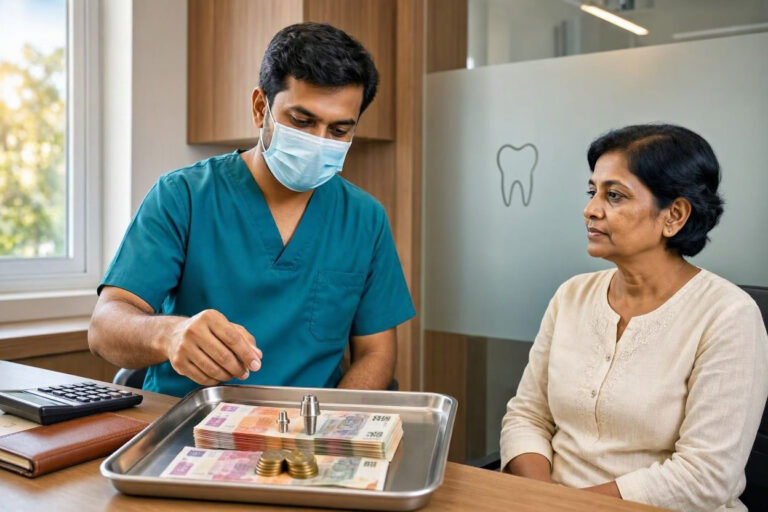
Cost Breakdown: How Much Should You Pay?
Let us talk money. This is a big question. Prices vary widely based on where you live, the dentist’s experience, and how many implants you need.
Here is a realistic range in the United States (2025-2026 estimates):
| Service | Low End | Average | High End |
|---|---|---|---|
| Single mini implant | $500 | $750 | $1,200 |
| Lower arch (4-6 implants + denture attachment) | $3,000 | $5,000 | $8,000 |
| Full mouth (both arches, 10-14 implants) | $6,000 | $10,000 | $16,000 |
| Traditional full mouth implants (comparison) | $25,000 | $35,000 | $60,000+ |
As you can see, mini implants can be one-third to one-half the cost of traditional implant solutions. That is a big difference.
What Is Usually Included?
- The implants themselves
- The surgery placement
- The attachments in your denture
- Follow-up adjustments (first 3 months)
What May Cost Extra?
- New dentures (if yours are old or do not fit well)
- 3D CT scan (usually 300to600)
- Extractions of remaining teeth (75to300 per tooth)
- Long-term maintenance kits
Reader Note: Be careful with “all-in-one” low prices advertised online. Some clinics offer $3,000 full mouth mini implants. That often includes only the implants, not the final denture or follow-ups. Always ask for a written breakdown.
Pros and Cons: An Honest List
Let us put everything side by side. This helps you decide if mini implants are right for you.
The Advantages (Pros)
✅ Less invasive. No large incisions. No stitches in most cases.
✅ Faster healing. Most people eat soft foods the next day. Full recovery in weeks, not months.
✅ Lower cost. Affordable for many middle-income patients.
✅ Preserves bone. Stimulates the jawbone and slows down further bone loss.
✅ Immediate results. You leave the office with a stable denture.
✅ Ideal for lower dentures. Stops that annoying floating feeling.
✅ Works with thin bone. No bone graft needed for most patients.
The Limitations (Cons)
❌ Less chewing power. You can eat well, but not tough or hard foods easily.
❌ Not permanent. Mini implants may last 5 to 15 years. Traditional implants can last 20+ years.
❌ Risk of fracture. Smaller diameter means higher risk of bending or breaking under heavy force.
❌ Not for everyone. Bruxism, heavy smokers, or those needing full fixed bridges are not ideal.
❌ Requires good hygiene. You must clean around the implants daily, or they will fail.
❌ Fewer dentists offer them. Not every implant dentist places mini implants.
Success Rates: Real Numbers
You deserve real data. No fake promises. Here is what independent dental research shows.
- 1-year success rate for mini implants: 94% to 98% (comparable to traditional implants)
- 5-year success rate: 85% to 92%
- 10-year success rate: 75% to 85%
By comparison, traditional implants have a 95% to 98% success rate at 10 years. So traditional implants last longer on average. But mini implants still have very good short to medium-term results.
Why Do Mini Implants Fail?
The most common reasons are:
- Poor oral hygiene (peri-implantitis, a gum infection around the implant)
- Overloading (chewing too hard foods)
- Smoking
- Poor bone quality
- Dentist inexperience
Important: A good dentist and a dedicated patient can achieve excellent results. A cheap, rushed job by an inexperienced provider will fail. Choose your dentist carefully.
Caring for Your Mini Implants Long-Term
Think of your mini implants like a nice car. They need regular care to run well. Here is your maintenance checklist.
Daily Home Care
- Brush the implants with a soft brush and non-abrasive toothpaste.
- Clean the denture attachments with a small interdental brush.
- Soak your denture in a cleaning solution each night (if removable).
- Floss or use a water flosser around the implants.
Professional Maintenance
- Visit your dentist every 6 months for a check-up.
- Replace O-rings or clips every 1 to 2 years. They wear out. This is normal.
- X-rays every 2 to 3 years to check bone levels.
What to Avoid
- Chewing hard candies, ice, or bones
- Using your teeth as tools (opening packages)
- Smoking or tobacco products
If you take care of them, many mini implants last 10 years or more. Some patients have had them for 15+ years. But be prepared for eventual replacement.
Mini vs. Traditional Implants: Comparison Table
This is one of the most helpful sections. Let us compare both options directly.
| Feature | Mini Implants | Traditional Implants |
|---|---|---|
| Diameter | 1.8 – 3.0 mm | 3.5 – 5.0 mm |
| Surgery | Minimally invasive | More invasive |
| Healing time | 4 – 8 weeks | 3 – 6 months |
| Bone graft needed? | Rarely | Often |
| Same-day teeth? | Yes, usually | Sometimes (All-on-4) |
| Chewing force | Moderate | High |
| Longevity | 5 – 15 years | 20+ years |
| Cost (full arch) | 4,000–10,000 | 15,000–40,000 |
| Best for | Loose dentures, thin bone | Full reconstruction, high bite force |
| Removable? | Usually yes | Can be fixed or removable |
Common Questions People Ask (And Honest Answers)
“Can I eat steak with mini implants?”
You can eat softer cuts. But a tough, grilled steak? You will struggle. Many patients avoid very chewy meats.
“Will they look fake?”
No. The visible part is your denture. Your denture looks like teeth. The implants are hidden under the gum.
“Does insurance cover them?”
Some dental insurances cover a portion. But many classify mini implants as “experimental.” Call your insurance first. Medicare does not cover implants.
“Can I get them if I have diabetes?”
Controlled diabetes is often fine. Uncontrolled diabetes is a real risk. Your dentist will ask for your HbA1c levels.
“How painful is the procedure?”
Most patients say 2 to 4 out of 10 during recovery. The placement itself is not painful due to numbing. You may feel pressure.
“What if one fails?”
Your dentist can often replace a single failed mini implant. Your denture will still work with the remaining ones.
Finding a Qualified Provider
Not every dentist places mini implants. And not every dentist places them well. Here is how to find a good one.
Look For:
- A dentist who has placed at least 50 to 100 mini implant cases.
- Before and after photos of real patients.
- Online reviews mentioning mini implants specifically.
- A provider who does a 3D scan before surgery. (X-rays alone are not enough.)
- A dentist who offers a written warranty (6 months to 2 years is common).
Red Flags To Avoid:
- “Same-day full mouth” for $3,000 with no exam.
- No CT scan offered.
- Pressure to pay upfront in full.
- No follow-up care plan.
- Vague answers about what happens if an implant fails.
Pro tip: Ask the dentist: “What is your failure rate for mini implants in the lower jaw?” A good dentist will give you an honest number. A bad one will say “100% success” which is impossible.
The Future of Mini Implants
Mini implants are not going away. In fact, they are improving. Newer designs have stronger alloys. Some have antibacterial coatings. Digital planning software makes placement more precise.
However, they will never replace traditional implants for every case. And that is fine. Different tools for different jobs.
What we are seeing is a growing acceptance. More dental schools now teach mini implant techniques. More insurance companies are starting to cover them. This is good news for patients who need affordable stability.
Conclusion: Three Key Takeaways
1. Full mouth mini dental implants are an excellent, affordable solution for stabilizing loose dentures, especially in people with thin bone or limited budgets.
2. They are less invasive and heal faster than traditional implants, but they also have lower chewing power and a shorter lifespan.
3. Choose a skilled dentist, maintain good daily hygiene, and have realistic expectations—then mini implants can truly change your quality of life.
Frequently Asked Questions (FAQ)
Q: How long do full mouth mini dental implants last?
A: On average, 5 to 15 years with good care. The denture attachments (O-rings) need replacement every 1 to 2 years.
Q: Can I sleep with my mini implant denture?
A: Most dentists recommend removing it at night to let your gums rest and to clean the implants properly.
Q: Are mini implants removable?
A: The implants themselves are permanent. The denture that snaps onto them is removable.
Q: Do mini implants hurt more than regular extractions?
A: No. Most patients say the discomfort is less than a tooth extraction.
Q: Can I get a full mouth of mini implants if I have no teeth at all?
A: Yes. You just need enough bone to hold the mini implants. Your dentist will check this with a 3D scan.
Q: What is the difference between mini implants and All-on-4?
A: All-on-4 uses 4 traditional implants to support a fixed bridge. Mini implants use more implants (usually 6 to 8 per arch) to support a removable denture. All-on-4 is much stronger and more expensive.
Additional Resource
For a deeper, non-commercial look at mini implant research, visit the National Library of Medicine (PubMed) and search for “mini dental implants review.” You will find free, peer-reviewed studies.
👉 Suggested link: PubMed Mini Implants Research (Open in a new tab)
Disclaimer
This article is for general informational purposes only. It does not constitute medical or dental advice. Every patient is unique. You should always consult with a licensed dentist or oral surgeon for a personal examination and treatment plan. The author and publisher are not responsible for any actions taken based on the content of this article. Prices, success rates, and procedures vary by location and provider. Always verify information with a qualified professional.