How Long Can the Implant Suture Stay?
You run your tongue gently over the surgical site for what feels like the hundredth time since your implant surgery. The sutures feel different than they did last week. Maybe looser. Maybe one end is poking out more than before. A flicker of concern crosses your mind. Are they supposed to still be there? Should you call the office, or is this perfectly normal? Dental implant sutures are a temporary but essential component of the healing process, yet patients receive surprisingly little information about what to expect from them. How long they remain in place, what type was used, what happens if they come out early or stay in too long, and when to contact your surgeon are questions that deserve clear answers. Understanding the role and timeline of implant sutures transforms them from a source of worry into a predictable part of your surgical recovery.
The Purpose of Sutures in Implant Surgery
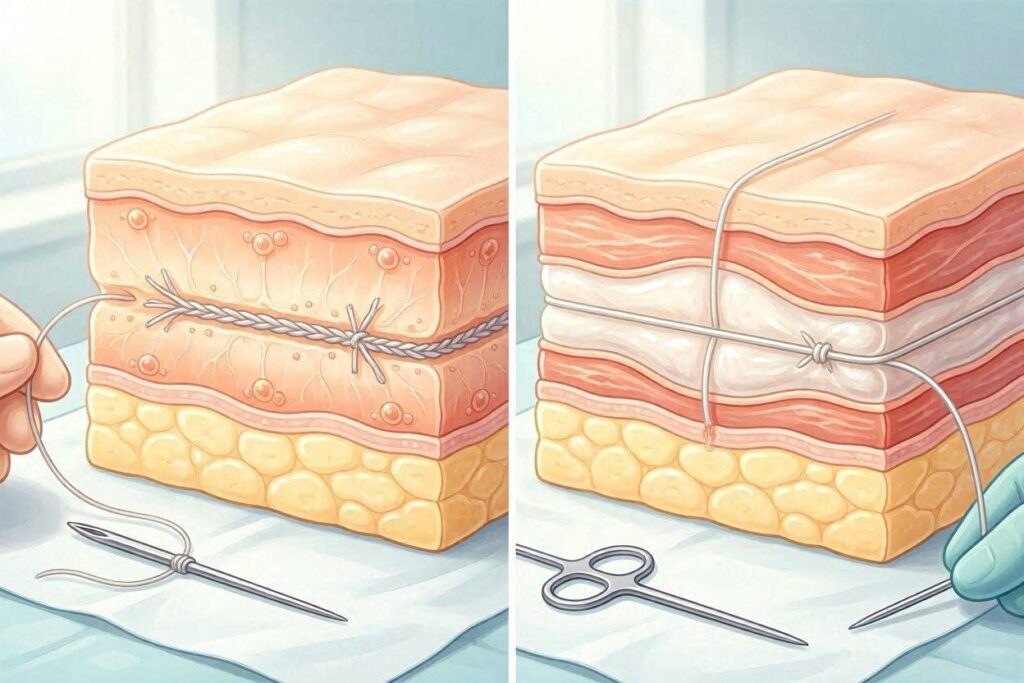
Sutures serve specific surgical objectives that directly influence the success of your implant. They are not merely a formality or a temporary inconvenience. They perform essential functions during the critical early healing period.
Wound Closure and Protection
The primary purpose of sutures is to hold the wound edges together until healing establishes tissue integrity. When the surgeon makes an incision and elevates the gum tissue to access the underlying bone, the tissue’s natural position is disrupted. Sutures restore this position, bringing the cut edges into close approximation.
This closure protects the underlying surgical site. The implant, the bone graft material if used, and the blood clot that forms around the implant are shielded from the oral environment. Without this protection, food debris, bacteria, and mechanical trauma from chewing or tongue movement could disrupt the healing process.
The closed wound also maintains the blood clot in position. This clot is not a passive space-filler. It contains growth factors, signaling molecules, and cells that orchestrate the early phases of healing. Disruption of the clot through wound opening can delay healing and increase the risk of complications.
Tissue Stabilization During Healing
Sutures stabilize the soft tissue during the inflammatory and proliferative phases of healing. During the first few days after surgery, the wound edges have minimal intrinsic strength. The fibrin bonds that initially hold them together are weak. Sutures provide the mechanical support that prevents wound separation during this vulnerable period.
As healing progresses, the body lays down new collagen fibers across the wound. Fibroblasts, the cells responsible for connective tissue formation, migrate into the wound and begin producing the extracellular matrix that will eventually provide permanent tissue strength. Sutures hold the wound edges in the optimal position while this new tissue forms.
The stabilization function continues even after the initial clot has been replaced by granulation tissue. The young scar tissue, while stronger than the initial fibrin bond, remains weaker than mature tissue. Sutures compensate for this weakness during the first one to two weeks of healing.
Containment of Graft Materials
When bone graft material or a barrier membrane has been placed during implant surgery, sutures play an additional critical role. They contain these materials within the surgical site, preventing their displacement or loss.
Particulate graft materials, which resemble small granules or powder, can migrate if the wound opens. Sutures keep the overlying tissue sealed, maintaining the graft in the position where bone formation is needed. Premature suture loss or wound opening can result in graft particle exfoliation, compromising the bone augmentation.
Barrier membranes, used in guided bone regeneration procedures, are positioned under the gum tissue to exclude soft tissue cells from the bone graft site. Sutures maintain the soft tissue coverage over these membranes. Membrane exposure through wound breakdown is a common complication that can compromise graft outcomes.
Types of Sutures Used in Implant Surgery
The type of suture material used influences how long the sutures remain in place and what you should expect during the healing period. Different materials serve different purposes.
Resorbable Sutures
Resorbable sutures are designed to degrade naturally in the body over time, eliminating the need for a suture removal appointment. These sutures are commonly used in implant surgery, particularly when the surgical site is extensive or when suture removal would be difficult for the patient.
The degradation process occurs through hydrolysis, where water molecules break the chemical bonds in the suture material. The rate of degradation depends on the specific material, the suture thickness, and the local tissue environment. The suture gradually loses strength and eventually fragments, with the remnants absorbed by the body or exfoliated into the oral cavity.
Common resorbable suture materials include polyglycolic acid, polyglactin, polydioxanone, and poliglecaprone. Each has a characteristic absorption profile. Fast-resorbing materials like plain gut may lose strength within days and absorb within one to two weeks. Slower-resorbing materials like chromic gut maintain strength for one to two weeks and absorb over two to three weeks. Synthetic resorbable sutures like polyglactin maintain strength for two to three weeks and absorb over six to eight weeks.
The color of resorbable sutures varies by material. Chromic gut sutures are brown or tan. Polyglactin sutures are violet or undyed. Poliglecaprone sutures are undyed or violet. The suture color does not affect the absorption rate but may affect visibility during cleaning and monitoring.
Non-Resorbable Sutures
Non-resorbable sutures maintain their integrity indefinitely in the body and require a separate appointment for removal. These sutures are used when longer-term wound support is needed or when the surgeon prefers the handling characteristics of non-resorbable materials.
Common non-resorbable suture materials include nylon, polypropylene, and silk. Nylon sutures are strong, elastic, and cause minimal tissue reaction. They are available in monofilament and braided forms. Polypropylene sutures are extremely inert and slide through tissue easily, making removal comfortable. Silk sutures handle well but cause more tissue reaction and are used less commonly in implant surgery.
Non-resorbable sutures are typically removed seven to fourteen days after implant surgery. The specific timing depends on the surgical procedure, the wound healing progress, and the surgeon’s preference. The suture removal appointment is brief, typically requiring only a few minutes, and is generally well-tolerated without anesthesia.
Typical Suture Retention Timelines
The expected duration of suture retention varies based on the suture material, the surgical procedure, and the surgeon’s protocol. Understanding these timelines helps patients know what to expect.
Sutures With Implant Placement Only
For straightforward implant placement without bone grafting or extensive flap surgery, sutures are typically maintained for seven to fourteen days. The wound edges have developed sufficient intrinsic strength by this time to remain closed without suture support.
Resorbable sutures used in these cases are often the faster-absorbing types. The sutures may begin to loosen or fragment around day five to seven, with complete absorption or exfoliation by day ten to fourteen. The patient may notice suture fragments in the mouth during this period, which is normal.
Non-resorbable sutures are removed at a scheduled appointment, typically seven to ten days after surgery. The removal appointment also allows the surgeon to evaluate wound healing, address any patient concerns, and provide guidance for the next phase of healing.
Sutures With Bone Grafting
When bone grafting has been performed in conjunction with implant placement, suture retention is often extended. The graft material requires containment during the initial healing phase, and premature wound opening can compromise the graft.
Sutures over bone graft sites are typically maintained for fourteen to twenty-one days. Longer-lasting resorbable materials or non-resorbable sutures are often selected for these cases. The additional retention time allows the overlying soft tissue to develop sufficient strength to contain the graft material.
Membrane coverage over bone grafts requires particular attention to suture integrity. Membrane exposure is a common complication that can be minimized by maintaining suture support until the tissue has healed adequately. The surgeon may instruct the patient to be especially cautious with oral hygiene and diet around these sites.
Sutures With Sinus Lift Procedures
Sinus lift surgery involves elevating the sinus membrane and placing bone graft material beneath it. The intraoral incision must heal securely to prevent communication between the oral cavity and the sinus. Suture retention is particularly important after these procedures.
Sutures over sinus lift sites are typically maintained for fourteen to twenty-one days. The patient must avoid activities that create pressure changes in the sinus, including nose blowing, sneezing with a closed mouth, and straw use, for at least two weeks regardless of suture status.
The surgeon may use non-resorbable sutures for sinus lift cases to ensure consistent suture support throughout the critical healing period. The removal appointment allows evaluation of the graft site and reinforcement of post-operative precautions.
What to Expect During the Suture Period
The appearance and sensation of sutures change during the healing period. Understanding what is normal prevents unnecessary concern while ensuring that abnormal findings are recognized.
Normal Suture Appearance Over Time
Immediately after surgery, sutures are tight and intact. The tissue around them is swollen, and the suture material may be partially hidden by the edematous tissue. The sutures may appear prominent as they cross the incision line.
Over the first few days, swelling begins to subside. The sutures become more visible as the tissue shrinks back to its normal contour. This is not suture loosening but rather tissue edema resolving. The sutures themselves remain at their original tension.
By day five to seven, resorbable sutures may show signs of degradation. The material may appear frayed or thinned. Loops may loosen. The ends may protrude more as the suture loses tension. These changes are normal and expected with resorbable materials.
Non-resorbable sutures should maintain their original appearance throughout the retention period. They should remain intact, with consistent tension. Significant loosening or breakage before the scheduled removal appointment warrants communication with the surgical office.
Sensations Associated With Sutures
Patients experience a range of sensations related to their sutures during the healing period. Most of these are normal and expected.
A feeling of tightness or pulling at the surgical site is common, particularly during the first few days when swelling is present. This sensation typically diminishes as swelling resolves. Some patients describe the sutures as feeling like food stuck between teeth, which is the brain’s interpretation of an unfamiliar object in the mouth.
Suture ends may poke the cheek or tongue, causing irritation. A small amount of dental wax, available at pharmacies, can be applied to the offending suture end to smooth it. The wax adheres to the suture and creates a smooth surface. It should be removed before eating and replaced afterward.
As resorbable sutures loosen, patients may feel them moving with tongue or cheek movement. This is a normal part of the degradation process. The loosening suture may be more noticeable but is not causing harm. It will either resorb or exfoliate in the coming days.
Oral Hygiene Around Sutures
Maintaining cleanliness around sutures is essential for healing and infection prevention. However, the technique must be modified to avoid disrupting the suture line.
The surgical site should not be brushed directly for the first week after surgery unless the surgeon has provided specific instructions to the contrary. Adjacent teeth can be brushed normally with a soft toothbrush. The tongue and palate can be cleaned as usual.
Warm salt water rinses, beginning 24 hours after surgery, help keep the suture area clean. The rinse should be gentle, with the water allowed to fall from the mouth rather than being spit forcefully. Chlorhexidine mouth rinse, if prescribed, is used according to the surgeon’s instructions, typically twice daily.
After the first week, gentle brushing of the suture area may be initiated if the surgeon approves. A soft toothbrush with a small head allows precise cleaning without traumatizing the healing tissue. The brush should move from the tissue toward the tooth or implant, avoiding disruption of the wound edges.
When Sutures Come Out Early
Premature suture loss occurs in a subset of patients for various reasons. Understanding why it happens and what to do about it prevents unnecessary alarm and ensures appropriate management.
Common Causes of Early Suture Loss
Sutures may loosen or come out before the intended timeframe for several reasons, not all of which indicate a problem.
Resorbable sutures are designed to degrade, and individual variation in the local tissue environment can accelerate this process. Inflammation, infection, or simply a more aqueous environment can speed hydrolysis. A resorbable suture that degrades a few days earlier than expected is not necessarily a cause for concern.
Mechanical disruption from tongue movement, chewing on the surgical side, or aggressive oral hygiene can loosen sutures prematurely. Patients who have difficulty avoiding the surgical site with their tongue may inadvertently place stress on the suture line. Hard or chewy foods eaten too early in the healing period can similarly disrupt sutures.
Tissue edema resolving can create the appearance of suture loosening when the sutures have actually maintained their tension. The suture was placed in swollen tissue. As the swelling decreases, the tissue volume reduces, and the suture loop may appear loose. This is a normal phenomenon rather than true suture failure.
Swelling that continues to increase after the first few days, rather than resolving, can place tension on sutures and cause them to cut through the tissue. This scenario, associated with infection or hematoma, represents a complication requiring professional evaluation.
What to Do If Sutures Come Out Early
The appropriate response to early suture loss depends on the timing, the extent of suture loss, and the appearance of the underlying wound.
If a single suture comes out and the wound remains closed, no intervention is typically necessary. The remaining sutures continue to support the wound edges. The patient should avoid manipulating the area and continue with prescribed oral hygiene and diet precautions. The surgeon should be informed at the next scheduled contact or earlier if concerns arise.
If multiple sutures are lost and the wound edges are separating, professional evaluation is warranted. The surgeon will assess whether resuturing is necessary or whether the wound can heal by secondary intention. Wound separation over a bone graft site requires prompt attention to prevent graft loss.
If sutures come out and there is bleeding, pain, swelling, or discharge, the surgical office should be contacted promptly. These symptoms suggest possible infection or other complication requiring intervention. The patient should not wait for a scheduled follow-up appointment if these symptoms are present.
When Resuturing Is Necessary
The decision to resuture depends on several factors assessed by the surgeon. Early in the healing period, within the first three to four days, significant wound separation typically warrants resuturing to restore wound closure. The healing process is too early to have established adequate intrinsic wound strength.
After five to seven days of healing, small areas of wound separation may not require resuturing. The wound has developed some intrinsic strength, and healing by secondary intention, where the wound fills in from the base rather than being held closed, can produce acceptable results. The surgeon evaluates the specific wound characteristics to make this determination.
Wound separation over a bone graft site, regardless of timing, may require resuturing or other intervention to protect the graft material. Exposed graft is vulnerable to infection and particle loss. The surgeon may attempt to reclose the wound or may manage the exposure conservatively with close monitoring.
When Sutures Stay in Too Long
Sutures retained beyond their intended timeframe can cause problems, though these are generally minor and easily managed.
Potential Problems With Retained Sutures
Non-resorbable sutures that are not removed at the appropriate time can cause tissue irritation. The suture material acts as a foreign body, and the tissue may become inflamed around it. The suture tracts, the small channels through which the suture passes, may become irritated or infected.
Excessive tissue reaction around retained sutures can result in scarring that affects the final soft tissue contour. This is of particular concern in the esthetic zone, where the gingival architecture must support a natural-appearing restoration. Timely suture removal minimizes this risk.
Resorbable sutures that persist beyond their expected absorption time may indicate that the local tissue environment is not conducive to hydrolysis, such as in areas of low moisture or poor vascularity. Alternatively, the patient may be observing non-resorbable sutures they assumed were resorbable.
Signs That Sutures Need Attention
Sutures that have been in place longer than the surgeon’s specified timeframe should be brought to the dental office’s attention. The patient should not assume that a missed removal appointment means the sutures can remain indefinitely.
Increasing irritation, redness, or discomfort around sutures that have been in place for an extended period suggests that removal is indicated. The tissue is reacting to the prolonged presence of the suture material.
Plaque and food debris accumulating on retained sutures can cause localized inflammation and unpleasant taste. While the patient should clean around sutures as well as possible, retained sutures eventually become a nidus for bacterial colonization that professional cleaning cannot fully address.
The Removal Process for Overdue Sutures
Removal of overdue non-resorbable sutures is straightforward and identical to timely removal. The surgeon or surgical assistant grasps the suture with forceps, gently lifts it to expose the portion under the tissue, and cuts the suture. The suture is then pulled through the tissue and discarded.
The tissue may have healed over the suture if it has been retained for an extended period. In this case, the suture may be slightly more difficult to access, and removal may cause minor tissue disruption. The area heals quickly once the suture is removed.
Resorbable sutures that have persisted longer than expected can often be removed manually if they are causing problems. The fragments that remain embedded will continue to resorb. If they are not causing symptoms, they can be left to resorb on their own timeline.
Distinguishing Suture Material From Other Post-Surgical Findings
Patients sometimes confuse other post-surgical findings with sutures, leading to unnecessary concern or inappropriate intervention.
Sutures vs. Membrane Exposure
Barrier membranes used in guided bone regeneration procedures are typically white or light-colored and may be visible if the overlying tissue thins or recedes. Patients sometimes mistake exposed membrane for loose or misplaced sutures.
Exposed membrane appears as a white or light material in the surgical site, distinct from the pink surrounding tissue. Unlike sutures, it is not thread-like and does not cross the incision line. Membrane exposure requires professional evaluation, as exposed membrane can compromise graft outcomes.
Sutures vs. Graft Particles
Bone graft particles that exfoliate through the healing wound may be mistaken for suture fragments or debris. Graft particles are granular, resembling sand or small pebbles, and are typically white, tan, or gray depending on the graft material.
A small amount of graft particle exfoliation can be normal, particularly with particulate grafts placed without a membrane. However, significant graft loss indicates wound breakdown that requires professional evaluation. The patient should not attempt to push particles back into the site.
Sutures vs. Healing Tissue
Fibrin clots and granulation tissue can appear white, yellow, or gray on the wound surface. Patients sometimes mistake this normal healing tissue for suture material or debris.
Fibrin appears as a whitish or yellowish film covering the wound. It is soft and does not have the thread-like structure of sutures. Granulation tissue appears as pink to red, slightly bumpy tissue filling in the wound. Neither should be disturbed, as they are essential components of normal healing.
Suture Care by Surgical Procedure Type
Different implant-related procedures have different suture requirements and care protocols. Understanding the specifics for your procedure helps ensure appropriate care.
Single Implant Placement
Single implant placement typically involves a small incision and minimal flap elevation. Sutures, whether resorbable or non-resorbable, are usually limited to a few loops closing the incision over the implant or around the healing abutment.
Suture retention for single implant cases is typically seven to ten days for non-resorbable sutures, with resorbable sutures lasting one to two weeks before degrading. The wound heals quickly due to the limited surgical trauma and good blood supply.
Home care involves avoiding the surgical site with the toothbrush for the first week, gentle salt water rinses after 24 hours, and a soft diet. Sutures that loosen after five to seven days in an otherwise healing wound rarely require intervention.
Multiple Implant Placement
Multiple implants placed during the same surgical session involve more extensive flap surgery and a longer incision. More sutures are placed to close the longer wound, and the healing demands are greater.
Suture retention for multiple implant cases often extends to ten to fourteen days, providing additional support for the more extensive wound. The surgeon may use a combination of resorbable and non-resorbable sutures, with the non-resorbable sutures providing primary wound support.
Home care is similar to single implant cases but requires attention to the more extensive surgical site. The patient should avoid chewing on the entire surgical side. Multiple healing abutments require careful cleaning once the surgeon approves initiation of oral hygiene around them.
Implants With Simultaneous Bone Grafting
Simultaneous implant placement and bone grafting, particularly guided bone regeneration with a barrier membrane, requires meticulous wound closure and extended suture retention.
Sutures are typically maintained for fourteen to twenty-one days for these cases. Non-resorbable sutures are commonly used to ensure consistent wound support throughout the graft containment period. The suture removal appointment allows the surgeon to evaluate graft stability and membrane coverage.
The patient must be particularly careful to avoid any trauma to the surgical site. Hard foods, aggressive rinsing, and any activity that could disrupt the wound closure must be avoided. The consequences of wound breakdown over a graft site are more significant than for implant placement alone.
The Relationship Between Sutures and Healing Outcomes
Suture management influences healing outcomes in several ways that patients should understand.
How Sutures Affect Scar Formation
The technique of wound closure affects the amount and quality of scar tissue that forms. Well-approximated wound edges held securely by sutures heal with minimal scarring. Gaping wounds that heal by secondary intention produce more scar tissue.
In the esthetic zone, where the gingival architecture around the implant crown is critical to the final appearance, suture technique directly influences the soft tissue outcome. Precise wound closure with fine suture material produces the best esthetic results.
Sutures that are left in place too long can cause suture tract scarring, where the channels through which the sutures passed heal with visible marks. Timely suture removal minimizes this risk.
The Role of Sutures in Preventing Infection
Closed wounds heal with lower infection rates than open wounds. Sutures that maintain wound closure prevent oral bacteria from accessing the deeper surgical site. Premature suture loss that results in wound opening increases infection risk.
Sutures themselves can become colonized with bacteria if oral hygiene is inadequate. The suture material, particularly braided sutures, provides a surface for bacterial biofilm formation. This is one reason sutures are removed as soon as the wound can support itself without them.
Chlorhexidine mouth rinse use during the suture period reduces bacterial colonization of sutures and the surgical site. The antimicrobial activity of chlorhexidine suppresses the oral flora that could cause wound infection.
Communicating With Your Dental Team About Sutures
Effective communication with the surgical team about suture concerns ensures that problems are addressed appropriately.
What to Report Promptly
Certain suture-related observations warrant prompt communication with the dental office. Sutures that come out within the first three days after surgery, particularly if the wound opens, should be reported. The early healing wound lacks the intrinsic strength to remain closed without suture support.
Increasing pain, swelling, or discharge from the suture line suggests possible infection. These symptoms require professional evaluation, as antibiotic therapy or other intervention may be necessary. The patient should not wait for a scheduled follow-up appointment.
Sutures that cause significant discomfort, such as a sharp end that persistently traumatizes the cheek or tongue, can often be addressed with a quick office visit to trim or adjust the offending suture. The patient need not suffer unnecessarily while waiting for the scheduled removal appointment.
What Can Wait Until the Next Scheduled Visit
Minor suture loosening after five to seven days, in the absence of wound opening or other symptoms, can typically wait until the next scheduled appointment or can be reported by phone without requiring an additional visit.
Suture ends that are slightly irritating but manageable with wax or careful positioning can be addressed at the scheduled removal appointment. The patient can use dental wax or orthodontic relief wax to cover the irritating end in the meantime.
Questions about whether sutures are resorbable or non-resorbable can be clarified by phone rather than requiring an office visit. The surgical team can review the chart and inform the patient what type of sutures were placed and the expected timeline.
Conclusion
Dental implant sutures typically remain in place for seven to fourteen days for straightforward implant placement, with the exact duration depending on whether resorbable materials were used, which degrade naturally over one to three weeks, or non-resorbable materials that require a brief removal appointment. Sutures placed over bone graft sites or sinus lift procedures often remain longer, typically fourteen to twenty-one days, to ensure adequate soft tissue closure over the graft material. Premature suture loss within the first few days warrants professional evaluation if the wound edges are separating, while sutures that loosen after five to seven days without wound opening are usually not concerning. Proper care during the suture period, including gentle oral hygiene, soft diet, and avoidance of mechanical disruption, protects the surgical site during the vulnerable early healing phase and contributes to optimal implant outcomes.
Frequently Asked Questions
How do I know if my sutures are dissolvable or need removal?
The best source of this information is your surgical team. Ask at the time of surgery or call the office to clarify. Generally, if you were scheduled for a suture removal appointment, the sutures are non-resorbable. If no removal appointment was scheduled, the sutures are likely resorbable.
What if I swallow a loose suture?
Swallowing a loose suture fragment is harmless. The suture material passes through the digestive system without being absorbed and is eliminated in the stool. Dental sutures are small, soft, and pose no risk of intestinal injury.
Can I brush my teeth normally with sutures?
You can brush teeth not involved in the surgical site normally. Avoid brushing the sutures directly for the first week. After the first week, gentle brushing of the suture area may be permitted. Follow your surgeon’s specific instructions, as protocols vary.
Why do my sutures feel loose?
Suture loosening after several days can be normal. As swelling resolves, the tissue volume decreases, and sutures that were placed in swollen tissue may feel looser. Resorbable sutures intentionally lose strength as they degrade. True suture failure with wound opening is different from normal loosening.
Do suture removal appointments hurt?
Suture removal is typically quick and causes minimal discomfort. The sutures are cut and gently pulled from the tissue. Most patients do not require anesthesia for suture removal. Any minor discomfort resolves immediately after the suture is removed.
What happens if a suture breaks?
A single broken suture in a wound with multiple sutures is usually not concerning if the wound remains closed. If the broken suture results in wound opening, or if multiple sutures have broken, contact your surgical office for evaluation.
Can I use mouthwash with sutures?
Use only the mouthwash prescribed or recommended by your surgeon. Chlorhexidine mouth rinse is commonly prescribed for use during the suture period. Alcohol-based mouthwashes may irritate the surgical site and should be avoided. Warm salt water rinses are safe and recommended.
How can I stop sutures from irritating my cheek?
Dental wax or orthodontic relief wax can be applied to the suture end to create a smooth surface. A small piece of wax is rolled into a ball, pressed onto the offending suture end, and molded to cover it. The wax should be removed before eating and replaced as needed.
Additional Resource
American Association of Oral and Maxillofacial Surgeons: Post-Operative Care
https://myoms.org/procedures/post-operative-care