How To Fix A Loose Dental Implant
You’re going about your day, eating lunch or brushing your teeth, when you notice something strange. A slight wiggle. A tiny shift. Your dental implant, which has always felt as solid as a natural tooth, suddenly feels… loose.
It is a startling sensation. After investing time, money, and energy into restoring your smile, the last thing you want is movement. But before you panic, take a deep breath. You are not alone, and in many cases, a loose implant can be fixed.
This guide will walk you through everything you need to know. We will explore why implants loosen, what you can do at home, what a dentist will do, and how to prevent the problem from happening again. No fluff. No unrealistic promises. Just honest, useful information.
Important Note: A loose dental implant is different from a loose crown or abutment. This article focuses on the implant itself (the screw placed into your jawbone). However, we will also cover the more common issue of a loose crown on top of a stable implant.
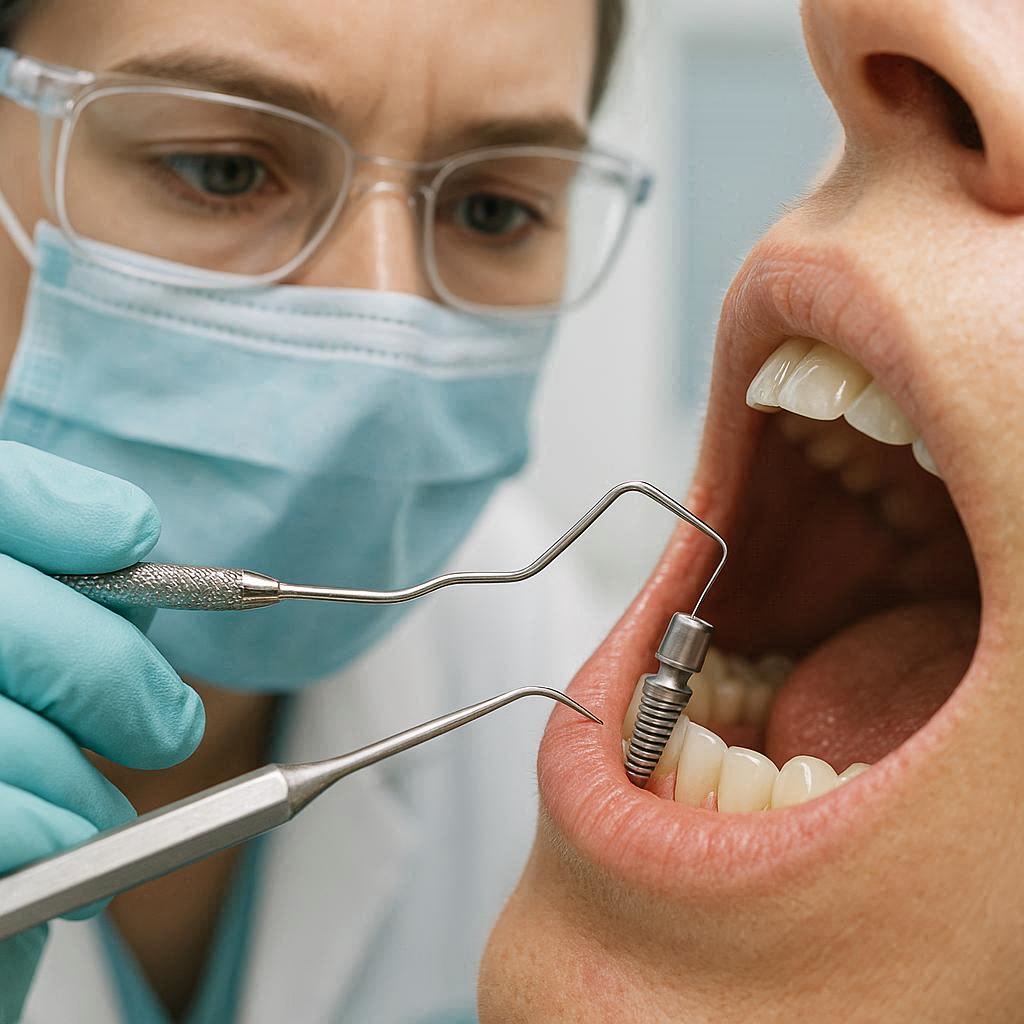
Understanding Your Dental Implant: A Quick Refresher
To understand why an implant gets loose, you need to know the basic parts of an implant system. Think of it like a three-piece construction:
- The Implant Fixture: This is the titanium screw inserted into your jawbone. It acts as the artificial tooth root.
- The Abutment: This is a connector piece screwed into the implant fixture. It sticks up above the gum line.
- The Crown: This is the visible, tooth-colored part that attaches to the abutment.
When people say “my implant is loose,” they usually mean one of two things:
- The crown is loose on the abutment (common, often an easy fix).
- The abutment is loose on the implant (less common, more serious).
- The implant fixture is loose in the bone (rare, the most serious scenario).
Each situation requires a completely different solution. We will cover all three.
Why Do Dental Implants Become Loose? The Main Culprits
An implant can feel loose for several reasons. Some are simple maintenance issues. Others point to a biological or mechanical failure. Let’s break them down honestly.
Mechanical Issues (Hardware Problems)
These are often the easiest to solve.
- Loosened Abutment Screw: Over time, the tiny screw holding the abutment to the implant can back out slightly. Chewing forces, especially clenching or grinding, cause this.
- Loosened Crown Screw: The screw that attaches the crown to the abutment can also loosen. This feels like the whole tooth is wiggly, but the implant itself is still solid in the bone.
- Broken Abutment or Crown: A crack or fracture in the abutment or the crown itself can create movement. The implant is fine, but the parts above it are failing.
- Cement Failure: If your crown is cemented (rather than screwed on), the cement can break down. The crown becomes a loose cap.
Biological Issues (Healing or Health Problems)
These are more serious and require a dentist’s immediate attention.
- Failed Osseointegration: Osseointegration is the process where your jawbone grows tightly around the titanium implant. If this never happens properly (early failure), the implant remains loose from the start. This usually shows up within the first few months.
- Peri-Implantitis: This is the leading cause of late implant failure. It is a severe infection and inflammation of the gum and bone around the implant. As the bone dissolves, the implant loses its foundation and becomes loose. It is the implant equivalent of severe gum disease.
- Bone Loss Due to Overloading: If you grind your teeth (bruxism) or put too much pressure on a single implant, the bone around it can slowly resorb. The implant loses support over years.
- Nerve or Tissue Damage: Rarely, trauma or an improperly placed implant damages surrounding tissue, leading to bone loss and loosening.
User-Related Factors
- Poor Oral Hygiene: Failing to clean around the implant leads to gum inflammation and eventually peri-implantitis.
- Smoking: Significantly impairs healing and increases infection risk.
- Uncontrolled Diabetes: Affects bone healing and immune response.
- Trauma or Injury: A direct blow to the mouth can fracture bone around the implant or break hardware.
Immediate Steps: What To Do If You Discover A Loose Implant
You feel the movement. Now what? Do not ignore it. Here is a calm, effective action plan.
Step 1: Do Not Panic, But Do Not Wait
Most loose implants are not emergencies in the sense of life-threatening danger. However, the longer you wait, the more damage can occur. A small screw tightening today could prevent bone surgery tomorrow.
Step 2: Stop Chewing On That Side
Immediately shift your chewing to the opposite side. Any pressure on the loose implant can:
- Widen the space between bone and implant.
- Fracture a weak abutment or crown.
- Push bacteria deeper into the gum pocket.
Step 3: Gently Clean The Area
Use a soft toothbrush and warm salt water rinse (one teaspoon of salt in a cup of warm water). Do not floss aggressively. Do not use a water flosser on high pressure. You want to reduce bacteria without forcing debris deeper.
Step 4: Try To Identify The Source Of Movement
This is tricky, but you can try a simple test at home. Wash your hands thoroughly. Then, using a clean fingernail or a soft plastic tool (never metal):
- Hold the crown (the white part) and try to wiggle it. Does it move separately from the gum line? If the crown shifts but you don’t feel any movement deep down, the crown or abutment screw is likely loose.
- If the whole unit (crown, abutment, and implant) moves as one solid piece, that suggests the implant fixture may be loose in the bone. This is a red flag.
Important: Do not try to tighten anything yourself. Do not use pliers, tweezers, or your teeth. You can easily overtighten and strip the threads or crack the abutment.
Step 5: Call Your Dentist Immediately
Explain exactly what you feel. Say: “My dental implant feels loose. I am not sure if it’s the crown or the whole implant.” They will likely schedule you for an emergency evaluation. Most dentists keep same-day slots for situations like this.
Professional Diagnosis: What Your Dentist Will Do
When you arrive at the dental office, your dentist will not just poke the implant and guess. They follow a systematic diagnostic process.
1. Visual and Tactile Examination
The dentist will use a mirror and a periodontal probe (a small, blunt measuring tool). They will:
- Check for visible cracks in the crown or abutment.
- Measure the gum pocket depth around the implant. Healthy pockets are 3mm or less. Deep pockets (5mm+) suggest infection or bone loss.
- Try to gently wiggle each component separately.
2. Radiographic Imaging (X-rays)
A periapical X-ray (a detailed image of the implant and surrounding bone) is essential. The dentist looks for:
- A visible gap between the implant threads and bone (radiolucency). This indicates bone loss.
- Fractures in the implant body (rare but visible on high-resolution images).
- Loosened abutment screw (the screw will appear unscrewed by a few threads).
3. Torque Testing
The dentist will use a special hand tool called a torque wrench. They will attempt to tighten the abutment screw to a specific value (usually 15-35 Ncm). If the screw tightens easily and holds, the implant itself is likely stable. If it keeps spinning or never gets tight, the internal threads may be stripped.
4. Percussion Testing
Tapping on the implant with a metal instrument produces a sound. A healthy, integrated implant sounds solid and high-pitched (like tapping on granite). A loose implant sounds dull or hollow (like tapping on rotten wood).
The Verdict: Three Possible Diagnoses
After examination, your dentist will give you one of three diagnoses:
| Diagnosis | What It Means | Typical Solution |
|---|---|---|
| Type 1: Loose Crown/Abutment | The implant is solid in bone, but the hardware above it is loose. | Retighten or replace the screw. |
| Type 2: Loose Implant with Bone Loss | The implant has lost bone support but may still be savable. | Bone graft, implant cleaning, possibly a new abutment. |
| Type 3: Failed Implant | The implant is completely mobile with significant bone loss. | Remove the implant. Consider a new implant after healing. |
How To Fix A Loose Dental Implant: Solutions By Type
Now we get to the core question. The “fix” depends entirely on the diagnosis above. Here are the real-world solutions.
Fix #1: Tightening Or Replacing The Abutment Screw (Type 1)
This is the best-case scenario. It is quick, minimally invasive, and often painless.
What the dentist does:
- Administers local anesthetic (numbing gel or injection).
- Removes the crown. If it is a screw-retained crown, they simply unscrew it. If it is cemented, they use a special tool to gently pop it off.
- The abutment screw is exposed. The dentist removes it, inspects it for damage.
- If the screw is intact, they clean the threads and retighten it to the precise torque specification (using a torque wrench).
- If the screw is stripped or fractured, they replace it with a new one.
- The crown is reattached (either re-cemented or screwed back on).
Time: 20-40 minutes.
Cost: $150 – $400 (often just the office visit and a new screw).
Success rate: Over 95%.
Realistic Note: Sometimes, a screw will loosen again after a few months. This may indicate that you grind your teeth at night. Your dentist may recommend a nightguard to protect the implant.
Fix #2: Replacing A Broken Crown Or Abutment (Type 1)
If the crown itself or the abutment is cracked, tightening won’t help. They need replacement.
What the dentist does:
- Removes the damaged crown/abutment.
- Takes a digital scan or impression of the area.
- Sends the scan to a dental lab.
- Fabricates a new custom abutment and/or crown (takes 1-3 weeks).
- Fits a temporary crown in the meantime.
- Permanently attaches the new crown at a second appointment.
Time: Two appointments, 2-4 weeks apart.
Cost: $500 – $1,500 (depending on materials).
Success rate: Very high, assuming the implant itself is healthy.
Fix #3: Treating Peri-Implantitis With Bone Loss (Type 2)
This is a more complex, serious fix. The implant is still in place, but it is losing its bone anchor. The goal is to stop the infection and regenerate bone.
What the dentist does (non-surgical first):
- Deep cleaning: Special plastic instruments clean the implant surface (metal scalers would scratch it). Antibacterial solutions are flushed into the pocket.
- Laser therapy: Some dentists use a dental laser to kill bacteria and remove inflamed tissue.
- Oral antibiotics: Sometimes a course of amoxicillin or doxycycline is prescribed.
If non-surgical fails, surgical intervention is next:
- Open flap debridement: The gum is cut and folded back. The dentist cleans the implant threads thoroughly. Any granulation tissue (infected material) is removed.
- Bone grafting: A synthetic or natural bone graft material is packed around the exposed implant threads. A membrane is placed over it to encourage new bone growth.
- Resuture the gum: The area is closed and left to heal for 4-6 months.
Time: 1-2 hours for surgery. 4-6 months of healing.
Cost: $1,500 – $4,000 (depending on graft size).
Success rate: 60-80%. Not guaranteed. Peri-implantitis is difficult to reverse completely.
Critical Warning: If the bone loss exceeds 50% of the implant length, many dentists will recommend implant removal rather than salvage. A half-supported implant will fail again.
Fix #4: Implant Removal And Replacement (Type 3)
If the implant is fully loose, with no bone support, or if the internal threads are stripped, there is no repair. It must come out.
What the dentist does:
- Numb the area thoroughly.
- Use a special instrument (a trephine drill or an implant extractor) to reverse the implant out of the bone. It unscrews like a bolt.
- Clean the socket (hole) of any infected tissue.
- Often, they place a bone graft into the socket to rebuild the ridge.
- Suture the gum closed.
- Wait for healing: 3-6 months.
- Place a new implant (sometimes with an additional bone graft).
- Wait another 3-6 months for osseointegration.
- Attach a new crown.
Total timeline: 6-12 months.
Total cost: $4,000 – $8,000 (removal + graft + new implant + new crown).
Success rate for the new implant: Over 95%, assuming the cause of failure (infection, grinding, poor hygiene) is addressed first.
Can You Fix A Loose Dental Implant At Home?
No. Absolutely not.
Let us be very clear. There are no safe, effective DIY fixes for a loose dental implant. Do not try:
- Super glue or denture adhesive: These are toxic to gum tissue and will trap bacteria. You will seal infection inside.
- Tightening with pliers: You will crack the abutment or strip the threads. Then the entire implant may be unsalvageable.
- Toothpaste or baking soda “cement”: These have no bonding strength and will irritate gums.
What you CAN safely do at home:
- Maintain gentle hygiene (salt water rinses).
- Take over-the-counter anti-inflammatories like ibuprofen if there is pain.
- Eat soft foods only.
- Call your dentist.
That is the full list.
Preventing Future Implant Loosening
Fixing an implant is expensive and stressful. Preventing the problem is much better. Here is a realistic prevention plan.
Daily Hygiene Protocol For Implants
Natural teeth have a ligament that acts as a shock absorber. Implants do not. They rely entirely on you keeping them clean.
| Tool | Frequency | Technique |
|---|---|---|
| Soft toothbrush | Twice daily | Brush the implant crown like a natural tooth, but be gentle at the gumline. |
| Implant-specific floss | Once daily | Use floss with a stiffened end or a floss threader. Wrap it around the abutment in a “C” shape. |
| Water flosser | Once daily (optional) | Use on low pressure. Aim the tip at a 45-degree angle into the gum pocket. |
| Interdental brushes | As needed | Rubber-tipped or coated wire brushes are safe. Never use metal-on-titanium. |
Professional Maintenance
- Regular checkups every 6 months: Your dentist will check torque and take periodic X-rays to monitor bone levels.
- Nightguard if you grind: Bruxism destroys implants. A custom nightguard costs $400-700 but protects an $5,000 implant.
- Quit smoking: Smokers have a 3x higher failure rate for implants.
Know The Warning Signs
Do not wait for looseness. Act earlier if you notice:
- Redness or bleeding when brushing around the implant.
- A bad taste or odor coming from the area.
- Pus around the gumline.
- The gum pulling away (receding) to expose metal threads.
Cost Comparison: Repair vs. Replace vs. Ignore
Many people ask, “Is it worth fixing a loose implant?” Here is a realistic financial and health comparison.
| Action | Short-term Cost | Long-term Outcome | Health Risk |
|---|---|---|---|
| Tighten a loose screw | $150 – $400 | Excellent. Implant saved. | Very low. |
| Peri-implantitis treatment | $1,500 – $4,000 | Good to fair (60-80% success). | Moderate (infection can spread). |
| Remove and replace implant | $4,000 – $8,000 | Excellent for new implant. | Low if cause is addressed. |
| Ignore the looseness | $0 now | Very poor. Progressive bone loss. | High. Can lead to jaw infection, nerve damage, loss of adjacent teeth. |
A frank statement from a dentist: “I have seen patients ignore a slightly loose implant for six months. When they finally come in, the bone is gone, a neighboring tooth is loose, and the repair costs triple. Do not ignore it.”
What If The Implant Feels Loose But The X-Ray Looks Fine?
This happens more often than you might think. You feel movement, but the X-ray shows perfect bone integration. What is going on?
Possible explanations:
- You are feeling the crown move on the abutment. The implant is rock solid. The X-ray does not show the crown-abutment connection well. The solution is to recement or screw the crown.
- Very early bone loss: X-rays can miss changes of less than 1mm. You may have the earliest stage of bone loss that is not yet visible radiographically. Your dentist will rely on the torque test instead.
- Phantom movement: Rarely, patients feel movement from a nearby natural tooth and mistake it for the implant. Your dentist will check each tooth individually.
What your dentist will do: They will torque test the abutment screw. If it holds, they will remove the crown and test the abutment directly. If both are tight, the implant is stable, and the sensation is either normal (some micro-movement is allowed) or from a different source.
Long-Term Outlook: Can A Fixed Implant Last Forever?
A dental implant is a lifelong investment, but “lifelong” requires active participation.
- A loose screw that is retightened: The implant can still last 20+ years if you maintain hygiene and avoid trauma.
- An implant treated for peri-implantitis: The prognosis is guarded. Studies show that treated implants have a 10-15% chance of re-infection within 5 years. Meticulous home care is critical.
- A replaced implant (removed and new one placed): This new implant has the same success rate as a first-time implant (over 95% at 10 years), provided you corrected the original problem.
The honest bottom line: An implant that has loosened once is not doomed. But it is a warning sign. Something went wrong: either a screw backed out (correctable) or you are losing bone (needs aggressive intervention). Listen to the warning.
Frequently Asked Questions (FAQ)
1. Is it normal for a dental implant to move slightly?
No. A fully healed, healthy implant should have zero perceptible movement. Natural teeth move less than 0.1mm under pressure. Implants should move even less. Any wiggle you can feel with your finger is abnormal.
2. Can a loose dental implant tighten itself?
No. Bone does not grow back spontaneously around a loose implant. The screw will not retighten itself. Only a dentist can fix it.
3. How long can I wait to fix a loose implant?
Technically, you can wait days. You should not wait weeks. Each day that a loose implant moves, it acts like a tiny piston, pumping bacteria into the bone and widening the socket. Ideally, see a dentist within 48 hours.
4. Will I lose my implant if it is loose?
Not necessarily. Approximately 60-70% of “loose implant” complaints are actually loose crowns or abutments, which are easily fixed. Only about 30% are true implant fixture failures. Your odds are good.
5. Can I eat with a loose implant?
Yes, but only soft foods on the opposite side. Think yogurt, soup, mashed potatoes, smoothies. Avoid anything chewy, crunchy, sticky, or hard. No steak, nuts, bagels, or gum.
6. Why does my implant click or make noise when I chew?
Clicking usually indicates that the abutment screw has backed out by a quarter turn. The crown is tapping against the abutment with each bite. Do not ignore a clicking implant. It will progress to looseness.
7. Is repairing a loose implant covered by dental insurance?
Most dental insurance plans cover repair of a loose abutment or crown (typically 50-80% after deductible). However, treatment for peri-implantitis or implant removal may have limited coverage. Always verify with your provider.
8. Can I get a new implant in the same spot after removal?
Yes, in most cases. After bone grafting and 4-6 months of healing, a new implant can be placed in the exact same position. The success rate is nearly identical to a first implant.
Additional Resources
For more reliable, dentist-reviewed information on dental implant health and maintenance, visit the American Academy of Implant Dentistry (AAID) patient education page.
👉 AAID Patient Resources: Dental Implant Care (External link – opens in new tab)
Disclaimer: This resource is provided for informational purposes. Always consult your own dentist for personal medical advice.
Conclusion
A loose dental implant feels scary, but it is often fixable. In most cases, the problem is simply a loose crown or abutment screw that a dentist can tighten in under an hour. However, if the implant itself is loose due to bone loss or infection, require prompt professional treatment ranging from deep cleaning to removal and replacement. Your best strategy? Act immediately, see your dentist, and commit to daily hygiene to protect your smile for decades.
Disclaimer: This article is for informational purposes only and does not constitute medical or dental advice. Always consult with a licensed dentist for diagnosis and treatment of any dental condition. Individual results vary. The author and publisher are not liable for any actions taken based on this content.