Jaw Pain After Implant Placement
You finally made the decision. You chose to replace that missing tooth with a dental implant. You sat through the procedure with courage, and your dentist did a great job. But now, a few days later, you feel it: a dull, persistent ache deep in your jaw. Or maybe a sharp pain every time you try to chew.
If you are reading this, you are probably experiencing some level of jaw pain after implant placement. Let me start by saying this: you are not alone, and most of the time, what you feel is perfectly normal.
Dental implant surgery is, after all, a form of bone surgery. Your body needs time to heal. However, there is a fine line between standard post-operative soreness and a sign that something needs attention.
This guide walks you through everything you need to know. We will explore why your jaw hurts, how long the pain should last, home remedies that actually work, and the red flags you should never ignore.
Important note for readers: This article is for informational purposes only. It does not replace professional medical or dental advice. Always consult your own dentist or oral surgeon for concerns about your specific situation.
Understanding Why Jaw Pain Happens After an Implant
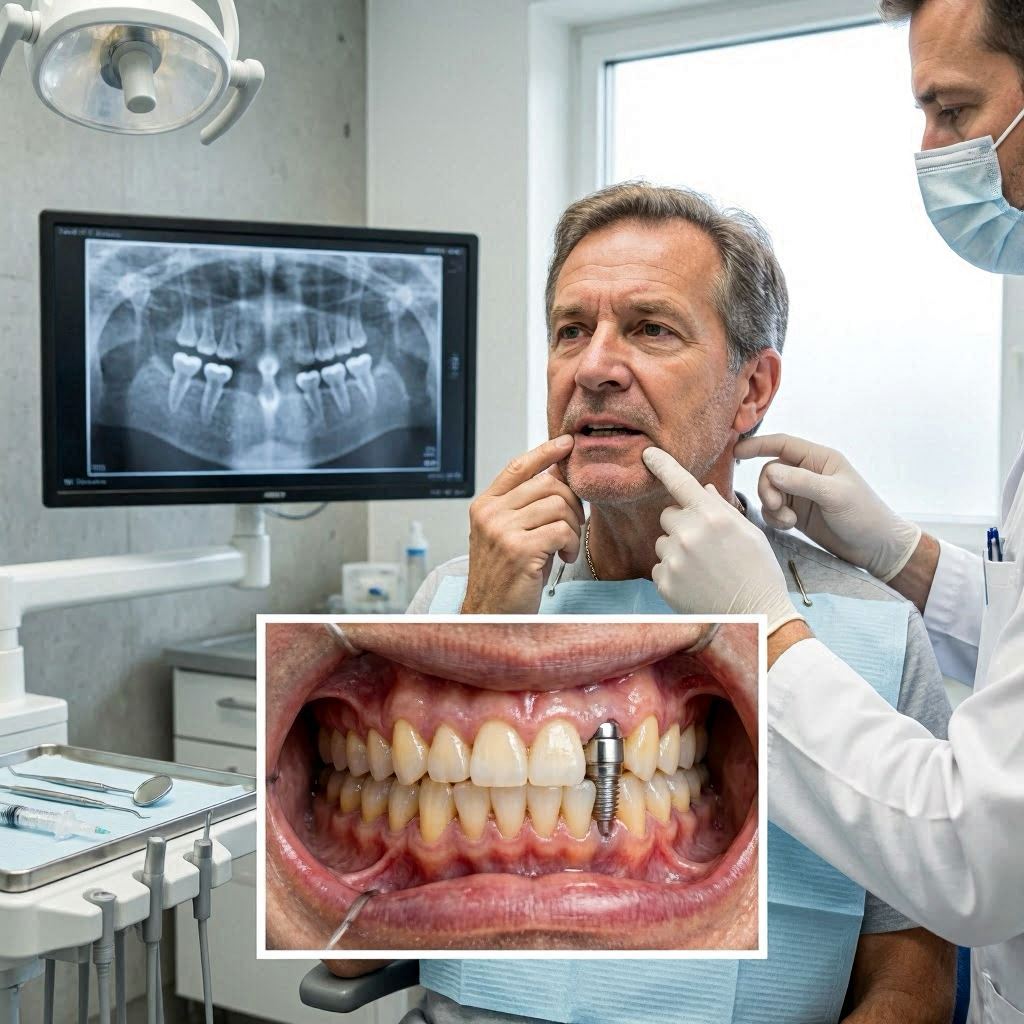
Before we dive into solutions, let’s talk about what happened during your procedure. A dental implant is a titanium post that your dentist surgically placed into your jawbone. That post acts as a new artificial root. For it to work, it needs a tight, stable fit inside the bone.
Think of it like this: if you hammer a nail into a wooden plank, the wood fibers stretch and compress around the nail. Your jawbone reacts in a similar way, but it is alive. It sends inflammatory signals and fluids to the area to start the healing process.
That inflammation is the primary source of your jaw pain.
The Role of Inflammation in Healing
Inflammation is not your enemy. It is your body’s natural way of repairing itself. When the bone and gum tissue around the implant get disturbed, blood vessels dilate. White blood cells rush to the site. All of this creates pressure, warmth, and swelling. And pressure inside a hard structure like your jawbone equals pain.
Most patients describe this as a deep, aching sensation. It might spread to your ear, temple, or neck. This is called referred pain, and it is very common.
Common Causes of Post-Implant Jaw Pain
Let’s break down the specific reasons you might feel discomfort. Some are routine. Others are less so.
| Cause | Typical Timing | Pain Type | Should You Worry? |
|---|---|---|---|
| Normal bone healing | Days 1–7 | Dull, throbbing, manageable with meds | No |
| Soft tissue swelling | Days 2–4 | Tender to touch, mild | No |
| High implant torque | First 24–48 hours | Intense pressure sensation | Possibly, inform dentist |
| Nerve irritation | Variable | Electric shock, tingling, sharp | Yes, call your dentist |
| Infection (peri-implantitis) | After day 5 or later | Increasing, not responding to meds | Yes |
| Sinus involvement (upper jaw) | Days 1–5 | Pressure in cheek, pain when leaning forward | Possibly |
Normal Healing Pain vs. Complication Pain
How do you know which one you have? Here is a simple rule: normal healing pain gets a little better every day. It might spike when you lie down (blood rushes to the head) or after you eat, but the overall trend is downward.
Complication pain, on the other hand, gets worse over time. It does not respond to over-the-counter painkillers. It might wake you up at night after the first week.
Let me be honest with you. Most people who search for “jaw pain after implant placement” are worried they are the exception. Statistically, you are probably not. Dental implants have a success rate above 95%. But knowing the difference gives you peace of mind.
The First 72 Hours: What to Expect Hour by Hour
The first three days after your surgery are the most intense. It helps to know what is coming so you do not panic.
Day of Surgery (Hours 0–12)
You leave the dental office with your mouth still numb from local anesthesia. You feel nothing. This is the calm before the storm. As the anesthetic wears off (usually 3 to 5 hours after the procedure), you will start to notice a dull ache.
What you feel: A deep, expanding pressure in your jaw. It might feel like someone is pressing on the bone from the inside. This is normal.
What to do: Take your first dose of pain medication before the numbness completely disappears. This prevents the pain from peaking too high.
Day 1 Post-Op (Hours 12–24)
This is often the worst moment for jaw pain. The inflammation reaches its first peak. Swelling of the gum and cheek becomes visible. You might have trouble opening your mouth wide. That is called trismus, and it is a natural muscle response to protect the area.
What you feel: A constant throbbing that radiates to your ear or lower jawline. Swallowing might hurt on that side.
Days 2 and 3
The pain should plateau here. It will not get worse than day one. But it will stay consistently uncomfortable. You might feel tired and frustrated. That is normal, too. Healing requires a lot of energy.
What you feel: A shift from sharp pain to a dull, heavy ache. The area feels warm to the touch.
A Realistic Timeline for Jaw Pain
| Time After Surgery | Pain Level (0–10) | Typical Sensation | Action Needed |
|---|---|---|---|
| 0–6 hours | 1–2 | Numb, then mild ache | Pre-medicate |
| 6–24 hours | 4–7 | Throbbing, radiating | Ice packs, rest |
| Day 2–3 | 3–6 | Constant dull ache | Soft diet, meds |
| Day 4–7 | 1–4 | Occasional twinges | Warm compresses |
| Day 8–14 | 0–2 | Mild tenderness only | Normal activities |
| After day 14 | 0 | No pain at rest | Contact dentist if pain persists |
A note from clinical experience: If your pain level is consistently at an 8 or above despite taking prescribed pain medication, call your dentist immediately. That is not typical healing.
Home Remedies That Actually Reduce Jaw Pain
You do not always need stronger drugs. Sometimes, simple physical strategies work better. Let me share the methods that oral surgeons recommend most often.
Ice Therapy (First 48 Hours Only)
Ice is your best friend during the first two days. It constricts blood vessels, which reduces swelling and numbs the nerve endings.
How to do it correctly:
- Wrap a bag of frozen peas or an ice pack in a thin cloth.
- Apply to the outside of your face, directly over the painful area.
- Leave it on for exactly 15 minutes.
- Remove it for 15 minutes.
- Repeat as needed, but never fall asleep with ice on your face.
Why not longer? Prolonged ice application can damage skin and actually slow healing by reducing blood flow too much.
Heat Therapy (After 48 Hours)
Once the initial swelling has peaked, heat becomes more effective. It dilates blood vessels, flushes out inflammatory waste, and relaxes sore jaw muscles.
How to do it correctly:
- Use a warm, damp towel or a commercial heating pad on low.
- Apply for 15–20 minutes.
- Repeat 3–4 times per day.
Salt Water Rinses (Begin Day 2)
Gentle rinsing keeps the surgical site clean without disturbing the blood clot that protects the bone.
Recipe:
- Dissolve 1/2 teaspoon of non-iodized salt in 8 ounces of warm water.
- Swish very gently for 30 seconds.
- Let the water fall out of your mouth. Do not spit forcefully. Spitting creates suction that can dislodge the clot.
Elevate Your Head When Sleeping
This is a small change with a huge impact. When you lie flat, gravity sends more blood to your head. That increases pressure inside your healing jaw.
Instead: Sleep with two or three pillows under your head for the first five nights. Even better, sleep in a recliner if you have one.
Soft Food Strategies
Chewing creates mechanical stress on the implant site. For the first week, avoid that stress entirely.
Safe foods:
- Smoothies (no seeds or straws – straws also create suction)
- Yogurt and pudding
- Mashed potatoes
- Blended soups (lukewarm, not hot)
- Scrambled eggs
- Protein shakes
Foods to avoid:
- Crunchy chips or crackers
- Steak or tough meats
- Sticky candies or caramel
- Nuts and seeds
- Very hot beverages (heat increases bleeding)
When Jaw Pain Signals a Problem (Red Flags)
Now we get to the part that makes everyone nervous. I will not scare you. But I will be honest about the signs you must not ignore.
Your body is wise. It sends clear alarms when something is wrong. Learn to recognize them.
Sign #1: Pain That Worsens After Day 4
By day four, your pain should be moving in one direction only: down. If you wake up on day five feeling worse than you did on day two, something is likely wrong.
Possible cause: Early infection or a condition called “implant overload” where the post is putting excessive pressure on the bone.
Sign #2: Swelling That Expands Instead of Shrinks
Some swelling is normal. But it should peak around day two or three and then slowly decrease. If your swelling spreads to your eye, neck, or the other side of your face, you need urgent care.
Sign #3: Fever Over 100.4°F (38°C)
A low-grade fever (around 99°F) can be a normal part of inflammation. But a true fever means your body is fighting an infection systemically. This is not normal after a routine implant.
Sign #4: A Bad Taste or Pus
If you notice a salty, foul taste that will not go away, or if you see yellow or white fluid oozing from the gum around your implant, that is pus. It is a definitive sign of infection.
Sign #5: Numbness or Tingling in Your Lip or Chin
Lower jaw implants sit near the inferior alveolar nerve. That nerve gives feeling to your lower lip, chin, and gum. If you feel persistent numbness, burning, or “pins and needles” in those areas, the implant might be compressing the nerve.
Here is the nuance: Some minor altered sensation is common in the first hours due to local anesthesia and swelling. But if it lasts beyond 24 hours or appears after the anesthesia should have worn off, call your dentist.
Sign #6: The Implant Feels Loose
You should not be able to wiggle your implant at any stage. If you feel movement, the implant has failed to integrate with the bone. This is rare but requires immediate attention.
Quick Reference: Emergency Signs
| Symptom | Action | Urgency |
|---|---|---|
| Fever + facial swelling | Call dentist or go to ER | High |
| Pus or foul taste | Call dentist | High |
| Numbness beyond 24 hours | Call dentist | Medium-High |
| Loose implant | Call dentist | Medium |
| Pain unresponsive to meds after day 4 | Call dentist | Medium |
Medications: What Works and What to Avoid
Pain management after jaw surgery is a balancing act. You want relief without side effects. Let me walk you through the standard approach.
Over-the-Counter Options
Ibuprofen (Advil, Motrin)
This is often the best choice for bone pain. Ibuprofen is an anti-inflammatory drug. It directly targets the cause of your discomfort – swelling in the jawbone. A typical dose is 400–600 mg every 6–8 hours, but follow your dentist’s recommendation.
Acetaminophen (Tylenol)
This works on pain but does nothing for inflammation. It is a good option if you cannot take ibuprofen due to stomach issues or other medical conditions. You can also alternate ibuprofen and acetaminophen for stronger relief. For example: ibuprofen at 8 am, acetaminophen at 12 pm, ibuprofen at 4 pm.
Aspirin
Avoid aspirin after dental surgery. It thins your blood and can increase bleeding or cause a dry socket-like complication around the implant.
Prescription Medications
For complex cases or multiple implants, your dentist might prescribe a stronger option.
- Opioids (codeine, hydrocodone): Effective but use with extreme caution. They cause drowsiness, constipation, and can be habit-forming. Most patients only need these for the first 24–48 hours.
- Steroids (dexamethasone, methylprednisolone): Sometimes a dentist will give a short course of oral steroids to control severe swelling. These are not painkillers, but they reduce pain by shrinking inflammation.
What About Antibiotics?
If you received a prescription for antibiotics, finish the entire course even if you feel better. Stopping early creates antibiotic-resistant bacteria. However, antibiotics do not relieve pain directly. If you still hurt after finishing antibiotics, you need a re-evaluation, not more antibiotics.
A honest warning: Do not take leftover antibiotics from a previous illness. Different bacteria require different antibiotics. Taking the wrong one is useless and dangerous.
The Difference Between Jaw Pain and Sinus Pain (Upper Implants Only)
If your implant is in the upper jaw, near the back (premolar or molar area), your sinus cavity sits right above the bone. The sinus floor is paper-thin. Sometimes the implant protrudes slightly into the sinus space, or the surgery irritates the sinus lining.
Sinus pain feels different from jaw pain.
Jaw pain is deep, bony, and localized to the tooth area.
Sinus pain feels like pressure in your cheek, behind your eye, or in your forehead. It gets worse when you bend over, cough, or sneeze. You might have clear or yellow nasal drainage.
If you suspect sinus involvement:
- Avoid blowing your nose forcefully for two weeks.
- Use a saline nasal spray (not decongestant spray) to keep tissues moist.
- Sneeze with your mouth open to release pressure.
- Call your dentist if you feel air or liquid passing between your nose and the implant site when you drink.
How Long Will the Jaw Pain Last? A Honest Timeline
Every person heals differently. Age, overall health, smoking status, and the number of implants placed all affect recovery speed. But here is a general roadmap based on thousands of patients.
Week one: This is the hardest period. You will likely need daily pain medication. Swelling is visible. Eating is a chore. By day seven, most people feel significantly better but not back to normal.
Week two: Mild discomfort remains, especially when biting on that side. You might forget to take your morning pain pill because the ache is so minor. Swelling should be gone or barely noticeable.
Week three to four: Occasional twinges. The bone is actively remodeling around the implant. You might feel a strange sensation of pressure when the weather changes (barometric pressure affects healing bone). This is normal.
Month two to three: No pain at rest. Some patients feel a dull ache after chewing very hard foods. That is your bone telling you it is still maturing.
Month four to six: Complete resolution of all jaw pain. The implant should feel like a natural part of your mouth.
Factors That Lengthen Healing Time
| Factor | Impact on Pain Duration |
|---|---|
| Smoking | Doubles healing time |
| Diabetes (uncontrolled) | Significantly longer |
| Osteoporosis medications | Variable, often longer |
| Multiple adjacent implants | 1–2 extra weeks |
| Bone grafting at same time | 1–3 extra weeks |
| Age over 65 | Slightly longer |
Preventing Severe Jaw Pain in Future Implants
If you are reading this before your implant surgery, or if you plan to get another implant later, these strategies prevent the worst of the pain.
Choose an Experienced Surgeon
Skill matters. A surgeon who places hundreds of implants per year knows how to avoid nerves, minimize bone trauma, and control torque during placement. Do not shop for the cheapest option. Your jawbone will thank you.
Ask About a Staged Approach
For large or complex cases, some surgeons place the implant and then wait four months before attaching the abutment (the connector piece). This “two-stage” approach reduces early loading on the bone and lowers post-op pain.
Discuss Pain Management Before Surgery
A proactive plan works better than a reactive one. Ask your dentist: “What is your standard pain protocol for someone like me?” A good answer includes specific medication names, doses, and a schedule.
Quit Smoking (At Least Temporarily)
Smoking dramatically impairs blood flow to the jawbone. Less blood means slower healing and more pain. If you cannot quit entirely, stop for at least two weeks before surgery and two weeks after. Your pain levels will drop noticeably.
Psychological Aspects of Jaw Pain After Implant Placement
Let me address something most articles ignore: the mental toll. Chronic pain, even short-term, wears you down. You might feel anxious, irritable, or regretful about getting the implant. These feelings are normal, not signs of weakness.
Common thoughts patients have:
- “Did I make a mistake?”
- “What if this never goes away?”
- “Why is my dentist not worried when I am suffering?”
Here is the truth: Dental implant pain is temporary. Your body knows how to heal. The anxiety you feel today will fade as the pain fades. Focus on getting through one day at a time. Celebrate small victories, like eating a yogurt without wincing.
If you feel overwhelmed, talk to your dentist. A simple statement like “I am really struggling with the pain and anxiety” opens the door to better support, maybe even a short course of anti-anxiety medication to help you sleep.
When to Return to Your Dentist for a Follow-Up
Do not assume that no news is good news. Scheduled follow-ups are part of the implant process. Here is what typically happens.
Two weeks post-op: Suture removal (if you have non-dissolving stitches). Your dentist will check for signs of infection and ask about your pain levels.
Six to eight weeks post-op: A clinical exam to see if the implant feels firm. Some dentists take a small X-ray (periapical radiograph) to check the bone level around the implant.
Four to six months post-op: The final check before placing the crown. By this point, you should have zero pain.
If at any point between these visits your jaw pain returns after having gone away, schedule an unscheduled visit. Pain that resolves and then reappears is a classic sign of a problem.
Frequently Asked Questions (FAQ)
Is it normal to have jaw pain after implant placement?
Yes. Most patients experience some degree of jaw pain for 3 to 10 days after surgery. The pain comes from bone inflammation and soft tissue healing. It usually responds well to over-the-counter anti-inflammatories.
How long does jaw pain last after a dental implant?
Mild to moderate pain lasts about one week. Occasional discomfort can continue for up to four weeks. Beyond that, any pain should be evaluated by your dentist. Complete resolution typically occurs by month four.
Can dental implant pain radiate to my ear or temple?
Absolutely. Referred pain is very common after jaw surgery. The nerves that supply your lower jaw also connect to your ear, temple, and neck. As long as the pain follows this pattern and decreases over time, it is normal.
Why does my jaw hurt more at night?
Two reasons. First, when you lie flat, gravity increases blood flow to your head, raising pressure in the healing bone. Second, at night you have no distractions, so you notice the pain more. Sleeping with an extra pillow helps.
What should I do if my pain gets worse after a week?
Do not wait. Call your dentist’s office. Worsening pain after the first week is a red flag for infection, implant overload, or nerve involvement. Most offices have an after-hours number for emergencies.
Can I use a heating pad on my jaw?
Yes, but only after the first 48 hours. In the first two days, use ice. After that, moist heat (warm towel) or a heating pad on low setting helps relax muscles and flush out inflammatory fluids.
When can I chew normally again?
You can introduce soft, chewable foods around day 7 to 10. Full chewing on the implant side should wait until your dentist gives the green light, usually around week 6 to 8. Chewing too early increases pain and risks implant failure.
Will antibiotics help my jaw pain?
Only if the pain is caused by a bacterial infection. Antibiotics do not treat bone healing pain or nerve pain. Taking them unnecessarily can cause side effects like stomach upset or yeast infections. Let your dentist decide.
Additional Resource
For a deeper understanding of the entire dental implant healing process, including what happens to your bone at a microscopic level, visit the American Academy of Implant Dentistry’s patient education page:
🔗 https://www.americanacademyofimplantdentistry.com/patient-education/
This resource provides free, evidence-based guides, video animations of the osseointegration process, and a directory of qualified implant dentists near you.
Conclusion
Jaw pain after implant placement is a normal part of healing for most people. Expect some discomfort for the first week, with gradual improvement each day. Use ice then heat, eat soft foods, sleep with your head elevated, and take anti-inflammatory medication as directed. Watch for red flags: pain that worsens after day four, spreading swelling, fever, pus, or numbness. When in doubt, call your dentist. With patience and proper care, your implant will integrate smoothly, and the pain will become a distant memory.
Disclaimer: This article is for informational purposes only and does not constitute medical or dental advice. Always consult with a licensed dental professional for diagnosis and treatment of your specific condition. The author and publisher are not liable for any actions taken based on the contents of this article.