Medical Cubre Implantes Dentales
If you have recently undergone dental implant surgery—or are about to—you have probably heard your dentist mention something called a “medical cover” for implants. The term Medical Cubre Implantes Dentales might sound technical at first. But in reality, it is a simple, small, yet incredibly important device that can make the difference between a smooth recovery and a complicated one.
Think of it as a protective cap. A shield. A temporary guardian for that small titanium post placed inside your jawbone. While the implant integrates with your bone—a process called osseointegration—this little cover keeps everything safe, clean, and on track.
In this guide, we will walk you through everything you need to know. No confusing medical jargon. No unrealistic promises. Just honest, practical information to help you understand what this protective cover does, why you might need one, and how to care for it.
Let us start from the beginning.
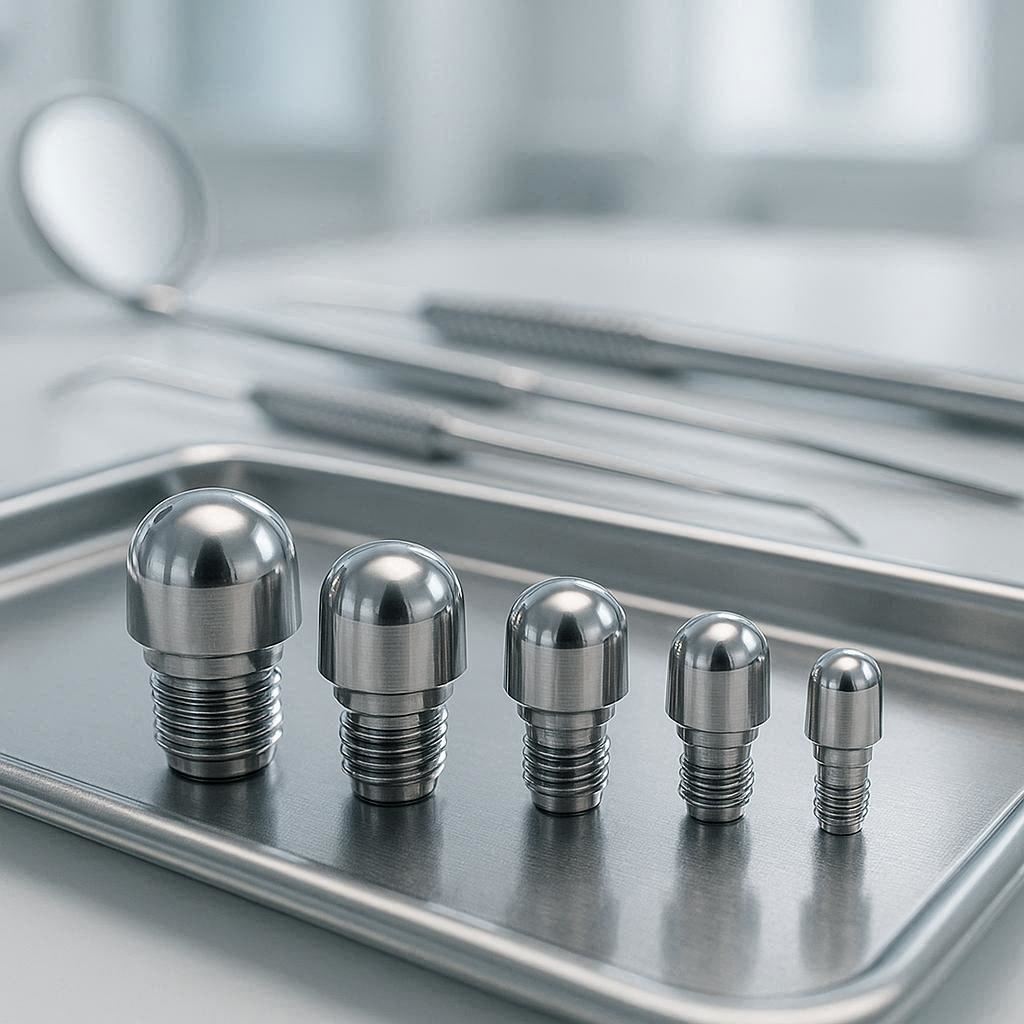
What Is a Medical Cubre Implantes Dentales?
A Medical Cubre Implantes Dentales is a protective device used immediately after dental implant placement. It is typically made of medical-grade materials such as titanium, PEEK (polyether ether ketone), or surgical stainless steel. Its primary job is to cover and seal the top of the dental implant during the healing phase.
Imagine you just planted a small screw-shaped post into your jawbone. That post has an internal thread. That thread needs to stay clean, dry, and free from food, bacteria, and oral debris. The cover screws gently into that thread, acting like a lid on a jar.
Key characteristics
- Small size: Usually between 2 and 5 millimeters in diameter.
- Smooth surface: Prevents bacteria from adhering.
- Biocompatible: Does not trigger allergic reactions or rejection.
- Temporary: Removed once healing is complete.
Important note: Not every dental implant requires an external cover. Some implants are designed with a built-in healing abutment. However, when a two-stage implant procedure is used, a cover is essential.
Why “medical” and not just “cover”?
The term “medical” indicates that this device meets strict health and safety regulations. It is manufactured in sterile conditions. It is designed for single use or limited clinical use. Unlike homemade or improvised covers, a medical cover reduces infection risks dramatically.
Why Do You Need a Protective Cover for Your Dental Implant?
You might wonder: Can’t the implant just heal on its own? Technically, yes. But leaving an implant exposed without a cover is risky. Here is why.
Protection against infection
Your mouth is full of bacteria. Some are harmless. Others can cause peri-implantitis—an infection around the implant that can lead to bone loss and implant failure. A medical cover creates a physical barrier. It prevents food particles and bacteria from entering the implant’s internal threads.
Preservation of the connection channel
Dental implants have a precise internal connection where the abutment (and later the crown) will attach. If that connection gets damaged or clogged, your dentist might not be able to place the final restoration correctly. The cover keeps that channel clean and intact.
Guided soft tissue healing
When the gum tissue is sutured over or around the cover, it heals in a controlled manner. This creates a healthier emergence profile for your future crown. In other words, it helps your gums shape themselves properly around the implant.
Prevention of bone overgrowth
Without a cover, bone could grow over the top of the implant. That would require a second surgery just to expose the implant again. The cover prevents this by maintaining a clear separation between bone and the implant’s top surface.
Types of Medical Implant Covers
Not all covers are the same. Depending on your case, your dentist may choose one of the following.
| Type | Material | Best for | Duration |
|---|---|---|---|
| Healing abutment (integrated cover) | Titanium or PEEK | Single-stage procedures | 3 to 6 months |
| Screw-type cover | Titanium alloy | Two-stage submerged implants | 4 to 6 months |
| Temporary plastic cover | Medical-grade polymer | Provisional restorations | 2 to 8 weeks |
| Custom cast cover | Gold or titanium alloy | Complex cases with angulation | 3 to 5 months |
Healing abutment versus protective cover
Many people confuse these two. Let us clarify:
- Healing abutment: Extends through the gum. No second surgery needed. The gum heals around it like a collar.
- Protective cover (submerged): Fully covered by gum tissue. Requires a minor second surgery to expose the implant.
Your dentist will decide which one fits your clinical situation. Neither is “better” overall. It depends on your bone quality, gum thickness, and aesthetic needs.
Reader note: If your dentist recommends a submerged cover, do not worry. The second surgery is quick—often 10 to 15 minutes with local anesthesia.
When Is a Medical Cubre Implantes Dentales Used?
This device is used in specific phases of implant treatment. Let us break it down step by step.
Phase 1: Immediately after implant placement
Right after your dentist places the titanium implant into the bone, they will check the stability. If the implant feels solid, they will insert the cover into the implant’s internal thread. Then they will suture the gum tissue over it (submerged healing) or around it (healing abutment).
Phase 2: During the osseointegration period
Osseointegration is the process where your bone cells grow tightly around the implant. This takes anywhere from 3 to 6 months. During this time, the cover stays in place. You do not feel it. You cannot see it if it is submerged. It simply does its job silently.
Phase 3: Before the final crown
Once osseointegration is complete, your dentist will remove the cover (or healing abutment). They will then place a final abutment and take impressions for your permanent crown.
Special cases
- Immediate loading: Sometimes a temporary crown is placed the same day. In that case, a modified cover is used as part of the provisional restoration.
- Multiple implants: Each implant gets its own cover. Your dentist will keep detailed records of which cover belongs to which implant.
Benefits of Using a Medical Implant Cover
Let us focus on the real advantages. Not marketing hype. Not theoretical benefits. Just what patients and dentists actually experience.
Reduced infection rate
Studies show that covered implants have a lower incidence of early infection compared to uncovered ones. The cover acts as a barrier against oral bacteria during the most vulnerable period.
Higher implant survival rate
When the implant connection remains clean and undamaged, the long-term success rate exceeds 95% in healthy patients. The cover plays a small but meaningful role in that statistic.
Less post-operative discomfort
A properly placed cover prevents sharp edges or rough threads from irritating your gums. This means less pain and swelling after surgery.
Predictable aesthetic results
By guiding soft tissue healing, the cover helps create a natural-looking gum line around your final crown. This is especially important for front teeth.
Easier second surgery (if applicable)
If you have a submerged cover, the second surgery to expose the implant is straightforward. Your dentist makes a small punch incision, removes the cover, and places the healing abutment. No drilling into bone. No surprises.
Risks and Complications: What Can Go Wrong?
Let us be honest. No medical device is perfect. Complications are rare but possible. Knowing them helps you act quickly if something feels off.
Cover loosening
Sometimes the cover screw becomes loose. You might feel a tiny movement or hear a clicking sound when eating. This is not an emergency, but you should call your dentist. A loose cover can allow bacteria to enter.
Cover fracture
Extremely rare with modern titanium covers. However, plastic temporary covers can crack under heavy chewing forces. If this happens, fragments must be removed immediately.
Soft tissue overgrowth
In submerged cases, the gum tissue can sometimes grow over the cover more than expected. This makes the second surgery slightly more complex. It does not harm the implant but may require a larger incision.
Allergic reaction
True allergy to titanium is exceptionally rare—less than 0.6% of the population. For those with known metal sensitivities, PEEK covers are an excellent alternative.
Infection around the cover
Signs include persistent pain, swelling, redness, or a bad taste in your mouth. If you notice any of these, contact your dentist the same day. Early treatment usually resolves the issue without implant loss.
Important note: Do not ignore mild discomfort that lasts more than five days after surgery. It is better to call and find out it is nothing than to wait and risk complications.
How Is a Medical Cubre Implantes Dentales Placed?
The placement procedure is short and performed under local anesthesia. Here is what happens in the dental chair.
Step-by-step placement
- Implant insertion: Your dentist places the implant into the prepared bone site.
- Confirmation of stability: They check the torque and primary stability.
- Selection of correct cover: Different implants have different internal geometries. The cover must match the exact brand and model.
- Cleaning the internal channel: Any blood or debris is rinsed out.
- Screwing in the cover: Using a special torque driver, the dentist gently tightens the cover to the manufacturer’s recommended value.
- Suturing: The gum tissue is closed over or around the cover.
Total time for this step: 5 to 10 minutes.
How does it feel?
You will not feel the cover itself. It is too small. You might feel slight pressure if you press your tongue against the area, but that is normal. Most patients forget the cover is even there.
Can you see it?
- Submerged cover: No. The gum tissue covers it completely.
- Healing abutment: Yes. You will see a small metal or pink-colored button emerging from your gum.
Neither option is right or wrong. Each has its place in modern implant dentistry.
Caring for Your Implant Cover: Do’s and Don’ts
Proper care during the healing phase directly impacts your implant’s long-term success. Follow these simple guidelines.
Do’s
- Do maintain gentle oral hygiene: Brush surrounding teeth carefully. Use an extra-soft toothbrush.
- Do rinse with warm salt water: Twice a day. This reduces inflammation and keeps the area clean.
- Do attend all follow-up appointments: Your dentist needs to monitor healing.
- Do eat soft foods for the first two weeks: Think yogurt, mashed potatoes, smoothies, and soup.
- Do report any unusual symptoms: Pain, swelling, or a loose feeling.
Don’ts
- Don’t chew directly on the implant site: Even if it feels fine, avoid pressure.
- Don’t use water flossers at full power: The jet can dislodge the cover or traumatize healing gums.
- Don’t smoke: Smoking dramatically increases implant failure rates. If you can, quit at least two weeks before and after surgery.
- Don’t poke the area with toothpicks or tools: Leave it alone.
- Don’t skip your antibiotics if prescribed: Finish the full course.
What about brushing over a healing abutment?
If you have a healing abutment visible above the gum, brush it gently. Use a circular motion. Do not scrub hard. A soft interdental brush can help clean around the base.
Recovery Timeline with a Medical Implant Cover
Every patient heals differently. But here is a general timeline you can expect.
Days 1 to 3
- Mild to moderate swelling.
- Possible bruising on the cheek or gum.
- Soft diet only.
- The cover is completely stable.
Days 4 to 7
- Swelling decreases.
- Sutures may still be present.
- You can return to work or normal activities (except heavy exercise).
Weeks 2 to 4
- Gum tissue begins to mature.
- No pain under normal conditions.
- If submerged, you cannot see or feel the cover.
- If healing abutment, it may feel slightly rough to the tongue.
Months 1 to 4
- Osseointegration progresses.
- The cover remains untouched.
- You resume nearly all normal eating habits (still avoid hard nuts or ice directly on the area).
Month 4 to 6
- Healing is complete.
- Your dentist schedules the next phase (uncovering or final impressions).
Reader note: Some patients heal faster. Others need more time. Your dentist will take X-rays to confirm bone integration before moving forward.
How Much Does a Medical Cubre Implantes Dentales Cost?
Let us talk money. Because this matters.
The cover itself is inexpensive. In most dental markets, the component costs between $15 and $60 USD. However, you rarely pay for the cover separately. It is usually included in the overall implant surgery fee.
Typical cost breakdown
| Procedure | Average cost (USD) |
|---|---|
| Single implant + cover + surgery | $1,500 – $3,000 |
| Cover replacement (if lost) | $50 – $150 |
| Second surgery to uncover implant | $150 – $400 |
| Healing abutment (if used instead) | $30 – $80 |
Does insurance cover it?
Yes, in most cases. Dental insurance plans that cover implant surgery usually include the protective cover as part of the surgical package. However, always check your policy. Some plans consider the cover a separate “supply” item with a small copay.
Out-of-pocket tips
- Ask your dentist if the cover fee is already in your treatment plan.
- If you need a replacement cover (lost or damaged), compare prices at different clinics.
- Never buy implant covers online yourself. They must be sterilized and correctly matched to your implant brand.
Medical Cubre Implantes Dentales vs. Other Implant Components
To fully understand the cover, you need to see how it fits into the bigger picture.
Comparison table: Implant parts explained
| Component | Function | Visible after healing? | Removable by patient? |
|---|---|---|---|
| Implant body | Replaces tooth root | No | No |
| Cover | Protects internal threads | No (if submerged) or yes (healing abutment) | No |
| Healing abutment | Shapes gum tissue | Yes | No |
| Final abutment | Connects crown to implant | No (under crown) | No |
| Dental crown | The visible tooth | Yes | No |
| Cover screw | Secures the cover | No | No |
Can the cover replace a healing abutment?
No. They serve different purposes. A healing abutment is taller and designed to emerge through the gum. A cover is short and designed to be submerged. Using the wrong one can lead to improper healing or infection.
Frequently Asked Questions (FAQ)
1. Is the placement of a medical cover painful?
No. The cover is placed while you are under local anesthesia. You will not feel it. After surgery, you may feel general soreness, but not pain specifically from the cover.
2. Can I eat normally with the cover in place?
You should eat soft foods for the first two weeks. After that, you can gradually return to a normal diet. Avoid very hard, sticky, or crunchy foods directly over the implant area.
3. How long does the cover stay in the mouth?
Between 3 and 6 months, depending on your healing speed and the implant system used.
4. What happens if the cover falls out?
Call your dentist immediately. Do not try to put it back yourself. If the cover is missing for more than 24 hours, food and bacteria can enter the implant, increasing infection risk.
5. Can I feel the cover with my tongue?
If it is a submerged cover, no. If it is a healing abutment, yes—you will feel a smooth or slightly textured surface.
6. Does the cover affect speech or swallowing?
No. It is too small and located deep in the gum or bone level.
7. Is the cover always made of metal?
No. PEEK (medical-grade polymer) covers are available for patients with metal sensitivities or aesthetic preferences. They are white or pink.
8. Can the cover damage neighboring teeth?
No. It only touches the implant and the surrounding gum tissue.
9. Will I need a second surgery if I have a cover?
Only if your dentist used a submerged cover. If they used a healing abutment, no second surgery is needed.
10. How do I know which type of cover I have?
Ask your dentist. They will tell you during the treatment planning phase.
Realistic Expectations: What This Cover Will and Will Not Do
Let us set clear expectations.
What it will do
- Protect the internal connection of your implant.
- Reduce bacterial contamination.
- Help guide gum healing.
- Preserve the implant’s integrity during osseointegration.
What it will not do
- It will not speed up bone healing. That depends on your body.
- It will not replace a missing tooth. The crown does that later.
- It will not prevent all infections. Good oral hygiene is still required.
- It will not make the implant stronger. The bone does that.
Honest truth: The cover is a helper, not a miracle worker. Your implant’s success depends more on your overall health, oral hygiene, and your dentist’s skill than on the cover alone.
When Should You Call Your Dentist About the Cover?
Do not hesitate. Call if you experience any of these signs.
- The area around the cover becomes increasingly painful after the first week.
- You see pus or discharge coming from the gum.
- The cover feels loose or moves when you press it gently with a clean finger.
- You notice a metallic taste that does not go away.
- The gum over the cover turns dark red or purple.
- You accidentally hit the area and feel a sharp pain.
These symptoms do not automatically mean implant failure. But they do mean you need professional evaluation.
Additional Resource for Readers
For a deeper understanding of dental implant healing stages, including detailed X-ray comparisons and patient case studies, visit the American Academy of Implant Dentistry’s patient education library:
👉 https://www.aaid.com/patients
This resource is free, reliable, and updated regularly by implant specialists.
Conclusion
A Medical Cubre Implantes Dentales is a small but essential component in many dental implant procedures. It protects the implant during healing, reduces infection risks, and helps shape healthy gum tissue. While it is not the most talked-about part of implant treatment, its role is quietly critical. Understanding what it does, how to care for it, and when to seek help gives you confidence and control over your dental health journey.