The Location of Implant Placement in Dentures
The word “denture” no longer needs to conjure images of a slippery, uncomfortable plate resting on the gums. Modern dentistry has transformed the experience of complete tooth loss through the strategic placement of dental implants to support and retain dentures. The critical question is not just whether to get implants, but where those implants should be positioned. The location of implant placement is not arbitrary. It is a decision governed by the available bone, the anatomy of your jaw, and the biomechanical demands of the prosthesis. This guide provides a clear, detailed map of the standard implant positions for both removable and fixed full-arch dentures, so you can understand the engineering behind your new smile.
The Biomechanical Imperative of Implant Location
A denture that rests on gums alone is a purely soft-tissue-supported device. It moves with the cheeks and tongue because it has no hard connection to your skeleton. Every denture wearer knows this reality. The introduction of dental implants changes the physics completely. The denture is no longer a passive, floating plate. It becomes anchored, either snapping onto implants for stability or being rigidly screwed into them for complete fixation. The placement location of these implants determines how forces are managed, how the denture functions, and how long the supporting bone and hardware will last.
The fundamental biomechanical principle is the concept of the “support polygon.” The implants should be distributed around the arch to create the widest possible base of support. Forces generated during chewing are then shared evenly among the implants, minimizing the stress on any single fixture and on the bone surrounding it. If implants are placed too close together, the denture acts like a lever, magnifying forces on the implants at the back when you bite on the extended section. This is called a cantilever effect, and it is a primary cause of mechanical failure in implant dentures. The goal of strategic implant placement is to create a balanced, tripodal or quadrilateral support system that neutralizes these destructive lever forces.
The Maxilla vs. The Mandible: Different Anatomies, Different Strategies
The upper and lower jaws present completely different anatomical challenges, which dictate different implant location strategies. The maxilla, the upper jaw, is generally a bone of poorer quality. It has a thin cortical plate and a spongy, less dense marrow. The maxillary sinus is a large air-filled cavity that occupies much of the posterior bone, leaving insufficient height for implants in many patients. The floor of the nose and the nasal cavity limit bone availability in the front. For these reasons, implant placement in the maxilla often requires bone grafting or sinus lift procedures to create adequate bone volume, and it typically requires more implants to support a full prosthesis.
The mandible, the lower jaw, is a dense, cortical bone powerhouse. The anterior mandible, the section between the two mental foramina where the nerves exit, is the most reliable and dense bone in the entire human body for implant placement. Implants placed in this region achieve the highest success rates. However, the posterior mandible has its own limitation: the inferior alveolar nerve. This nerve runs through a bony canal and must be avoided at all costs. The location of this nerve, visualized with a CBCT scan, determines the maximum length of implant that can be placed in the posterior mandible. The anatomy dictates the strategy. In the maxilla, the strategy is often to place a higher number of implants, and to use the anterior zone and the zygomatic bone as anchors when posterior bone is absent. In the mandible, the dense anterior bone allows for fewer implants, often just four or even two, to successfully retain an overdenture.
Standard Implant Locations for a Removable Overdenture
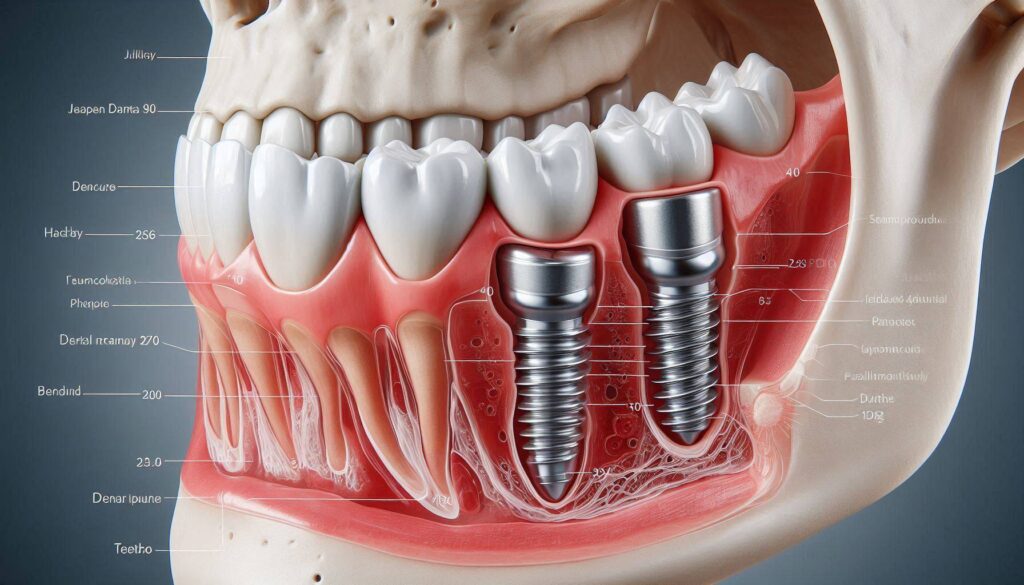
A removable implant overdenture, often called a snap-on denture, is a design that provides a dramatic increase in stability and retention over a conventional denture while still being removable for cleaning. The denture has special housings that snap onto attachments on the implants. The location of these implants is standardized and follows well-established, evidence-based protocols. For the mandible, the most classic and widely used protocol is the two-implant overdenture. This is considered the minimum standard of care for restoring the edentulous mandible. The two implants are placed in the anterior mandible, one on each side of the midline, typically in the positions of the former canine teeth, roughly 5 to 6 millimeters anterior to the mental foramina.
This location is chosen for specific reasons. The bone here is the densest in the jaw, ensuring excellent primary stability and high implant success. The anterior position avoids the mental nerves. The two implants, connected by a bar or with independent ball or locator attachments, provide a fulcrum at the front of the denture. The back of the denture is still supported by the gums on the posterior ridges. The patient gains immense retention at the front, eliminating the embarrassing flotation of the anterior denture, but there remains some posterior movement. This design is highly successful, cost-effective, and life-changing for the patient accustomed to a loose lower denture.
Four-Implant Overdenture and the Maxillary Protocol
When greater stability and retention are desired, the four-implant overdenture is the next level. In the mandible, the four implants are typically placed in the anterior zone, between the mental foramina. The implants are positioned in a gentle curve, creating a quadrilateral support base. A bar is fabricated connecting all four implants, and the denture snaps onto this bar. The bar design splints the implants together, distributing forces across all four fixtures and providing robust retention. This design greatly reduces posterior denture movement.
The maxillary overdenture is a different beast because of the softer bone. A minimum of four implants is generally recommended for a maxillary overdenture, and the implant distribution must be wider. The anterior implants are placed in the canine regions, or slightly more forward. The posterior implants, if bone is available, are placed in the premolar or first molar regions. This wide-spread quadrilateral distribution is essential to resist the dislodging forces of the tongue and the weight of the prosthesis. If posterior bone is insufficient and the patient is not a candidate for sinus grafting, the implants must be placed in the anterior maxilla, but the cantilever on the denture must be kept short. The lack of posterior implant support is a biomechanical compromise that the patient and clinician must understand.
Implant Location for a Fixed Full-Arch Prosthesis
The fixed full-arch prosthesis, often called an All-on-4 or a hybrid denture, is the pinnacle of implant-supported restoration for edentulous patients. It is a full arch of teeth that is permanently screwed into the implants. Only your dentist removes it for maintenance. This design places the highest demands on the implants because all chewing forces are transmitted directly to them, with no gum support. The location of the implants is the single most critical factor for the long-term survival of this prosthesis. The most famous and researched protocol is the All-on-4 concept. Four implants are placed in the jaw. The two anterior implants are placed vertically, in the canine or lateral incisor positions. The two posterior implants are tilted at a distal angle of 30 to 45 degrees.
This posterior tilt is the genius of the All-on-4 design. By tilting the posterior implants, the surgeon can anchor them in the dense bone of the anterior maxilla or mandible while the prosthetic platform emerges farther back in the premolar region. This provides a much wider spread of support, reducing the cantilever length on the denture. It also often allows the surgeon to avoid anatomical structures like the maxillary sinus or the mental nerve, bypassing the need for bone grafting. The tilted implants create a trapezoidal support pattern that is exceptionally stable. The result is a fixed, screw-retained bridge with a maximum of one tooth cantilever distal to the most posterior implant. The location of the implants in the All-on-4 protocol is not a suggestion; it is a precision-engineered prescription.
The All-on-6 and Zygomatic Implant Options
For patients who desire an extra margin of safety, or who have poor bone quality, the All-on-6 protocol places six implants. The additional two implants are placed in the anterior region, between the midline and the canines. This creates an even more robust anterior support zone and can allow for a slightly longer posterior cantilever. The distribution of loads across six implants reduces stress on each individual bone-implant interface. This is an excellent design, provided the bone volume is sufficient to accommodate the additional implants without compromising their placement.
For the severely atrophic maxilla where no conventional bone remains, the location of implant placement moves to an entirely different anatomical structure: the zygomatic bone. Zygomatic implants are much longer than conventional implants, ranging from 35 to 55 millimeters. They are anchored not in the maxillary alveolar bone, but in the dense, solid zygomatic bone of the cheekbone. One or two zygomatic implants are placed on each side, and they emerge into the mouth near the first molar area. These are combined with two to four conventional implants in the anterior maxilla. Zygomatic implant placement is a highly advanced surgical procedure performed by specialists. It eliminates the need for large, staged bone grafting procedures and can provide a fixed full-arch prosthesis for patients who were previously told they had no options. The location of these implants is unique and represents the furthest reach of implant dentistry into the craniofacial skeleton.
The Decision-Making Process: How Your Dentist Chooses the Location
The selection of implant locations for your denture is not a generic, one-size-fits-all decision. It is a customized, data-driven process that begins with a three-dimensional cone beam computed tomography scan. This scan provides a complete, distortion-free map of your jaw anatomy. It reveals the exact location and trajectory of the inferior alveolar nerve, the exact dimensions and health of the maxillary sinuses, the density of the available bone, and the presence of any hidden pathology. The scan is the single most important piece of diagnostic information in modern implant planning.
Your dentist or oral surgeon will use specialized implant planning software to perform a virtual surgery on your CBCT scan before you ever enter the operating room. They will select virtual implants of various sizes, place them in the ideal bone, and check the proximity to all vital structures. They will ensure the implants emerge from the bone in positions that can support a hygienic, aesthetic, and functional prosthesis. The virtual plan is then transferred to the actual surgery via a 3D-printed surgical guide. This guide fits over your gums or bone and has precision-machined sleeves that direct the implant drills to the exact pre-planned location, angle, and depth. This digital workflow transforms implant placement from a freehand art into a predictable, engineered science. The location of each implant is decided by the fusion of surgical anatomy and prosthetic design, a collaborative process between the surgeon and the restorative dentist. The question of “where the implants go” is answered definitively by your own anatomy, as read by the CBCT and interpreted by your expert clinical team.
Conclusion
The location of implant placement in dentures is a strategic, biomechanically driven decision mapped precisely to the patient’s unique anatomy, with the mandibular anterior canine zone being the most reliable site for a two-implant overdenture and the All-on-4 protocol using a combination of straight anterior and tilted posterior implants to create a broad, graft-free support polygon for a fixed full-arch prosthesis. The maxilla, with its softer bone and sinus limitations, demands a higher number of implants or the use of advanced zygomatic anchorage, while a CBCT-guided digital plan ensures every implant is placed to avoid nerves and sinuses while optimizing the prosthetic outcome. Ultimately, the chosen locations create a stable, balanced foundation that neutralizes destructive forces and restores function and confidence.
Frequently Asked Questions
Can denture implants be placed in the back of the jaw?
Yes, if the bone volume is adequate and the inferior alveolar nerve is not in the way, posterior implants provide the best biomechanical support. However, in many patients, bone resorption or nerve proximity makes posterior placement impossible without advanced grafting procedures.
Why are implants for a lower denture usually placed in the front?
The bone in the anterior mandible is dense, cortical bone with an excellent blood supply and no risk of nerve injury. This area provides the highest implant success rates and is almost always available even in long-term denture wearers.
What is the minimum number of implants for a fixed full-arch denture?
The minimum is typically four implants, as in the All-on-4 protocol. Attempting to support a full arch of teeth on fewer than four implants places excessive cantilever forces on the fixtures and is associated with a higher risk of mechanical failure.
Do the implants for a snap-on denture have to be parallel?
No. The implants do not need to be parallel. The attachments, such as locator housings, are designed to accommodate up to 40 degrees of divergence between implants. The restorative dentist can easily manage angled implants when designing the overdenture.
What happens if there is not enough bone for implants for a denture?
Options include bone grafting to rebuild the deficient ridge, sinus lift surgery to create bone height in the maxilla, short or ultra-short implants in areas of limited height, or, in the severely atrophic maxilla, advanced zygomatic implant placement anchored in the cheekbone.
Additional Resource
The American College of Prosthodontists is the leading authority on the restoration of dental implants, including the strategic planning of implant-supported dentures. Their patient education resources provide detailed information on the different types of implant overdentures and fixed prostheses. Visit: https://www.gotoapro.org/