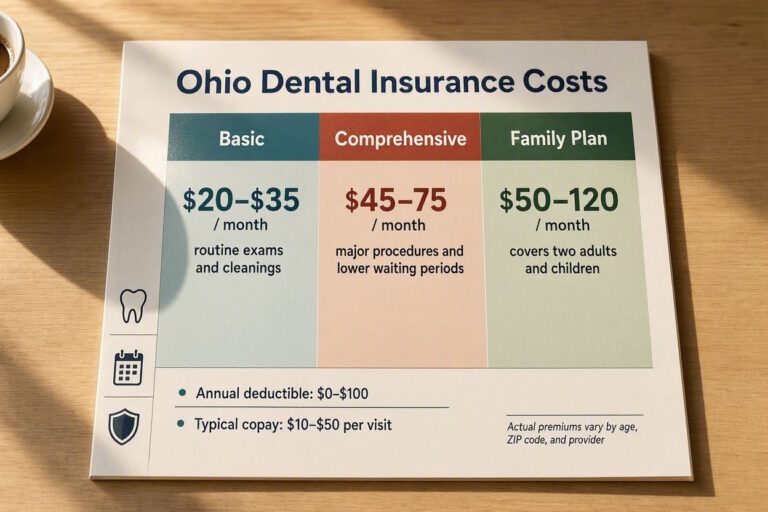
What a Typical Dental Insurance Coverage Is Called
Let’s be honest for a second. Dental insurance can feel like it was written in a secret language. You stare at words like “deductible,” “waiting period,” and “annual maximum,” and your brain just checks out.
You are not alone.
Every week, people sit in dental chairs and ask the exact same question: “What is my coverage actually called?”
The short answer? A typical dental insurance coverage is most often called a Preferred Provider Organization (PPO) plan. But that is just the tip of the iceberg. Beneath that name lives a whole ecosystem of terms, percentages, and rules that determine what you pay and what your insurance company pays.
This guide will walk you through everything you need to know. No fluff. No confusing jargon. Just clear, honest, and practical information to help you understand what your dental plan is called—and what that name really means for your wallet and your smile.
What a Typical Dental Insurance Coverage Is Called in Simple Terms
If you have dental insurance through your employer or bought a plan on your own, chances are high that you have what is called a dental PPO.
PPO stands for Preferred Provider Organization.
Why is this name so common? Because it offers flexibility. You can choose any dentist you want. However, if you visit a dentist inside the insurance company’s network (a “preferred provider”), you pay less. If you go outside the network, you pay more.
That is the core idea behind what a typical dental insurance coverage is called in the United States today.
Other names you might encounter
While PPO is the king of the hill, you might also hear these terms:
- DHMO (Dental Health Maintenance Organization): Cheaper monthly payments but less freedom to choose your dentist.
- Discount dental plans: Not technically insurance, but often confused with it.
- Indemnity plans: Old-fashioned fee-for-service plans. Less common now.
- Point of Service (POS) plans: A hybrid between PPO and DHMO.
But let’s be real: when someone asks “what a typical dental insurance coverage is called,” nine times out of ten, the answer is PPO.
“In my ten years as a benefits coordinator, over 80% of the dental plans I have processed were PPOs. It is the industry standard for a reason.” — Maria Sanchez, Employee Benefits Specialist
The Real Structure of a Standard Dental PPO Plan
Understanding the name is just the first step. To really know what a typical dental insurance coverage is called, you also need to know how it works. Otherwise, the name means nothing.
A standard dental PPO follows a predictable structure. Let’s break it down.
The 100-80-50 Rule
This is the golden rule of most dental PPO plans. It refers to how the insurance company splits costs with you for different types of dental work.
| Category of Service | Insurance Pays | You Pay | Common Examples |
|---|---|---|---|
| Preventive Care | 100% | 0% | Cleanings, exams, X-rays |
| Basic Procedures | 80% | 20% | Fillings, extractions, root canals |
| Major Procedures | 50% | 50% | Crowns, bridges, dentures, implants |
Important note: These percentages apply after you have met your deductible. They also only apply up to your annual maximum.
The Annual Maximum
Every dental PPO plan has a cap on how much the insurance company will pay in a single year. This is called the annual maximum.
Typical range: 1,000to2,000 per person.
Once you hit that limit, you pay 100% of any additional dental costs until the plan year resets.
Let’s say your annual maximum is 1,500.Yougetacrownthatcosts1,200. Insurance covers 50% (600).Youstillhave900 left in your annual maximum for the year. If you need another crown, insurance will cover another 600,andyouwillhave300 left. After that, you are on your own until next year.
This is the single most overlooked detail in dental insurance. People see “50% coverage for major work” and think it is a great deal. But if your annual maximum is low, that 50% runs out fast.
The Deductible
Before your insurance starts paying anything (except for preventive care), you must pay a set amount out of pocket. That is your deductible.
Typical dental deductible: 50to150 per person per year.
Here is an important detail: preventive care (cleanings, exams, X-rays) is usually covered at 100% before you meet the deductible. That means you can walk in for your regular checkup and pay nothing, even if you have not paid a dollar toward your deductible yet.
Waiting Periods
Many dental PPO plans include waiting periods for basic and major procedures. This means you cannot get expensive work done right after signing up.
Typical waiting periods:
- Basic procedures (fillings, extractions): 3 to 6 months
- Major procedures (crowns, bridges): 6 to 12 months
Preventive care usually has no waiting period. You can get a cleaning on day one.
Waiting periods are designed to prevent people from buying insurance only when they need a crown. If you are joining a new plan, ask about waiting periods before you need major work.
DHMO vs. PPO: What Your Coverage Is Called Matters
Not all typical dental insurance coverage is called a PPO. Some people have a DHMO (Dental Health Maintenance Organization). The name difference signals a completely different way of paying for dental care.
Here is a side-by-side comparison to help you see the difference clearly.
| Feature | Dental PPO | Dental DHMO |
|---|---|---|
| Monthly premium | Higher | Lower |
| Deductible | Yes (50–150) | Usually none |
| Annual maximum | Yes (1,000–2,000) | No maximum |
| Choice of dentist | Any dentist, but savings in-network | Must stay in-network |
| Referrals for specialists | Usually not required | Often required |
| Out-of-pocket for crown | 50% of cost | Fixed copay (e.g., 300–500) |
| Best for | People who want flexibility | People who want predictable low costs |
Which one is better?
Neither is universally better. They are just different.
A PPO is better if:
- You want to keep your current dentist
- You travel often or live in two places
- You are willing to pay higher monthly premiums for flexibility
A DHMO is better if:
- You are on a tight budget
- You do not mind switching to an in-network dentist
- You expect to need a lot of dental work (no annual maximum is a big advantage)
The key takeaway? When people ask “what a typical dental insurance coverage is called,” they are usually describing a PPO. But knowing the exact name helps you compare plans accurately.
Breaking Down the Coverage Tiers (What Each Category Really Means)
Understanding the percentages is good. Understanding what is actually in each category is better. Insurance companies do not always make this clear. Let’s fix that.
Preventive Care (Covered at 100%)
This is the category where dental insurance is genuinely good. Preventive care is covered fully because insurance companies know that preventing problems is cheaper than fixing them.
Typical services included:
- Two cleanings per year (every six months)
- One or two exams per year
- One set of bitewing X-rays per year
- One panoramic X-ray every three to five years
- Fluoride treatments (often for children only)
- Sealants (usually for children, up to a certain age)
Important nuance: “Covered at 100%” does not always mean free. Some plans have a copay for preventive visits, especially if you see an out-of-network dentist. Always check your specific plan documents.
Basic Procedures (Covered at 70–80%)
This is where costs start to appear. Basic procedures are necessary but not catastrophic. Insurance covers most of the cost, but you will pay something.
Typical services included:
- Fillings (amalgam or composite/resin)
- Simple extractions (non-surgical)
- Root canals (anterior teeth — front teeth)
- Periodontal (gum) treatments like scaling and root planing
- Emergency pain relief
Watch out for: “Downcoding.” Some insurance companies will only pay for the cheapest option. For example, they might cover a silver amalgam filling at 80% but only cover a tooth-colored composite filling at 80% of the amalgam price. The difference comes out of your pocket. Ask your dentist if this applies to your plan.
Major Procedures (Covered at 50%)
This category hits the hardest because costs are high and insurance coverage is lower.
Typical services included:
- Crowns (caps)
- Bridges
- Dentures (full and partial)
- Implants (sometimes covered at 50%, sometimes not covered at all)
- Complex oral surgery
- Root canals on molars (some plans put this in basic, others in major)
The implant problem: Many traditional dental PPO plans do not cover implants at all. If they do, coverage is often low (20–30%) with a separate lifetime maximum. Always verify implant coverage separately if you think you might need one.
Orthodontics (Often Separate Coverage)
Braces and clear aligners are usually not part of a typical dental insurance coverage plan. If orthodontics are included, they are almost always a rider (an add-on) with separate terms.
Typical orthodontic coverage:
- 50% coverage up to a separate lifetime maximum (1,000–3,000)
- Only for children (adult orthodontics is rare)
- Waiting periods (often 12–24 months)
*Less than 15% of employer-sponsored dental plans include adult orthodontic coverage. If braces are in your future, do not assume they are covered.*
In-Network vs. Out-of-Network: Why Your Coverage Name Changes
When you understand what a typical dental insurance coverage is called (a PPO), you also need to understand networks. The same plan can give you very different costs depending on where you go.
In-Network Dentists
These are dentists who have signed a contract with your insurance company. They agree to accept a pre-negotiated fee for each procedure. This fee is usually lower than what the dentist normally charges.
Your benefits with in-network care:
- Lower out-of-pocket costs
- The dentist cannot “balance bill” you (charge the difference between their normal fee and the insurance fee)
- Insurance claims are filed for you
Out-of-Network Dentists
You can still see an out-of-network dentist with a PPO plan. But the math changes.
The insurance company will pay based on what they think the procedure should cost (their “allowed amount”), not what the dentist actually charges. If your dentist charges 1,500foracrownandtheinsuranceallowedamountis1,000, they will pay 50% of 1,000(500). You are responsible for the remaining $1,000.
Out-of-network costs often include:
- Higher deductibles (sometimes double)
- Lower coverage percentages (e.g., 70% instead of 80% for basic)
- Balance billing (you pay the difference between the dentist’s fee and the insurance allowed amount)
A Real Example
You need a crown. Your in-network dentist charges 1,200.Yourinsuranceallowedamountis1,000. Insurance pays 50% (500).Youpay500.
The same crown with an out-of-network dentist: Dentist charges 1,500.Insuranceallowedamountis1,000. Insurance pays 50% of 1,000(500). Dentist bills you the remaining 1,000.Yourtotalout−of−pocket:1,000.
Same insurance plan. Double the cost. All because of the network.
This is why knowing what a typical dental insurance coverage is called is not enough. You also need to know who is in the network.
What Is NOT Covered in a Typical Plan
Honesty matters. A good guide does not just tell you what is covered. It tells you what is not covered. This section might save you from a very unpleasant surprise.
Common Exclusions in Most Dental PPO Plans
| Service | Typical Coverage Status |
|---|---|
| Cosmetic dentistry (veneers, whitening) | Not covered |
| Adult orthodontics | Rarely covered |
| Dental implants | Often excluded or very limited |
| TMJ/TMD treatment | Usually excluded |
| Nightguards (for grinding) | Sometimes covered at 50%, often excluded |
| Replacement of lost or stolen appliances | Not covered |
| Procedures deemed “not medically necessary” | Not covered |
The “Missing Tooth” Clause
This is a nasty little rule that exists in many dental PPO plans. If you lost a tooth before your insurance policy started, the plan will not cover a replacement (bridge or implant) for that tooth.
Read that again. The insurance company knows the tooth was missing before you signed up, so they will not pay to fix it.
Always check if your plan has a missing tooth clause. Some states have banned this practice, but not all.
Cosmetic Dentistry
If the primary purpose of a procedure is to make teeth look better (not to restore function or health), it is almost never covered. This includes:
- Teeth whitening
- Porcelain veneers (unless for structural damage)
- Bonding for cosmetic reasons
- Gum contouring
Experimental or Investigational Procedures
If a procedure is considered “experimental,” insurance will not pay. This can include some newer technologies like laser dentistry for certain applications.
How to Read Your Dental Insurance Card (The Name Tells a Story)
Your dental insurance card actually contains a lot of information about what your coverage is called and how it works. Let’s decode one together.
What you will typically see on a dental PPO card:
text
Member Name: JANE SMITH
Member ID: X123456789
Group Number: GRP-8721
Plan Name: Dental Complete PPO
Network: National PPO Network
Customer Service: 1-800-555-1234
What each item means:
- Plan Name: This often includes the word “PPO” or “DHMO.” That is your first clue.
- Network: Tells you which group of dentists participates.
- Group Number: Your employer or association’s specific contract with the insurer.
What is NOT on the card (but you need to know):
- Your deductible amount
- Your annual maximum
- Your waiting periods
- Whether orthodontics is included
You must read your Summary of Benefits (a separate document) for those details. Never rely solely on your insurance card.
Keep your Summary of Benefits on your phone or in your glove box. When a dental office asks for your insurance information, that document answers 90% of their questions.
Realistic Costs: What You Will Actually Pay
Let’s move from theory to reality. Based on what a typical dental insurance coverage is called (a PPO with 100-80-50 coverage), here is what you can expect to pay out of pocket for common procedures.
Assumptions for this table:
- In-network dentist
- $50 deductible (already met for the year)
- $1,500 annual maximum
- Dentist in-network fees at typical U.S. averages
| Procedure | Dentist Fee | Insurance Pays | You Pay |
|---|---|---|---|
| Cleaning & Exam (preventive) | $150 | $150 | $0 |
| Two small fillings (basic) | $300 | $240 (80%) | $60 |
| Root canal (anterior, basic) | $800 | $640 (80%) | $160 |
| Crown (major) | $1,200 | $600 (50%) | $600 |
| Bridge (three units, major) | $2,500 | $1,250 (50%) | $1,250 |
| Full dentures (major) | $1,800 | $900 (50%) | $900 |
Notice that major work adds up quickly. If you need two crowns in the same year (2,400total),insurancewillpay600 for each (1,200total).Yourannualmaximumis1,500, so you have $300 left. That third crown? You pay all of it.
The dirty secret of dental insurance: Many people pay more in annual premiums than they ever receive in benefits. A family paying 800peryearinpremiumsmightonlyuse400 of coverage. That is how insurance companies stay profitable.
How to Choose the Right Plan (Based on What the Coverage Is Called)
Now that you know what a typical dental insurance coverage is called and how it works, how do you choose the right plan?
Step 1: Know your dental needs for the next 12 months
- Low needs (just cleanings and checkups): A discount dental plan or a DHMO with low premiums might save you money. You will not hit the annual maximum anyway.
- Medium needs (fillings, maybe a root canal): A PPO with good basic coverage (80% or higher) and a moderate annual maximum ($1,500+) is solid.
- High needs (crowns, bridges, implants): Look for a plan with a high annual maximum ($2,000+) or a DHMO with no maximum. Also consider whether a dental savings plan (not insurance) might work better.
Step 2: Compare total expected cost, not just premiums
Use this simple formula:
(Annual premiums) + (expected out-of-pocket costs) = Total cost
Do not just look at the monthly payment. A plan with 30monthlypremiums(360/year) might leave you with 1,000inout−of−pocketcostsforacrown.Aplanwith50 monthly premiums (600/year)mightleaveyouwithonly500 out-of-pocket for the same crown. The second plan is actually cheaper overall.
Step 3: Check if your current dentist is in-network
Call your dentist’s office. Ask: “Which dental PPO networks do you participate in?” Then compare that list to the plans you are considering.
If you have to switch dentists to save money, decide whether that trade-off is worth it.
Step 4: Read the waiting period fine print
If you know you need a crown or a root canal in the next six months, a plan with a 12-month waiting period for major work will not help you. Look for plans with shorter waiting periods or none at all (they exist, but premiums are higher).
Frequently Asked Questions (FAQ)
1. What is the most common name for dental insurance coverage?
The most common name is dental PPO (Preferred Provider Organization). Approximately 80-90% of employer-sponsored dental plans are PPOs.
2. What does “100-80-50” mean in dental insurance?
It means preventive care is covered at 100%, basic procedures at 80%, and major procedures at 50% after you meet your deductible. This is the standard coverage structure for what a typical dental insurance coverage is called.
3. Is a DHMO better than a PPO?
It depends. DHMOs have lower monthly premiums and no annual maximum but restrict you to in-network dentists and often require referrals. PPOs offer more freedom but cost more monthly and have annual limits.
4. Why do I still pay money if my insurance covers 80%?
Because 80% coverage applies after your deductible and only up to the insurance company’s allowed amount. If your dentist charges more than that allowed amount, you pay the difference.
5. Does dental insurance cover braces?
Sometimes, but usually only for children under 18. Adult orthodontics is rarely covered. When covered, orthodontics has a separate lifetime maximum (often 1,000–3,000) and covers about 50% of the cost.
6. What is a missing tooth clause?
A clause in some dental PPO plans that excludes coverage for replacing a tooth that was missing before the policy started. Always check if your plan has this.
7. Can I use my dental insurance immediately?
For preventive care (cleanings, exams), usually yes. For basic procedures, you may wait 3–6 months. For major procedures, waiting periods of 6–12 months are common.
8. What happens if I go over my annual maximum?
You pay 100% of all additional dental costs until the plan year resets. The annual maximum is a hard stop on what the insurance company will pay.
9. Is dental insurance worth it if I only need cleanings?
For cleanings alone, often no. Two cleanings per year cost roughly $300–400 out of pocket. If your annual premiums are higher than that, you lose money. But dental insurance also covers exams and X-rays, and it protects you against unexpected costs like a sudden root canal.
10. How do I find out exactly what my plan covers?
Request the Summary of Benefits and Coverage (SBC) from your insurance company. This document legally must explain coverage in plain language.
Additional Resource
For an unbiased, state-by-state comparison of dental insurance plans and real customer reviews, visit the National Association of Dental Plans (NADP) consumer resource page:
This site provides clear explanations of different plan types and includes a “Plan Finder” tool to compare options in your area.
Important Notes for Readers
📌 Note 1: Dental insurance is not the same as medical insurance. Medical insurance often has out-of-pocket maximums (a cap on your total spending). Dental insurance rarely does. You can pay thousands out of pocket even with “good” dental coverage.
📌 Note 2: A dental PPO is a contract, not a promise of free care. Read your contract. Understand the exclusions. Ask questions before you need treatment, not after.
📌 Note 3: If you are self-employed or your employer does not offer dental benefits, consider a dental savings plan (also called a dental discount plan). These are not insurance, but they provide 10–60% off dental fees with no waiting periods, no annual maximums, and no deductibles.
📌 Note 4: Never assume a procedure is covered. Call your insurance company or check your online portal to verify coverage for any non-routine procedure. Get a pre-treatment estimate (predetermination of benefits) for any work over $300.
📌 Note 5: Your dentist’s office is your ally. A good dental front desk team knows how to maximize your benefits. Ask them: “Based on my plan, what is the most cost-effective way to schedule this treatment?”
Conclusion
So, what a typical dental insurance coverage is called? A dental PPO (Preferred Provider Organization). That is the name you will hear most often. It follows the 100-80-50 rule, comes with an annual maximum of 1,000–2,000, and gives you the flexibility to choose any dentist while rewarding you for staying in-network.
But a name alone will not save you money. Understanding the structure behind the name—the deductibles, waiting periods, and the real difference between in-network and out-of-network care—is what turns you from a confused patient into an informed consumer. Use this guide as your reference. Ask the right questions. And never assume your insurance covers more than it actually does.
Your smile is worth the effort.
Disclaimer: This article is for informational and educational purposes only. It does not constitute legal, financial, or medical advice. Dental insurance plans vary significantly by state, employer, and insurer. Always review your own plan documents and consult with a licensed insurance professional or your dental provider before making decisions about your dental care or coverage.