What Is The Additional Cost Of Sedation Dentistry?
For millions of people, the thought of sitting in a dental chair evokes a profound sense of fear and anxiety. This is not just a mild case of nerves; for many, it is a genuine phobia that prevents them from seeking the care they need. The sound of the drill, the smell of the office, the fear of pain—these triggers can be overwhelming. This condition, known as dental anxiety, is one of the most common reasons people avoid the dentist, leading to a cascade of worsening oral health problems.
Fortunately, modern dentistry has developed effective solutions to address this fear. Sedation dentistry has transformed the patient experience, offering a way to receive necessary treatment in a state of deep relaxation and comfort. From mild anxiety relief to deep sleep, sedation options make it possible for even the most fearful patients to get the care they deserve.
However, this added comfort and peace of mind comes with an added cost. The question for patients considering this option is a practical one: What is the additional cost of sedation dentistry? This comprehensive guide will explore the different types of sedation, provide realistic cost breakdowns for each, and explain what factors influence the final price. Our goal is to help you understand this investment in your comfort so you can make an informed decision about your dental care.
Understanding Sedation Dentistry: What Are Your Options?
The term “sedation dentistry” is an umbrella term that covers a spectrum of techniques used to relax a patient. It is not a one-size-fits-all approach. The right level of sedation depends on the patient’s level of anxiety, the complexity of the procedure, and their medical history.
Here is a breakdown of the most common levels of sedation:
1. Minimal Sedation (Anxiolysis)
This is the lightest form of sedation. You are awake and able to respond to commands, but you feel significantly more relaxed.
- The Method: The most common method for minimal sedation is Nitrous Oxide, often called “laughing gas.” You inhale a mixture of nitrous oxide and oxygen through a mask placed over your nose. The effects are felt within minutes and wear off very quickly after the mask is removed.
- The Feeling: You feel calm, warm, and perhaps a bit detached. Some people feel a tingling sensation. Crucially, you are still fully aware of your surroundings and can communicate with the dental team. You can usually drive yourself home after the appointment.
2. Moderate Sedation (Conscious Sedation)
This is a deeper level of relaxation. You are still technically awake but are in a “twilight” state. You may feel drowsy and may not remember much of the procedure afterward.
- The Method: The most common method is Oral Conscious Sedation. You take a prescribed pill (often a medication from the benzodiazepine family, like Halcion) about an hour before your appointment. You will feel deeply relaxed by the time you sit in the dental chair.
- The Feeling: You are very drowsy but can still be aroused and can follow simple instructions. Many patients have little to no memory of the procedure. Because the effects can linger for several hours, you will need someone to drive you home.
3. Deep Sedation and General Anesthesia
This is the highest level of sedation. You are either on the edge of consciousness or completely unconscious.
- The Method: This is achieved through Intravenous (IV) Sedation or General Anesthesia. With IV sedation, medication is delivered directly into your bloodstream for rapid, precise control of your sedation level. With general anesthesia, you are completely asleep.
- The Feeling: You are completely unaware of the procedure. You will have no memory of it. This level of sedation is typically reserved for extensive surgical procedures (like wisdom tooth extraction) or for patients with severe, unmanageable anxiety or special needs. Recovery takes longer, and you must have a driver.
What Is The Additional Cost Of Sedation Dentistry?
Now, let’s address the central question. It is crucial to understand that sedation is billed as an add-on to the cost of your dental procedure. It is a separate line item on your bill, covering the time, medication, equipment, and monitoring involved.
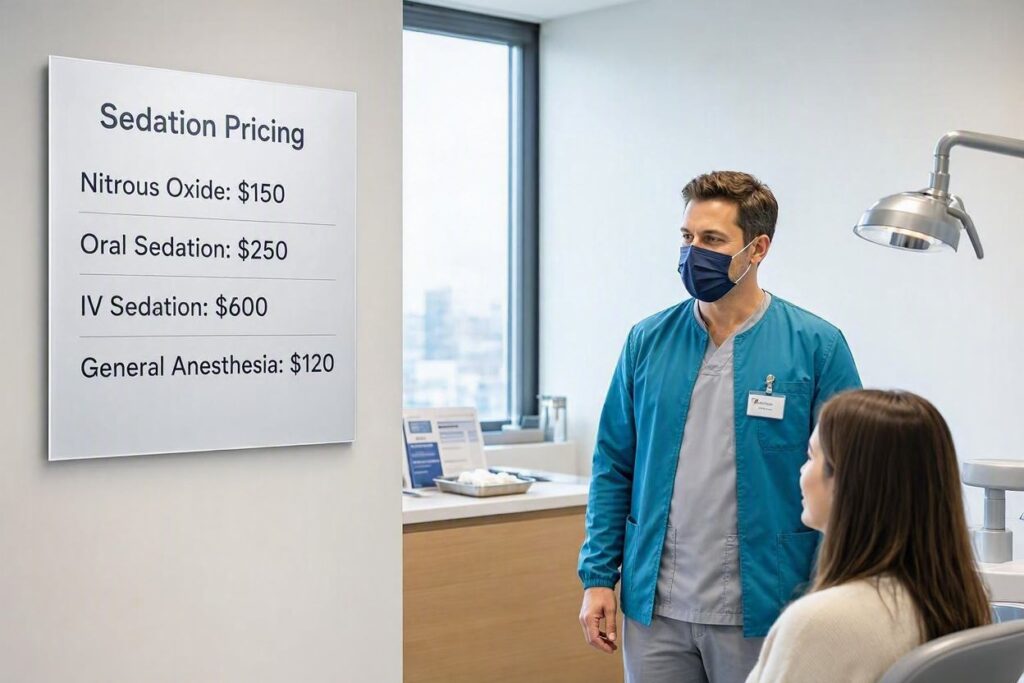
Here is a realistic breakdown of the average additional costs for each type of sedation.
| Type of Sedation | Average Additional Cost | Key Characteristics |
|---|---|---|
| Nitrous Oxide (Laughing Gas) | $50 – $150 per visit | Inhaled, minimal sedation, fast recovery. |
| Oral Conscious Sedation | $200 – $500 per visit | A pill taken before appointment, moderate sedation. |
| IV Sedation | $500 – $1,000+ per visit | Injected, deep sedation, requires monitoring. |
| General Anesthesia | $1,000 – $2,500+ per hour | Complete unconsciousness, administered by an anesthesiologist. |
A Deeper Dive into Each Cost
Let’s explore what is included in these fees and why they vary.
Nitrous Oxide
This is the most affordable sedation option. The fee is simple and usually covers the gas itself and the time spent administering it. The cost is low because the equipment is simple, the gas is inexpensive, and the patient recovers immediately.
Oral Conscious Sedation
This fee is higher for several reasons. The dentist must have advanced training to provide this service. The cost covers the pre-operative consultation to determine the correct dosage, the medication itself, and the extended appointment time required, as the dentist must monitor your vital signs throughout the procedure.
IV Sedation and General Anesthesia
This is the most expensive option for good reason. This level of sedation requires a higher level of expertise and specialized equipment. The dental team must monitor your heart rate, blood pressure, and oxygen levels continuously. In many cases, especially for general anesthesia, a dedicated anesthesiologist or nurse anesthetist is brought in, which adds a significant professional fee. The price may be quoted per visit or per hour for longer surgeries.
Does Insurance Cover Sedation?
The answer here is complicated and depends on your specific policy and the reason for the sedation.
- Nitrous Oxide: Most dental insurance plans do not cover the cost of nitrous oxide for routine procedures. It is considered a comfort item, not a medical necessity.
- Oral Sedation: Similar to nitrous, this is often not covered for standard procedures. However, if it is being used to facilitate a medically necessary procedure for a patient with a documented severe phobia, some plans may provide a benefit.
- IV Sedation and General Anesthesia: When this is used for surgical procedures (like wisdom teeth removal), insurance is more likely to cover a portion of the cost. This is because the sedation is considered an integral part of the surgery. If it is being used for a routine filling on a fearful patient, coverage is less likely.
Important Note: Before scheduling your treatment, ask the dental office to submit a “pre-treatment estimate” to your insurance company. This will give you a clear, written answer on what your out-of-pocket cost for sedation will be.
Is the Additional Cost Worth It? The Value of Comfort
The cost of sedation is a real financial consideration. But to assess its value, you must weigh it against the alternative: avoiding the dentist altogether.
The Cost of Avoiding the Dentist
For a patient with severe dental anxiety, the choice is rarely between “sedation” and “no sedation.” It is often between “sedation” and “no treatment.” When fear prevents you from getting regular checkups, small problems are left to fester. A tiny cavity becomes a root canal. Gum inflammation becomes advanced periodontitis. A chipped tooth becomes an extraction.
The financial cost of this neglect can be staggering. A $150 nitrous oxide fee to get a $200 filling is a bargain compared to the $2,000 root canal and crown you will need next year. Sedation is not just a luxury; it is a tool that enables patients to access necessary care.
The Priceless Value of Peace of Mind
For many, the value cannot be measured in dollars. The ability to receive dental care without panic, without tears, and without a traumatic memory is transformative. Sedation breaks the cycle of fear. It allows patients to build trust with their dentist and, over time, may even reduce the need for sedation in the future.
“Sedation dentistry doesn’t just calm a patient; it changes their life. We have patients who come in terrified, shaking in the waiting room. Under sedation, they get the work they’ve needed for years. They wake up with no memory of it and are amazed it’s all over. The cost is small compared to the relief they feel.” — A Common Reflection from Dentists Who Offer Sedation
Who is a Good Candidate for Sedation Dentistry?
Sedation is not just for people with a phobia. It can be beneficial for a variety of patients.
- Patients with Severe Dental Anxiety or Phobia: This is the primary indication.
- Patients with a Low Pain Threshold: For those who find it difficult to get numb or are very sensitive.
- Patients with a Strong Gag Reflex: Sedation can help to relax the muscles and suppress the gag reflex.
- Patients Who Need Extensive Work: If you are getting multiple fillings or a complex procedure done in one long visit, sedation makes the time fly by.
- Patients with Physical or Cognitive Limitations: Sedation can help patients with conditions that make it difficult to sit still.
A Guide to Preparing for Your Sedation Appointment
If you choose to proceed with sedation, your dentist will give you specific instructions. Following them is critical for your safety and the success of the procedure.
Before Your Appointment:
- Fasting: For oral, IV, and general anesthesia, you will be instructed not to eat or drink anything for a specific period (usually 6-8 hours) before your appointment.
- Medications: Review all your medications with your dentist. You may be told to take some and skip others.
- Clothing: Wear comfortable, loose-fitting clothing. Avoid jewelry and contact lenses.
- Your Driver: For anything beyond nitrous oxide, you must arrange for a responsible adult to drive you home and stay with you for a few hours.
After Your Appointment:
- Rest: Do not plan to return to work or school. Go home and rest.
- No Driving: Do not drive or operate machinery for at least 24 hours after moderate or deep sedation.
- Diet: Start with soft foods and clear liquids.
- Follow-up: Your dentist will call to check on your recovery.
Frequently Asked Questions (FAQ)
1. Will I be asleep during my procedure?
It depends on the type of sedation. With nitrous oxide, you are awake. With oral sedation, you are drowsy and may drift off but can be awakened. With IV sedation, you are in a deep state of relaxation and may not remember anything. With general anesthesia, you are completely unconscious.
2. Is sedation dentistry safe?
Yes, when administered by a trained and licensed professional, sedation dentistry is very safe. Your vital signs are monitored throughout the procedure. The risks are minimal but are higher for patients with certain medical conditions, which is why a thorough health history is taken beforehand.
3. Can children be sedated for dental work?
Yes. Sedation is commonly used in pediatric dentistry, especially for very young, anxious, or uncooperative children. The methods are the same, and the dosages are carefully calculated based on the child’s weight.
4. How long do the effects of sedation last?
Nitrous oxide wears off in minutes. The drowsiness from oral sedation can last for several hours. The effects of IV sedation may linger for 24 hours.
5. Can I use my HSA or FSA to pay for sedation?
Yes. Sedation for a medical or dental procedure is considered a qualified medical expense, so you can use your Health Savings Account or Flexible Spending Account funds to pay for it.
6. Is oral sedation a “sleep” sedation?
It is often marketed as “sleep dentistry,” but you are not technically asleep. You are in a state of deep relaxation and may drift off, but you can be easily awakened. For most patients, the amnesia effect is so strong that they feel like they slept through the procedure.
Additional Resource
For more information on managing dental anxiety and understanding sedation, visit the Dental Fear Central website.
Conclusion
The additional cost of sedation dentistry varies widely based on the method used, ranging from a modest fee for nitrous oxide to a significant investment for IV sedation or general anesthesia. This cost is billed separately from your dental procedure and is frequently not covered by insurance for routine care. However, for patients with severe anxiety, this added expense is the key that unlocks access to essential dental care, making it a priceless investment in their long-term oral health and overall well-being.