What Is The Cost Of Teeth Whitening?
A bright, white smile is universally associated with health, beauty, and confidence. It is no surprise that teeth whitening is one of the most popular cosmetic dental procedures in the world. From drugstore strips to professional in-office treatments, the options are vast, and so are the prices.
Understanding the cost of teeth whitening requires looking beyond the sticker price. You need to consider the effectiveness, the longevity of results, and the potential for side effects like sensitivity. This guide provides a comprehensive breakdown of teeth whitening costs, helping you choose the right option for your budget and goals.
The Spectrum of Whitening Options
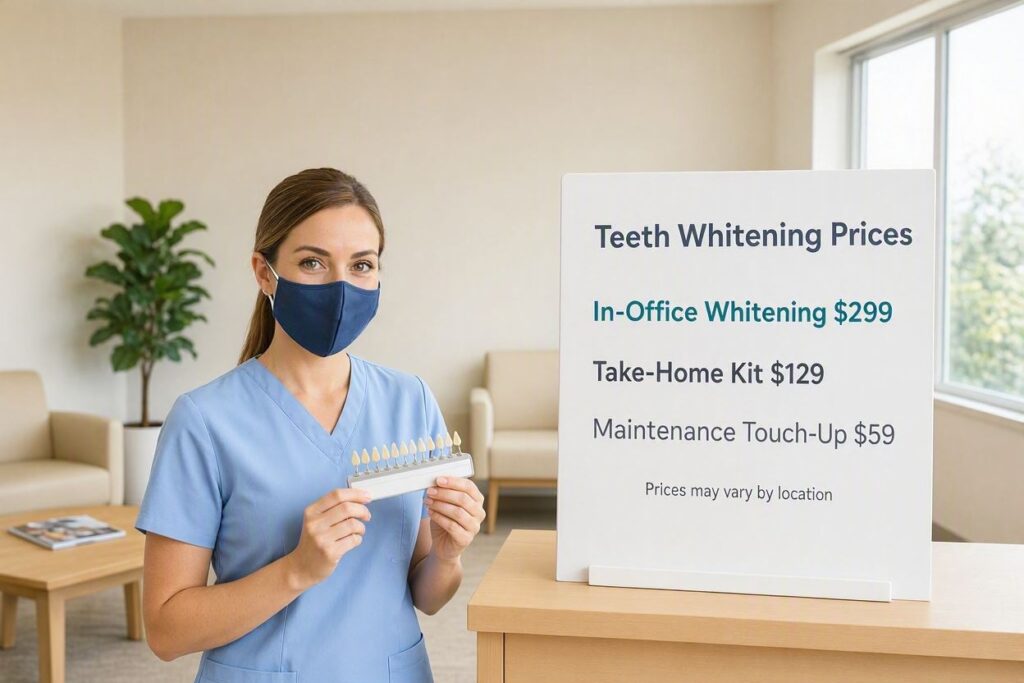
Teeth whitening is not a one-size-fits-all service. The cost varies dramatically based on the method you choose.
1. Over-the-Counter (OTC) Products
These are the cheapest options, available at drugstores and supermarkets.
- Whitening Toothpaste: $5 – $15.
- Whitening Strips: $30 – $80.
- Whitening Trays/Kits (OTC): $40 – $100.
2. Professional Take-Home Kits
These are provided by your dentist. They use custom-fitted trays and professional-grade gel.
- Cost: $150 – $600.
3. In-Office Professional Whitening
This is the fastest and most effective method. It is performed in the dental chair, often using a light or laser to accelerate the process.
- Cost: $300 – $1,000+.
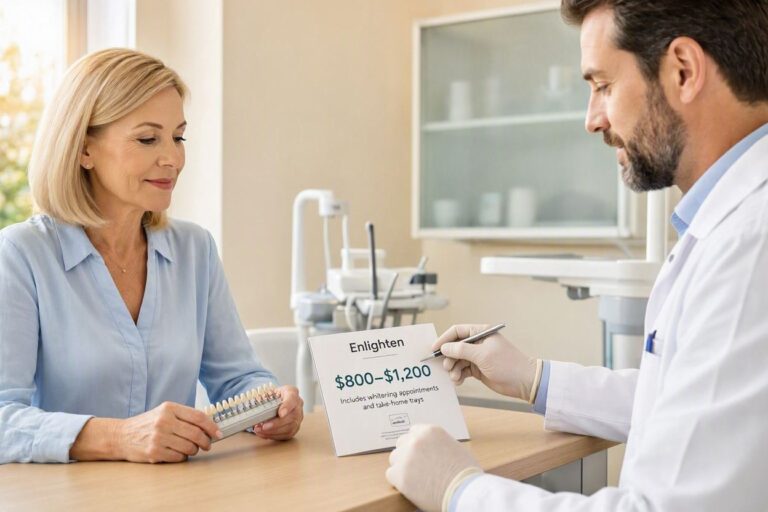
4. Premium Systems (e.g., Enlighten, KöR)
These are specialized systems that combine at-home and in-office treatment for dramatic results.
- Cost: $600 – $1,500+.
Average Cost Breakdown
| Whitening Method | Average Cost | Time to See Results | Longevity | Shade Improvement |
|---|---|---|---|---|
| Whitening Toothpaste | $5 – $15 | 4-8 weeks | Temporary (surface only) | 0-1 shades |
| Whitening Strips (Crest, etc.) | $30 – $80 | 1-2 weeks | 3-6 months | 1-4 shades |
| OTC Whitening Trays | $40 – $100 | 1-2 weeks | 3-6 months | 2-5 shades |
| Dentist Take-Home Kit | $150 – $600 | 1-2 weeks | 6-12 months | 4-8 shades |
| In-Office Whitening (Zoom, Laser) | $300 – $800 | 1 hour | 1-2 years | 4-8 shades |
| Premium Systems (Enlighten, KöR) | $600 – $1,500 | 2-3 weeks | 2+ years | 8-16 shades |
Why Is Professional Whitening More Expensive?
The difference in cost between a $50 box of strips and a $500 in-office treatment is significant. Why the gap?
1. Concentration of Whitening Agent
- OTC Strips: Contain 5% – 10% hydrogen peroxide or carbamide peroxide.
- Professional Gels: Contain 15% – 45% hydrogen peroxide or carbamide peroxide.
Higher concentrations whiten faster and more effectively, but they require professional supervision to protect your gums.
2. Custom-Fitted Trays
Dentist-provided take-home kits use custom trays made from impressions of your teeth. This ensures the gel stays on your teeth and off your gums. OTC trays are one-size-fits-all and often leak.
3. Protective Measures
During in-office whitening, the dentist applies a protective barrier to your gums. This prevents chemical burns and allows the use of high-concentration gels.
4. Immediate and Dramatic Results
In-office whitening can lighten teeth by several shades in a single one-hour visit. OTC products require weeks of consistent use.
“Patients often ask why they should pay $500 for whitening when they can buy strips for $50. The answer is efficacy and safety. Professional whitening works on deep stains that strips cannot touch, and it does so without damaging the gums.” — A Cosmetic Dentist in Miami
Factors That Influence the Cost
1. Geographic Location
- Major Cities (NYC, LA, London): $500 – $1,200 for in-office treatment.
- Suburban/Rural Areas: $300 – $600 for the same service.
2. Dentist’s Expertise
A cosmetic dentist with advanced training charges more than a general dentist.
3. Type of Stains
- Extrinsic Stains (Coffee, tea, smoking): Respond well to whitening.
- Intrinsic Stains (Tetracycline, fluorosis): More difficult to treat. May require premium systems or multiple sessions, increasing cost.
4. Combination Treatments
Some patients combine whitening with other cosmetic procedures (like veneers or bonding). Dentists often offer package discounts.
Is Teeth Whitening Covered by Insurance?
No. Teeth whitening is classified as a purely cosmetic procedure. Dental insurance does not cover it.
Can You Use FSA/HSA?
Some Flexible Spending Accounts (FSAs) or Health Savings Accounts (HSAs) may reimburse whitening if it is deemed medically necessary (e.g., to correct discoloration from trauma or medication). However, this is rare. Check with your plan administrator.
The Hidden Costs of Whitening
1. Sensitivity Treatment
Whitening can cause temporary tooth sensitivity. You may need desensitizing toothpaste or gel.
- Cost: $10 – $30.
2. Touch-Up Treatments
Whitening is not permanent. You will need touch-ups.
- In-Office Touch-Up: $150 – $300 per year.
- Take-Home Touch-Up Gel: $30 – $80 for a syringe.
3. Replacement of Restorations
Whitening does not work on crowns, veneers, or fillings. If you whiten your natural teeth, your old restorations may no longer match. You might need to replace them.
- Cost of Replacement Filling: $150 – $450.
- Cost of Replacement Crown: $800 – $2,500.
At-Home vs. In-Office: Which Is Better Value?
Choose OTC Products If:
- You have a tight budget.
- You have mild staining.
- You are patient and can follow the instructions for weeks.
Choose Dentist Take-Home Kits If:
- You want better results than strips.
- You want custom trays you can reuse for touch-ups.
- You have moderate staining.
Choose In-Office Whitening If:
- You need immediate results (e.g., for a wedding or event).
- You have stubborn stains.
- You want the safest, most controlled environment.
Choose Premium Systems If:
- You want the absolute whitest possible shade.
- You have severe staining (e.g., tetracycline).
- You want long-lasting results.
The Cost of DIY Whitening Gone Wrong
Social media is full of “DIY whitening hacks” using baking soda, lemon juice, or hydrogen peroxide. These are dangerous.
The Risks:
- Enamel Erosion: Acidic substances (like lemon juice) dissolve enamel. This is irreversible.
- Gum Burns: Undiluted hydrogen peroxide can burn gums.
- Increased Sensitivity: Eroded enamel exposes the sensitive dentin layer.
Fixing enamel erosion can cost thousands of dollars in restorative work. Spending $50 on safe OTC strips is always better than a $5 DIY hack that ruins your teeth.
How to Make Whitening Results Last
To maximize the value of your investment:
- Avoid Staining Foods/Drinks: Coffee, tea, red wine, and dark sodas stain teeth.
- Use a Straw: When drinking staining beverages, use a straw to bypass your front teeth.
- Quit Smoking: Tobacco is a major cause of yellowing.
- Maintain Oral Hygiene: Brush twice daily and floss.
- Use Whitening Toothpaste: Helps maintain the shade between treatments.
- Schedule Touch-Ups: Annual touch-up treatments keep your smile bright.
Conclusion
The cost of teeth whitening ranges from $5 for a tube of whitening toothpaste to over $1,500 for premium professional systems. While OTC products are budget-friendly, they offer limited results. Professional treatments, though more expensive, provide faster, more dramatic, and longer-lasting whitening under safe, supervised conditions.
Additional Resource
To understand the science behind teeth whitening and to find a qualified cosmetic dentist near you, visit the American Academy of Cosmetic Dentistry (AACD) at www.aacd.com.
Frequently Asked Questions (FAQ)
Q: Does teeth whitening damage enamel?
A: When done correctly (professionally or with approved OTC products), whitening does not damage enamel. It temporarily opens the pores of the enamel to remove stains, then they close again.
Q: How long does professional whitening last?
A: Results can last 1 to 3 years, depending on your diet and habits. Touch-ups are recommended annually.
Q: Can I whiten my teeth if I have sensitive teeth?
A: Yes, but you should choose a system designed for sensitivity. Professional systems often include desensitizing agents. Consult your dentist.
Q: Will whitening work on crowns or veneers?
A: No. Whitening only works on natural tooth enamel. You may need to replace restorations if they no longer match.
Q: What is the strongest teeth whitening?
A: In-office professional systems using high-concentration hydrogen peroxide (up to 40%) are the strongest and fastest. Premium systems like Enlighten or KöR offer the most dramatic results.