Screwless Dental Implants For Seniors
Losing teeth as we age is common. But the discomfort of traditional dentures doesn’t have to be permanent.
Many seniors avoid dental implants because they fear the word “screw.” They imagine metal parts, complicated surgeries, and long, painful recoveries. This is completely understandable.
However, modern dentistry has made incredible progress. Today, screwless dental implants for seniors offer a different path. They focus on comfort, simplicity, and a more natural feel.
This guide is written for you. We will explore what these implants are, how they work, and whether they might be a good fit for your lifestyle and health. No complex jargon. No unrealistic promises. Just honest, useful information.
Let’s begin.
What Are Screwless Dental Implants? (And How Are They Different?)
To understand screwless implants, we first need to look at traditional ones.
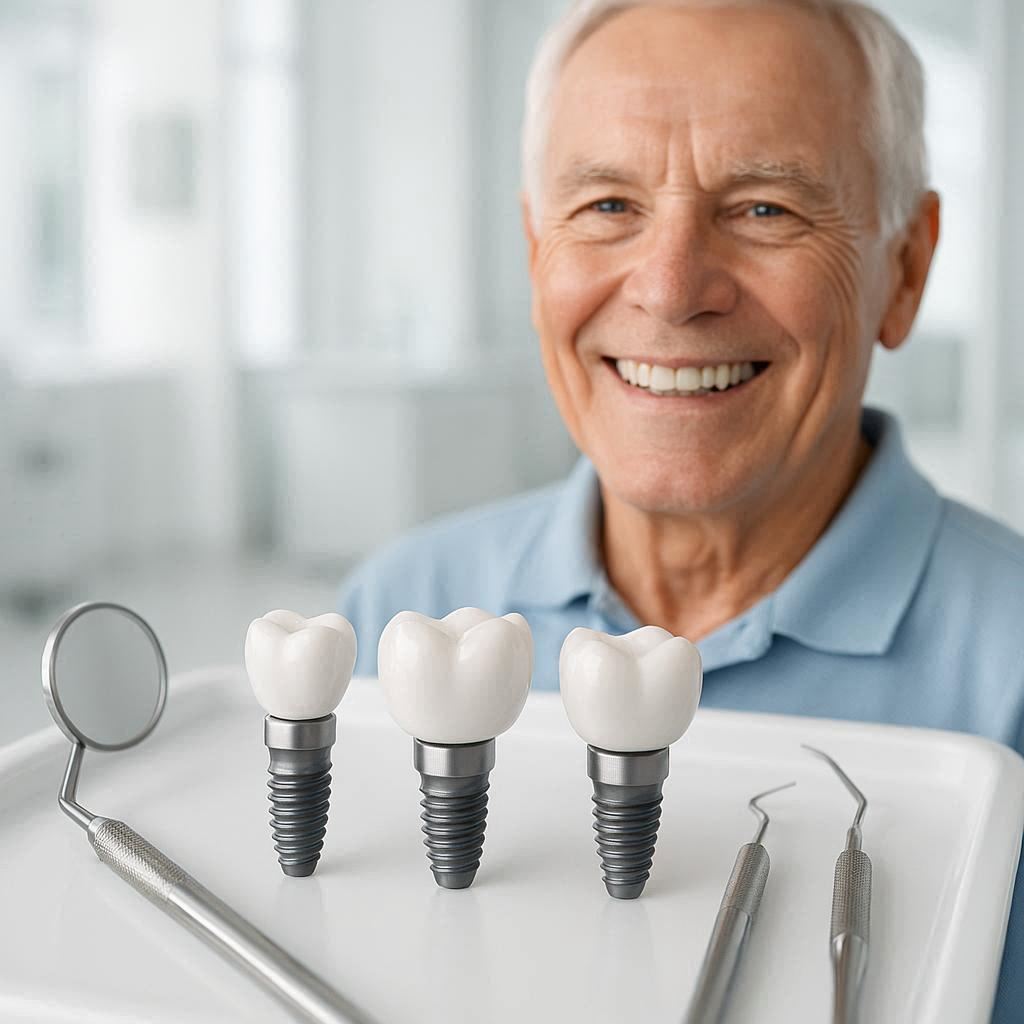
A traditional dental implant is a small titanium post. The dentist surgically places this post into your jawbone. It acts like an artificial tooth root. On top of this post, there is an abutment. This is a small connector piece. The dentist screws the abutment into the implant. Finally, the crown (the fake tooth) is screwed or cemented onto the abutment.
So, a traditional implant has screws inside your jaw. You cannot see them, but they are there.
The Screwless Difference
A screwless dental implant is not entirely without metal. The implant post (the root part) is still usually made of titanium or zirconia. That part remains in the jawbone. The difference is in the connection.
In a screwless system, the abutment connects to the implant without a screw. Instead, it uses a different mechanism. Common methods include:
- Friction fit: The abutment is gently tapped into place. The pressure holds it securely.
- Morse taper: This is a cone-in-cone connection. The abutment locks into the implant using a precise, self-locking angle.
- Magnetic retention: Rare for permanent teeth, but used for implant-supported dentures that need to be removable.
For seniors, the main advantage is no micro-movement. Screws can sometimes loosen over time. Screwless connections often feel more stable and solid. They also eliminate the need for a tiny screwdriver in your mouth during adjustments.
Important Note: The term “screwless” can be confusing. It does not mean the implant has no metal. It means the locking mechanism does not rely on a traditional screw. Always ask your dentist for the exact system they use.
Why Seniors Are Choosing Screwless Implants
Age brings wisdom. It also brings changes to our bones, gums, and overall health. A solution that works for a 30-year-old might not be ideal for a 70-year-old.
Here is why screwless implants are becoming popular among older adults.
1. Less Pressure on Fragile Bones
As we get older, our jawbone density can decrease. This is especially true if we have worn dentures for many years. Traditional screwed implants require a certain amount of bone thickness. The screwing action can sometimes create stress on the bone.
Screwless implants, especially those using a taper connection, distribute biting forces more evenly. This is gentler on an aging jaw. It reduces the risk of microfractures.
2. No Loose Parts
One of the most common problems with traditional implant crowns is a loose screw. It happens over time. Chewing creates vibration. The screw can unscrew by a fraction of a millimeter. You might feel a tiny wobble. Fixing it requires a trip to the dentist.
Screwless connections have no screw to loosen. The locking mechanism is passive but extremely secure. For seniors with arthritis or reduced hand mobility, this is a blessing. You will not need to worry about a loose tooth.
3. Easier Hygiene
Food particles love to hide in tiny screw holes. On traditional implants, there is a small hole on top of the crown where the screw goes. This hole is filled with a small plug, but it can still trap bacteria.
Screwless crowns often have a smoother, solid surface. There is no access hole. This makes brushing and flossing easier and more effective. For seniors who want to avoid gum infections, this is a major benefit.
4. Reduced Chair Time
Placing and tightening screws is a delicate process. The dentist needs to use precise torque. They often need X-rays during the procedure to check the fit.
A screwless system is often simpler to place. The abutment clicks or taps into place. This can mean less time in the dental chair. For seniors who find long appointments tiring, this is a real advantage.
Are You a Candidate? A Realistic Look at Health Factors
Honesty is important. Not every senior is a candidate for any type of implant. Let us look at what helps and what might create challenges.
Good Signs You May Be a Candidate
- You are in good general health. Uncontrolled diabetes, active cancer treatment, or severe immune disorders can affect healing.
- You do not smoke heavily. Smoking reduces blood flow to the gums. It dramatically increases implant failure rates.
- You have enough jawbone height. You do not need perfect bone density, but you need enough height to hold the implant post.
- Your gums are healthy. No active gum disease. This is essential.
Potential Challenges (And Solutions)
| Challenge | Why It Matters | Possible Solution |
|---|---|---|
| Low bone density | The implant may not integrate (fuse) with the bone. | Bone grafting. However, some seniors choose mini-implants instead. |
| Taking blood thinners | Surgery carries a higher bleeding risk. | Your doctor and dentist can coordinate a safe plan. |
| Bruxism (teeth grinding) | Excessive force can damage any implant. | Night guards. Your dentist will monitor you closely. |
| Dry mouth (medication side effect) | Increases risk of gum infection around the implant. | Special mouth rinses, sugar-free gum, and more frequent cleanings. |
“I was told I had too much bone loss for regular implants. My dentist suggested screwless mini-implants for my lower denture. The difference is night and day. I can eat an apple again.” — Robert, 72, Florida.
A Word on Age
There is no upper age limit for dental implants. Dentists have successfully placed implants in patients over 90. The key is your biological age, not your chronological age. If you are mobile, mentally aware, and relatively healthy, age is just a number.
Types of Screwless Implants for Seniors
Not all screwless systems are the same. Your dentist will choose one based on your needs. Here are the most common types you will encounter.
1. Tapered Connection Implants (Most Common)
This is the gold standard in screwless technology. The implant post has an internal cone shape. The abutment has a matching cone shape. When the dentist pushes them together, they lock via friction. It is incredibly stable.
Best for: Single tooth replacements and fixed bridges.
2. Locator Attachments (For Dentures)
These are not for single crowns. They are for implant-supported dentures. A small metal housing is placed inside the denture. This housing snaps onto a ball-shaped abutment on the implant. The patient can remove the denture for cleaning.
Best for: Seniors who want removable dentures that do not slip.
3. Zirconia Screwless Implants (Metal-Free Option)
Some companies make one-piece zirconia implants. The post and the abutment are a single, solid piece. There is no screw because there is no separate part. These are beautiful and gum-friendly. However, they require very precise placement because you cannot adjust the angle.
Best for: Front teeth replacements in patients with metal allergies.
4. Magnet-Retained Implants
Rare today, but still used. A small magnet is placed in the implant. Another magnet is in the denture. The denture clicks into place. Over time, magnets can lose strength.
Best for: Very light, temporary dentures. Not recommended for heavy chewing.
The Step-by-Step Procedure: What to Expect
Let us walk through a typical screwless implant procedure for a senior. This assumes you are getting a single tooth replacement.
Step 1: The Consultation (1 hour)
Your dentist will take a 3D CT scan of your jaw. They will check bone height and nerve location. They will review your medications. This is the time to ask all your questions.
Step 2: Tooth Removal (If needed)
If you still have a damaged tooth, the dentist will remove it gently. They may place a bone graft if the socket is too wide.
Step 3: Implant Placement (1-2 hours)
This is the surgery. You will receive local anesthesia (numbing shots). Some dentists offer sedation if you are anxious. The dentist makes a small cut in your gum. They drill a precise hole. Then, they place the implant post into the bone. The top of the implant is level with or slightly below the gum. Then they place a healing cap on top. They stitch the gum closed.
Step 4: Osseointegration (The Waiting Period – 3 to 6 months)
This is the most important step. Your jawbone grows around the implant surface. It fuses with it. During this time, you wear a temporary denture or flipper. You eat soft foods. You do not put pressure on the healing implant.
Step 5: Abutment Connection (15 minutes)
Once the implant is solidly fused, the dentist uncovers it. They remove the healing cap. Then, they place the screwless abutment. For a taper connection, they will tap it into place. You will hear a click. There is no tightening torque. You might feel pressure, but no pain.
Step 6: Crown Delivery (1 hour)
Your final crown is ready. The dentist checks the fit and color. They then cement or press the crown onto the abutment. The crown is now solidly attached. You can chew on it immediately.
Important Note: The screwless part (Step 5) is much faster than a traditional screw tightening. Many seniors report less jaw fatigue during this step.
Cost Breakdown: Are Screwless Implants More Expensive?
Let us be realistic. Dental implants are an investment. Screwless systems are not necessarily more expensive. Sometimes, they are the same price. Sometimes, the specialized abutment costs a little more.
Here is a general price guide in the United States (private pay, no insurance):
| Item | Traditional Screwed Implant | Screwless Implant |
|---|---|---|
| Implant post + abutment | $1,500 – $2,500 | $1,600 – $2,700 |
| Crown (the tooth) | $1,000 – $2,000 | $1,000 – $2,000 |
| CT Scan & Surgical guide | $500 – $1,000 | $500 – $1,000 |
| Total per single tooth | $3,000 – $5,500 | $3,100 – $5,700 |
How to save money:
- Dental schools: Teaching clinics offer lower prices. Supervised students perform the work.
- Dental tourism: Mexico, Costa Rica, and Colombia have high-quality clinics at 50-70% less cost. However, travel and follow-up care can be complicated for seniors.
- Dental discount plans: These are not insurance. They offer negotiated rates. Ask your dentist if they accept any.
- Medicare and implants: Original Medicare does not cover dental implants. Some Medicare Advantage plans (Part C) offer limited dental benefits. Check your policy carefully.
A realistic perspective: A single screwless implant costs roughly the same as a high-end laptop or a used car. It lasts 20+ years. Dentures need replacement every 5-7 years. Over two decades, implants are often cheaper.
Recovery and Aftercare: A Senior-Friendly Guide
Healing takes patience. But screwless implants often have a smoother soft-tissue recovery because there is no rough screw thread exposed.
The First 24 Hours
- Bite on gauze to stop bleeding.
- Apply an ice pack to your face (20 minutes on, 20 off).
- Do not spit, use a straw, or smoke.
- Eat cold, soft foods: yogurt, pudding, smoothies.
- Take prescribed pain medication before the anesthesia wears off.
Week One
- Rinse gently with warm salt water (no swishing, just move your head).
- Brush your other teeth normally. Avoid the surgical site.
- Eat soft, warm foods: mashed potatoes, scrambled eggs, soup.
- No heavy lifting or strenuous exercise.
Months 1-3 (Healing Phase)
- Stick to soft foods on that side of your mouth.
- Wear your temporary denture only as instructed (usually removed at night).
- Attend all follow-up appointments. The dentist will check for bone integration.
- Report any pain, redness, or movement immediately.
After the Final Crown (Long-term Care)
Screwless implants are easy to maintain.
Daily cleaning routine:
- Brush twice a day with a soft toothbrush.
- Floss once a day. Use super floss or a water flosser (Waterpik) around the implant.
- Avoid using metal scrapers on the crown.
What to avoid:
- Chewing ice or hard candy.
- Using your teeth as tools (opening packages).
- Neglecting your 6-month dental cleanings.
“The hygienist uses a plastic scaler on my screwless implant. Metal ones can scratch the surface. Ask for plastic or titanium instruments.” — Linda, 68, Oregon.
Screwless vs. Traditional: Which is Better for You?
Let us compare side by side.
| Feature | Traditional Screwed Implant | Screwless Implant |
|---|---|---|
| Connection security | Very secure (screw can loosen over years) | Extremely secure (no loosening mechanism) |
| Ease of repair | Easy to unscrew and replace crown | Harder to remove (may need to cut the crown off) |
| Hygiene | Screw hole can trap bacteria | Smooth surface, very clean |
| Bone stress | Moderate | Low (gentler on senior bones) |
| Cost | Standard | Similar or slightly higher |
| Availability | Every implant dentist offers this | Specialized systems, not all dentists offer it |
Which one wins?
- Choose screwless if: You have low bone density, want the easiest hygiene, and dislike the idea of tiny screws in your mouth.
- Choose traditional if: You need the ability to easily repair or replace the crown in the future without potential damage. Also, if your dentist does not offer screwless systems.
The honest truth: Both work very well. The skill of the dentist matters more than the screw vs. screwless debate. A poorly placed screwless implant will fail. A perfectly placed traditional implant will last a lifetime.
Common Fears and Misconceptions (Addressed Gently)
Fear is normal. Let us address the most common worries seniors have.
Fear #1: “The surgery will hurt.”
Reality: You feel pressure, not pain. Local anesthesia is powerful. Most seniors say the dental injection is the worst part. After that, you feel nothing. Post-surgery, over-the-counter ibuprofen usually controls the ache.
Fear #2: “I am too old to heal.”
Reality: Healthy seniors heal well. It might take a few extra weeks compared to a 25-year-old. But your body’s healing ability does not stop at 65. Good nutrition and avoiding smoking are your best tools.
Fear #3: “The implant will fail.”
Reality: Failure rates for implants in seniors (over 65) are around 5-10% over 10 years. This is similar to younger patients. The main cause of failure is not age. It is gum disease and smoking. Keep your gums clean, and the success rate is very high.
Fear #4: “I cannot afford it.”
Reality: That is a valid concern. But consider financing. Many dental offices offer CareCredit or in-house payment plans. Also, consider doing one implant at a time, not a full mouth at once.
Frequently Asked Questions (FAQ)
Q1: Can screwless dental implants be removed if something goes wrong?
Yes, but it is more difficult than a screwed implant. The dentist may need to use a special removal tool or drill out the abutment. In most cases, the crown would be destroyed during removal. This is rare.
Q2: Are screwless implants safe for people with osteoporosis medications?
It depends. Oral bisphosphonates (like Fosamax) for less than 4 years are usually safe. Intravenous bisphosphonates (for cancer) are a high risk. You must tell your dentist your exact medication history. They may consult your doctor.
Q3: How long do screwless implants last for seniors?
With good hygiene, the implant post can last 20+ years to a lifetime. The crown on top lasts 10-15 years before it may need replacement due to wear.
Q4: Can I get screwless implants for full upper and lower teeth?
Yes. This is called “full arch fixed implant bridge.” Many screwless systems offer multi-unit abutments for this purpose. However, traditional screws are still very common for full arches because they are easier to repair.
Q5: Will my insurance cover screwless implants?
Most dental insurance does not cover implants at all. If your plan does, it usually covers the crown (50%) and a small portion of the implant. The screwless system itself makes no difference to insurance.
Q6: What is the failure rate for screwless implants in seniors?
Clinical studies show a 95-98% success rate over 5 years for healthy seniors. This is equal to or slightly better than traditional screwed implants. The difference is not statistically significant in most studies.
Q7: Do screwless implants make noise when chewing?
No. The taper connection is silent. Some magnetic attachments for dentures can make a small “click” when the denture snaps in, but this is normal.
Additional Resources
For more reliable, research-backed information on dental implants for older adults, visit:
🔗 The American College of Prosthodontists (ACP) – “Implants for Seniors” Patient Guide
Link format: www.gotoapro.org/implants-for-seniors
This resource offers a search tool to find a prosthodontist (implant specialist) near you who has experience with older patients. They also have free PDF guides on implant costs and Medicare coverage.
Final Conclusion (Summary)
Screwless dental implants for seniors offer a comfortable, low-maintenance alternative to traditional screwed implants. They are gentler on aging jawbones, easier to keep clean, and eliminate the worry of loose parts. While not suitable for every senior, those in good general health with adequate bone density can enjoy a stable, natural-looking smile for decades. Always consult a dentist who specializes in geriatric implant dentistry for a personalized evaluation.