Problems With 3 On 6 Dental Implants
If you have been researching ways to replace multiple missing teeth, you have probably come across the term “3 on 6 dental implants.” It sounds modern, efficient, and cost-effective. But is it the right solution for everyone?
The truth is, no dental procedure is perfect. And while 3 on 6 implants help many people eat and smile again, there are real problems you need to understand before making a decision.
This guide walks you through the most common issues, risks, and long-term complications associated with 3 on 6 dental implants. No fluff. No sales pitch. Just honest information to help you talk to your dentist with confidence.
Let’s start with the basics.
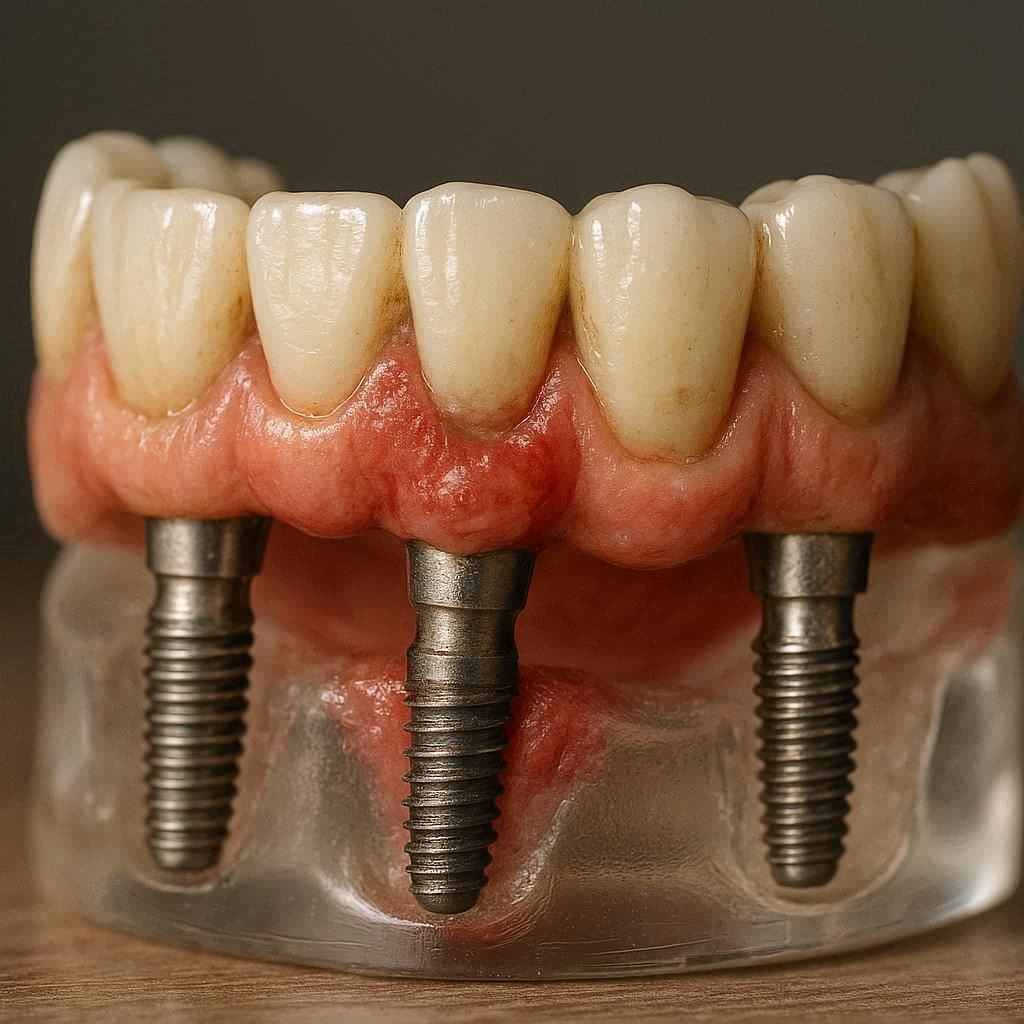
What Exactly Are 3 On 6 Dental Implants?
Before diving into the problems, a quick definition helps.
3 on 6 dental implants refer to a full-arch restoration technique. A dentist places six titanium implants into your jawbone. Then, they attach a fixed bridge made of three connected sections. That bridge replaces an entire arch of upper or lower teeth.
Think of it as a hybrid between dentures and individual implants. It is less expensive than replacing each missing tooth separately. And it feels more stable than traditional dentures.
But here is where things get tricky. The design creates unique stresses, cleaning challenges, and potential failure points. Understanding those challenges is the key to making a smart choice.
Important Note: Not all dentists recommend 3 on 6 implants. Some prefer 4 on 4 or 6 on 6 designs. Each has different pros and cons. Always ask why a specific design is suggested for your case.
The Most Common Problems With 3 On 6 Dental Implants
Let’s get straight to the issues patients face. These are not rare complications. They happen often enough that you need to know about them.
1. Difficulty Cleaning Under the Bridge
Cleaning is the number one complaint.
With individual crowns, you can floss between each tooth. With a 3 on 6 bridge, the three sections are fused together. Food and bacteria get trapped underneath.
Floss cannot pass through. Water flossers help, but they do not remove everything. Over time, trapped bacteria lead to:
- Gum inflammation
- Bone loss around the implants
- Bad breath
- Infection (peri-implantitis)
Many patients discover too late that they cannot clean properly. Once bone loss starts, the implants become loose. Fixing this often means removing the entire bridge.
What patients say:
“I loved the way they looked. But after a year, my gums bled every time I tried to clean underneath. My dentist said I needed a special threader and a water flosher. It takes me 20 minutes every night.”
2. Higher Risk of Implant Overload
In a normal mouth, each implant supports the force of one tooth. With 3 on 6, six implants support twelve or fourteen teeth. That is already a lot.
But the real problem is the bridge design. The three sections distribute force unevenly. If you chew on one side, the implants on that side take most of the pressure. Over time, that leads to:
- Micro-movement of implants
- Screw loosening
- Fractured bridge materials
- Bone loss around overloaded implants
People who grind their teeth (bruxism) face even higher risks. The constant pressure can crack the bridge or break the implants themselves.
3. Complicated Repairs When Something Breaks
Dental implants are durable. But nothing lasts forever.
If an individual crown breaks, your dentist removes one crown and replaces it. Simple.
If one part of a 3 on 6 bridge breaks, the entire bridge becomes unstable. You cannot remove just one section. The whole structure comes off. That means:
- Higher repair costs
- Longer time without teeth
- Potential damage to underlying implants
Many dentists warn that repairing a 3 on 6 bridge costs nearly as much as the original placement. And not every dental lab can make a matching replacement.
4. Bone Loss in Hard-to-Reach Areas
Your jawbone stays healthy because your teeth stimulate it when you chew. Implants do the same thing. But only where the implant touches bone.
With 3 on 6, there are gaps between implants. The bridge covers those gaps. But the bone underneath those gaps receives little to no stimulation. Over years, that bone resorbs (shrinks).
When bone shrinks, the bridge no longer fits perfectly. Gaps open up. More food gets trapped. The cycle continues.
This is not a fast problem. It happens over five, ten, or fifteen years. But when it does, you may need bone grafting and a completely new bridge.
5. Unpredictable Aesthetics for Smile Lines
This one surprises many people.
Dentists love 3 on 6 because it is efficient. But efficient does not always mean beautiful. The three-section design creates visible seams. Depending on your lip line and smile, those seams can look unnatural.
If your gums are thin or receding, the metal or pink porcelain underneath may show. Some patients report that their 3 on 6 bridge looks “blocky” or “too uniform.”
Individual crowns or a different bridge design often give better aesthetic results. But they cost more.
6. Not Reversible Without Major Surgery
Once you commit to 3 on 6, going back is hard.
If you hate dentures, you can stop wearing them. If you hate a traditional bridge, a dentist can remove it. But implants fuse to your bone. Removing them means surgery.
And after removal, your jawbone will have holes and damage. Replacing 3 on 6 with a different implant system often requires bone grafting, sinus lifts, and months of healing.
This is why experts call 3 on 6 a “surgical commitment.” It is not a trial. It is permanent.
Comparison Table: 3 on 6 vs. Other Implant Options
| Feature | 3 on 6 Implants | 4 on 4 Implants (All-on-4) | Individual Implants + Crowns |
|---|---|---|---|
| Number of implants | 6 | 4 | 12–14 |
| Cleaning ease | Difficult | Moderate | Easy (floss normally) |
| Repair complexity | Very high | Moderate | Low |
| Initial cost | Medium-high | Medium | Very high |
| Bone loss risk | Medium (in gaps) | Low (angulated implants) | Very low |
| Aesthetic control | Medium | High | Very high |
| Surgical time | Long | Short | Long |
Note: This table shows general trends. Your specific case may vary. Always get at least two professional opinions.
Who Should Avoid 3 on 6 Implants?
Not everyone is a good candidate. Avoid 3 on 6 if you have:
- Thin gum tissue – The bridge seams may show.
- Heavy teeth grinding – High risk of bridge fracture.
- Poor home hygiene habits – Cleaning challenges will cause failure.
- Limited bone height – Six implants may not fit safely.
- High aesthetic demands – Individual crowns look more natural.
- Smoking habit – Higher implant failure rate overall.
A hard truth: Many dentists push 3 on 6 because it is profitable for them. It uses many implants (more profit) but less lab work than individual crowns. Ask your dentist how many 3 on 6 procedures they have done. Ask to see before-and-after photos of cases older than five years.
Long-Term Maintenance Problems
Even successful 3 on 6 implants require ongoing maintenance. Here is what your life looks like after the procedure.
Daily Cleaning Routine
- Water flosser (every night, 5–10 minutes)
- Superfloss or implant-specific floss threaders
- Small interproximal brushes
- Antibacterial mouthwash (prescription strength often needed)
If this sounds like a lot, it is. Patients who do not commit to this routine see problems within two to three years.
Professional Maintenance Visits
You need professional cleanings every three to four months. Not every six months like natural teeth. Your dentist or hygienist uses special instruments to clean under the bridge. They also check screw tightness and bone levels with X-rays.
Each visit costs money. And not every dental office has experience with 3 on 6 maintenance.
Future Failure Rates
Research suggests that 3 on 6 implants have a five-year success rate of around 90–95%. That sounds good. But ten-year success rates drop to 80–85%. And fifteen-year rates drop further.
Compare that to individual implants with crowns. They show 95% success at ten years and 90% at fifteen years.
The difference matters. Especially if you are young (under 50).
Realistic Cost Problems
3 on 6 seems affordable compared to individual implants. But the total cost over time may be higher.
Upfront Costs
- Surgery for six implants: $15,000–$30,000 per arch
- Bridge fabrication: $5,000–$10,000
- Temporary prosthesis: $1,000–$3,000
Total: $21,000–$43,000 per arch
Long-Term Costs
- Professional cleanings (4x/year): $600–$1,200 annually
- Replacement bridge (every 10–15 years): $5,000–$10,000
- Repair for screw loosening or fracture: $500–$2,000 per incident
- Bone grafting if failure occurs: $2,000–$6,000
Over twenty years, a $25,000 upfront cost can become $50,000 or more. Individual implants may cost $60,000 upfront but require less maintenance and fewer replacements.
Important Note: Dental insurance rarely covers 3 on 6 fully. Most plans cap at $1,500–$2,000 per year. You pay most costs out of pocket.
Common Complaints from Real Patients
Here are actual quotes from online forums and dental review sites. Names are removed for privacy.
- “My bridge came loose after 18 months. The screw on implant #4 broke. My dentist said the whole bridge had to come off. I wore a denture for six weeks during repair.”
- “I cannot eat sticky foods anymore. Caramel and gummy bears pull at the bridge. I am afraid something will snap.”
- “My gums look gray under the bridge. The metal shows when I smile wide. My dentist never warned me about this.”
- “Cleaning takes forever. I miss just brushing and flossing like normal teeth. If I skip one night, my gums hurt the next day.”
- “I developed peri-implantitis on two implants. Now I need laser treatment and antibiotics. My dentist says I may lose those implants.”
These are not horror stories from bad dentists. These are normal outcomes for some patients.
When 3 on 6 Still Makes Sense
Despite the problems, 3 on 6 is not always a bad choice. It makes sense for:
- Patients with limited budget but enough bone for six implants.
- People who cannot wear dentures due to gag reflex or poor retention.
- Those who accept higher maintenance for a fixed solution.
- Cases where individual implants are anatomically impossible (sinus or nerve issues).
The key is going in with open eyes. Know the problems. Plan for them. Commit to the hygiene routine.
Questions to Ask Your Dentist Before Choosing 3 on 6
Walk into your consultation with this list. Write down the answers.
- How many 3 on 6 procedures have you done in the last five years?
- Can I see before-and-after photos of your cases older than three years?
- What is your repair rate for screw loosening or bridge fracture?
- Do you recommend 3 on 6 or a different design for my bone and gum type?
- What cleaning tools do you prescribe, and how often do I need professional visits?
- If one implant fails, can you repair it without removing the whole bridge?
- What is your policy for free repairs within the first year?
- Do you offer a warranty on the bridge and implants?
A confident dentist answers these without hesitation. A defensive dentist may be hiding something.
Conclusion (Summary in Three Lines)
3 on 6 dental implants offer a fixed, affordable alternative to dentures but come with real cleaning challenges, repair complexity, and long-term bone loss risks. Patients who choose this option must commit to a strict hygiene routine and accept higher maintenance costs over time. Always compare with 4 on 4 or individual implants, and get a second opinion before surgery.
Frequently Asked Questions (FAQ)
1. How long do 3 on 6 dental implants last?
The implants themselves can last 20+ years with good care. The bridge usually needs replacement every 10–15 years. Proper hygiene and regular checkups extend lifespan.
2. Are 3 on 6 implants painful to place?
The surgery happens under local anesthesia or sedation. Most patients report mild to moderate discomfort for 5–7 days after. Pain is similar to tooth extraction but lasts slightly longer.
3. Can I get 3 on 6 if I have bone loss?
Possibly, but you may need bone grafting first. Severe bone loss makes six implants impossible. In that case, 4 on 4 or zygomatic implants may be better.
4. Do 3 on 6 implants look natural?
They look better than dentures but less natural than individual crowns. Visible seams and uniform shape can be noticeable depending on your smile line and gum thickness.
5. What happens if one implant fails?
This is a major problem. Often, the entire bridge must be removed. The failed implant is surgically extracted. You may need bone grafting and a new bridge design.
6. Can I remove a 3 on 6 bridge myself?
No. Only a dentist removes it with special tools. The bridge is screwed or cemented onto the implants. Attempting removal damages both the bridge and implants.
7. Are 3 on 6 cheaper than All-on-4?
Not always. 3 on 6 uses more implants (higher surgical cost) but less complex bridge design (lower lab cost). Total cost is similar. Compare quotes for your specific case.
8. What is the failure rate for 3 on 6 implants?
Five-year failure rate: 5–10%. Ten-year failure rate: 15–20%. Failure means losing one or more implants or needing bridge replacement. Smokers and poor cleaners have higher rates.
Additional Resource
For a deeper, research-backed look at implant complications and maintenance protocols, visit the American Academy of Implant Dentistry’s patient education library:
🔗 https://www.aaid.com/patient-resources