Should Diabetics Get Dental Implants?
If you are living with diabetes and missing one or more teeth, you have probably asked yourself this question more than once. You might have heard conflicting advice. Some people say implants are too risky. Others claim modern dentistry makes them possible for almost anyone.
So, what is the real answer?
The short version is this: yes, many diabetics can safely get dental implants. But there is a catch. Your blood sugar control matters more than almost anything else.
This guide will walk you through everything you need to know. We will look at the real risks, the success rates, the preparation steps, and the long-term care. No complicated medical language. No sugar-coating. Just honest, useful information to help you make a confident decision.
Let us start with the most important question first.
Understanding the Real Concern: Why Diabetes Matters for Implants
To understand why dentists sometimes hesitate, you first need to know how a dental implant works.
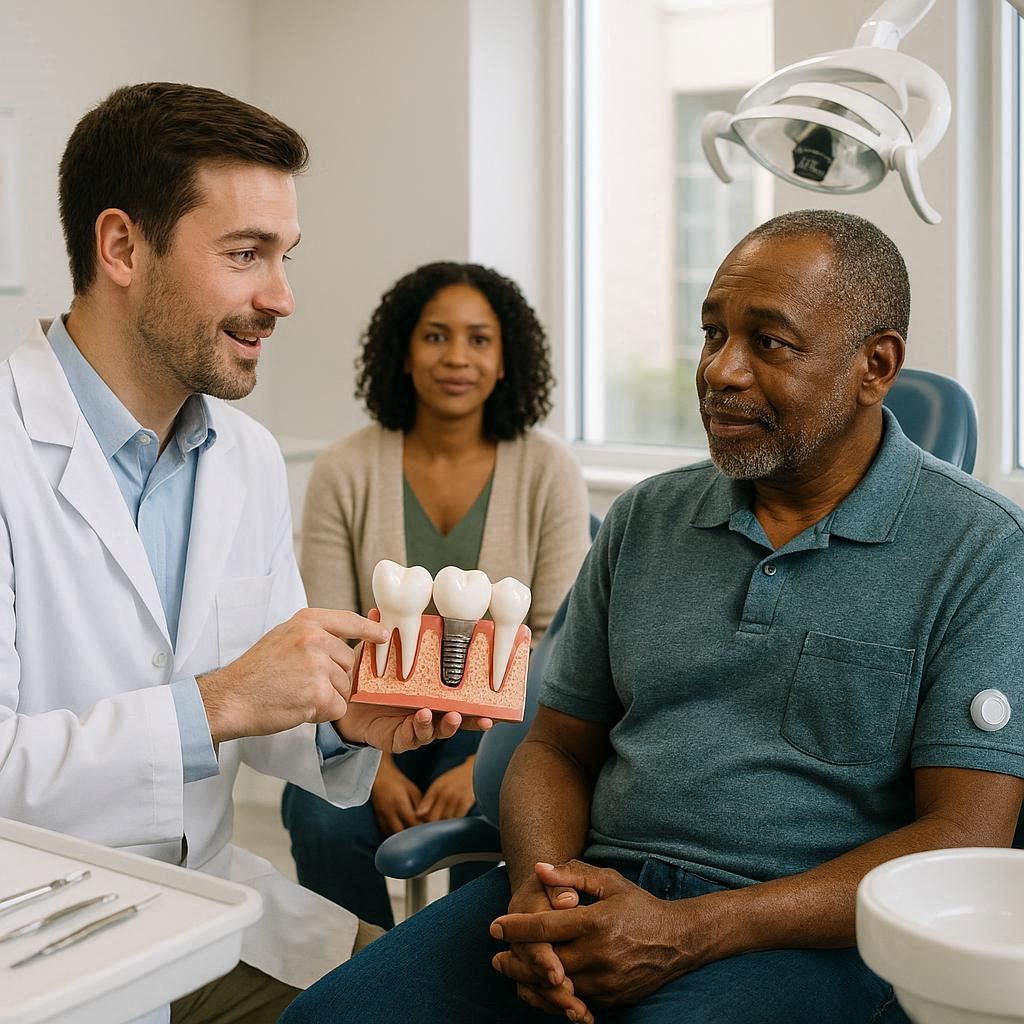
An implant is a small titanium screw. A dentist places it into your jawbone. Over several months, your bone grows around that screw. This process is called osseointegration. Once the bone locks the implant in place, your dentist adds a crown on top. You get a new tooth that looks, feels, and functions like a natural one.
The key step is bone healing.
Diabetes, especially when blood sugar runs high, can slow down healing. High blood sugar affects small blood vessels. It reduces oxygen flow to tissues. It also increases the risk of infection.
In simple terms: if your body struggles to heal a small cut on your finger, it will also struggle to heal the bone around an implant.
But here is the good news. Many people with diabetes manage their condition very well. When blood sugar stays in a healthy range, the healing process can be almost as good as someone without diabetes.
Important note: Uncontrolled diabetes is a genuine risk. Controlled diabetes is often not a barrier at all.
The Difference Between Type 1 and Type 2 Diabetes
You might wonder if your type of diabetes changes the answer.
Both Type 1 and Type 2 diabetes can affect implant success. The issue is not the type itself. The issue is your blood glucose levels over time.
| Aspect | Type 1 Diabetes | Type 2 Diabetes |
|---|---|---|
| Nature | Autoimmune, insulin-dependent | Often related to insulin resistance |
| Blood sugar variability | Can be harder to stabilize | Often easier with lifestyle changes |
| Implant suitability | Good if well-controlled | Good if well-controlled |
| Main challenge | Preventing highs and lows | Long-term management consistency |
The real difference comes down to stability. Some people with Type 1 experience more frequent blood sugar swings. That can affect healing. But again, good management makes implants possible.
What Does the Research Say? Success Rates for Diabetics
Let us look at actual numbers. Research helps us move from fear to facts.
For a person without diabetes, dental implants have a success rate of around 95% to 98% over ten years.
For diabetics, the numbers depend heavily on blood sugar control.
- Well-controlled diabetics (HbA1c below 7%): Success rates between 85% and 95%. That is very close to non-diabetics.
- Moderately controlled diabetics (HbA1c 7% to 8.5%): Success rates between 80% and 88%. Still good, but slightly higher risk of complications.
- Poorly controlled diabetics (HbA1c above 8.5% or higher than 9%): Success rates can drop to 60% to 75%. Some studies show even lower numbers. The risk of implant failure increases significantly.
One important study followed diabetic patients for five years. It found that those with stable blood sugar lost implants at almost the same rate as non-diabetics. The group with poor control lost implants three times more often.
What does this mean for you?
If your diabetes is well managed, your chances of success are excellent. If your control is poor, you should focus on improving it before considering implants.
Common Complications Diabetics Should Know About
Let us be realistic. Even with good control, there are some extra risks. A good dentist will tell you about them. A great dentist will help you manage them.
Delayed healing
Your bone may take longer to fuse with the implant. Instead of three to six months, healing might take six to nine months. That does not mean failure. It just means patience.
Peri-implantitis
This is an infection around the implant. It is similar to gum disease. Diabetics have a slightly higher risk of developing this condition. Good oral hygiene and regular dental visits are your best defense.
Poor blood flow
High blood sugar can narrow blood vessels. That means less oxygen reaches the healing site. This is why controlling blood sugar before surgery matters so much.
Increased infection risk
Any surgery carries an infection risk. For diabetics, infections can be more serious and harder to treat. Your dentist may prescribe antibiotics before and after the procedure.
These risks sound scary on paper. But remember: millions of diabetics have successfully received dental implants. The key is preparation and partnership with your medical team.
Who Is a Good Candidate? A Simple Checklist
Not every diabetic is the same. Use this checklist to see where you stand.
Green Light (Good Candidate)
- HbA1c below 7% for at least three months
- No active gum disease
- Non-smoker or willing to quit during healing
- Good daily blood sugar monitoring habits
- Regular visits to both dentist and doctor
- No severe complications from diabetes (like kidney failure or uncontrolled neuropathy)
Yellow Light (Possible, but with extra care)
- HbA1c between 7% and 8.5%
- Occasional blood sugar spikes
- Mild gum disease that can be treated first
- Smoker but willing to reduce significantly
- Slower healing from past wounds
Red Light (Not recommended at this time)
- HbA1c consistently above 8.5% or higher than 9%
- Active, untreated gum disease
- Severe, unstable medical complications
- Unwilling to monitor blood sugar closely
- Heavy smoker with no plan to quit
If you fall into the yellow or red zone, do not lose hope. Many people improve their control within a few months. Work with your doctor. Get your numbers down. Then revisit the idea.
Steps to Take Before Getting Implants as a Diabetic
Preparation is everything. Think of this as a team sport. You, your dentist, and your doctor all play important roles.
Step 1: Get a Full Medical and Dental Evaluation
Do not skip this. Your dentist needs to know your full medical history. Bring a list of all medications, including insulin and any blood sugar-lowering drugs. Tell your dentist about any complications you have, even small ones.
Your dentist should also do a complete oral exam. They will check for gum disease, tooth decay, and bone density. If you have gum disease, you must treat that first. Placing an implant into infected gums is a recipe for failure.
Step 2: Stabilize Your Blood Sugar
This is the most important step. Aim for an HbA1c below 7%. Some dentists accept up to 8%. But lower is safer.
Work with your doctor to adjust your diet, medication, or insulin. Even a small improvement makes a difference.
Realistic advice: Do not rush. If it takes six months to get your numbers right, take six months. One failed implant costs more time, money, and pain than waiting to do it right the first time.
Step 3: Plan the Timing with Your Doctor
Your dentist and doctor should talk to each other. Yes, really. Many dental offices now ask for a letter from your physician clearing you for surgery.
Your doctor may recommend:
- Checking blood sugar more often on the day of surgery
- Adjusting insulin doses if you are having sedation
- Taking antibiotics before the procedure
Step 4: Quit Smoking (or Cut Way Back)
Smoking and diabetes together are a dangerous combination for implants. Smoking reduces blood flow even more. It doubles or triples the failure rate.
If you cannot quit completely, try to stop for at least two weeks before surgery and eight weeks after. Every cigarette-free day helps your healing.
Step 5: Prepare for a Longer Healing Time
Accept this now. Your healing may take longer than a non-diabetic. That is normal. Do not panic if your dentist says you need nine months instead of four. Patience leads to success.
What to Expect During the Implant Procedure
The actual procedure is the same for diabetics and non-diabetics. But your team will take extra precautions.
Before Surgery
- Your dentist may prescribe preventive antibiotics
- You will likely take them one hour before the procedure
- Eat a normal meal unless sedation requires otherwise
- Check your blood sugar before leaving home. If it is too high or too low, call your dentist. They may reschedule.
During Surgery
The procedure is done under local anesthesia. You stay awake but feel no pain. Some people choose sedation for anxiety.
Your dentist will:
- Numb the area completely
- Make a small cut in the gum
- Drill a tiny hole into the bone
- Place the titanium implant
- Close the gum with stitches
The whole thing takes 30 to 90 minutes for one implant.
Right After Surgery
- Keep the gauze in place for about 30 minutes
- Apply ice packs to reduce swelling
- Take prescribed medications as directed
- Eat soft foods for a few days
- Check your blood sugar more often. Surgery can cause temporary spikes.
The Healing Phase (Osseointegration)
This is where diabetics need the most patience. Your bone grows around the implant. For non-diabetics, this takes three to six months. For diabetics, it can take six to nine months.
During this time:
- Keep your blood sugar stable
- Practice excellent oral hygiene
- Avoid chewing on that side
- Visit your dentist for progress checks
Your dentist will take X-rays to see how the bone is healing. Only when the implant is fully integrated will they place the final crown.
Long-Term Success: Caring for Implants as a Diabetic
Getting the implant is only half the story. Keeping it healthy for decades is the real goal.
Diabetics need to be extra diligent about long-term care. Not because implants are weak. But because gum disease and infections are more common with diabetes.
Daily Home Care
- Brush twice a day with a soft toothbrush
- Floss daily. Use superfloss or implant-specific floss if needed.
- Consider a water flosser. It is gentle and effective around implants.
- Use an antibacterial mouthwash if your dentist recommends it
Professional Maintenance
- See your dentist every six months. Some diabetics need every four months.
- Get professional cleanings. Your hygienist will check around each implant.
- Ask for annual X-rays to check bone levels
Blood Sugar and Implant Health
Here is something many people do not realize. Your blood sugar control continues to affect your implants years later.
If your diabetes gets worse over time, your risk of peri-implantitis goes up. That is why regular checkups matter so much. Your dentist can catch early signs of trouble before they become serious.
Think of your implant as a canary in a coal mine. If your blood sugar is harming your implant, it is also harming your natural teeth and gums. Caring for your implant means caring for your whole body.
Cost Considerations for Diabetic Patients
Dental implants are an investment. In the United States, a single implant with crown costs between $3,000 and $6,000. That does not include bone grafts, extractions, or sedation.
For diabetics, there can be additional costs.
| Service | Typical Cost | Notes for Diabetics |
|---|---|---|
| Single implant + crown | $3,000 – $6,000 | Same as non-diabetics |
| Bone graft (if needed) | $500 – $2,000 | Diabetics may need more grafting |
| CT scan | $300 – $600 | Required for complex cases |
| Extra cleaning visits | $100 – $300 each | May need 3-4 visits per year |
| Antibiotics | $20 – $50 | Often prescribed before surgery |
Does insurance cover implants? Most dental insurance plans do not. Some cover a small portion. Medical insurance rarely covers implants unless they are needed due to injury or disease.
Many dentists offer payment plans. CareCredit is a common option. Some offices have in-house financing.
Money-saving tip: Dental schools often offer implants at half the cost. Treatment takes longer, but the quality is supervised by experienced faculty.
Alternatives to Dental Implants for Diabetics
Not every diabetic wants implants. Not every diabetic is a candidate right now. That is fine. You have other options.
Fixed Bridges
A bridge uses the two teeth next to the gap to support a false tooth in the middle.
Pros:
- No surgery
- Faster process (2-3 weeks)
- Lower upfront cost ($2,000 – $4,000)
Cons:
- Requires shaving down healthy teeth
- Lasts 10-15 years, less than implants
- Harder to clean underneath
Removable Partial Dentures
A partial denture clips onto your remaining natural teeth.
Pros:
- Lowest cost ($1,000 – $2,500)
- No surgery at all
- Easy to repair or adjust
Cons:
- Less stable. Can move when eating.
- Less comfortable for some people
- Needs replacement every 5-8 years
- Can accelerate bone loss over time
Full Dentures
If you are missing all teeth on an arch, traditional dentures are an option.
Pros:
- Affordable ($1,500 – $4,000 per arch)
- No healing time
- Easy to clean
Cons:
- Can become loose
- Reduces chewing power significantly
- Does not prevent bone loss
- May require adhesives
Implant-Supported Dentures
This is a hybrid. Two to four implants hold a denture in place.
Pros:
- More stable than regular dentures
- Less bone loss than dentures alone
- Fewer implants than replacing each tooth
Cons:
- Still requires surgery and healing
- Higher cost than regular dentures ($8,000 – $15,000 per arch)
- Removable for cleaning
Which option is best? That depends on your health, budget, and goals. A good dentist will explain all options without pressuring you toward implants.
Realistic Success Stories: Diabetics with Implants
Let me share anonymized examples based on real patient outcomes.
Maria, age 58, Type 2 diabetes
Maria had poorly controlled diabetes for years. Her HbA1c was 9.2%. She wanted implants but her dentist said no. Maria spent six months working with a dietitian and her doctor. She lost weight, started walking daily, and adjusted her medication. Her HbA1c dropped to 6.8%. She got two implants. Both healed well. Three years later, they are still perfect.
James, age 45, Type 1 diabetes
James has had Type 1 since childhood. His control is excellent. He uses a continuous glucose monitor and insulin pump. His HbA1c stays around 6.5%. He received a single implant to replace a molar. Healing took seven months instead of four. But the implant integrated fully. James says the extra waiting time was worth it.
Eleanor, age 71, Type 2 diabetes
Eleanor has mild diabetes controlled with metformin. Her HbA1c is 7.2%. She also smokes half a pack per day. Her dentist warned her about higher failure risks. Eleanor quit smoking for three months before surgery. She got two implants. One failed after eight months. The second succeeded. She does not regret trying. But she wishes she had quit smoking permanently.
These stories show a clear pattern. Good control and healthy habits lead to success. Poor control or smoking lead to problems.
Common Myths About Diabetes and Dental Implants
Let us clear up some misunderstandings.
Myth 1: Diabetics can never get implants.
False. Thousands of diabetics get implants every year. The key is control, not diagnosis.
Myth 2: Implants will make my blood sugar worse.
Mostly false. The surgery itself can cause a temporary stress response. But once healed, implants do not affect blood sugar. In fact, being able to chew properly may improve nutrition and blood sugar control.
Myth 3: I need perfect blood sugar 100% of the time.
No. Perfection is impossible. Even non-diabetics have fluctuations. Aim for stable, well-controlled most of the time. Occasional high readings do not automatically doom an implant.
Myth 4: If one implant fails, all will fail.
Not true. Each implant heals independently. One failing does not predict others failing.
Myth 5: Healing takes the same time for everyone.
False. Diabetics often need more time. Accepting this prevents frustration.
A Step-by-Step Timeline for Diabetic Implant Patients
Here is what a realistic timeline looks like.
Month 1-3: Work on blood sugar control. Get dental evaluation. Treat any gum disease.
Month 3: If HbA1c is below 7% or 8%, schedule implant surgery.
Day of surgery: Arrive with stable blood sugar. Procedure takes 1-2 hours.
Week 1-2: Soft food diet. Manage swelling. Monitor blood sugar closely.
Month 1-6: Bone healing begins. Check blood sugar daily. No chewing on implant side.
Month 6-9: Dentist checks healing with X-rays. If ready, they uncover the implant.
Month 9-10: Take impression of the implant. Lab makes your crown.
Month 10-11: Crown placed. You have a new tooth.
Ongoing: Regular cleanings every 4-6 months. Monitor blood sugar for life.
Compare this to a non-diabetic timeline of 4-7 months total. The difference is real but manageable.
Questions to Ask Your Dentist Before Moving Forward
Before you commit to implants, ask these questions. A good dentist will welcome them.
- How many diabetic patients have you treated with implants?
- What is your success rate with well-controlled diabetics?
- Do you require a letter from my doctor?
- What is your protocol for antibiotics before surgery?
- How often will you check my healing with X-rays?
- What signs of failure should I watch for at home?
- If an implant fails, what is your policy on refunds or replacements?
- Do you work with a periodontist for complex cases?
- How long do you expect my healing to take given my HbA1c?
- What is your long-term maintenance schedule for diabetic patients?
Write down the answers. If a dentist dismisses your diabetes or says it does not matter at all, consider a second opinion. Responsible dentists take diabetes seriously but do not automatically reject you.
Special Considerations for Older Diabetics
Age alone is not a barrier. Many people in their 70s and 80s get implants successfully. But older diabetics face some unique factors.
Medications: Many older adults take blood thinners, blood pressure drugs, or other medications. These can affect bleeding and healing. Your dentist needs a complete list.
Bone density: Osteoporosis is more common with age and diabetes. Your jawbone may be less dense. That can require bone grafting before implants.
Healing reserve: Older bodies heal more slowly in general. Add diabetes, and you need even more patience.
Mobility issues: Arthritis or neuropathy can make daily oral hygiene harder. If you cannot brush and floss well, implants may not be the best choice.
None of these are automatic disqualifiers. But they require honest discussion with your dentist.
The Psychological Side: Fear, Anxiety, and Diabetes
Living with diabetes is already stressful. Adding dental surgery can feel overwhelming.
It is normal to feel anxious. Here is what helps.
Talk to your dentist about sedation. Many offices offer nitrous oxide (laughing gas), oral sedatives, or IV sedation. These reduce anxiety during the procedure.
Bring support. Ask a friend or family member to drive you and stay during the appointment.
Break it into steps. Focus only on the next step. First, improve blood sugar. Then get the evaluation. Then schedule the surgery. You do not need to solve everything at once.
Remember the reward. Imagine eating an apple or corn on the cob again. Imagine smiling without hiding a gap. That future is possible.
When to Avoid Dental Implants Entirely
Honesty matters. Some diabetics should not get implants. At least not now.
You should wait or choose alternatives if:
- Your HbA1c stays above 9% despite trying everything
- You have active, untreated diabetic foot ulcers or other healing problems
- You have end-stage kidney disease requiring dialysis
- You have severe, unstable heart disease
- You have untreated cancer or are on chemotherapy
- You are unwilling or unable to maintain good oral hygiene
These are not judgments. They are safety measures. A failed implant can lead to bone loss, infection, and more dental problems. Protecting your health comes first.
The Role of Your Diet in Implant Success
What you eat affects both blood sugar and bone healing.
Foods That Help Healing
- Protein: Eggs, chicken, fish, tofu, Greek yogurt
- Calcium: Low-fat cheese, leafy greens, almonds, fortified plant milks
- Vitamin D: Fatty fish, egg yolks, sunlight, supplements
- Vitamin C: Bell peppers, broccoli, strawberries, citrus (in moderation)
- Zinc: Pumpkin seeds, chickpeas, lean beef
Foods to Limit
- Sugary drinks: Soda, sweet tea, fruit juice
- Sticky sweets: Caramel, dried fruit, gummy candies
- Simple carbs: White bread, white rice, regular pasta
- Hard, crunchy foods: Nuts, chips, hard candy (during healing)
After surgery, you will eat soft foods for several days. Good options include:
- Sugar-free pudding or yogurt
- Mashed potatoes (no sugar added)
- Scrambled eggs
- Smoothies (no straw, use a spoon)
- Broth-based soups
- Oatmeal
Avoid straws for at least a week. Suction can dislodge blood clots and delay healing.
Comparing Implants to Other Options: A Detailed Table
| Feature | Dental Implant | Fixed Bridge | Partial Denture | Implant Denture |
|---|---|---|---|---|
| Surgery required | Yes | No | No | Yes |
| Healing time | 6-9 months | 2-3 weeks | 2-3 weeks | 6-9 months |
| Affects adjacent teeth | No | Yes (shaved down) | No | No |
| Prevents bone loss | Yes | No | No | Yes |
| Lifespan | 20+ years | 10-15 years | 5-8 years | 15-20 years |
| Chewing power | 90-100% | 70-80% | 40-60% | 80-90% |
| Cleaning difficulty | Moderate | High (under pontic) | Low | Moderate |
| Cost (single tooth) | $3k-6k | $2k-4k | $1k-2.5k | N/A |
| Best for diabetics with… | Good control | Fair control | Poor control or low budget | Good control, multiple missing |
Final Medical Consensus: What Doctors and Dentists Agree On
Professional organizations have clear positions on this topic.
The American Academy of Periodontology states that diabetes is not a contraindication for implants. However, patients must have their condition under medical management.
The American Diabetes Association does not have a specific implant policy. But they emphasize that good glycemic control improves all surgical outcomes.
Most implant specialists follow the “7% rule.” If your HbA1c is below 7%, proceed normally. If between 7% and 8.5%, proceed with caution and longer healing times. If above 8.5% or 9%, delay surgery until control improves.
Some dentists use a stricter cutoff of 8%. Others are more flexible with well-monitored patients. The trend is toward more acceptance, not less, as diabetes management tools improve.
Practical Tools for Tracking Your Readiness
Use this simple checklist each month as you prepare.
Blood Sugar Metrics
- HbA1c below 7% (or dentist’s target)
- Fasting blood glucose below 130 mg/dL most days
- Post-meal glucose below 180 mg/dL most days
- No severe hypoglycemic episodes in past 3 months
Oral Health
- No active gum disease (confirmed by dentist)
- No untreated cavities
- Brush twice daily, floss once daily
- Last dental cleaning within 6 months
Lifestyle
- Non-smoker or quit for surgery
- Willing to attend extra follow-up visits
- Have transportation to appointments
- Understand and accept longer healing time
Logistical
- Discussed implant plan with my doctor
- Have a budget for the procedure and maintenance
- Can take time off work for surgery and follow-ups
- Have a support person for day of surgery
When you check all these boxes, you are ready.
Frequently Asked Questions (FAQ)
Q: Can I get dental implants if I use insulin?
Yes. Many insulin-dependent diabetics get implants successfully. The key is stable blood sugar and close communication between your dentist and endocrinologist.
Q: Will my dental implants fail if my blood sugar spikes sometimes?
Occasional spikes are unlikely to cause failure. Chronic high blood sugar is the real problem. Aim for good control most of the time.
Q: How long do dental implants last for diabetics?
With good care and stable blood sugar, implants can last 20 years or more. Some last a lifetime. Regular dental visits are essential.
Q: Can I get multiple implants at once?
Yes. Some diabetics get full-mouth implants. But healing may take longer. Your dentist may recommend doing one arch at a time.
Q: Does metformin affect implant healing?
Metformin does not harm healing. In fact, some studies suggest metformin may even help bone growth. Always tell your dentist about all medications.
Q: What is the success rate of implants for Type 1 vs Type 2 diabetics?
Studies show no significant difference when both groups have good blood sugar control. The key is control, not type.
Q: Can I get implants if I have diabetic neuropathy in my feet?
Yes, as long as you have no active infections and your doctor approves. Neuropathy in your feet does not directly affect jaw healing.
Q: Are mini implants better for diabetics?
Not necessarily. Mini implants are smaller and less invasive. But they are also less stable for some uses. Discuss both options with your dentist.
Q: How soon after tooth extraction can I get an implant?
Immediate implants are possible but riskier for diabetics. Most dentists recommend waiting 3-6 months after extraction to let the bone heal first.
Q: What should I do if my implant feels loose?
Call your dentist immediately. Do not wait. A loose implant may still be saved if treated early.
Additional Resource
For more trusted information on diabetes and oral health, visit the American Diabetes Association’s oral health page:
www.diabetes.org/healthy-living/oral-health-care
This resource provides research updates, patient guides, and tips for coordinating dental care with diabetes management.
Conclusion
Diabetics can get dental implants, but success depends mainly on blood sugar control. Well-controlled diabetes (HbA1c below 7%) offers success rates close to non-diabetics. Poorly controlled diabetes significantly raises the risk of implant failure, infection, and delayed healing. Work closely with your dentist and doctor, prepare properly, and commit to long-term maintenance for the best outcome.