Are Dental Implants Expensive?
Let’s be honest for a second. When someone mentions “dental implants,” the first thing that pops into most of our minds is a hefty price tag. You might even feel a little knot in your stomach, wondering if a healthy, permanent smile is something only celebrities or wealthy retirees can afford.
But here is the truth: the answer to “Are dental implants expensive?” is not a simple yes or no. It depends on where you live, how many teeth you need replaced, your bone health, and even the type of specialist you visit.
In this guide, we’ll walk through every single cost factor together. No confusing dental jargon. No hidden sales pitch. Just real numbers, realistic options, and friendly advice to help you figure out what works for your mouth and your wallet.
Understanding the Real Cost of Dental Implants
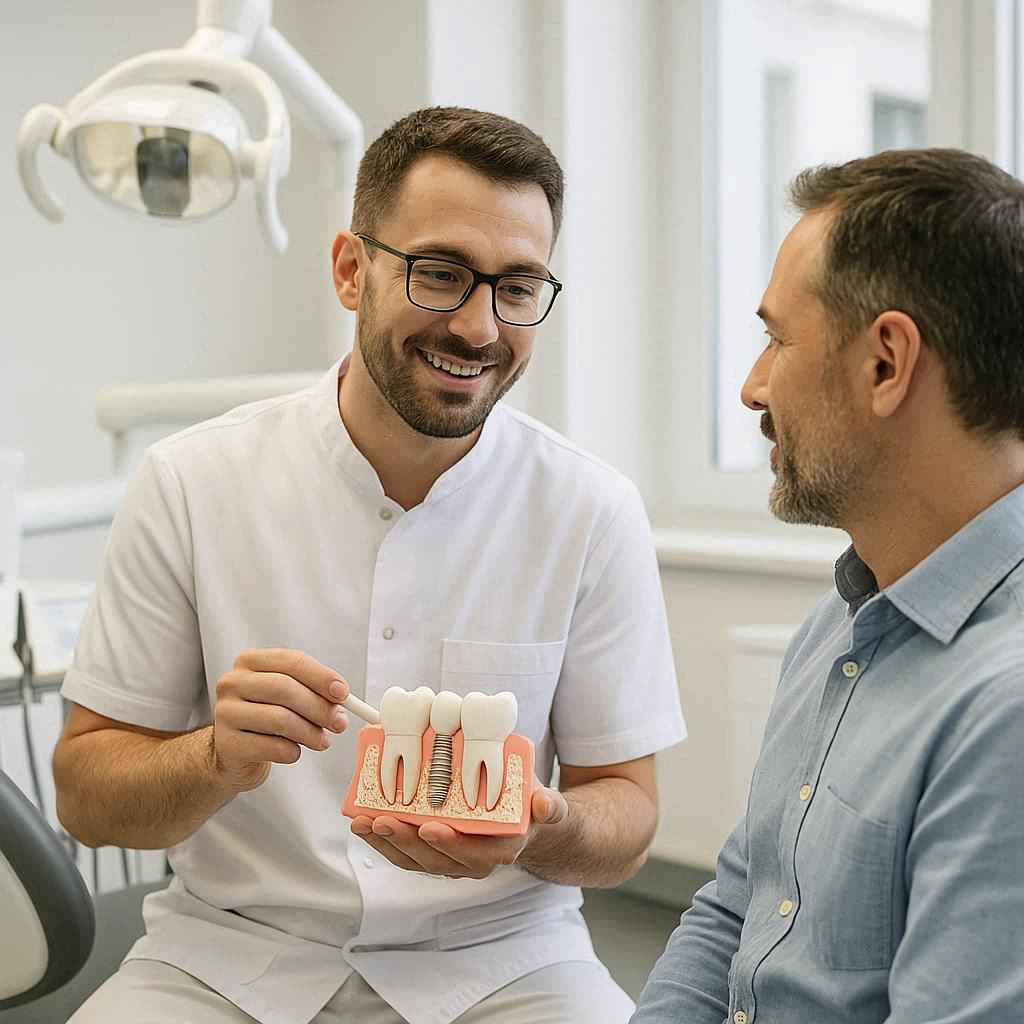
Before we talk about numbers, let’s clarify what a “dental implant” actually is. Many people think it is just the fake tooth on top. But a complete implant is made of three parts:
- The implant post (titanium screw placed into your jawbone)
- The abutment (connector piece)
- The dental crown (the visible, tooth-like part)
When you pay for an implant, you are paying for surgery, materials, and the expertise of several professionals.
Average Cost Breakdown (USA, 2025–2026)
To give you a realistic starting point, here is what a single dental implant typically costs in the United States without insurance:
| Component | Average Cost Range |
|---|---|
| Implant post placement (surgery) | $1,500 – $2,500 |
| Abutment | $300 – $500 |
| Custom crown | $1,000 – $2,000 |
| Total per single implant | $2,800 – $5,000 |
Important note: These numbers are averages. In high-cost cities like New York or Los Angeles, a single implant can easily reach $6,000 or more. In rural areas, you might find it for $2,500.
What About Multiple Teeth?
If you need more than one tooth replaced, you don’t always need one implant per missing tooth. For example:
- Two to three missing teeth in a row: Two implants can support a fixed bridge.
- Full arch (all teeth on top or bottom): 4 to 6 implants can support a full denture (often called “All-on-4” or “All-on-6”).
Here is a rough price guide for multiple implants:
| Procedure | Typical Cost Range |
|---|---|
| Two implants + bridge | $5,000 – $9,000 |
| Four implants (All-on-4 per arch) | $15,000 – $30,000 |
| Full mouth implants (both arches) | $30,000 – $60,000+ |
Yes, those numbers look high. But remember: a full mouth of traditional dentures might cost $2,000 to $5,000. The difference is that implants last decades longer and feel completely different in your mouth.
Why Do Dental Implants Cost So Much?
You might be thinking, “It’s just a screw and a tooth. Why isn’t it cheaper?” That is a fair question. Let me explain where your money actually goes.
1. The Materials Are Medical-Grade
Titanium implants are not the same metal used in construction. They are biocompatible, meaning your bone will actually fuse to them (a process called osseointegration). This requires precise manufacturing and strict quality control. Some premium brands like Straumann or Nobel Biocare cost more because they have decades of success data behind them.
2. Specialized Training and Skills
A general dentist can place some implants, but many cases require an oral surgeon or a periodontist (gum specialist). These professionals complete:
- 4 years of dental school
- 3 to 6 additional years of residency training
You are paying for their expertise to avoid nerve damage, sinus problems, or implant failure.
3. Advanced Technology
Modern implant dentists use:
- 3D CBCT scans (costly machines that create a 3D image of your jaw)
- Surgical guides (custom 3D-printed tools for precise placement)
- Digital impression scanners (instead of goopy molds)
These tools improve success rates but add to your bill.
4. The Lab Work
Your custom crown is not made in the back office. A skilled dental ceramist hand-crafts each crown to match the color, shape, and translucency of your natural teeth. Good lab work is expensive—often $500 to $1,000 per crown.
5. Multiple Appointments
A single implant usually requires:
- Initial consultation and scan
- Implant placement surgery
- Healing period (3–6 months)
- Abutment placement
- Crown impression and fitting
- Final crown placement
That is 5 to 7 visits over 6 to 9 months. Each visit involves staff time, sterilization, and overhead costs.
Hidden Costs Most People Don’t Expect
Let me save you from an unpleasant surprise. Many people get a quote for $3,000 and think that’s the final number. Often, it is not.
Bone Grafting
If you have been missing a tooth for a while, your jawbone may have shrunk. Without enough bone, the implant cannot be placed. A bone graft solves this.
- Cost: $300 – $1,500 per site
- Recovery: Adds 3 to 6 months before implant placement
Sinus Lift
For upper back molars, your sinus cavity might be too low. A sinus lift raises the sinus floor and adds bone.
- Cost: $1,500 – $3,000
- Recovery: Adds 4 to 6 months
Tooth Extraction
If you still have a damaged tooth where the implant will go, you need an extraction first.
- Simple extraction: $75 – $200
- Surgical extraction (impacted tooth): $200 – $600
Temporary Tooth
During healing, you might want a temporary partial denture or a “flipper” so you don’t have a gap.
- Cost: $300 – $1,000
CT Scan
Not always included in the initial quote.
- Cost: $200 – $500
Anesthesia or Sedation
If you are anxious or having multiple implants placed, sedation adds cost.
- Nitrous oxide (“laughing gas”): $100 – $300
- Oral sedative (pill): $150 – $400
- IV sedation: $500 – $1,000 per hour
Reader note: Always ask for a “treatment plan with all possible fees included.” A transparent dentist will list every potential extra cost before you start.
Are Dental Implants Worth the Expense?
Let’s step back from the numbers for a minute. Expensive is relative. A $5,000 TV is expensive. But a $5,000 solution that changes how you eat, speak, smile, and feel about yourself for 20+ years? That is an investment.
Comparing Implants to Alternatives
Here is a quick comparison to help you see the bigger picture.
| Option | Upfront Cost | Lifespan | Pros | Cons |
|---|---|---|---|---|
| Dental Implant | $3,000 – $6,000 (single) | 20+ years (often lifetime) | Natural feel, preserves bone, no damage to adjacent teeth | High upfront cost, requires surgery |
| Traditional Bridge | $2,000 – $5,000 | 7–15 years | Faster (2–3 visits), no surgery | Shaves down healthy teeth, doesn’t stop bone loss |
| Partial Denture | $1,000 – $2,500 | 5–10 years | Cheap, non-invasive | Can feel bulky, moves while eating, may damage adjacent teeth |
| Full Denture | $1,500 – $5,000 (per arch) | 5–8 years | Most affordable for many missing teeth | Slipping, sore spots, bone loss over time |
A Quote from a Real Patient
“I hesitated for two years because of the cost. I was wearing a partial denture that clicked every time I talked. I finally got one implant for a front tooth. Was it expensive? Yes. Do I regret it? Not for one second. I laugh out loud now without covering my mouth.”
— Maria, 54, Texas
Ways to Make Dental Implants More Affordable
You do not need to be wealthy to get implants. Thousands of people find ways to make them work. Here is how.
1. Dental Insurance (Yes, Some Plans Help)
Traditional dental insurance often excludes implants or covers only a small portion. But more plans now offer:
- 50% coverage for implant crowns (after deductible)
- Annual maximums of $1,000 – $2,500 (that’s the most they pay per year)
Strategy: Schedule the implant post in December and the crown in January to use two years of benefits.
2. Dental Savings Plans
These are not insurance. You pay an annual fee ($100 – $300) and get 15% to 50% off procedures from participating dentists. For implants, this can save you $1,000 or more.
3. Flexible Spending Account (FSA) or Health Savings Account (HSA)
In the US, you can use pre-tax dollars from these accounts for dental implants. If you are in the 22% tax bracket, that is like getting a 22% discount.
4. In-House Membership Plans
Many dental offices now offer their own “membership plan” for $300 – $500 per year. Benefits often include:
- Free exams and cleanings
- 10% – 20% off implants
- No waiting periods
5. Dental Schools
This is one of the best-kept secrets. Accredited dental schools (like UCLA, NYU, University of Michigan) have implant clinics where supervised students or residents place implants at 40% to 60% less than private practices.
- Typical cost at a dental school: $1,500 – $2,500 per implant (all-in)
- Trade-off: Longer appointment times (3–4 hours per visit). But the supervision is extremely strict.
6. CareCredit or Medical Credit Cards
These are healthcare-specific credit cards with promotional financing (e.g., 6, 12, or 18 months no interest if paid in full). Be careful: if you miss a payment, deferred interest can be brutal.
7. Traveling for Implants (Dental Tourism)
Some people save 50% to 70% by going to Mexico, Costa Rica, Colombia, Turkey, or Thailand.
| Destination | Single Implant Cost (approx) | Flight from US (approx) |
|---|---|---|
| Mexico (Los Algodones or Tijuana) | $900 – $1,500 | $200 – $500 |
| Costa Rica | $1,000 – $1,800 | $400 – $800 |
| Turkey | $500 – $1,200 | $800 – $1,200 |
| Thailand | $1,000 – $1,800 | $1,000 – $1,500 |
Risks to consider:
- Follow-up care is difficult if something goes wrong
- Language barriers
- Different sterilization and training standards
My advice: If you choose dental tourism, stay for at least 10 days to handle immediate complications, and have a local dentist willing to see you for emergencies.
How to Choose an Implant Dentist Without Overpaying
Price is important, but the cheapest implant is not always the best deal. A failed implant costs more to remove and replace than doing it right the first time.
Questions to Ask Before You Commit
- “How many implants have you placed?”
Look for at least 100+ placed, ideally 500+. - “What is your success rate?”
A good answer: 95% to 98% for lower jaw, 90% to 95% for upper jaw. - “Do you use a CBCT scan and surgical guide?”
If no, consider another dentist. - “What is included in your quote?”
Get it in writing: surgery, abutment, crown, temporary, follow-ups. - “Who handles complications?”
If an implant fails within the first year, will they replace it for free? (Some do.)
Red Flags to Avoid
- Prices that seem too good to be true (e.g., $800 for a full implant)
- No pre-surgical CT scan
- Dentist who rushes you into surgery without a written plan
- No reviews or before/after photos
Long-Term Value: Why Implants Often Cost Less Over Time
Let’s do a 20-year comparison. Assume you need to replace one missing tooth.
Option 1: Traditional Bridge
- Upfront: $3,500
- Replacement at year 12: $4,000 (inflation adjusted)
- Total after 20 years: $7,500
Option 2: Dental Implant
- Upfront: $4,500
- Maintenance: routine cleanings only (covered by insurance or $200/year)
- Total after 20 years: $4,500 (if no complications)
Plus, the implant saved the two healthy teeth next to the gap from being shaved down. Those teeth remain intact for life.
Other Non-Monetary Benefits
- Better nutrition: You can chew apples, steak, nuts again.
- Bone preservation: Implants stimulate your jawbone, so your face doesn’t collapse or look sunken over time.
- Confidence: No clicking, no adhesive creams, no fear of teeth falling out.
- Oral health: You can floss normally. Implants don’t get cavities (though gums still need care).
Financing Scenarios: Real Examples
Let’s look at three realistic patients and how they afford implants.
Scenario 1: Single Missing Molar
- Patient: Sarah, 42, teacher
- Cost: $4,800 (implant + crown)
- Insurance: Pays $1,500 (50% of crown + some surgery)
- HSA: $1,000 saved pre-tax
- Out-of-pocket: $2,300
- Payment plan: $200/month for 12 months (CareCredit, no interest)
Scenario 2: Two Missing Front Teeth
- Patient: James, 35, contractor
- Cost: $9,000 (two implants + two crowns)
- Dental school: $5,500 (saved $3,500)
- FSA: $2,000
- Out-of-pocket: $3,500 paid over 6 months
Scenario 3: Full Arch (All-on-4)
- Patient: Linda, 67, retired
- Cost: $28,000 for upper arch
- No insurance
- 401(k) loan: $15,000 (paid to herself with interest)
- Savings: $10,000
- Payment plan with dentist: $3,000 over 12 months
Common Myths About Implant Costs
Let’s clear up some misinformation floating around online.
Myth 1: “Insurance never covers implants.”
Reality: Many PPO plans now cover 30% to 50% of the crown and abutment. Some cover the surgery if you have an accident clause. Always call your provider.
Myth 2: “Cheap implants from online stores work the same.”
Reality: You cannot buy an implant online and have a dentist place it. Legitimate dentists use FDA-approved brands with proven research. No reputable dentist will place a random implant you bring in.
Myth 3: “Implants are only for rich people.”
Reality: With dental schools, payment plans, and HSA/FSA accounts, people from all income levels get implants. It requires planning, not a six-figure salary.
Myth 4: “You need to travel abroad to afford them.”
Reality: Travel can save money, but many US dentists offer affordable options through in-house plans or third-party financing. Compare total costs (travel + lodging + procedure + potential retreatments) before booking a flight.
What If You Truly Cannot Afford Implants Right Now?
I want to be realistic with you. Not everyone can drop $5,000 tomorrow. And that is okay.
Here is a smart, honest plan to work toward implants without feeling hopeless.
Short-term (0–12 months)
- Get a flipper or partial denture for $500 – $1,000. This fills the gap cosmetically while you save.
- Open a dedicated savings account and auto-deposit $50–$100 per week.
- Visit a dental school for a free or low-cost consultation. Get on their waiting list.
Medium-term (1–3 years)
- Apply for CareCredit or a medical credit card to cover the gap between savings and total cost.
- Ask your dentist about staged treatment: place the implant post this year, add the crown next year.
- Use two calendar years of insurance benefits.
Long-term (3+ years)
- Consider a part-time job with dental benefits (Starbucks, Costco, Amazon, UPS offer solid dental plans even for part-timers).
- Look into clinical trials for new implant materials or techniques (universities sometimes offer free implants for research participants).
Step-by-Step: How to Get an Accurate Quote
If you are ready to take action, follow this process to avoid overpaying or being surprised.
Step 1: Find 3 to 5 implant dentists in your area. Use reviews on Google, Yelp, and the American Academy of Implant Dentistry (AAID) website.
Step 2: Schedule consultations. Many offices offer free or $50–$100 consultations that include a CBCT scan.
Step 3: Bring a notebook. Ask every question from the list above.
Step 4: Request a detailed written treatment plan with:
- Procedure codes (D6010 for implant, D6057 for abutment, D6063 for crown)
- Itemized costs
- Expiration date of the quote
- Warranty information
Step 5: Compare not just price, but also:
- Dentist’s experience
- Technology used
- Payment options
- Follow-up policy
Step 6: Check if the dentist offers a free second opinion on your X-rays and plan.
Additional Resource: Where to Learn More
For completely unbiased, up-to-date information on implant costs, financing, and choosing a dentist, visit the American Academy of Implant Dentistry (AAID) patient resources page.
🔗 Link: www.aaid.com/patients
They offer a “Find an Implant Dentist” tool, patient guides, and a cost calculator.
Conclusion (Summary in Three Lines)
Dental implants can feel expensive upfront, often ranging from $3,000 to $6,000 per tooth, but they typically last 20+ years and preserve your jawbone and facial structure. Between dental schools, payment plans, and insurance strategies, most people can find an affordable path without traveling abroad or going into debt they cannot handle. The real question is not “Are implants expensive?” but “Can you afford not to invest in a permanent, life-changing smile?”
Frequently Asked Questions (FAQ)
1. Are dental implants painful?
The procedure itself is not painful because you receive local anesthesia. Afterward, most people compare the discomfort to a tooth extraction—manageable with over-the-counter pain relievers for 3 to 5 days.
2. How long do dental implants last?
With good oral hygiene and regular dental checkups, the implant post can last a lifetime. The crown on top may need replacement after 15 to 20 years due to normal wear.
3. Can I get implants if I have gum disease?
Not immediately. Gum disease must be treated and controlled first. Active infection significantly increases implant failure risk. Your dentist will recommend a cleaning or periodontal treatment before implant placement.
4. Do dental implants look natural?
Yes. Modern crowns are custom-shaded and shaped to match your existing teeth. Most people cannot tell the difference, even up close.
5. What is the failure rate for implants?
The success rate is about 95% to 98% in healthy non-smokers. Smoking, uncontrolled diabetes, and poor oral hygiene increase failure risk.
6. Can I have an MRI if I have dental implants?
Yes. Titanium implants are not magnetic. They are safe for MRIs and CT scans. However, always tell the technician about any metal in your body.
7. Are mini implants cheaper?
Mini implants (smaller diameter) cost about $1,000 to $2,000 less per implant, but they are not suitable for all cases. They are generally used for stabilizing lower dentures, not for single tooth replacement in high-chew areas.
8. Does Medicaid cover dental implants?
Medicaid typically does not cover implants for adults. Some states offer limited coverage for medically necessary cases (e.g., after jaw cancer surgery). Children may have coverage in certain states.
9. How much down payment do I need?
Many dentists require 25% to 50% down before starting treatment. Others offer $0 down financing through third-party lenders if you have good credit.
10. Can I get implants years after extraction?
Yes, but you may need a bone graft if the ridge has resorbed (shrunk). It is still possible, just more complex and slightly more expensive.