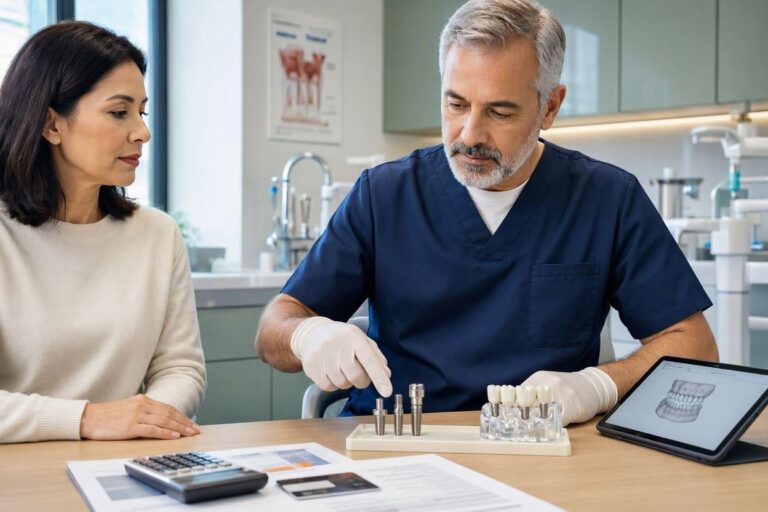
Are Dental Implants Painful? The Honest Truth About What to Expect
If you are reading this, you are probably missing a tooth. Or maybe several. And you have heard that dental implants are the gold standard for replacement. They look natural. They last decades. They protect your jawbone.
But there is one question that keeps coming up. It is the question that stops many people from even booking a consultation.
Are dental implants painful?
It is a fair question. The thought of a titanium post being placed into your jawbone sounds intense. Our natural reaction to any surgery is fear of pain.
Let me give you the short answer first: No, the procedure itself is not painful. And the recovery is usually much easier than people expect.
But you did not come here for a one-line answer. You want the real story. The details. The honest timeline of what hurts, what does not, and how to make the whole process as comfortable as possible.
Let us walk through everything together.
Why the Fear of Pain Is Totally Normal
Before we talk about the implant, let us talk about fear. Dental anxiety is real. Nearly 36% of people feel some anxiety about dental procedures. Another 12% suffer from extreme fear.
Why? Because we associate the dentist with drills, needles, and sudden sharp sensations. Even if your last dental visit was fine, the memory of that one painful filling stays with you.
But here is something important. Dental implant surgery is not like getting a filling. It is not like a root canal. It is a different type of procedure entirely. And the way your dentist manages pain today is light-years ahead of what it was even ten years ago.
“Most of my patients tell me the procedure was far less uncomfortable than they imagined. The anticipation is always worse than the reality.” — Dr. Sarah Jenkins, prosthodontist.
So let us break down exactly what you will feel. Step by step.
How Your Dentist Eliminates Pain During the Procedure
The simple truth is this: you will not feel pain during the implant placement. Not because you are brave. Because of modern anesthesia.
Local Anesthesia: Your Best Friend
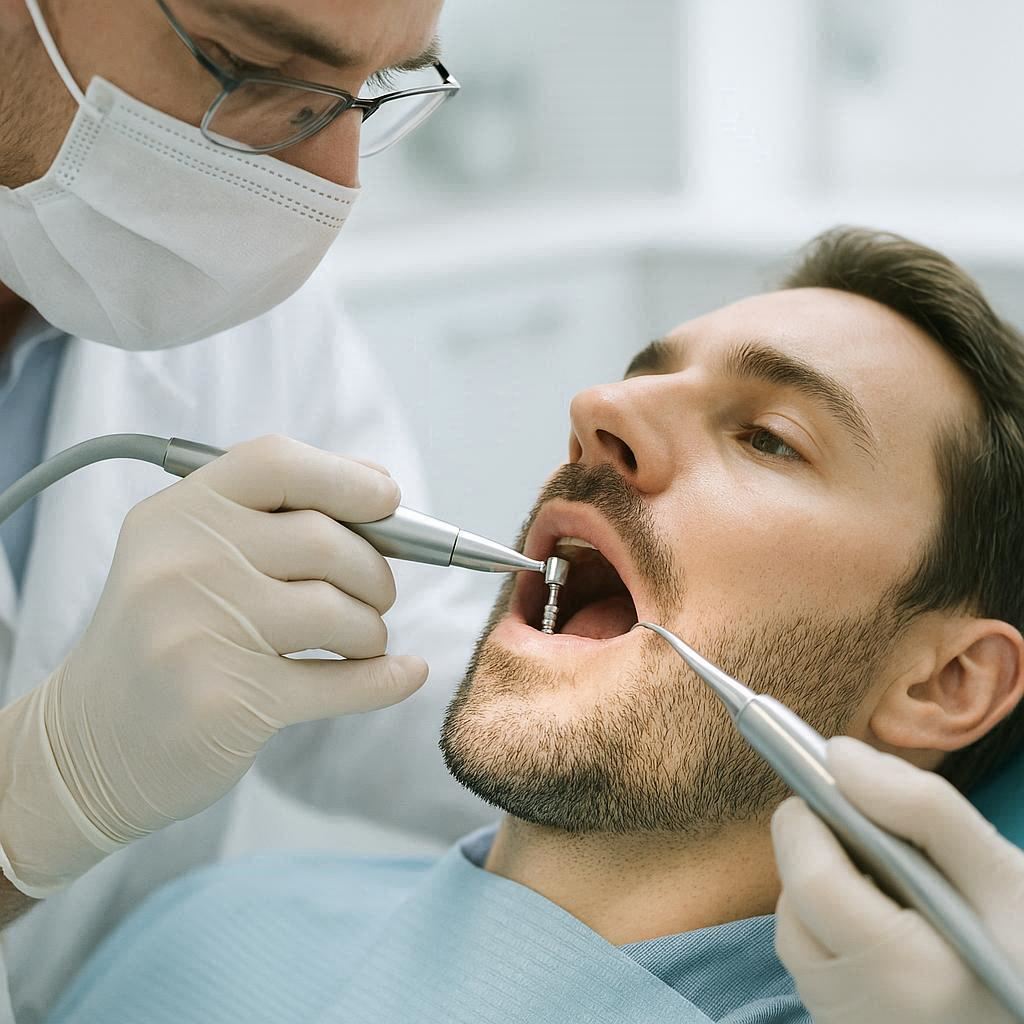
Before any cutting happens, your dentist injects a local anesthetic. This is similar to what you get for a filling. It numbs the entire area. You will feel some pressure. You will hear some sounds. But sharp pain? No.
Most patients describe the injection as a tiny pinch. After that, the area goes completely numb.
Sedation Options for Nervous Patients
If the thought of the injection bothers you, or if you have high anxiety, ask about sedation. Options include:
- Nitrous oxide (laughing gas): You remain awake but deeply relaxed. The gas wears off quickly after the procedure.
- Oral sedation: A pill taken one hour before surgery. You will feel drowsy and calm.
- IV sedation: You are technically awake but will remember almost nothing. This is common for multiple implants.
With sedation, many patients doze off during the procedure. They wake up and ask, “When are you going to start?” And the dentist says, “We are already finished.”
What About the Injection Itself?
Let us be honest. The numbing injection is the most uncomfortable part of the entire process for most people. But even that is minor.
Dentists now use:
- Topical numbing gel on the gum before the injection. You barely feel the needle.
- Warmed anesthetic (cold solution stings more).
- Slower injection speed.
The pinch lasts about five seconds. After that, you are numb for hours.
The Step-by-Step Sensation Guide
To truly understand are dental implants painful, you need a timeline. Let me walk you through each stage of the process. I will tell you exactly what you will feel.
Stage 1: The Tooth Extraction (If Needed)
If your damaged tooth is still in place, the dentist removes it first.
What you feel: Nothing during. You are completely numb. You may feel pushing or pulling pressure. No pain.
After the numbness wears off: Mild to moderate soreness for 2-3 days. Comparable to a deep cleaning. Over-the-counter pain relievers handle this easily.
Stage 2: Bone Grafting (Sometimes)
If your jawbone is too thin or soft, the dentist adds bone graft material. This creates a solid foundation for the implant.
What you feel: Nothing during. The area is numb.
After: Some patients report a dull ache for a few days. Less discomfort than the extraction itself. The graft material is not painful on its own.
Stage 3: Implant Placement Surgery
This is the main event. The dentist makes a small incision in your gum. They drill a precise hole in the bone. Then they place the titanium post.
What you feel during: Pressure. Vibration from the drill. Maybe some pushing sensations. Zero sharp pain.
Most patients are surprised by how quick this is. A single implant takes 30 to 60 minutes.
What you feel immediately after: Nothing yet. You are still numb. You might feel a little clumsy or groggy if you had sedation.
Stage 4: The Healing Period (Osseointegration)
Over the next 3 to 6 months, your jawbone grows around the implant. This is called osseointegration. It sounds intense. But here is the surprising part: most people feel nothing during this phase.
The bone grows on its own. You go about your normal life. You just avoid chewing on that side for a few months.
Stage 5: Abutment Placement
Once the implant is fused to the bone, the dentist attaches a small connector (the abutment). This will hold your final crown.
What you feel: Local anesthesia again. Minor pressure. This is a much smaller procedure than the implant placement. Takes about 15 minutes.
After: Very mild soreness for 24 hours. Most people take no pain medication at all.
Stage 6: Crown Attachment
The final step. The dentist screws or cements your custom-made crown onto the abutment.
What you feel: Nothing. No anesthesia needed for most patients. This is not a surgery. It is like placing a cap on a tooth.
After: Zero pain. You might feel some odd pressure as you adjust to the new tooth. That fades in a day or two.
The Real Pain: Recovery, Not Surgery
Here is the most important truth in this entire article. The implant surgery itself is not painful. But the recovery period does involve some discomfort.
Let me be clear: discomfort is not the same as pain. Discomfort is manageable. Discomfort is temporary. And you have complete control over it.
What Normal Recovery Feels Like
For the first 24 to 72 hours after implant surgery, expect:
- Swelling: Your gum and cheek may puff up. This peaks around day two. Ice packs are your best friend.
- Bruising: Some patients develop a small bruise on their face. This is harmless and fades in a week.
- Dull ache: A deep, boring ache in the jaw. Not sharp. Not stabbing. Just a persistent awareness that something happened there.
- Tenderness to touch: The gum around the implant will be sore. Do not poke it.
- Minor bleeding: Slight oozing from the incision site for the first 12 hours. This is normal.
What Pain Level to Expect (1 to 10 Scale)
Let me give you a realistic number.
| Time After Surgery | Typical Discomfort Level (0-10) | Description |
|---|---|---|
| During procedure (with anesthesia) | 0 | Nothing. Seriously. |
| 2-4 hours after (numbing wears off) | 2-4 | First awareness. A dull ache begins. |
| 6-12 hours after | 3-5 | Peak discomfort. Swelling increases. |
| Day 2 | 2-4 | Still sore. Ice helps. |
| Day 3 | 1-3 | Significantly better. |
| Day 4-7 | 0-2 | Only mild tenderness. |
| Day 7-14 | 0-1 | Almost normal. |
Most people rate their worst pain after dental implant surgery as a 3 or 4 out of 10. That is less than a sprained ankle. Less than a tension headache.
“I had two implants placed last year. I kept waiting for the horrible pain everyone warned me about. It never came. The worst part was being careful with what I ate for a few days.” — Mark, actual patient.
Comparing Implant Pain to Other Procedures
If you have had other dental work, this table will help you understand where implants fit.
| Procedure | Typical Peak Pain (1-10) | Duration of Significant Discomfort |
|---|---|---|
| Simple dental cleaning | 0-1 | None |
| Filling (small cavity) | 1-2 | A few hours |
| Deep cleaning (scaling) | 2-3 | 1-2 days |
| Dental implant (single) | 3-4 | 2-3 days |
| Wisdom tooth extraction | 5-7 | 4-7 days |
| Root canal (infected tooth) | 6-8 (before treatment) | Variable |
| Bone graft (large) | 4-6 | 3-5 days |
As you can see, a single dental implant is not the most painful dental procedure. It sits comfortably in the middle.
Factors That Influence Your Pain Level
Not everyone experiences the same level of discomfort. Here is why.
Number of Implants
One implant is manageable. Four implants in one session? That is more trauma to the mouth. More swelling. More recovery time.
But here is the good news: even with multiple implants, the pain rarely doubles. Why? Because the discomfort is spread out. Your body handles a larger surgical area, but the peak intensity stays similar.
Location in the Mouth
- Upper jaw implants: Often less painful. The bone is softer. Blood flow is better. Healing tends to be faster.
- Lower jaw implants: Can be slightly more uncomfortable. The bone is denser. The drilling requires more pressure. But the difference is small for most people.
Your Personal Pain Tolerance
Some people feel a 2 as a 5. Others feel a 5 as a 2. This is normal. If you know you have low pain tolerance, tell your dentist. They can adjust your pain management plan.
Surgical Technique
Not all implant surgeries are equal. Dentists who use:
- 3D guided surgery (computer-planned implant placement)
- Minimally invasive techniques
- Flapless surgery (no large gum incision)
…report that their patients have less post-operative pain.
Ask your dentist about these options before you commit.
Your Health History
Certain conditions can increase pain or slow healing:
- Uncontrolled diabetes
- Smoking (nicotine restricts blood flow)
- Autoimmune diseases
- Chronic pain conditions (fibromyalgia, etc.)
If any of these apply to you, be honest with your dentist. They can create a specialized plan.
The Complete Pain Management Toolkit
You do not have to suffer. Here is exactly how to stay comfortable after your implant surgery.
Medications That Work
Over-the-counter options:
- Ibuprofen (Advil, Motrin): The star player. Ibuprofen reduces both pain and swelling. Standard dose is 400-600mg every 6-8 hours. Do not exceed 2400mg per day.
- Acetaminophen (Tylenol): Good for pain but does not reduce swelling. Often combined with ibuprofen for better results.
- Aspirin: Avoid after oral surgery. It can increase bleeding.
Prescription options:
Your dentist may prescribe something stronger if you are getting multiple implants. This might include:
- Tramadol
- Codeine combinations (Tylenol with codeine)
- Hydrocodone (for more complex cases)
Most patients never need these. Ibuprofen alone is enough for 80% of single implant cases.
The Ice Pack Protocol
Ice is magical after oral surgery. Here is the right way to use it.
- First 24 hours: Apply ice pack to the outside of your cheek. 20 minutes on. 20 minutes off. Repeat as often as you want.
- 24 to 48 hours: Switch to warm compresses if you prefer. Warmth increases blood flow and can ease muscle soreness.
- Never put ice directly on your skin. Wrap it in a thin cloth.
Natural Comfort Methods
Some people prefer to minimize medication. These methods help:
- Elevate your head when sleeping. Use two pillows. This reduces blood flow to the area and minimizes throbbing.
- Rest for the first 24 hours. No exercise. No heavy lifting. No bending over.
- Eat cold soft foods for the first day. Ice cream, yogurt, smoothies. Cold reduces inflammation from the inside.
- Salt water rinses starting 24 hours after surgery. One teaspoon of salt in a cup of warm water. Gently swish. Do not spit hard. Let it fall out of your mouth.
What to Avoid
Some things make pain worse. Avoid these for at least one week:
- Straws: The sucking motion can dislodge the blood clot. This leads to a painful condition called dry socket.
- Spitting: Same problem. Let saliva dribble out if needed.
- Smoking: This is the worst thing you can do. Nicotine restricts blood vessels. It slows healing. It increases pain. And it can cause implant failure. If you smoke, consider this the time to quit or at least pause for two weeks.
- Alcohol: Interferes with healing and can interact with pain medications.
- Crunchy, hard, or hot foods: Your mouth needs gentle foods for a few days.
Day-by-Day Recovery Guide (What Actually Happens)
Let me walk you through a realistic timeline. This is what most patients experience.
Day of Surgery (Day 0)
You go home still numb. This is the easiest part. You feel nothing. You might be tired from sedation.
Action items: Rest. Ice packs. Take your first dose of ibuprofen before the numbness wears off. Eat something soft. Drink water.
Pain level: 0 (while numb) → 2 (as numbness fades)
Day 1
The numbness is gone. Swelling begins. You feel a dull ache. It is not sharp. It is not scary. It is just there.
Action items: Continue ice packs. Take ibuprofen on a schedule (every 6 hours). Do not skip a dose waiting for pain to return. Stay ahead of it. Eat yogurt, pudding, smoothies.
Pain level: 3-4
Day 2
This is often the peak for swelling. Your cheek might look puffy. The ache is still present but manageable.
Action items: You can switch to warm compresses if you prefer. Continue ibuprofen as needed. Many people reduce the dose today. Brush your other teeth gently. Avoid the surgical site.
Pain level: 2-3
Day 3
A noticeable improvement. Swelling starts going down. You can function normally. You might still feel tenderness when you chew near the site.
Action items: You can return to work if your job is not physically demanding. Start salt water rinses. Introduce soft solid foods like scrambled eggs or pasta.
Pain level: 1-2
Days 4 to 7
You feel almost normal. The area might still be slightly tender to touch. But you forget about it for hours at a time.
Action items: Resume normal activities. Avoid hard foods on that side. Continue gentle brushing.
Pain level: 0-1
Week 2
What pain? You are fine. The gum has healed significantly. You might feel a strange sensation if you press on the area. That is just the implant settling into the bone.
Action items: Eat normally but still be cautious with very hard foods (nuts, hard candy). Return to full brushing and flossing.
Pain level: 0
When Pain Is NOT Normal (Red Flags)
Here is the most critical section of this article. Most people recover without problems. But you need to know the warning signs.
Call your dentist immediately if you experience:
- Severe pain that worsens after day 3. Implant surgery pain should peak on day 1 or 2. If day 4 hurts more than day 2, something is wrong.
- Pain that medication does not touch. If ibuprofen does nothing, call.
- Fever over 101°F (38.3°C). This could indicate infection.
- Pus or foul taste coming from the surgical site.
- Swelling that suddenly gets worse after it was improving.
- Numbness that lasts beyond 24 hours (minor numbness from anesthesia is normal initially).
- The implant feels loose. It should feel rock solid. Movement is not normal.
What Could Be Wrong?
If you have these red flags, possible complications include:
- Infection: Rare but possible. Usually treated with antibiotics.
- Nerve injury: More common in lower jaw implants. Usually temporary but needs evaluation.
- Implant failure: The bone rejects the implant. This is painless in some cases but painful in others.
- Peri-implantitis: Inflammation around the implant. Treatable if caught early.
Here is the reassuring truth: serious complications occur in less than 5% of implant cases. For healthy non-smokers, the success rate is over 95%. You will likely be fine.
Dental Implants vs. Alternatives: Which Hurts More?
Sometimes fear of implant pain pushes people toward other options. Let us compare honestly.
Option 1: Dental Bridge
A bridge grinds down the two healthy teeth next to the gap. Then it places a three-unit false tooth structure.
Pain during: The tooth grinding requires local anesthesia. Some patients find this uncomfortable because healthy enamel is being removed.
Pain after: Mild sensitivity in the ground-down teeth for a week.
Long-term pain risk: The supporting teeth may develop decay or nerve damage over time. This can lead to root canals or extractions later.
Verdict: Less immediate pain than an implant? Slightly, yes. But you damaged two healthy teeth permanently. Many patients regret this choice when those teeth fail years later.
Option 2: Removable Partial Denture
A plastic or metal appliance with a false tooth. It clips onto your other teeth.
Pain during: None. No surgery.
Pain after: Pressure sores on your gums. Food trapping. The denture moving when you talk or eat.
Long-term pain risk: Constant low-grade irritation. Some people develop sore spots that never fully heal.
Verdict: Less surgical pain. But daily discomfort and inconvenience forever.
Option 3: Do Nothing
Leave the gap empty.
Pain during: None.
Pain after: None immediately.
Long-term pain risk: The adjacent teeth shift. The opposing tooth may over-erupt. You can develop jaw pain, headaches, and TMJ problems. The bone in the gap shrinks over time, making future implant placement more difficult (and more painful).
Verdict: Avoiding short-term pain creates long-term problems. This is the worst choice for your health.
The Honest Comparison Table
| Factor | Dental Implant | Bridge | Partial Denture | Do Nothing |
|---|---|---|---|---|
| Peak surgical pain | 3-4/10 | 2-3/10 | 0/10 | 0/10 |
| Pain during recovery (days) | 2-3 days | 1-2 days | 3-7 days (sores) | 0 |
| Long-term daily discomfort | None | Low (sensitivity possible) | Moderate (movement, sores) | Increasing over time |
| Risk of future pain from failure | Low (5%) | Moderate (10-15% over 10 years) | High (gum disease, decay) | High (shifting, TMJ) |
The implant gives you the best long-term result. A few days of mild discomfort. Then a lifetime of no pain.
Real Patient Stories (Names Changed)
Sometimes hearing from real people helps more than all the statistics.
Anna, 34: Single front tooth implant
“I was terrified. I cried in the parking lot. The worst part was the numbing injection—and that was just a pinch. The surgery took 45 minutes. I felt pressure but no pain. That night I took one ibuprofen. The next day I went to brunch with friends (I ate eggs and mashed avocado). By day three, I kept forgetting I had anything done. I wish I had done it years earlier.”
David, 52: Two lower molars
“I expected the worst. I had a bad experience with a root canal before. This was nothing like that. The dentist used IV sedation. I remember sitting in the chair. Then I remember waking up at home. Seriously. Zero memory. The next two days were sore but not awful. I ate a lot of ice cream. My wife was mad because I finished the whole pint.”
Linda, 68: Full arch reconstruction (All-on-4)
“I had all my upper teeth replaced with four implants. That is a bigger surgery. I will not lie—the first 24 hours were rough. A lot of swelling. A deep ache. But the dentist gave me proper medication. I slept most of the first day. By day three, I was walking around the house. By day five, I felt human again. Was it worth it? Absolutely. I can eat apples now. I could not do that for ten years.”
Marcus, 45: Smoker who had implant failure
“I did not listen. The dentist told me to stop smoking for two weeks. I lasted three days. The implant never healed right. By week two, I had this constant throbbing pain. It got worse and worse. They had to remove the implant. That removal hurt more than the placement. I learned my lesson. If you smoke, just stop. Or do not get implants.”
Marcus’s story is important. It shows that following instructions matters. The pain he experienced was not from the implant surgery. It was from the complication caused by smoking.
Frequently Asked Questions (FAQ)
1. Are dental implants painful without insurance?
The cost of implants can cause financial pain, but the physical pain is the same regardless of insurance. Many clinics offer payment plans. Some dental schools provide reduced-cost implants performed by supervised students. Do not let cost fears push you toward cheaper, lower-quality options.
2. How long does the pain last after a dental implant?
The most noticeable discomfort lasts 2 to 3 days. Mild tenderness can linger for up to a week. After that, you should feel nothing. The bone healing underneath happens silently with no sensation.
3. Can I go back to work the next day?
For a single implant, many people return to desk jobs the next day. You might feel tired. You might have some swelling. But you can work. For physical jobs or multiple implants, take 2-3 days off.
4. Are dental implants more painful than tooth extraction?
Generally, no. A simple extraction heals faster (2-3 days). But a surgical extraction of an impacted tooth is often more painful than an implant. For most people, the pain levels are comparable. Some find the implant recovery even easier because the site is not an open wound.
5. Do they put you to sleep for dental implants?
Not always. Local anesthesia alone works for most single implants. But you can request sedation if you are anxious. Options range from laughing gas to full IV sedation. Discuss this in your consultation.
6. Why does my implant hurt when I bite down?
This is not normal after healing. Possible causes include: the crown is too high (needs adjustment), the implant is loose (rare), or you have an infection. See your dentist. Do not ignore it.
7. Can dental implants cause headaches or jaw pain?
In the first few days, referred pain can cause a mild headache. This is normal. Long-term headaches or jaw pain are not normal. They may indicate that your bite is off. Your dentist can adjust the crown easily.
8. Are implants painful for older adults?
Age does not increase pain. Older adults often heal more slowly, but the pain level is the same. Many patients in their 70s and 80s get implants with no issues. The key is overall health, not age.
9. What is the most painful part of dental implants?
For most people: the numbing injection (brief pinch). For some: the day after surgery (dull ache). Neither is severe. Neither lasts long.
10. How can I sleep after dental implant surgery?
Elevate your head with two pillows. Sleep on the opposite side from the implant. Take your pain medication before bed. You may wake up once during the night. That is normal.
Additional Resource
For a deeper understanding of the entire implant process—including costs, timing, and long-term care—visit the American Academy of Implant Dentistry’s patient education page:
🔗 aaid-implant.org/patient-resources
This is a trusted, non-commercial source run by dental implant specialists. You will find verified information, before-and-after galleries, and a directory of qualified implant dentists in your area.
Important Notes for Readers
- 📌 Everyone heals differently. Your experience may vary slightly from the timelines above. That does not mean something is wrong.
- 📌 Do not compare yourself to internet horror stories. People with easy recoveries rarely post online. People with rare complications post everywhere.
- 📌 Choose your dentist wisely. An experienced implant surgeon causes less trauma and less pain. Do not bargain-hunt for this procedure.
- 📌 Ask questions before you agree to surgery. A good dentist will welcome your questions about pain management.
- 📌 You are stronger than you think. Thousands of people get implants every day. Most say, “That was it? I worried for nothing.”
Conclusion
Dental implants are not painful during the procedure thanks to modern anesthesia, and the recovery typically involves only mild discomfort for 2-3 days—similar to a tooth extraction. Most patients manage entirely with over-the-counter ibuprofen and ice packs, returning to normal life within a week. The short-term, manageable recovery is a small price to pay for a permanent, pain-free solution that restores both your smile and your ability to eat with confidence.