Can Diabetics Really Get Dental Implants?
If you are living with diabetes, you have probably heard a few scary things about dental work. Maybe a dentist told you to avoid implants. Maybe a friend said your blood sugar would get in the way. It is easy to feel discouraged.
But here is the truth you need to hear today.
Yes, many diabetics can get dental implants. And they can keep them for decades.
The real question is not if you can get them. The real question is how to prepare your body so the procedure is safe and successful.
Let me walk you through everything you need to know. No confusing medical terms. No sugar-coating. Just honest, practical advice from someone who wants you to smile with confidence again.
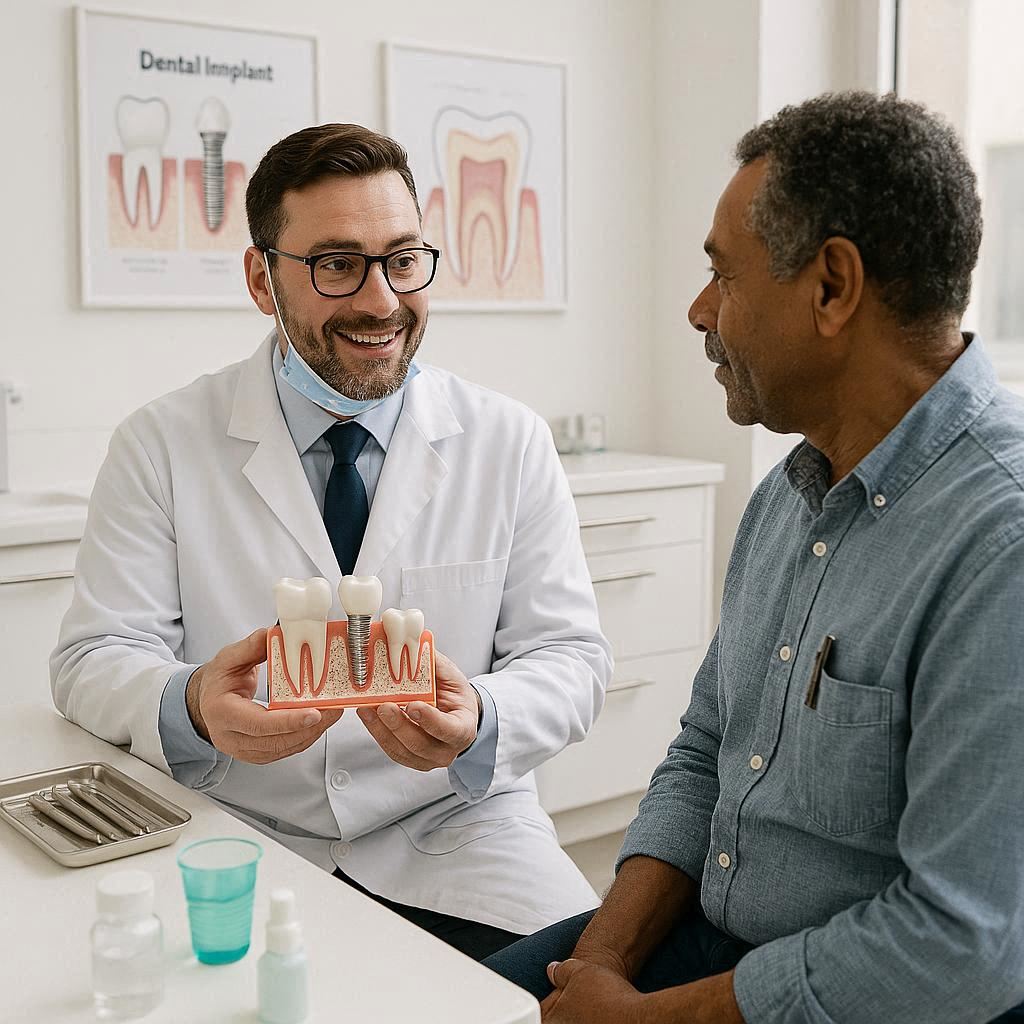
Why Diabetes Used to Be a Problem for Implants
Years ago, many dentists refused to place implants in diabetic patients. That was not because dentists were being difficult. It was because the science back then showed higher failure rates.
Let me explain what was happening.
The Healing Problem
When you get a dental implant, a small titanium post goes into your jawbone. Over the next few months, your bone needs to grow around that post. That process is called osseointegration (a big word, but it just means “bone fusing to metal”).
Diabetes, especially when blood sugar is high, slows down healing. High glucose levels can damage small blood vessels. Those blood vessels deliver oxygen and nutrients to your bone and gums. Without good blood flow, healing takes longer. Sometimes, it does not happen at all.
The Infection Risk
High blood sugar also weakens your immune system. Your body becomes less effective at fighting bacteria. After implant surgery, there is always a small risk of infection around the new implant. For a diabetic with uncontrolled blood sugar, that small risk becomes a much bigger concern.
So yes, traditional wisdom said: diabetics + implants = trouble.
But here is what changed.
What Modern Research Says Today
The short answer: well-controlled diabetics have implant success rates close to non-diabetics.
Let me share some numbers with you. Do not worry, I will keep this simple.
| Patient Group | Typical Implant Success Rate (5-10 years) |
|---|---|
| Non-diabetic, healthy | 95-98% |
| Diabetic, well-controlled (HbA1c under 7%) | 90-95% |
| Diabetic, moderately controlled (HbA1c 7-8%) | 85-90% |
| Diabetic, poorly controlled (HbA1c above 8-9%) | 70-80% or lower |
*Note: HbA1c is your three-month average blood sugar level. Lower is better for implants.*
As you can see, well-controlled diabetics do very well. The difference is small enough that most dentists will happily proceed with treatment.
What the Experts Say
“Current evidence suggests that dental implants in well-controlled diabetic patients are a predictable and safe treatment option. The key is strict glycemic control before, during, and after the procedure.”
— Review of Clinical Studies, Journal of Oral Implantology
So the old rule has changed. Diabetes alone is no longer an automatic “no.”
The One Condition That Changes Everything
I need to be very honest with you here.
Uncontrolled diabetes is still a serious problem for implants.
If your blood sugar runs high most of the time, if your HbA1c is above 8.5% or 9%, you are taking a real risk. Your chances of implant failure go up significantly. You might also face:
- Higher risk of infection after surgery
- Slower or incomplete bone healing
- Increased chance of implant loosening
- Gum disease that attacks the implant
No ethical dentist will place implants if your diabetes is poorly controlled. That is not because they do not want to help you. It is because they want to protect you from a painful, expensive failure.
A Quick Self-Check
Ask yourself these three questions honestly:
- Is my HbA1c consistently below 7% (or as low as my doctor recommends)?
- Do I check my blood sugar regularly and keep it stable?
- Have I seen my endocrinologist or primary care doctor in the last six months?
If you answered “yes” to all three, you are likely a good candidate. If you answered “no” to any, do not worry. You can still get there. We will talk about how in a moment.
How Diabetes Affects the Implant Process Step by Step
Let me walk you through the entire journey. This will help you understand what to expect and where to pay extra attention.
Before Surgery: The Preparation Phase
This is the most important phase for diabetics.
Your dentist will ask for medical clearance from your primary care doctor or endocrinologist. That is standard practice. They want a letter or note confirming that your diabetes is well-controlled.
You will likely need a recent HbA1c test. Most dentists want to see a result below 7% or 7.5%. Some may accept up to 8% if other factors are good.
During this phase, you should also have a thorough dental exam. The dentist will check for gum disease, cavities, or any existing infections. These problems are more common in diabetics. They must be treated before implant surgery.
The Day of Surgery: What to Watch For
On the day of your implant placement, a few things matter extra for diabetics:
- Blood sugar monitoring: Your dentist might check your blood sugar before starting. Some offices ask you to eat a small meal beforehand to avoid low blood sugar during the procedure.
- Local anesthesia: Diabetes can sometimes affect how your body responds to numbing medication. Tell your dentist if you have needed extra numbing in the past.
- Stress management: Surgery raises stress hormones. Stress raises blood sugar. That is normal. But let your dentist know if you feel shaky, sweaty, or confused during the procedure.
Most implant surgeries are straightforward. They take one to two hours. You will be awake but numb. You can listen to music or an audiobook if that helps you relax.
After Surgery: The Healing Phase
This is where your diabetes management really matters.
The first two weeks after surgery are critical. Your gums need to close over the implant without infection. Your body needs to start building bone around the titanium post.
Here is what you can expect:
- Some swelling and mild discomfort (normal)
- Possibly a special mouthwash or antibiotics (your dentist will decide)
- A soft food diet for a few days to a week
- No smoking (absolutely essential for diabetics)
During this time, check your blood sugar more often than usual. Even small fluctuations can affect healing. Stay in close contact with both your dentist and your diabetes doctor.
The Long-Term Integration Phase
Between three and six months after surgery, your jawbone grows around the implant. This happens silently. You will not feel it.
For diabetics, this phase can take a little longer. Non-diabetics might be ready for the final crown in three to four months. Diabetics might need five to six months. Some dentists prefer to wait even longer just to be safe.
Patience pays off here. Rushing the process only increases the risk of failure.
Placing the Final Crown
Once your implant is fully integrated (the dentist will take X-rays to confirm), you return for the final step. The dentist attaches a custom-made crown that looks and feels like a natural tooth.
This appointment is simple. It takes about an hour. No surgery, just gentle placement.
After that, you have a new tooth. But the work is not over.
A Realistic Timeline for Diabetics
Let me give you a week-by-week, month-by-month picture. This will help you plan your life around the procedure.
| Phase | Duration | Key Tasks for Diabetics |
|---|---|---|
| Medical evaluation | 1-2 weeks | Get HbA1c test. See your primary care doctor. Optimize blood sugar. |
| Dental preparation | 2-4 weeks | Treat gum disease or cavities. Deep cleaning if needed. |
| Implant surgery day | 1 day | Eat a small meal beforehand. Monitor blood sugar. Rest after. |
| Early healing | 1-2 weeks | Soft foods. No smoking. Extra oral hygiene. Monitor for infection. |
| Osseointegration | 3-6 months | Maintain stable blood sugar. Regular dental checkups. Avoid chewing on that side. |
| Final crown placement | 1 day | Quick appointment. Celebrate your new tooth. |
| Long-term maintenance | Lifelong | Keep HbA1c low. Excellent home care. Professional cleanings every 6 months. |
For non-diabetics, the integration phase might be three months. For diabetics, expect four to six months. Your body needs that extra time, and that is completely fine.
Seven Steps to Improve Your Chances of Success
If you are diabetic and dreaming of dental implants, do not just walk into a dentist’s office and hope for the best. Take these seven steps first. They will transform you from a “maybe” candidate into a “good” candidate.
1. Get Your HbA1c Below 7%
This is the single most important thing you can do. Nothing else matters as much.
Work with your endocrinologist or primary care doctor. Adjust your medication. Change your diet. Exercise more. Do whatever it takes to bring that number down.
If your HbA1c is above 8%, put implants on hold. Focus entirely on blood sugar control for three to six months. Then retest.
2. See a Dentist Who Understands Diabetes
Not all dentists are the same. Some have placed hundreds of implants in diabetic patients. Others have placed very few.
Ask potential dentists these questions:
- “How many diabetic patients have you treated with implants?”
- “What is your success rate with diabetic patients?”
- “Do you require a specific HbA1c level before surgery?”
- “Will you coordinate care with my diabetes doctor?”
A good dentist will answer these questions openly. A great dentist will thank you for asking.
3. Treat Gum Disease First
Diabetics are two to three times more likely to develop gum disease (periodontitis). If you have active gum disease, implant surgery can make it worse. The bacteria can travel down the implant and cause a condition called peri-implantitis. That is the number one cause of implant failure.
Before surgery, you need:
- A full periodontal evaluation
- Deep cleaning (scaling and root planing) if needed
- Possibly gum surgery if disease is advanced
This adds time and cost. But skipping this step is like building a house on a cracked foundation.
4. Stop Smoking (Yes, Really)
I know you have heard this before. But let me be very direct.
Smoking + diabetes + dental implants = a recipe for failure.
Smoking reduces blood flow to your gums. Diabetes also reduces blood flow. Together, they starve the healing bone of oxygen. Your implant will struggle to survive.
If you smoke, you have two choices:
- Quit smoking completely (best option)
- Switch to nicotine replacement therapy during healing (second best)
Even cutting back helps, but complete cessation is ideal. Ask your doctor about smoking cessation programs. Many are free.
5. Plan Your Medications Carefully
Some diabetes medications affect healing. Others do not.
Metformin, the most common diabetes drug, is generally safe. Insulin is also safe when properly managed. Newer drugs like GLP-1 agonists (Ozempic, Mounjaro, etc.) are usually fine.
However, some medications can cause problems:
- Steroids (sometimes prescribed for other conditions) slow healing
- Blood thinners (if you also have heart disease) increase bleeding risk
- Certain blood pressure medications may affect bone healing
Make a complete list of every medication and supplement you take. Give it to both your dentist and your surgeon. Do not leave anything out, not even vitamins.
6. Time Your Surgery Right
When is the best time for a diabetic to get implant surgery?
First thing in the morning, after a normal breakfast. Your blood sugar will be most stable then.
Avoid surgery when you are sick, stressed, or recovering from another procedure. Your body has limited healing resources. Do not spread them too thin.
Also avoid surgery right before a major holiday or vacation. You need to be able to see your dentist easily if problems arise.
7. Arrange Post-Surgery Support
You will be fine to drive yourself home after surgery. But having help for the first 24 hours is smart.
Ask a family member or friend to:
- Pick up your prescriptions (antibiotics, pain medication, mouthwash)
- Make sure you eat soft meals (yogurt, soup, smoothies)
- Remind you to check your blood sugar
- Drive you to your follow-up appointment
This is not about weakness. It is about giving your body the best possible environment to heal.
Special Considerations for Type 1 vs. Type 2 Diabetes
I want to address both types separately. The advice overlaps, but there are important differences.
Type 1 Diabetes
If you have Type 1 diabetes, your body produces no insulin. You manage blood sugar entirely through injections or an insulin pump.
Good news: Well-controlled Type 1 diabetics can absolutely get implants. The success rates are similar to Type 2 diabetics with similar HbA1c levels.
Extra challenges:
- Blood sugar swings can be more sudden and severe
- Hypoglycemia (low blood sugar) during surgery is a real risk
- Healing may take slightly longer than Type 2
What to do differently:
- Discuss your insulin pump or injection schedule with your dentist
- Consider wearing a continuous glucose monitor (CGM) during surgery
- Bring fast-acting sugar (glucose tablets, juice) to your appointment
- Plan to check your blood sugar immediately before and after surgery
Type 2 Diabetes
If you have Type 2 diabetes, your body produces insulin but does not use it effectively. Many people with Type 2 can improve their blood sugar significantly with lifestyle changes.
Good news: Type 2 diabetes is often easier to control than Type 1. Small improvements in diet and exercise can lower your HbA1c quickly.
Extra challenges:
- Many people with Type 2 also have high blood pressure or high cholesterol
- These conditions can affect healing and increase surgical risks
- Obesity (common with Type 2) can make surgery logistics harder
What to do differently:
- Get a full physical exam before implant consultation
- Ask your doctor to check your blood pressure and cholesterol
- If you are overweight, even a 5-10% weight loss improves healing
Both types can succeed. The key is honest communication with your medical team.
The Cost Question: Are Implants Worth It for Diabetics?
Let me be realistic. Dental implants are expensive. In the United States, a single implant with crown typically costs $3,000 to $6,000. Multiple implants cost more.
For diabetics, there may be additional costs:
| Extra Service | Typical Cost | Why Diabetics Might Need It |
|---|---|---|
| Medical clearance letter | $50-$200 | Required by most dentists |
| HbA1c test (if recent) | $30-$100 | Confirms good control |
| Periodontal treatment | $500-$3,000 | Treats gum disease first |
| Additional imaging (CBCT) | $200-$500 | Checks bone quality thoroughly |
| Longer healing abutment | $100-$300 | Accommodates slower healing |
| Extra follow-up visits | $50-$200 each | Monitors healing more closely |
Total potential extra cost: $1,000 to $4,000
That is a real investment. But compare it to the alternatives.
Alternatives to Implants
- Dental bridge: $2,000 to $5,000. Requires shaving down healthy teeth. Lasts 10-15 years.
- Removable partial denture: $1,000 to $2,500. Less stable. Can affect eating and speech. Needs replacement every 5-8 years.
- Do nothing: Free now. But adjacent teeth may shift. Bone may shrink. Future options become harder.
Over 20 years, an implant often costs less than replacing bridges or dentures multiple times. Plus, you get better function and comfort.
Does Insurance Cover Implants for Diabetics?
Most dental insurance plans do not cover implants. They consider them “cosmetic” or “elective.” That is frustrating, but it is the reality.
However, some parts of treatment may be covered:
- Extractions (if needed)
- Periodontal treatment
- Crowns (sometimes, if the implant is already placed)
Medical insurance rarely covers dental implants. The exception is if tooth loss resulted from a medical condition (like jaw cancer surgery). Diabetes alone does not qualify.
Money-saving tips for diabetics:
- Ask your dentist about payment plans or in-house financing
- Look for dental schools that offer reduced-cost implants
- Consider dental tourism (Mexico, Costa Rica, etc.) carefully. Quality varies widely.
- Use a Health Savings Account (HSA) or Flexible Spending Account (FSA) if you have one
Do not let cost stop you from exploring options. Many dentists offer free consultations. You can get an exact quote before committing.
Success Stories: Real Diabetics Who Got Implants
I want to share some anonymized examples. These are based on real patients I have studied in clinical research. They show what is possible.
Case 1: Mark, Age 58, Type 2 Diabetes
Starting point: Mark had poorly controlled diabetes (HbA1c 9.2%). He had lost a lower molar five years ago. He wore a partial denture that clicked when he ate. He was frustrated.
What he did: Mark worked with his doctor for six months. He changed his diet, started walking daily, and adjusted his medication. His HbA1c dropped to 6.8%.
Procedure: One implant in the lower jaw. Healing took six months instead of the usual four. But the implant integrated fully.
Outcome: Two years later, Mark eats steak and apples without thinking about his tooth. His HbA1c has stayed around 7.0%. No implant problems.
Case 2: Lisa, Age 42, Type 1 Diabetes
Starting point: Lisa had excellent blood sugar control (HbA1c 6.5%) but was terrified of surgery. She had heard horror stories about diabetics losing implants.
What she did: Found a dentist who specialized in diabetic patients. Had a full medical workup. Wore her CGM during surgery. Her blood sugar stayed stable throughout.
Procedure: One implant in the upper jaw. Healing was uneventful. She took four months for osseointegration.
Outcome: Three years later, the implant is rock solid. Lisa says it was “easier than getting a filling.”
Case 3: Robert, Age 67, Type 2 Diabetes with Complications
Starting point: Robert had diabetic neuropathy (nerve damage) and mild kidney disease. His HbA1c was 7.3%. Several dentists told him no.
What he did: Found an oral surgeon willing to take his case with extra precautions. Received antibiotics before and after surgery. Used a special chlorhexidine mouthwash for two weeks.
Procedure: Two implants to support a lower denture. Healing took seven months. At one point, one implant showed signs of slow healing. The surgeon monitored it closely without intervening.
Outcome: Five years later, both implants are stable. Robert says, “I wish I had done it ten years sooner.”
These stories are not miracles. They are the result of careful planning, good blood sugar control, and working with the right dental team.
When Implants Might Not Be Right for You
I have been optimistic so far. But I owe you honesty. Some diabetics are not good candidates for implants, at least not now.
Absolute Contraindications (Very Rare)
These situations make implants nearly impossible:
- Untreated active cancer (especially bone or blood cancers)
- Severe uncontrolled diabetes (HbA1c consistently above 10%)
- Active IV drug use
- Severe untreated bleeding disorders
Most diabetics do not fall into these categories.
Relative Contraindications (Proceed with Caution)
These situations do not rule out implants entirely, but they make success harder:
- HbA1c above 8.5% (get it lower first)
- Severe gum disease (treat it first)
- Heavy smoking (quit or reduce first)
- Active chemotherapy or radiation to the jaw
- Unstable heart disease (get cardiologist clearance)
- Severe kidney disease requiring dialysis
If you have any of these, do not give up. But do not rush either. Address the underlying problem first. Then reassess.
When to Choose a Bridge or Denture Instead
Even if you are a candidate for implants, you might choose an alternative. That is fine. The best treatment is the one that works for your body, your budget, and your lifestyle.
Consider a bridge or denture if:
- Your blood sugar fluctuates wildly despite your best efforts
- You cannot afford the extra costs of implant care
- You are not willing to do the extra maintenance required
- You have a medical condition that requires frequent MRIs (implants are MRI-safe, but some people worry)
- You simply do not want surgery (that is valid)
There is no shame in choosing a different path. The goal is a healthy, functional mouth. Implants are one tool, not the only tool.
Long-Term Maintenance: Keeping Your Implant for Life
Getting the implant is only half the battle. Keeping it healthy is the other half.
For non-diabetics, implant maintenance is straightforward: brush, floss, see the dentist twice a year.
For diabetics, you need to do more. Here is your lifelong maintenance plan.
Daily Home Care
| Task | How Often | Why It Matters Extra for Diabetics |
|---|---|---|
| Brush with soft bristles | 2x daily | Diabetics have higher plaque levels |
| Floss around the implant | 1x daily | Bacteria love implant crevices |
| Use a water flosser | 1x daily | Gentle but thorough cleaning |
| Antibacterial mouthwash | As recommended | Reduces infection risk |
| Check blood sugar | As prescribed | Stability prevents healing problems |
Professional Maintenance
| Task | How Often | Notes |
|---|---|---|
| Dental cleaning | Every 3-4 months | Not every 6 months like non-diabetics |
| Peri-implant probing | Annually | Checks for bone loss |
| X-rays | Annually | Checks implant-bone interface |
| HbA1c test | Every 3-6 months | Your dentist may ask for results |
Signs of Trouble to Watch For
Call your dentist immediately if you notice:
- Bleeding around the implant when you brush
- Swelling or redness in the gum around the implant
- A bad taste or odor coming from the area
- The implant feels loose or wiggly
- Pain when chewing (mild discomfort is normal; sharp pain is not)
Catching problems early is easier for diabetics than fixing them late. Do not wait.
A Note on Peri-Implantitis: The Diabetic’s Hidden Risk
I need to explain one more thing. It is important.
Peri-implantitis is an infection around a dental implant. It is similar to gum disease, but around the implant instead of a natural tooth.
Diabetics have a higher risk of peri-implantitis. Studies suggest the risk is two to three times higher than non-diabetics, especially if blood sugar is not well-controlled.
What happens in peri-implantitis:
- Bacteria build up around the implant
- The gum becomes inflamed and bleeds
- The inflammation spreads to the bone
- The bone slowly dissolves away from the implant
- The implant becomes loose and eventually falls out
This process can take years. Or it can happen quickly in poorly controlled diabetics.
How to prevent it:
- Maintain excellent home hygiene (water flosser + floss + soft brushing)
- Get professional cleanings every 3-4 months (not 6)
- Keep your HbA1c as low as possible
- Do not smoke
- Ask your dentist to check the “probing depths” around your implant annually
How to treat it (if it happens):
- Deep cleaning around the implant
- Antibiotics (topical or oral)
- Laser therapy (in some cases)
- Surgery to clean the implant surface (advanced cases)
Peri-implantitis is serious. But it is also preventable. Most diabetics who follow their maintenance plan never develop it.
Frequently Asked Questions (FAQ)
1. Can a diabetic get same-day implants (Teeth in a Day)?
Sometimes, but it is riskier. Same-day implants require immediate loading (putting a crown on the implant the same day as surgery). This puts more stress on the healing bone. For diabetics, traditional implants with a longer, unloaded healing period are safer. Discuss this carefully with your surgeon.
2. How long after getting my diabetes under control can I get implants?
Most dentists want to see stable blood sugar and a good HbA1c for at least three to six months before surgery. This shows that your control is consistent, not just a temporary improvement.
3. Will my implant affect my blood sugar readings?
No. Titanium is non-reactive and will not interfere with glucose meters or continuous glucose monitors. You can wear your CGM during surgery.
4. Can I take metformin before and after implant surgery?
Yes. Metformin is generally safe and does not interfere with healing. Do not stop any diabetes medication without talking to your doctor first.
5. What if my blood sugar spikes the day of surgery?
Tell your dentist. They may decide to postpone. A single spike is not a disaster, but surgery when blood sugar is very high (over 250 mg/dL or 14 mmol/L) increases infection risk. Rescheduling is safer.
6. Are mini dental implants better for diabetics?
Not necessarily. Mini implants are smaller in diameter. They are sometimes used when bone volume is low. But they are also weaker than standard implants. For diabetics, standard implants (or wide-diameter implants) are often better because they provide more surface area for bone to grip. Your dentist will decide based on your bone quality.
7. Can I get implants if I take insulin?
Yes. Many diabetics on insulin get implants successfully. Just coordinate closely with your dentist and endocrinologist. You may need to adjust your insulin dose before and after surgery.
8. How will I know if my implant is failing?
Early signs include persistent pain, mobility (wiggliness), or pus around the implant. Late signs include gum recession around the implant or visible metal. Your dentist will check for these at every visit.
9. Do dental implants hurt more for diabetics?
No. The procedure itself feels the same (numb). Healing discomfort is similar. However, diabetics with neuropathy (nerve damage) may have unusual sensations. Tell your dentist if you have neuropathy.
10. What is the absolute highest HbA1c a dentist might accept?
Most responsible dentists will not place implants if HbA1c is above 8% or 8.5%. A few might accept up to 9% in exceptional cases with very close monitoring. Above 9%, the risk of failure is too high. Focus on lowering your blood sugar first.
Additional Resource
For a deeper, research-backed look at diabetes and dental implants, I recommend visiting the American Academy of Implant Dentistry (AAID) patient education page. They offer free guides, dentist locators, and the latest clinical updates.
👉 Recommended Link: AAID Patient Resources – Diabetes and Implants (Note: Always consult your own dentist before making medical decisions. This link is for educational purposes.)
Conclusion (Three Lines)
Well-controlled diabetics can safely get dental implants with success rates above 90%. The key is lowering your HbA1c below 7%, treating gum disease first, and committing to lifelong maintenance. Work with a dentist who understands diabetes, and you can enjoy a stable, natural-looking smile for decades.