Can Dental Implants Last Forever?
You are sitting in the dentist’s chair. You have a missing tooth. Or maybe several missing teeth. The dentist mentions a solution called a dental implant. It sounds modern. It sounds permanent. Then a question pops into your head: Can dental implants last forever?
It is a fair question. When you invest time, money, and healing into something, you want it to stay with you. You want it to work for the long haul.
Let us be honest right from the start. Nothing in the human body is truly forever. Teeth change. Gums change. Bones change. But dental implants come closer to a lifelong solution than almost any other dental restoration.
This guide walks you through everything you need to know. No hype. No false promises. Just real, reliable information.
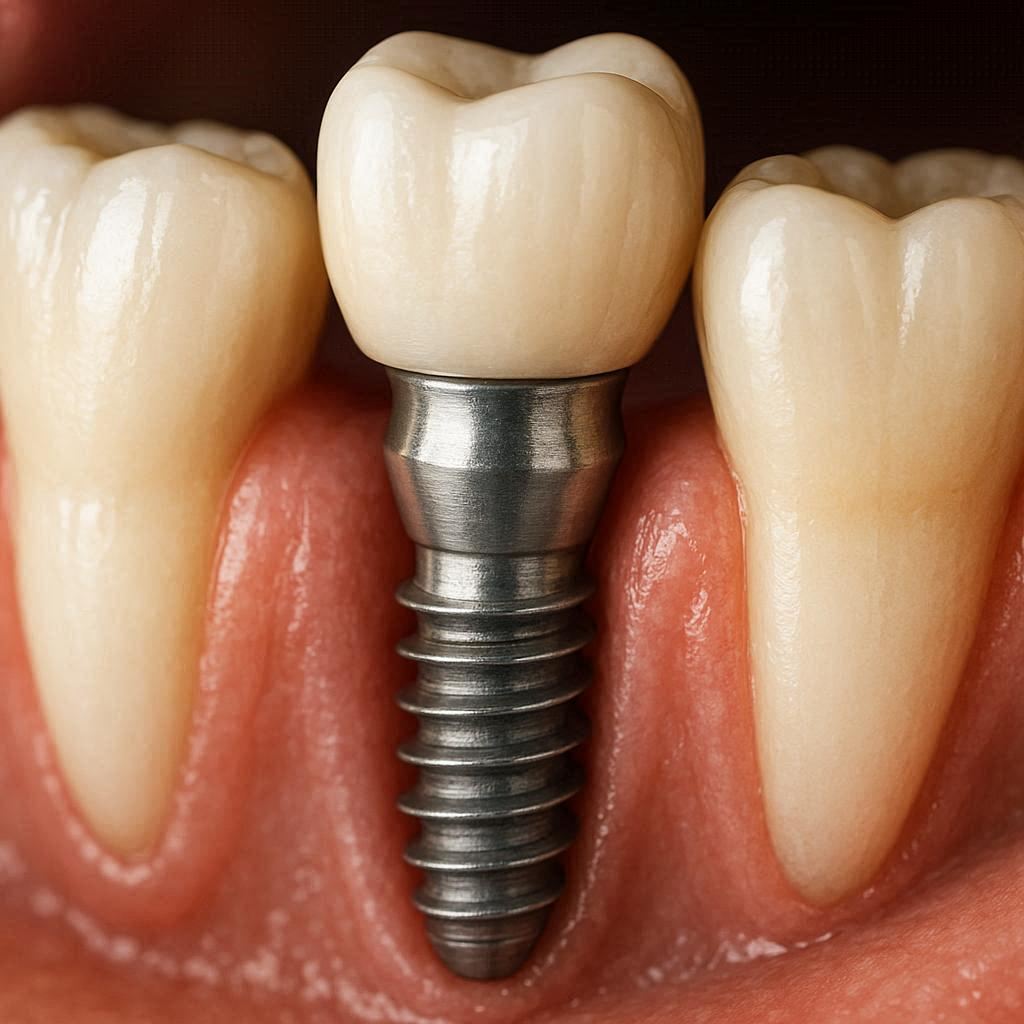
Understanding What a Dental Implant Really Is
Before we answer whether implants last forever, we need to understand what an implant actually is. Many people think an implant is just the fake tooth you see. That is only one part.
A complete dental implant has three pieces.
The Three Main Components
The implant post. This is a small screw, usually made of medical-grade titanium or zirconia. Your oral surgeon places this screw directly into your jawbone. It acts like an artificial tooth root.
The abutment. This is a small connector piece. It sits on top of the implant post. It sticks out just above your gum line.
The dental crown. This is the visible part. The part that looks like a natural tooth. It attaches to the abutment.
So when people ask, “Can dental implants last forever?” they are really asking about all three parts. The answer differs for each.
How an Implant Bonds with Your Body
Here is where the magic happens. Your jawbone grows around the implant post. It fuses to the surface of that titanium screw. This process has a fancy name: osseointegration.
Think of it like a tree root growing into soil. Over time, the root becomes one with the ground. The same thing happens with your implant. The bone embraces the post. It holds it firmly.
This bond is incredibly strong. It is what makes implants different from bridges or dentures. Bridges sit on top of other teeth. Dentures rest on your gums. But an implant becomes part of your body.
“Osseointegration is the biological foundation of modern implant dentistry. When successful, it creates a stability that no other restoration can match.” — Dr. Elena Marchetti, Prosthodontist
The Short Answer: Can Dental Implants Last Forever?
Here is the truthful short answer.
The implant post (the screw in your bone) can last a lifetime for many people. It is not truly forever, but it can last 40, 50, or even 60 years with proper care.
The abutment and crown will not last forever. They experience wear and tear. They may need replacement after 10 to 20 years.
So if you define “dental implant” as the whole system, then no. The visible parts wear out. But if you define it as the post embedded in your bone, then yes—it can outlive you.
Let us dig deeper.
What the Research Says About Implant Longevity
We rely on science, not stories. Multiple long-term studies give us clear numbers.
Success Rates Over Time
| Time Period | Estimated Implant Survival Rate |
|---|---|
| 5 years | 95% to 98% |
| 10 years | 90% to 95% |
| 20 years | 85% to 90% |
| 30+ years | 75% to 85% |
These numbers refer to the implant post still being in place and functional. They do not count a new crown as a failure.
A landmark study from the University of Gothenburg followed patients for over 30 years. More than 80% of their implants remained in place. That is impressive for any medical device.
What These Numbers Mean for You
Do not panic at the 75% to 85% range for 30+ years. Remember, we are talking about decades. Many patients lose implants because of preventable causes, not because implants are bad.
The key takeaway: implants have an excellent long-term track record. They are not eternal, but they are among the longest-lasting dental solutions available.
Comparing Implants to Other Tooth Replacement Options
To understand how impressive implant longevity is, look at the alternatives.
| Restoration Type | Average Lifespan | Pros | Cons |
|---|---|---|---|
| Dental Implant (post) | 30+ years possible | Bone preservation, natural feel, no damage to adjacent teeth | Higher upfront cost, surgery required |
| Dental Bridge | 5 to 15 years | No surgery, faster completion | Requires grinding down healthy teeth, does not prevent bone loss |
| Removable Partial Denture | 3 to 8 years | Lowest upfront cost, non-invasive | Can be uncomfortable, affects taste, accelerates bone loss |
| Complete Dentures | 5 to 10 years | Replaces all teeth at once | Poor stability, bone resorption, frequent adjustments |
Notice the difference. An implant post often outlasts two or three bridges. It can outlive multiple dentures.
One patient told me:
“I wore dentures for twelve years. They never felt like mine. My implant feels like a real tooth. I forget it is even there.”
That is the real value. Longevity plus quality of life.
Factors That Determine How Long Your Implant Lasts
Not every implant lasts decades. Some fail early. Others stay strong for a lifetime. What makes the difference?
Let us break it down into three categories: things you control, things your dentist controls, and things you cannot control.
Things You Control (The Big One)
Your oral hygiene. This is number one. Implants do not get cavities. But they can get a disease called peri-implantitis. It is like gum disease around the implant. Bacteria build up. The gums become inflamed. The bone starts melting away. Without bone, the implant loosens and fails.
Brushing. Flossing. Professional cleanings. These matter just as much as with natural teeth.
Your smoking habit. Smoking is terrible for implants. Nicotine reduces blood flow to your gums and bone. Less blood flow means slower healing and higher infection risk. Smokers have implant failure rates up to two times higher than non-smokers.
Your general health. Uncontrolled diabetes slows healing. Autoimmune diseases affect your body’s ability to maintain bone. Osteoporosis medications (bisphosphonates) can interfere with osseointegration.
Your bite habits. Do you grind your teeth at night? That is called bruxism. It puts extreme pressure on your implant. Natural teeth have ligaments that absorb shock. Implants do not. They transfer all force directly to the bone. Too much force can break the crown, loosen the abutment, or even fracture the bone.
Things Your Dentist Controls
Surgical skill. Not all dentists place implants equally. An experienced oral surgeon or periodontist knows how to avoid nerves, sinuses, and other vital structures. They know how to achieve primary stability—the tight fit that allows osseointegration to start.
Bone quality and quantity. Before placing an implant, your dentist should evaluate your bone. Too little bone? Too soft? A skilled professional can perform bone grafting to create a solid foundation. Cutting corners leads to early failure.
Implant position. An implant placed in the wrong angle creates cleaning problems. Food gets trapped. Bacteria thrive. Peri-implantitis follows. Proper positioning makes home care possible.
Prosthetic design. The crown must fit perfectly. A bad fit creates gaps where bacteria hide. It also creates uneven bite forces that stress the implant.
Things You Cannot Control
Genetics. Some people naturally produce more inflammatory chemicals. They heal slower. They are more prone to bone loss. You cannot change your DNA.
Previous infections. If you lost a tooth due to severe infection, that area may have compromised bone. Even after healing, the bone might be weaker.
Medications. Some medications interfere with bone metabolism. If you need these drugs for a serious medical condition, you cannot simply stop taking them.
Important Note for Readers: Always tell your dentist about every medication you take. Including over-the-counter supplements. Some natural supplements affect bleeding and healing.
The Most Common Reasons Implants Fail
Let us get practical. Why do implants actually fail in real life?
Early Failure (Within the First Year)
This happens before osseointegration completes. The bone never properly attaches to the implant.
Infection at the surgical site. Bacteria contaminate the fresh wound. The body rejects the implant as a foreign invader.
Overheating the bone during surgery. Drilling creates heat. Too much heat kills bone cells. Dead bone cannot fuse to titanium.
Loading the implant too soon. Some patients receive a temporary crown immediately. If that crown puts pressure on the healing implant, the bone connection fails.
Patient medical issues. Undiagnosed diabetes, severe immune disorders, or radiation therapy to the jaw can prevent healing.
Late Failure (After One Year or More)
This happens after successful osseointegration. The implant was stable. Then something changed.
Peri-implantitis. This is the number one cause of late failure. Bacteria trigger inflammation. Inflammation destroys bone. The implant gradually loses support. Many patients do not notice until it is advanced.
Mechanical overload. Grinding teeth or eating extremely hard foods (ice, hard candy, bones) fractures the crown or abutment. Sometimes the implant post itself fractures, though that is rare.
Poor prosthetic fit. A loose crown allows bacteria to seep down to the implant connection. Hidden infection grows for months.
Neglect. No professional cleanings. No home care. Tartar builds up. Gums recede. Bone disappears.
Signs Your Implant Might Be Failing
Watch for these warning signs:
- The implant feels loose. Even slightly.
- Your gum around the implant is red, swollen, or bleeds easily.
- You see pus or discharge.
- You feel pain when biting down.
- The gum tissue is receding, exposing metal.
- You notice a bad taste or odor from that area.
Do not wait. See your dentist immediately. Early intervention can save many failing implants.
How to Make Your Dental Implant Last for Decades
You want the longest possible lifespan. Here is your action plan.
Daily Home Care
Treat your implant like a premium investment. Because it is.
Brush twice daily. Use a soft-bristled toothbrush. Nylon brushes are gentler than natural bristles. Pay special attention to the gum line around the implant.
Floss every day. Regular floss works, but implant-specific floss (with a stiff end or spongy texture) works better. Wrap the floss around the abutment in a C-shape. Clean slightly below the gum line.
Consider a water flosser. Water flossers (like Waterpik) are excellent for implants. They flush out food and bacteria from hard-to-reach areas. Use a low to medium setting.
Avoid abrasive toothpaste. Some whitening toothpastes contain harsh abrasives. They can scratch the surface of your crown and abutment. Scratches collect bacteria.
Use an antimicrobial mouthwash. Ask your dentist which one. Some mouthwashes stain crowns. Others are perfect for implants.
Professional Maintenance
See your dentist every six months. This is non-negotiable. Your dentist uses special instruments (plastic or titanium scalers) that will not scratch your implant. Metal scalers can damage the surface.
Get annual X-rays. Your dentist needs to see the bone level around your implant. Small changes on an X-ray can catch peri-implantitis early, when it is reversible.
Ask about professional cleaning tools. Some dental offices have a device called a PerioScan or a laser that checks for hidden inflammation around implants.
Lifestyle Adjustments
Quit smoking. If you smoke, your implant is fighting an uphill battle. Nicotine replacement therapy, counseling, or prescription medications can help you stop. Your implant will thank you.
Control your blood sugar. If you have diabetes, keep your HbA1c below 7%. Well-controlled diabetes has near-normal implant success rates. Uncontrolled diabetes is dangerous.
Get a night guard if you grind. Your dentist can make a custom night guard. It absorbs the force of grinding. It protects both your implant and your natural teeth.
Avoid bad habits. Do not use your teeth as tools. Do not open bottles with your teeth. Do not chew ice, hard candies, or popcorn kernels.
Regular Self-Checks
Once a month, do this:
- Look in the mirror at your implant crown. Does it look different? Any chips or cracks?
- Gently press on the crown with your finger. Does it move even 1 millimeter?
- Feel the gum around it with a clean finger. Any bumps, tenderness, or swelling?
- Smell your floss after cleaning the implant. Any unusual odor?
If you answer yes to any of these, call your dentist.
Special Situations: Multiple Implants, Full Arches, and All-on-4
So far we have talked about a single implant replacing one missing tooth. But what if you need more?
Multiple Individual Implants
Two or three implants placed separately. Each one has its own crown. Each implant is independent.
The longevity principles are the same. Each post can last decades. But your cleaning routine becomes more important. You have more surfaces to clean. More places for bacteria to hide.
Implant-Supported Bridges
Two implants placed in the bone. They support a bridge that replaces three or four missing teeth. You cannot floss between the bridge and the gum. You need special tools like superfloss or a threader.
These systems work well. But they are harder to clean. Professional maintenance is essential.
Full-Arch Fixed Implants (All-on-4, All-on-6, etc.)
This is a major restoration. Four to six implants support a full arch of teeth (usually 10 to 12 crowns connected together). You cannot remove this appliance yourself. Only your dentist can remove it.
Special considerations for full-arch implants:
- Cleaning requires special tools. You will need water flossers, implant-specific brushes, and often a syringe to flush under the appliance.
- Professional cleanings are more complex. Your dentist needs to unscrew the entire prosthesis to clean underneath. This usually happens once or twice a year.
- Fracture risk is higher. The acrylic or zirconia teeth can chip. The underlying framework can crack with extreme force.
- The implants themselves still last. But the prosthesis (the fake teeth) will need replacement every 10 to 15 years on average.
One patient with All-on-4 told me:
“I have had my fixed denture for eleven years. The teeth are worn down. I am saving for a new one. But the implants feel as solid as the day they were placed.”
That is the pattern. Implants last. The restorations on top do not.
Implant-Retained Dentures (Overdentures)
Two to four implants in the jaw. They snap into a removable denture. You take the denture out at night to clean it.
The implants here face less biting force because the denture spreads the load. Implant survival is excellent. But the denture itself wears out every 5 to 8 years. The plastic teeth wear down. The attachment clips lose their grip.
The Cost Perspective: Short-Term Pain, Long-Term Gain
Let us talk money. Because “forever” matters differently when you see the price tag.
Typical Costs in the United States
| Procedure | Estimated Cost (per tooth) |
|---|---|
| Single implant, crown, and abutment | $3,000 to $6,000 |
| Implant-supported bridge (3-4 units) | $6,000 to $15,000 |
| Full-arch fixed implant (All-on-4, per arch) | $20,000 to $35,000 |
| Implant-retained denture (per arch) | $8,000 to $15,000 |
These numbers make people hesitate. But consider the long-term math.
Comparing Lifetime Costs
Let us say you need to replace a single missing tooth. You are 50 years old. You live to 85. That is 35 years.
Option 1: Dental bridge. Costs $2,500 to $4,000 upfront. Needs replacement every 10 years on average. Three replacements over 35 years: $7,500 to $12,000 total. Plus, you damaged two healthy teeth permanently. Plus, the bone under the bridge gradually disappears.
Option 2: Dental implant. Costs $4,000 to $6,000 upfront. One crown replacement after 15 to 20 years: $1,500 to $2,500. Total: $5,500 to $8,500. You preserved your bone. You saved your adjacent teeth. You enjoyed better function for three decades.
Over a lifetime, implants are often cheaper than bridges. Not always. But often.
Important Financial Note: Many dental insurance plans cover a portion of implant costs. Typically 30% to 50% of the crown, not the surgical post. Check your policy. Some plans exclude implants entirely. Always get a written treatment plan with costs before proceeding.
Who Is a Good Candidate for Long-Lasting Implants?
Not everyone can expect decades from an implant. Some people are better candidates than others.
Ideal Candidate Profile
- Non-smoker
- Healthy gums (no active gum disease)
- Good general health (diabetes controlled, no autoimmune diseases affecting bone)
- Sufficient bone volume (or willing to have bone grafting)
- Realistic expectations
- Committed to excellent home care
- Willing to see the dentist every six months
Acceptable Candidate (Still Good, But Extra Caution Needed)
- Light smoker (less than 10 cigarettes per day) willing to reduce or quit
- Well-controlled diabetes (HbA1c under 7.5%)
- History of gum disease but now stable
- Mild teeth grinder (uses night guard)
- Older age (over 80) — implants still work, but healing is slower
High-Risk Candidate (Expect Shorter Lifespan)
- Heavy smoker (more than a pack per day)
- Uncontrolled diabetes
- Active, untreated gum disease
- Severe bruxism without night guard
- Taking intravenous bisphosphonates (cancer treatment)
- Recent radiation to the jaw
- Severe immune disorders
If you fall into the high-risk category, do not despair. You can still get implants. But your dentist should have an honest conversation with you about expected lifespan. You may only get 5 to 10 years from an implant that would last 30 years in an ideal candidate.
What Happens When an Implant Fails?
Let us prepare for the worst-case scenario. Because knowing the backup plan reduces fear.
Early Failure (First 3-6 Months)
The implant never integrates. It remains loose. Your dentist will remove it. This is a simple procedure. They unscrew it like removing a loose screw from wood.
After removal, the bone needs to heal for 2 to 4 months. Then your dentist can try again. Often with a slightly wider implant. Or with a bone graft first.
Success rates for second attempts are still good. Over 80% in most studies.
Late Failure (After Years of Success)
The bone around the implant has dissolved. The implant is loose or infected.
Removal is more difficult. Bone has grown into the threads. Your dentist will use special tools (trephine burs or implant extractors) to remove it.
After removal, you have options:
- Bone graft and new implant. Wait 4 to 6 months. Place a new implant. Success rates are lower than first-time placements, but still reasonable (60% to 75%).
- Alternative restoration. Bridge or partial denture instead.
- Leave the space empty. Not ideal. Adjacent teeth will shift.
Salvaging a Failing Implant
Sometimes your dentist can save an implant that is starting to fail.
Treatment options include:
- Deep cleaning around the implant (debridement)
- Laser therapy to kill bacteria
- Local antibiotic placement (Arestin or similar)
- Surgical flap to clean the bone surface
- Bone grafting around the exposed threads
Catching failure early is everything. Once the implant moves, it is usually too late.
The Future: Are Forever Implants Coming?
Science never stops. Researchers are working on implants that last even longer.
Promising Developments
Antibacterial implant surfaces. Scientists are coating implants with silver nanoparticles or antimicrobial peptides. These surfaces kill bacteria on contact. They could dramatically reduce peri-implantitis.
Growth factor coatings. Some implants now have a coating that stimulates bone growth. This speeds osseointegration and creates stronger bone-implant bonds.
Zirconia implants. These are metal-free. They are white, like a tooth. Some studies suggest zirconia attracts less plaque than titanium. Less plaque means less inflammation. Less inflammation means longer life.
Smart implants. Imagine an implant that monitors its own health. Sensors detect pH changes, temperature shifts, or bacterial byproducts. The implant sends an alert to your phone: “See your dentist now.” This technology exists in labs. It will reach clinics within 10 to 15 years.
Will Implants Ever Be Truly Forever?
Probably not. The human body changes. You age. Your bone density decreases. Your immune system weakens. Medications accumulate.
But we can get closer. We can aim for 50, 60, even 70 years of function. For most adults, that is effectively a lifetime.
“The goal is not immortality for the implant. The goal is that the implant outlives the patient.” — Dr. James Lee, Implant Surgeon
Real Patient Stories (Without Breaking Privacy)
Let me share anonymized cases from clinical literature. These illustrate the range of outcomes.
Case 1: The 40-Year Implant
A 45-year-old non-smoking male received a single implant in his lower molar. Excellent bone. No health issues. He brushed and flossed religiously. He saw his dentist every six months. He wore a night guard because he ground his teeth.
At his 40-year follow-up (age 85), the implant was still firm. The crown had been replaced twice (at years 18 and 32). The bone level had dropped by less than 1 millimeter total. Success.
Case 2: The 5-Year Failure
A 55-year-old female smoker received an implant to replace a front tooth. She had mild diabetes. She did not control her blood sugar well. She flossed occasionally. She skipped dental cleanings for three years.
At year five, she noticed the implant felt different. An X-ray showed bone loss around 70% of the implant. The implant was mobile. Removal was required. Failure.
Case 3: The Salvage
A 60-year-old male with a history of gum disease received three implants. At year eight, one implant showed bleeding on probing and 3mm of bone loss on X-ray. He had peri-implantitis, caught early.
His dentist performed a surgical cleaning. He placed local antibiotics. The patient improved his home care and quit smoking. At year twelve, the bone level had stabilized. The implant survived. Success with intervention.
Myths About Implant Longevity (Busted)
Let us clear up common misconceptions.
Myth 1: Implants are maintenance-free.
False. They require daily cleaning and regular professional care. They are not “set and forget.”
Myth 2: Implants never fail.
False. They fail in 5% to 15% of cases over 20 years. That is low, but not zero.
Myth 3: You cannot floss implants.
False. You can and must floss implants. Use proper technique to avoid shredding the floss.
Myth 4: Implants are only for young people.
False. People in their 80s and 90s successfully receive implants. Age is not a barrier. Health is.
Myth 5: Once an implant fails, you cannot try again.
False. Many failed implants can be replaced with a second attempt.
Myth 6: Implants look fake.
False. Modern crowns are almost indistinguishable from natural teeth. Even dentists sometimes cannot tell without an X-ray.
Practical Tips for Choosing the Right Implant Dentist
Your dentist’s skill directly affects how long your implant lasts. Choose carefully.
Questions to Ask Before Treatment
- “How many implants do you place each year?” (Look for at least 50 per year.)
- “What is your success rate?” (Should be 95% or higher for single implants.)
- “Do you use 3D imaging (CBCT) for planning?” (Yes, always.)
- “What happens if my implant fails?” (They should have a clear policy on replacement.)
- “Do you work with a restorative dentist or do the crown yourself?” (Both are fine, but coordination matters.)
- “Can I speak to a previous patient?” (Many offices offer this.)
Red Flags to Avoid
- Dentist offering a “one-day implant” without bone evaluation
- No pre-surgical CT scan
- Vague answers about costs and warranties
- Pressure to decide immediately
- No discussion of risks or complications
Credentials to Look For
- Oral surgeon, periodontist, or prosthodontist
- Fellowship in the International Congress of Oral Implantologists (ICOI)
- Membership in the American Academy of Implant Dentistry (AAID)
- Published before-and-after cases
Do not choose based on price alone. Cheap implants often become expensive failures.
Implant Warranties and Guarantees: What They Really Mean
Some implant manufacturers and dental offices offer warranties. They sound reassuring. Read the fine print.
Typical Warranty Terms
| Warranty Type | What It Covers | Typical Duration |
|---|---|---|
| Manufacturer warranty | Implant post fracture | 5 years to lifetime |
| Crown warranty | Crown fracture or chipping | 1 to 5 years |
| Practice guarantee | Implant failure due to surgical error | 1 to 2 years |
What Warranties Do NOT Cover
- Peri-implantitis (patient hygiene failure)
- Crown wear from grinding
- Bone loss from medical conditions
- Failure to return for regular cleanings
- Damage from accidents or trauma
Read your warranty document before signing. Ask for a written copy.
Important Note: A warranty is not a substitute for good care. Even the best warranty will not give you back lost bone or months of treatment time.
Children, Teens, and Implants: A Special Consideration
Can young people get implants? Yes. Should they? Usually not until jaw growth stops.
Why Age Matters
In children and teens, the jaw is still growing. An implant placed in a growing jaw becomes “sunken” as the rest of the jaw grows around it. The implant stays where it was placed. Natural teeth move. The result is a crooked, uneven smile.
Recommended Minimum Ages
- Girls: 15 to 17 years old (after most jaw growth)
- Boys: 17 to 19 years old (jaw grows longer)
For younger patients, temporary solutions include:
- Removable partial denture
- Resin-bonded bridge (Maryland bridge)
- Space maintainer
Wait until growth is complete. Then place the implant. It will last for decades.
The Psychological Impact of Long-Lasting Implants
This is rarely discussed. But it matters.
Losing a tooth affects confidence. You may smile less. You may cover your mouth when you laugh. You may avoid photos.
Getting an implant changes that. A well-functioning, natural-looking implant restores not just a tooth, but a sense of wholeness.
Patients report:
- Smiling more freely
- Eating without fear
- Speaking clearly (no denture clicking)
- Sleeping better (no worry about dentures falling out)
- Higher self-esteem
One patient said:
“I forgot what it felt like to bite into an apple. After my implant, I cried. It was such a small thing. But it felt like getting a piece of myself back.”
That emotional benefit is real. It is worth protecting with good care.
Frequently Asked Questions (FAQ)
1. Can dental implants last forever if I take perfect care of them?
No medical device lasts forever. But with perfect care, an implant post can last 40 to 50 years or more. For most adults, that is a lifetime. The crown will need replacement every 10 to 20 years.
2. Do implants get cavities?
No. The implant post and crown are made of metal and ceramic. They do not decay. But the surrounding gum and bone can get infected (peri-implantitis). That is the real threat.
3. How often should I replace my implant crown?
Every 10 to 20 years on average. Some last longer. Some wear out faster if you grind your teeth or eat hard foods.
4. Can I eat normally with implants?
Yes. You can eat steak, apples, nuts, and most foods. Avoid extremely hard items like ice, hard candy, and bones. Use common sense.
5. Are dental implants painful?
The procedure uses local anesthesia. You should not feel pain during surgery. Afterward, most people have mild to moderate discomfort for a few days. Over-the-counter pain relievers usually suffice.
6. How long does the implant process take?
From start to finish: 3 to 9 months on average. This includes healing time for osseointegration. Some immediate-load implants shorten the timeline, but not everyone is a candidate.
7. Can I get an MRI with dental implants?
Yes. Titanium implants are MRI-safe. They may cause minor image distortion in the immediate area, but they do not heat up or move. Always tell the MRI technician you have implants.
8. Do dental implants set off metal detectors?
Rarely. Most airport metal detectors do not detect a single titanium implant. Larger full-arch prostheses with metal frameworks might trigger detectors. Carry your implant ID card if you are concerned.
9. What is the main reason implants fail?
Peri-implantitis (bone infection) is the number one cause of late failure. Smoking and poor hygiene are the biggest risk factors.
10. Can I have an implant if I already have gum disease?
You must treat the gum disease first. Active gum disease significantly increases implant failure risk. Your dentist will stabilize your gums before placing implants.
11. Are mini implants as long-lasting as regular implants?
No. Mini implants (narrow diameter) have lower success rates and shorter lifespans. They are sometimes used for temporary restorations or denture retention. For permanent single-tooth replacement, standard-diameter implants are better.
12. What happens if my implant crown breaks?
Your dentist can replace just the crown. They do not need to remove the implant post. This is a simple procedure, usually completed in two visits.
Additional Resources
For readers who want to go deeper, here is a trusted external resource:
🔗 American Academy of Implant Dentistry (AAID) Patient Information
Visit: aaid-implant.org/patient-resources
This site offers:
- Find an implant dentist near you
- Glossary of implant terms
- Cost calculators
- Video animations of procedures
- Answers to advanced clinical questions
Always verify any online information with your own dentist.
Conclusion
Dental implants do not last forever, but the implant post can easily last 30 to 50 years with proper care. The crown on top needs replacement every 10 to 20 years. Your daily hygiene, smoking status, and regular dental visits are the biggest factors determining whether your implant becomes a true lifelong solution.