CPT Code for a Dental Block
If you have ever sat in a dental chair waiting for a filling or a root canal, you know the feeling well. That tiny pinch, then the numbness spreading across your jaw. That is a dental block at work. It is one of the most common procedures in dentistry.
But here is where things get tricky for dental offices, billing specialists, and even patients. When it comes time to submit a claim, many people search for a single “CPT code for a dental block” only to find that the answer is not as simple as they hoped.
The truth is that there is no single, universal CPT code that says “dental block” on the label. Instead, you have to understand how the medical coding system views anesthesia, injections, and nerve blocks. This guide will walk you through everything you need to know. We will cover the correct codes, when to use them, how to avoid claim denials, and the difference between dental and medical insurance.
Why There Is No Single “CPT Code for a Dental Block”
This is the first thing you need to understand. The Current Procedural Terminology (CPT) manual is published by the American Medical Association (AMA). It covers thousands of medical procedures. But dentistry operates a little differently.
Dentists primarily use CDT codes (Current Dental Terminology). The CDT code for local anesthesia, including dental blocks, is usually bundled into the main procedure. For example, when a dentist performs a filling (D2391), the injection of lidocaine for the dental block is part of that service. You do not bill it separately.
However, problems arise when a dental procedure crosses over into medical necessity. Maybe a patient has trigeminal neuralgia. Maybe they need a nerve block for chronic facial pain. Or perhaps a dentist performs a procedure that a medical insurance plan should cover, not a dental plan.
In those cases, you need a medical CPT code. And that is where we have to look at the codes for nerve blocks, injections, and anesthesia services.
The Most Common Medical Codes Used for a Dental Block
Even though there is no exact “dental block” code, several CPT codes work perfectly to describe what you did. The right choice depends on the purpose of the injection, the location, and the patient’s diagnosis.
Here are the codes you will use most often.
64400: Injection, anesthetic agent; trigeminal nerve, any branch or branch
This is the closest you will get to a specific code for a dental block. The trigeminal nerve is the main sensory nerve of the face. It has three branches: ophthalmic (V1), maxillary (V2), and mandibular (V3). Dental blocks target the maxillary and mandibular branches.
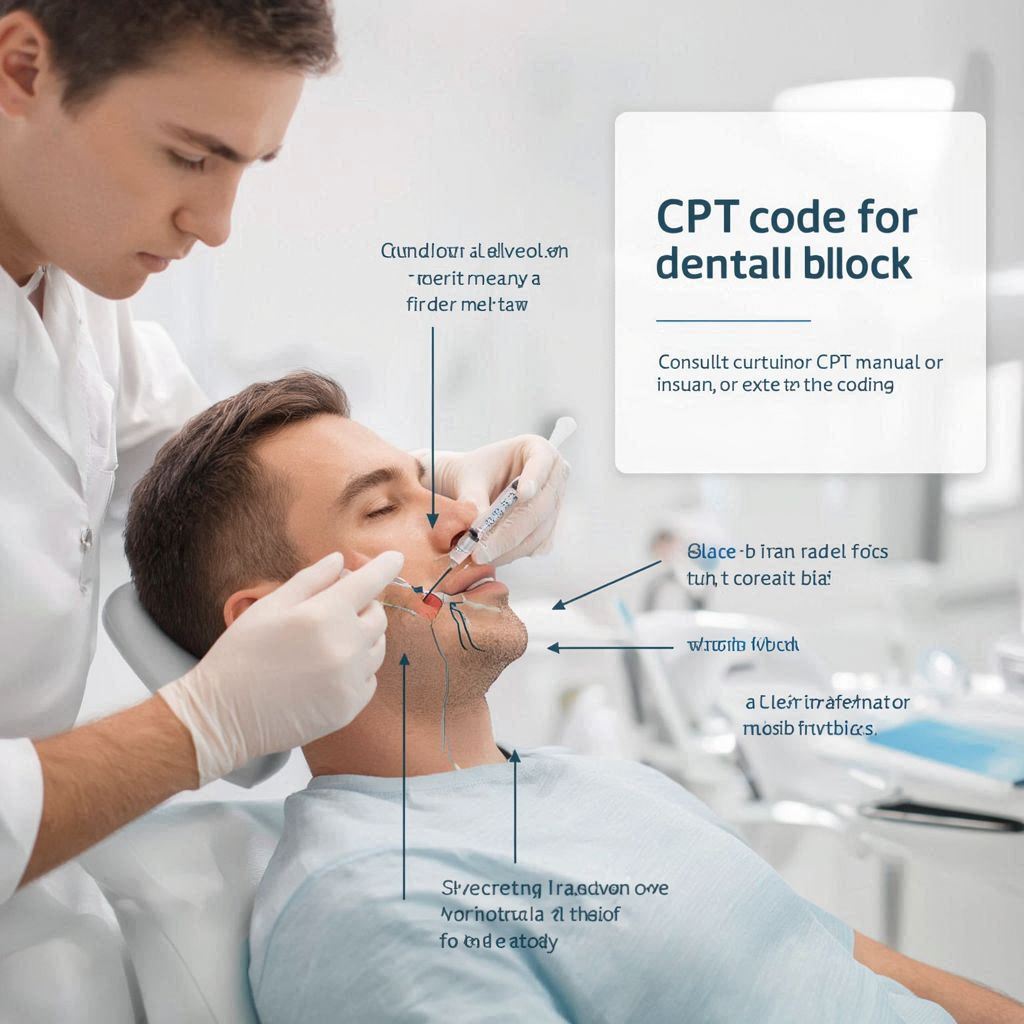
You would use 64400 when you perform a diagnostic or therapeutic injection into a branch of the trigeminal nerve. This includes procedures like an inferior alveolar nerve block, a mental nerve block, or a posterior superior alveolar nerve block.
When to use 64400:
- Treating facial pain syndromes
- Diagnosing the source of neuropathic pain
- Managing trigeminal neuralgia
- Providing anesthesia for a medical procedure (not routine dental work)
Important note: You cannot bill this code for a standard dental filling or extraction under a dental plan. But under a medical plan for pain management, this is your code.
64450: Injection, anesthetic agent; other peripheral nerve or branch
This code is a bit of a catch-all. It covers injections into peripheral nerves that do not have their own specific code. For dental blocks, you might use this for mental nerve blocks, infraorbital nerve blocks, or buccal nerve blocks.
Use 64450 when the block targets a smaller, more specific nerve branch that is not the main trigeminal trunk.
Example: A patient with chronic pain in the lower lip and chin following dental trauma. You perform a mental nerve block. That is a peripheral nerve branch. Code 64450 works well here.
64415 and 64416: Injection, anesthetic agent; brachial plexus
These codes are not for the face. But they appear in dental discussions when a patient needs anesthesia for the entire upper extremity during complex dental or oral surgery involving the jaw. This is rare, but it is worth knowing they exist.
For almost all routine dental blocks in the mouth and face, stick with 64400 and 64450.
A Quick Comparison Table: Which Code Fits Your Dental Block?
| Type of Dental Block | Target Nerve | Best CPT Code | Common Use Case |
|---|---|---|---|
| Inferior alveolar nerve block | Mandibular branch (V3) | 64400 | Lower jaw anesthesia, pain management |
| Mental nerve block | Mental nerve (branch of V3) | 64450 | Lip and chin pain, soft tissue biopsy |
| Infraorbital nerve block | Infraorbital nerve (branch of V2) | 64450 | Upper lip, nose, and anterior cheek pain |
| Posterior superior alveolar block | PSA nerve (branch of V2) | 64400 | Maxillary molar anesthesia |
| Greater palatine nerve block | Greater palatine nerve | 64450 | Palatal anesthesia for surgery |
| Nasopalatine nerve block | Nasopalatine nerve | 64450 | Anterior palate, incisive papilla area |
As you can see, the choice depends more on the specific nerve than on the fact that you are in a dental setting.
When to Bill a Dental Block Separately (And When Not To)
This is where most billing errors happen. You cannot bill for a dental block every time you give an injection. In fact, for standard dentistry, you almost never bill it separately.
Routine Dental Care: No Separate Billing
Let us say a patient comes in for a simple filling on tooth #19. You give an inferior alveolar nerve block. You place the filling. You send the claim.
Under CDT codes, you report the filling code (D2391 for a two-surface amalgam, for example). The dental block is included in that fee. You do not add a separate line for the injection. Most dental plans consider local anesthesia an integral part of the restorative procedure.
The same rule applies to:
- Extractions (D7140, D7210)
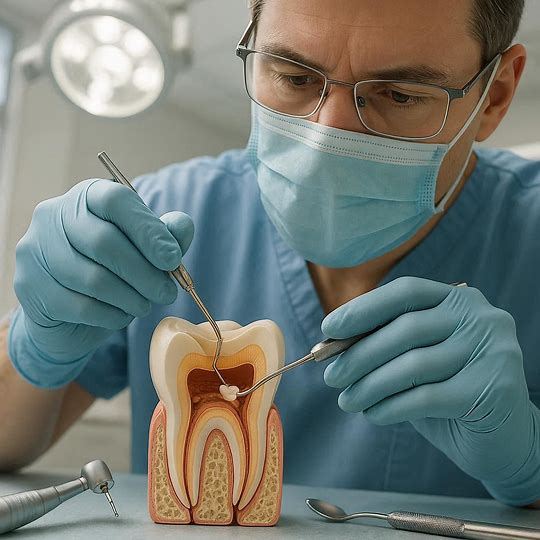
- Root canals (D3310, D3320, D3330)
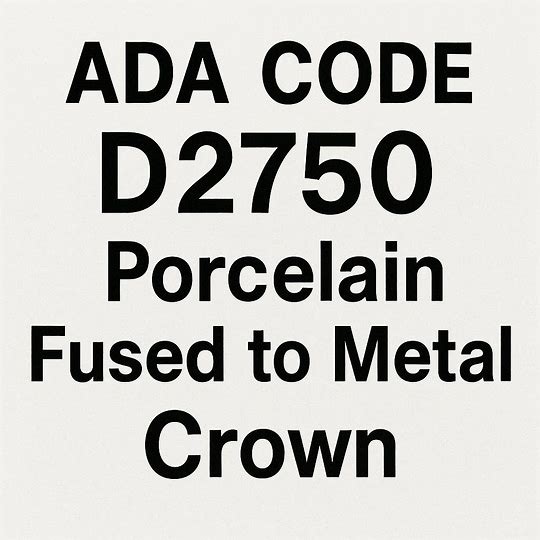
- Crown preps (D2740, D2750)
- Periodontal surgery
In these cases, you are not looking for a CPT code for a dental block because you are not using CPT codes at all. You are using CDT codes, and the anesthesia is bundled.
Medical Necessity: Yes, Bill Separately
Now consider a different scenario. A patient has a history of trigeminal neuralgia. They see a dentist who also offers pain management services. The dentist performs a diagnostic trigeminal nerve block to see if the pain originates from the nerve.
This is not routine dental care. This is a medical service. The dentist is acting like a pain specialist. In this case, you bill the patient’s medical insurance using CPT code 64400.
Other examples where separate billing makes sense:
- A patient with chronic post-herpetic neuralgia in the maxillary area
- A diagnostic block before radiofrequency ablation
- A therapeutic block for myofascial pain syndrome involving the masseter or temporalis muscles
- A nerve block for a patient with cancer pain in the jaw
In each of these, the primary diagnosis comes from a medical condition, not a dental disease like caries or periodontitis.
The Role of Modifiers: Getting Your Claim Paid
Even when you use the right CPT code for a dental block, you need modifiers. Modifiers tell the insurance company more about the service. They can mean the difference between payment and denial.
Modifier 50: Bilateral Procedure
If you perform dental blocks on both the left and right sides of the jaw during the same session, you might use modifier 50. However, many payers prefer that you bill two units of the code instead. Always check the specific policy of the medical plan.
Modifier 59: Distinct Procedural Service
This is a very important modifier. Use modifier 59 when you perform a dental block that is separate and distinct from other procedures on the same day.
Example: A patient receives a routine filling (bundled local anesthesia) but also requires a separate diagnostic nerve block for an unrelated pain condition. The block is not part of the filling. Modifier 59 tells the payer, “This is not the anesthesia for that filling.”
Modifier GA or GZ for Advanced Beneficiary Notice
These modifiers apply to Medicare and some other plans. They indicate whether the patient has signed a waiver (GA) or not (GZ) acknowledging that the service might not be covered. Use these when the medical necessity of the dental block is questionable.
Modifier 25 for Evaluation and Management
If the patient comes in for a consultation about facial pain and you perform a dental block on the same day, you might bill an E/M code (like 99213) with modifier 25 plus the injection code (64400). Modifier 25 shows that the evaluation was significant and separate from the procedure.
Documentation Requirements for Medical Billing of Dental Blocks
If you want to get paid, you need to document like a medical professional, not just a dentist. Medical insurance adjusters do not think like dental adjusters. They need clinical evidence.
Your notes must include:
1. Detailed medical history
Describe the patient’s pain. When did it start? What makes it worse? What treatments have they tried? Use pain scales (0 to 10). Note the quality of pain (burning, sharp, dull, electric shock-like).
2. Specific nerve targeted
Do not write “dental block.” Write “inferior alveolar nerve block performed at the mandibular foramen.” Name the nerve. Name the branch. This justifies code 64400 or 64450.
3. Image guidance (if used)
Some providers use ultrasound or fluoroscopy for nerve blocks. If you do, document it. You may need to add a code for image guidance (like 76942 for ultrasound guidance).
4. Type and dose of anesthetic
Record the agent (lidocaine, bupivacaine, ropivacaine), the concentration (1%, 2%), and the volume (1.8 mL, 3.6 mL). Also note if you used a steroid (like triamcinolone) for a therapeutic block.
5. Response to the block
Did the patient get 50% pain relief? How long did it last? This information supports medical necessity for future blocks or more advanced procedures.
6. Signed informed consent
Medical plans expect documentation that the patient understood the risks of the nerve block, including temporary numbness, hematoma, infection, or nerve injury.
Without these details, the payer will likely deny your claim as not medically necessary or insufficiently documented.
Common Diagnosis Codes That Support a Dental Block
A CPT code tells the insurer what you did. An ICD-10 code tells them why you did it. For a dental block to be paid under medical insurance, the diagnosis must justify the procedure.
Here are the most relevant ICD-10 codes for dental blocks:
| Diagnosis | ICD-10 Code | Explanation |
|---|---|---|
| Trigeminal neuralgia | G50.0 | Classic indication for trigeminal nerve block |
| Atypical facial pain | G50.1 | Pain in the face without clear nerve lesion |
| Postherpetic neuralgia | B02.22 | Pain following shingles outbreak in trigeminal distribution |
| Other disorders of trigeminal nerve | G50.8 | Includes neuropathy after dental trauma |
| Chronic pain syndrome | G89.4 | For long-term facial pain management |
| Temporomandibular joint disorder | M26.60 | When TMJ pain involves nerve components |
| Myofascial pain syndrome | M79.1 | Involving masticatory muscles |
Avoid using dental-only diagnoses like K02.9 (dental caries) or K04.7 (periapical abscess) when billing medical insurance. Those will cause immediate denials for a separate nerve block.
How to Avoid Claim Denials for Dental Blocks
Denials happen. But you can reduce them significantly with a few smart practices.
Always check medical plan policies first. Some medical plans explicitly exclude dental blocks. Others cover them only for specific diagnoses. Call the payer or check their medical policy manual before performing the procedure.
Do not bill dental and medical on the same claim. Separate them. Bill your routine dental work on a dental claim form (ADA 2012 form). Bill your medical nerve block on a CMS-1500 medical claim form. Sending them together confuses payers.
Use the correct place of service code. If you perform the block in a dental office, use Place of Service (POS) code 11 (Office). That is fine. But be aware that some medical plans pay less for services in a dental office. Consider hospital outpatient or ambulatory surgery center settings for complex blocks.
Appeal denials properly. If the denial says “bundled service,” respond by explaining that this block was diagnostic or therapeutic, not anesthetic for a separate procedure. Include your documentation of medical necessity. Many denials reverse on the first appeal.
Real-Life Scenarios: Putting It All Together
Let us walk through three realistic cases to see how the CPT code for a dental block works in practice.
Scenario 1: Routine Dental Extraction
Patient: 45-year-old with tooth #30 fractured to the gumline.
Procedure: Extraction of a completely bony impacted tooth (D7230).
Anesthesia: Inferior alveolar nerve block with 2% lidocaine.
What you bill: D7230 only.
CPT code for dental block? None. The block is bundled.
Insurance type: Dental plan.
Result: Paid as part of the extraction fee.
Scenario 2: Diagnostic Block for Suspected Trigeminal Neuralgia
Patient: 60-year-old with sharp, electric shock-like pain in the right lower jaw for six months. Neurologist suspects trigeminal neuralgia but wants a diagnostic block.
Procedure: Diagnostic inferior alveolar nerve block with 1% lidocaine.
Documentation: Detailed pain history, pain score 8/10 before block, reduced to 2/10 after block.
What you bill: CPT 64400.
Modifier: None, unless an E/M service also provided.
Diagnosis: G50.0 (trigeminal neuralgia).
Insurance type: Medical plan.
Result: Likely paid, especially with supporting documentation.
Scenario 3: Therapeutic Block for Chronic Post-Surgical Pain
Patient: 35-year-old with persistent numbness and burning in the lower lip for two years following wisdom tooth extraction. Failed physical therapy and medications.
Procedure: Mental nerve block with bupivacaine and triamcinolone.
Documentation: Detailed exam, pain score 7/10, 60% relief lasting three weeks after previous block.
What you bill: CPT 64450.
Modifier: 59 if performed on same day as another service.
Diagnosis: G50.8 (other trigeminal nerve disorder).
Insurance type: Medical plan.
Result: Likely paid as medically necessary for chronic pain management.
Differences Between CPT Codes and CDT Codes for Anesthesia
To fully understand this topic, you need to see the comparison. Dentists live in the world of CDT. Medical billers live in CPT. Here is how they differ for anesthesia.
| Aspect | CDT Codes (Dental) | CPT Codes (Medical) |
|---|---|---|
| Local anesthesia (dental block) | Bundled into restorative, surgical, or endodontic codes | Reported separately with 64400, 64450, etc. |
| Deep sedation/general anesthesia | Reported with D9222, D9223, D9239 (per 15 minutes) | Reported with 00100–00199 (anesthesia for procedures on head) |
| Who uses these | Dentists, oral surgeons | Anesthesiologists, pain specialists, some dentists with medical billing |
| Typical payer | Dental insurance (Delta Dental, MetLife, etc.) | Medical insurance (BCBS, Aetna, Cigna, Medicare) |
| Documentation requirements | Dental charting, tooth numbers | Medical history, nerve targeted, response to block |
This table explains why you cannot just take a CDT dental code and turn it into a CPT code. They are different systems for different purposes.
The Role of Ultrasound and Fluoroscopy in Dental Blocks
Advanced imaging is becoming more common in dental nerve blocks, especially for therapeutic and diagnostic procedures. If you use image guidance, you can bill for it separately.
Ultrasound guidance (CPT 76942): Use this when you visualize the needle tip, target nerve, and surrounding structures in real-time. Ultrasound helps avoid blood vessels and improves accuracy.
Fluoroscopic guidance (CPT 77002): Less common in dentistry, but some oral surgeons use it for blocks near the skull base.
Important: You can only bill image guidance if you document that you used it. A simple note saying “ultrasound used” is not enough. You need to describe the approach, the nerve identified, and the spread of local anesthetic.
When you add image guidance, the total reimbursement increases. But so does the documentation burden. Make sure your staff is trained.
Important Notes for Readers
Note 1: Do not attempt to bill a CPT code for a dental block to a dental insurance plan. Dental plans do not recognize CPT codes. They will reject your claim immediately. Use CDT codes for dental plans and CPT codes for medical plans.
Note 2: Some medical plans require prior authorization for nerve blocks, especially for chronic pain. Always verify medical policy before performing the procedure. Failure to obtain prior authorization is a leading cause of denial.
Note 3: Medicare generally does not cover dental blocks because Medicare excludes most dental services. However, Medicare Part B may cover a trigeminal nerve block if the primary diagnosis is a medical condition like trigeminal neuralgia, not a dental condition. This is a narrow exception. Consult your local Medicare Administrative Contractor (MAC) for guidance.
Note 4: If you are a dentist billing medical insurance, you need an NPI (National Provider Identifier) and you may need to enroll as a medical provider with each insurance plan. You cannot just send a claim without being credentialed.
Frequently Asked Questions (FAQ)
1. Is there a specific CPT code for a dental block?
No, there is no single CPT code named “dental block.” The correct codes are 64400 for the trigeminal nerve and 64450 for other peripheral nerves. Choose based on the specific nerve you block.
2. Can I bill a patient separately for a dental block?
For routine dentistry, no. The fee for local anesthesia is included in the procedure fee. For medically necessary nerve blocks (pain management, diagnosis), yes, you can bill the patient’s medical insurance or the patient directly if the service is not covered.
3. What is the difference between a dental block and a nerve block?
In dentistry, a dental block is a type of nerve block. Both terms refer to injecting anesthetic near a nerve to numb a specific area. In medical coding, “nerve block” is the broader category, and dental blocks fall under that category.
4. How much does a medical insurance plan pay for code 64400?
Reimbursement varies widely by region, payer, and contract. As a rough estimate, a simple trigeminal nerve block without imaging might reimburse between $80 and $200. With ultrasound guidance, it might reach $250 to $400. Always check your specific fee schedule.
5. Can a dental hygienist perform a dental block and bill for it?
In most states, dental hygienists cannot independently perform nerve blocks. A dentist must prescribe and supervise. Even then, billing a CPT code for a hygienist’s service is complex because medical plans expect a physician or dentist provider. Check your state’s scope of practice laws.
6. What modifier do I use for a repeat dental block?
Use modifier 76 (Repeat procedure by same physician) if you perform the same block on the same nerve on the same day. For blocks on different days, no modifier is needed, but document the medical necessity for the repeat procedure.
7. Do I need a separate consent form for a dental block under medical necessity?
Yes. Medical insurers expect a separate informed consent for nerve blocks. The consent should list risks specific to the trigeminal or peripheral nerve block, including possible prolonged numbness, dysesthesia, bleeding, infection, and allergic reaction.
8. What happens if I accidentally bill a CPT code to a dental plan?
The dental plan will reject the claim with an error message like “invalid procedure code.” You will need to resubmit the claim using the correct CDT code. If the service was truly medical in nature, you may need to submit to the medical plan instead.
Additional Resource for Readers
For the most current and official information on CPT coding for nerve blocks, visit the American Medical Association’s CPT® website. You can also access the ADA’s CDT coding guide for dental-specific procedures.
Recommended link: American Society of Regional Anesthesia and Pain Medicine (ASRA) – Coding and Reimbursement Guidelines (Search for “nerve block coding” on their site. This resource is updated annually with payer policies and reimbursement trends.)
Note: Always verify codes with your current CPT manual and payer policies, as codes and guidelines change annually.
Conclusion
Finding the correct CPT code for a dental block requires you to shift your thinking. There is no magic single code. Instead, you choose between 64400 for the trigeminal nerve and 64450 for other peripheral nerves. You only bill these codes under medical necessity for pain management or diagnosis, not for routine dental anesthesia. Pair the right code with strong documentation, appropriate modifiers, and a medically necessary diagnosis to get your claims paid.