Cheap or Free Dental Implants
Let’s be honest. You are here because you have missing teeth, and the price tag for implants makes your stomach drop.
You have probably heard that dental implants are the gold standard. They look natural. They feel strong. They last a lifetime. But a single implant can cost anywhere from $3,000 to $6,000. A full mouth? That can reach $30,000 or more.
For most people, that is simply not possible.
So you start wondering: does “cheap or free dental implants” actually exist? Or is that just a dream?
The short answer is yes—but with important conditions. Free implants are extremely rare. Cheap implants are real, but you need to know where to look and how to avoid dangerous shortcuts.
This guide walks you through every realistic path. No fake promises. No hidden agendas. Just honest, practical information to help you smile again without losing your savings.
Why Dental Implants Cost So Much (And When You Can Reduce That Cost)
Before we talk about saving money, you need to understand why implants are expensive. This is not just about titanium and porcelain. You are paying for:
- The surgeon’s training – Implantology requires years of extra education.
- Advanced imaging – CBCT scans map your nerves and bone structure.
- The implant itself – High-grade titanium or zirconia.
- The abutment and crown – Custom-made for your mouth.
- Follow-up care – Multiple appointments over several months.
That said, you should never pay the first price you see. Many clinics inflate prices because patients do not negotiate. You can absolutely reduce your final bill.
The Real Difference Between “Cheap” and “Low-Cost”
This is important. Cheap dental implants might mean low-quality materials or inexperienced providers. Low-cost implants mean you pay less without sacrificing safety. We focus on the second option.
Note: Be extremely careful with advertisements promising “implants for $500.” If it sounds too good to be true, it probably involves hidden fees, temporary solutions, or unqualified practitioners.
Free Dental Implants: Do They Really Exist?
Let’s start with the most searched phrase: free dental implants.
Free implants exist, but they are not available to everyone at any time. You usually need to meet specific criteria and be patient.
Who Typically Qualifies for Free Implants?
- Low-income individuals with no insurance
- Veterans with service-related dental issues
- Victims of domestic abuse or oral cancer survivors
- Participants in dental clinical trials or teaching programs
Where to Find Free Dental Implant Programs
Give Back a Smile (American Academy of Cosmetic Dentistry)
This program helps survivors of domestic abuse restore their front teeth. It covers implants, crowns, and bridges. You do not pay. Dentists donate their services.
Dental Lifeline Network
This organization connects disabled, elderly, or medically fragile individuals with volunteer dentists. Not every case gets implants, but some do. You must apply and be accepted.
Clinical Trials and Research Studies
Universities and implant manufacturers sometimes run studies. They need volunteers to test new techniques or materials. You receive free implants. You also receive close supervision from experts.
How to find trials:
- Search clinicaltrials.gov (use keywords: dental implant, free treatment)
- Contact dental schools directly
- Ask implant companies like Straumann, Nobel Biocare, or Zimmer
Mission of Mercy (MOM) Events
These are large, temporary dental clinics. They offer free extractions, fillings, and sometimes partial dentures. Full implants are rare at these events, but you might get a free consultation or low-cost bridge.
Important: Free implants almost never happen overnight. The application process can take months. Be ready to provide financial documents and medical records.
Cheap Dental Implants: 7 Realistic Avenues to Save Money
If you do not qualify for free programs, do not give up. “Cheap” is relative, but you can often reduce your costs by 50% or more.
1. Dental Schools – Your Best Bet for Affordable Implants
Dental schools are the most reliable source for low-cost implants. Why? Because students need to practice. Supervising professors are experienced implantologists.
What to expect:
- Prices can be 30% to 60% lower than private clinics.
- Appointments take longer (sometimes double the time).
- You might have multiple students involved in your care.
Real examples (prices vary by location):
- Single implant at a private clinic: $4,000
- Same implant at a dental school: $1,800 to $2,500
How to find a dental school near you:
Visit the American Dental Education Association (ADEA) website. They list all accredited dental schools in the US.
Pros of dental schools:
- Rigorous supervision
- Modern equipment
- No pressure to upsell
Cons:
- Longer treatment time
- Limited availability (waiting lists)
- You may need to be a good candidate (healthy gums, sufficient bone)
2. Dental Tourism – Go Abroad for Lower Prices
Traveling for dental work is common. Thousands of Americans go to Mexico, Costa Rica, Colombia, Thailand, or Turkey for implants.
Typical savings:
- US price per implant: $3,000 – $6,000
- Mexico (Los Algodones, Cancun): $800 – $1,500
- Costa Rica: $900 – $1,800
- Turkey: $500 – $1,200 (plus flight)
Is it safe? Yes, if you do your research. Many international clinics use the same implant brands as US dentists. They often have English-speaking staff and digital X-rays.
Before you book:
- Verify the dentist’s credentials (specialty in implantology)
- Read recent Google and RealSelf reviews
- Ask for before/after photos of similar cases
- Request a treatment plan in writing
Hidden costs to consider:
- Flights and hotels
- Multiple trips (implants require 2–4 visits over 6 months)
- Follow-up care at home (your local dentist may charge for adjustments)
Personal tip: If you choose dental tourism, stay for the entire healing phase or plan a return visit. Do not rush the process.
3. Non-Profit and Charitable Organizations
Several organizations help with dental costs. Most focus on extractions and dentures, but some assist with implants.
| Organization | What They Offer | Best For |
|---|---|---|
| United Way | Referrals to local low-cost clinics | General dental help |
| Catholic Charities | Varies by location | Emergency dental care |
| America’s Dentists Care Foundation | Free clinics (rarely implants) | Basic extractions |
| Local health departments | Sliding scale fees | Low-income residents |
Action step: Call 211 (United Way helpline). Ask for “low-cost dental implants” or “charity dental programs” in your county.
4. Sliding Scale Clinics and Community Health Centers
Federally Qualified Health Centers (FQHCs) offer dental services based on your income. You pay what you can afford.
What they typically provide:
- Exams and X-rays
- Extractions
- Partial dentures
- Some FQHCs now place basic implants
How to find one: Search “FQHC dental near me” or visit the HRSA website.
Cost example: If you earn $20,000 a year, a $4,000 implant might cost you $500 to $800 at a sliding scale clinic.
5. Dental Discount Plans (Not Insurance)
This is not insurance. It is a membership card. You pay an annual fee ($80–$200). Then you get discounted rates from participating dentists.
How it helps with implants:
- Some plans offer 20% to 40% off implant surgery
- No waiting periods
- No annual limits
Popular plans for implants:
- Careington 500 Series
- Aetna Dental Access
- Cigna Plus Savings
Important: Always check the fee schedule before buying. Not every plan covers implants. Call two or three local dentists who accept the plan and ask for their implant price with the discount.
6. Payment Plans and Medical Credit Cards
If you cannot find cheap or free dental implants, financing spreads the cost over time.
CareCredit – The most popular healthcare credit card. Promotional financing: 6, 12, or 18 months with no interest if paid in full. Interest rates are high after that.
Wells Fargo Health Advantage – Similar to CareCredit. Used by many dental offices.
In-house financing – Some clinics offer monthly payments directly. No credit check. Lower interest. Ask your dentist if they have a “payment plan for uninsured patients.”
Pro tip: Before signing, calculate the total interest. A $5,000 implant at 15% interest over 24 months costs almost $1,000 extra.
7. Negotiate with Your Local Dentist
Yes, you can negotiate dental fees. Most patients never ask. Dentists would rather lower their price than lose you to a competitor.
What to say:
“I really want to do the implant with you because I trust your work. But my budget is $2,500 total. Can we make that work if I pay in cash today?”
What they can adjust:
- Waive the consultation fee ($100–$300 saved)
- Discount the crown (lab fees are often negotiable)
- Bundle multiple implants together (second implant at half price)
Cash is king. Many dentists offer 5% to 10% off for same-day cash or check payments. They avoid credit card processing fees (2% to 4%) and get paid immediately.
A Comparative Table: Cheap vs. Free Dental Implants Options
| Option | Cost Range | Waiting Time | Risk Level | Best For |
|---|---|---|---|---|
| Free programs (Give Back a Smile, Lifeline) | $0 | 6–18 months | Very low | Survivors, low-income, disabled |
| Dental schools | $1,500 – $2,500 per implant | 2–6 months | Low | Patients with flexible schedules |
| Dental tourism | $500 – $1,800 per implant | Immediate (but multiple trips) | Medium (if not researched) | Travelers, multiple implants needed |
| Non-profits | $0 – $500 | 3–12 months | Low | Emergency cases, seniors |
| Sliding scale clinics | $300 – $1,000 | 1–4 months | Low | Low-income residents |
| Discount plans | 20–40% off | None | Very low | Those without insurance |
| Negotiation + cash | $2,000 – $3,500 | None | Very low | Patients with a preferred local dentist |
Hidden Dangers of “Too Cheap” Dental Implants
You want cheap. I understand. But some offers are dangerous.
What to Avoid at All Costs
- Unlicensed providers – In some countries, anyone can call themselves a dentist. Verify licenses through official dental boards.
- Same-day implants from a mall kiosk – Real implant surgery requires sterile environment, imaging, and follow-up.
- Implants made from unknown metals – Cheap titanium can contain nickel or other allergens. Ask for brand names (Straumann, Nobel, Zimmer, Hiossen).
- No written warranty – Reputable clinics offer at least 1–5 years on implant components.
Real Risks of Poor-Quality Implants
- Infection (peri-implantitis) that destroys bone
- Implant failure (the screw loosens or breaks)
- Nerve damage causing permanent numbness
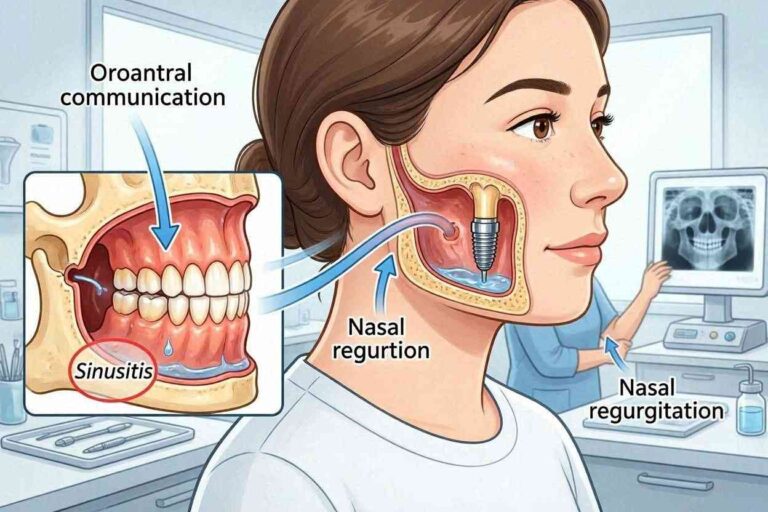
- Sinus perforation (upper jaw implants)
Quote from Dr. Amanda Pierce, prosthodontist: “I have seen patients who paid $800 for an implant overseas. They then paid $6,000 to fix the damage. Cheap can become very expensive.”
Step-by-Step Action Plan: How to Find Cheap or Free Dental Implants Today
Do not feel overwhelmed. Follow this sequence.
Step 1 – Assess your case
Do you need one implant or a full mouth? Do you have bone loss? Are your gums healthy? Get a free or low-cost exam first ($50–$150).
Step 2 – Apply for free programs
If you qualify for Give Back a Smile or Dental Lifeline Network, apply immediately. These programs have limited slots.
Step 3 – Contact all dental schools within 200 miles
Call each school’s graduate implant clinic. Ask: “Do you have a waitlist for reduced-cost implants? Can I be screened?”
Step 4 – Search for clinical trials
Use clinicaltrials.gov. Use keywords: “dental implant,” “free dental treatment,” “osseointegration study.”
Step 5 – Get quotes from 3 to 5 local dentists
Tell each one: “I am comparing prices. I can pay cash. What is your best out-of-pocket price for a single implant including the crown?”
Step 6 – Check dental tourism for multiple implants
If you need 4+ implants, travel savings add up quickly. Request virtual consultations from two clinics abroad.
Step 7 – Use a discount plan + payment plan combination
Buy a discount plan for $100. Find a dentist who accepts it. Then use CareCredit for the remaining balance.
Full Mouth Implants on a Budget
Full mouth reconstruction with implants normally costs $20,000 to $40,000 per arch. But there are cheaper configurations.
Implant-Supported Dentures (Overdentures)
Instead of individual implants, you get 2 to 6 implants that snap into a denture. This costs much less.
Price comparison:
- Traditional full mouth implants (All-on-4): $25,000 – $35,000 per arch
- Implant-supported denture (2 implants): $4,000 – $8,000 per arch
Pros: More affordable, easier to clean, less surgery.
Cons: Less stable than fixed implants, removable for cleaning.
Mini Implants
Mini implants are smaller (1.8mm vs. standard 3.5mm). They cost less and require less bone.
Typical price: $500 – $1,500 per mini implant
Best for: Lower denture stabilization, smaller tooth gaps
Caveat: Mini implants are not as durable for heavy chewing. They work best for lighter bite forces.
Government Assistance and Insurance Options
Medicaid and Dental Implants
Medicaid rarely covers dental implants for adults. Some states cover them only if medically necessary (e.g., birth defect, accident, cancer).
States with limited implant coverage for adults: California (Medi-Cal在某些情况下), Minnesota, New York (某些豁免)
Action step: Call your state Medicaid office. Ask: “Does my plan cover implant-supported prostheses for functional chewing?”
VA Dental Benefits
Veterans with 100% service-connected disability receive comprehensive dental care, including implants in some cases. Other veterans may have limited coverage.
What to do: Visit your local VA medical center’s dental clinic. Ask for an evaluation.
Employer-Sponsored Insurance
Most PPO plans cover implants partially. Typical coverage: 50% after a $1,500 yearly maximum. That barely covers one implant.
Strategy: Time your treatment across two calendar years. Start in November, finish in January. Use two annual maximums.
The Honest Timeline: From Consultation to Final Crown
Understanding the timeline helps you budget and plan.
| Phase | What Happens | Typical Cost | Time |
|---|---|---|---|
| 1 | Exam, X-rays, CBCT scan | $150 – $500 | Day 1 |
| 2 | Extraction (if needed) + bone graft | $200 – $800 | Day 1 or 2 |
| 3 | Healing (bone graft integration) | – | 3–6 months |
| 4 | Implant placement surgery | $1,500 – $3,000 | 1 hour |
| 5 | Osseointegration (bone fuses to implant) | – | 3–6 months |
| 6 | Abutment placement | $300 – $600 | 1 visit |
| 7 | Crown fabrication and placement | $1,000 – $2,500 | 2–3 weeks |
Total for one implant in private clinic: $3,150 – $7,400
Total with dental school or discount plan: $1,800 – $3,500
Frequently Asked Questions (FAQ)
1. Can I get free dental implants from the government?
No. The US government does not have a free implant program. Some state programs help low-income residents with dentures, but not implants.
2. Are cheap dental implants safe?
It depends on the provider. Dental schools and reputable international clinics are safe. Unlicensed operators or “pop-up” clinics are dangerous.
3. How can I find dental implants for $500?
You will not find $500 implants in the US from a licensed dentist. In Mexico or Turkey, $500 to $800 is realistic.
4. Does Medicare pay for dental implants?
Original Medicare (Parts A and B) does not cover routine dental care or implants. Some Medicare Advantage plans offer dental benefits, but implant coverage is rare.
5. What is the cheapest way to replace a missing tooth?
The cheapest is a removable partial denture ($300–$800). But it does not prevent bone loss. A dental school implant is the cheapest permanent solution.
6. Can I negotiate with a dentist for free implants?
Free? No. Discounted? Yes. Offer to pay cash, sign a testimonial, or refer three patients. Some dentists offer barter arrangements.
7. How long do cheap implants last?
A properly placed implant from any source (even cheap) lasts 20+ years if you maintain oral hygiene. The crown may need replacement after 10–15 years.
8. What if I don’t have enough bone for implants?
You need a bone graft. This adds $300–$1,500 per site. Dental schools often include grafting in their package price.
9. Are there clinical trials for dental implants right now?
Yes. Search clinicaltrials.gov. Filter by “recruiting” and “United States.” Contact the research coordinator directly.
10. What is the success rate of low-cost implants?
Over 95% for implants placed in dental schools or by experienced surgeons. The same as private clinics. The price does not determine success; the provider’s skill does.
Additional Resources
For a deeper dive into verified low-cost dental clinics and implant grant programs, visit the National Association of Free & Charitable Clinics (NAFC) patient resource page.
👉 Click here for the NAFC Find a Clinic tool – This free directory helps you locate sliding scale and charitable dental services by zip code.
Conclusion: Your Path to an Affordable Smile
Cheap or free dental implants are not a myth, but they require effort. Free implants exist through charity programs and clinical trials. Cheap implants are widely available via dental schools, tourism, discount plans, and negotiation. Avoid unrealistic offers. Prioritize safety over savings. Start with your nearest dental school today.