Who Is Responsible For Dental Implant Failure
You made a significant investment in your smile. You went through the surgery, the healing period, and finally, you received your beautiful new tooth. Then, the unthinkable happens: the implant starts to feel loose, or an infection appears around the gum line. You are facing a dental implant failure.
It is frustrating. It is painful. And the first question that pops into your mind is almost always, “Whose fault is this?”
The honest answer is rarely simple. Dental implant failure is often the result of a chain of events, not a single moment of carelessness. Responsibility can fall on multiple shoulders: the surgeon, the restorative dentist, the laboratory technician, or even the patient’s own body and habits.
Let us take a calm, realistic walk through each possibility. Our goal is not to assign blame but to help you understand the factors so you can make better choices and, hopefully, avoid failure altogether.
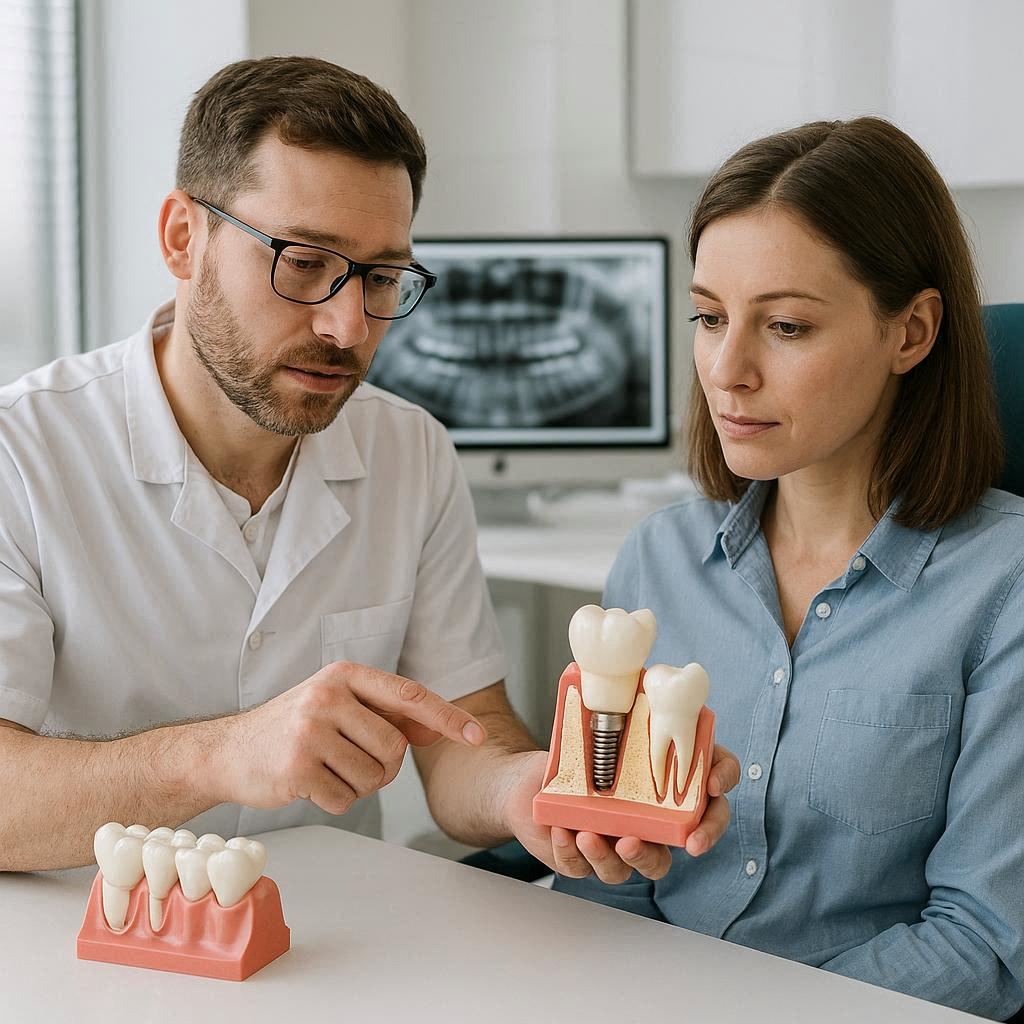
Understanding the Two Faces of Implant Failure
Before we discuss responsibility, we need to understand that implant failure comes in two distinct forms. Each has its own set of causes.
Early Failure: The First Few Months
Early failure happens within the first three to six months after implant placement, often before the final crown is even attached. This is usually a biological problem. The bone simply refused to fuse with the titanium implant—a process called osseointegration.
Think of it like planting a tree. If the roots never take hold in the soil, the tree will fall over regardless of how beautiful its branches are. Early failure is dramatic and discouraging, but it often has clear medical or surgical causes.
Late Failure: Years After Success
Late failure occurs after the implant has successfully integrated and has been supporting a crown, bridge, or denture for a year or longer. This is often a slow, creeping process. It might start with minor gum bleeding, then progress to bone loss around the implant.
Late failure is like a tree that grew well for five years but is now dying because the soil is eroding. This type of failure is frequently linked to maintenance issues, bite problems, or gradual overloading.
The Surgical Team: Where Precision Begins
The oral surgeon or periodontist who places the implant into your jawbone carries a heavy load of responsibility. Their skill directly sets the stage for success or failure.
Incorrect Positioning
Placing an implant is not like drilling a hole in a wall. It is three-dimensional neurosurgery. The surgeon must consider bone density, nerve pathways, and the position of neighboring teeth. If the implant is placed too close to another tooth root, it can damage that tooth. More critically, if it is placed at the wrong angle, the final crown will not fit properly, leading to excessive chewing forces that destroy the bone around the implant.
A surgeon who fails to order or correctly read a 3D CBCT scan before surgery is already behind the curve. That scan shows exactly where the bone is thick or thin. Skipping it is a preventable error.
Overheating the Bone
This sounds technical, but the concept is simple. When the surgeon drills the hole for the implant, friction creates heat. Bone cells are extremely sensitive. If the temperature rises above 47 degrees Celsius (about 117 degrees Fahrenheit) for more than one minute, those cells die. Dead bone cannot fuse to titanium.
A careful surgeon uses sharp drills, a slow drilling speed, and constant saline irrigation to keep the area cool. Rushing this step is a direct cause of early failure, and that responsibility sits squarely with the clinician.
Contamination of the Implant Site
Imagine trying to plant a seed in dirty soil. It might grow, but the odds are against it. The same applies to dental implants. If the implant touches a drop of saliva during placement, or if the surgical instruments are not perfectly sterile, your body may reject the implant as a foreign invader.
In rare cases, the implant itself can be contaminated from the manufacturer. However, most contamination happens in the operating room. Proper draping, sterile gloves, and a disciplined team are non-negotiable.
Insufficient Bone Assessment
Some patients simply do not have enough bone height or width to support an implant. A responsible surgeon will tell you this before surgery. They may recommend a bone graft first, which adds months to the treatment time but hugely increases the chance of success.
A less scrupulous or overly optimistic surgeon might place an implant in marginal bone, hoping for the best. When that implant fails three months later, the surgeon’s judgment—not your biology—is the primary factor.
Key responsibility of the surgeon: Providing a truthful pre-operative assessment and executing a technically flawless placement.
The Restorative Dentist: Connecting Implant to Tooth
In many cases, the surgeon places the implant, but a different dentist—your general dentist—attaches the final crown, bridge, or denture. This person is called the restorative dentist. Their role is just as critical.
Poorly Fitted Crowns
The connection between the implant and the crown is a mechanical interface. If that crown is even half a millimeter too high, it will hit the opposing tooth with every bite. That extra force travels down the implant and into the bone. Over months, the bone responds by resorbing (melting away). This is called peri-implantitis, and it is the leading cause of late failure.
A skilled restorative dentist uses a plastic or metal part called an abutment to create a precise connection. They use bite registration paper to check your occlusion. If they skip these steps, they are gambling with your implant.
Using Incompatible Components
Dental implants come from many different manufacturers: Straumann, Nobel Biocare, Zimmer, Implant Direct, and dozens more. The parts are not universally compatible. A crown made for a Straumann implant will not fit a Nobel implant correctly.
An ethical dentist orders the correct components from the original manufacturer or from a reputable third-party producer who guarantees fit. A lazy dentist tries to force a generic part to work. That “almost fit” creates micro-movements, which prevent osseointegration and invite bacterial leakage.
Neglecting the Temporary Phase
Between implant placement and the final crown, you will wear a temporary restoration. Some dentists skip this entirely and leave a healing cap exposed. That is fine for back teeth. But for a front tooth, a poorly designed temporary can push on the healing gum, shaping it incorrectly. When the final crown arrives, it does not seal against the gum properly, leaving a gap where bacteria thrive.
Key responsibility of the restorative dentist: Creating a passive, accurate, and clean connection between the implant and your bite.
The Dental Laboratory: The Invisible Partner
You never meet the dental lab technician. They work behind the scenes. But their craftsmanship can make or break your implant.
Inaccurate Impressions
To make your crown, the dentist takes an impression (a mold) of your implant and sends it to the lab. If that impression distorts—because the material was mixed wrong or the tray bent—the lab will fabricate a crown that fits the distorted mold, not your actual mouth. The dentist cannot see this error until they try to seat the crown in your mouth.
A good lab will reject poor impressions and ask for new ones. A mediocre lab will “make it work” by grinding the crown to fit, compromising its strength and precision.
Improper Material Selection
Your implant crown must withstand hundreds of pounds of biting force. A lab that uses cheap acrylic or weak porcelain is setting you up for fracture. When the crown breaks, the implant below is suddenly unprotected. You might not notice a small crack, but bacteria will find it.
A reputable lab uses milled zirconia or high-grade lithium disilicate for posterior implants. They stand behind their work with a warranty.
Key responsibility of the laboratory: Delivering a passive-fitting, biomechanically sound restoration that matches the doctor’s prescription.
The Patient’s Role: What You Control
It is uncomfortable to consider that you might be partially responsible for your own implant failure. But your daily habits and health choices play a massive role in long-term success.
Poor Oral Hygiene
An implant is not a natural tooth. It has no ligament to sense pressure or fight infection. But it does have a gum collar around it. If you do not brush and floss that collar daily, plaque accumulates. That plaque turns into calculus, which inflames the gums. That inflammation leads to bone loss.
This is not a judgment. Life gets busy. But here is the truth: implants require more hygiene than natural teeth. You need special brushes, possibly a water flosser, and professional cleanings every three to four months instead of every six months. Skipping this routine is the number one patient-driven cause of failure.
Smoking and Tobacco Use
Nicotine constricts your blood vessels. Your bone and gums need robust blood flow to heal and to fight infection. A smoker’s implant failure rate is roughly double that of a non-smoker. This is not an opinion; it is a statistical fact.
If you smoke and your implant fails, you cannot solely blame the surgeon. You were warned. You signed a consent form that mentioned smoking as a risk factor. Taking responsibility means either quitting or accepting the elevated risk.
Unmanaged Bruxism (Teeth Grinding)
Do you wake up with a sore jaw or flattened teeth? You likely grind your teeth at night. Grinding generates forces up to six times greater than normal chewing. An implant has no shock absorber. That force transfers directly into the bone, causing microfractures that accumulate into complete failure.
A responsible patient discloses this habit to the dentist. A responsible dentist provides a nightguard. If neither happens, the failure is shared.
Ignoring Warning Signs
Your body sends signals. Bleeding gums. A funny taste. Slight mobility. Pain when biting. Too many patients ignore these signs, hoping they will go away. They do not go away. They get worse.
The moment you notice something unusual, call your dentist. Early intervention—a deep cleaning, an antibiotic course, or an occlusal adjustment—can save a failing implant. Waiting three months transforms a salvageable situation into a lost cause.
Key responsibility of the patient: Maintaining meticulous hygiene, disclosing medical history honestly, and seeking help at the first sign of trouble.
Systemic and Biological Factors: No One’s Fault
Sometimes, no one is to blame. Your body simply refuses to cooperate. These are called biological complications, and they fall into the category of “informed risk.”
Uncontrolled Diabetes
High blood sugar impairs healing and fuels infection. A diabetic patient with well-controlled A1c levels (below 7%) has implant success rates similar to a non-diabetic. But if your A1c is 9% or higher, your body cannot mount an effective healing response. The implant will likely fail, and it is not the surgeon’s fault—provided they warned you and you proceeded anyway.
Autoimmune Conditions
Conditions like lupus, rheumatoid arthritis, or Sjögren’s syndrome alter your immune system. Your body may attack the implant as a foreign object, or you may simply heal too slowly. A skilled rheumatologist can help optimize your medications before implant surgery, but some risk remains unavoidable.
Medications That Sabotage Healing
Bisphosphonates (Fosamax, Actonel, Boniva) used for osteoporosis are notorious for causing medication-related osteonecrosis of the jaw (MRONJ). In simple terms, your jawbone loses its ability to heal after any injury, including an implant placement. The bone can literally die and crumble away.
This is a known risk. A responsible dentist will ask about these medications and may refuse to place implants if you have taken IV bisphosphonates for cancer. For oral bisphosphonates, a drug holiday may be recommended. If the dentist proceeds without this conversation, they assume a large share of responsibility.
Unexplained Foreign Body Reaction
In a small percentage of patients (less than 1%), the immune system rejects titanium. This is not an allergy in the traditional sense (true titanium allergy is vanishingly rare). It is a frustration of the healing process. The body forms a fibrous scar tissue around the implant instead of bone. No one can predict this. No test reliably screens for it. It is simply bad luck.
Key takeaway: Some failures are tragedies, not malpractice. The responsible clinician discloses these risks upfront.
Comparative Table: Responsibility by Failure Type
| Failure Scenario | Surgeon Responsibility | Restorative Dentist | Patient Responsibility | Biological Bad Luck |
|---|---|---|---|---|
| Implant placed in insufficient bone | High | None | Low | None |
| Poor hygiene leading to bone loss | None | Low | High | None |
| Crown too high, causing overload | Low | High | None | Low |
| Smoker with early failure | None (if warned) | None | High | None |
| Unexplained foreign body reaction | None | None | None | High |
| Contaminated implant from surgery | High | None | None | None |
| Uncontrolled diabetic with failure | Low (if warned) | None | Medium | Medium |
| Poor lab impression leading to misfit | None | Medium | None | None |
When Is the Dentist Legally Responsible?
You are not here for legal advice, but it helps to know what constitutes genuine negligence versus bad outcome.
Failure to Obtain Informed Consent
Before any implant procedure, you should sign a document listing all risks: infection, nerve damage, failure, and the need for future maintenance. If your dentist never discussed these risks and your implant fails, they may be responsible for not giving you the chance to make an informed decision.
Obvious Surgical Errors
Damage to the inferior alveolar nerve (causing permanent lip numbness) is a known risk. But placing an implant directly into the nerve canal despite clear CBCT evidence is negligence. Similarly, perforating the sinus cavity without proper grafting is below the standard of care.
Abandonment After Failure
Dentists are not required to guarantee implant success. But they are required to offer reasonable follow-up care. If your implant fails and your dentist refuses to see you, blames you entirely without investigation, or will not discuss revision options, that is abandonment. It is both unethical and legally problematic.
What Can You Do to Protect Yourself?
Rather than obsessing over blame after a failure, focus on prevention. Here is a simple checklist before you commit to any implant.
- Ask for the CBCT scan. If your dentist says X-rays are enough, find another provider. 3D imaging is the standard of care.
- Request a treatment plan in writing. It should mention bone grafting if needed, the implant brand, and the expected timeline.
- Disclose everything. Smoking, grinding, diabetes, bisphosphonates, and especially any history of head and neck radiation.
- Meet the restorative dentist. If the surgeon is different from the dentist making your crown, ensure they have a collaborative relationship.
- Get it in writing about maintenance. Ask: “How often will I need professional cleanings on this implant?” The correct answer is every three to four months.
Realistic Success Rates and Honest Expectations
Let us ground this conversation in numbers. Dental implant success rates are actually very high when conditions are ideal.
- Healthy non-smoker with good bone: 95-98% success over 10 years.
- Controlled diabetic or former smoker: 90-95% success.
- Current heavy smoker: 80-85% success.
- Bruxer without nightguard: 70-80% success over 5 years.
- Patient with poor hygiene: 50-60% success over 5 years.
These numbers are not excuses. They are predictions. If you fall into a higher-risk category and your dentist does not adjust their treatment plan (more frequent cleanings, nightguard, antibiotic coverage), then they are not managing your risk properly.
“The most common cause of implant failure is not a single catastrophic error, but the accumulation of small oversights: a slightly loose crown, a slightly crooked placement, a slightly lazy hygiene routine. Responsibility is almost always shared.” — Dr. Elena Vasquez, Prosthodontist.
The Aftermath: What to Do If Your Implant Fails
Do not panic. Do not immediately post a negative review. Follow this sequence.
Step 1: Document everything. Take photos of your gums. Save all your receipts, consent forms, and post-op instructions.
Step 2: Return to the treating dentist. Give them the first chance to diagnose the cause. A good clinician will remove the failed implant, treat any infection, and discuss your options (refund, replacement at reduced cost, or referral).
Step 3: Seek a second opinion. If your dentist blames you entirely and offers no solution, see an independent prosthodontist or a periodontist. Ask for a written report on the probable cause of failure.
Step 4: Understand your financial options. Many implant manufacturers offer a warranty (5 years to lifetime) on the implant component itself. Some dentists include a free replacement within one year. Read your paperwork.
Step 5: Decide on a revision. In most cases, a failed implant can be replaced after a healing period of 3-6 months. The new implant often succeeds, especially if the original cause has been corrected (e.g., you quit smoking or started wearing a nightguard).
Frequently Asked Questions (FAQ)
1. Can I sue my dentist if my dental implant fails?
Not automatically. Failure alone is not malpractice. You would need to prove that your dentist deviated from the standard of care—for example, placing an implant without a CBCT scan or ignoring obvious signs of infection. Most implant failures are not legally actionable. Consult a medical malpractice attorney if you suspect gross negligence.
2. Will my insurance cover a failed implant?
Typically, no. Most dental insurance plans treat implant placement as a single procedure. If it fails, they consider that a new procedure, not a warranty repair. Some plans offer a one-time replacement benefit. You need to read your policy carefully. Medical insurance rarely covers dental implant failure unless it is linked to a covered condition like jaw reconstruction after trauma.
3. How common is it for an implant to fail completely?
Complete failure (implant removal) occurs in roughly 2-5% of cases within the first year. Late failure adds another 1-2% per year thereafter. In other words, the vast majority of implants—over 90%—are still functioning well after a decade.
4. Can a failed implant be replaced in the same spot?
Yes, in most cases. After removing the failed implant, the surgeon will clean the site and often place a bone graft to fill any defect. After 3-6 months of healing, a new implant can be placed. Success rates for replacement implants are slightly lower but still above 85% when the original cause is addressed.
5. Is my dentist responsible for cleaning my implant?
No. You are responsible for daily home care. However, your dentist is responsible for recommending a professional maintenance schedule and performing those cleanings correctly using plastic or carbon-fiber instruments (metal scalers can scratch titanium implants, creating bacterial traps).
6. What is the single biggest patient-controlled risk factor for late failure?
Without question, it is inconsistent hygiene. Plaque accumulation around an implant leads to peri-implantitis, which is the leading cause of late failure. Smoking is a close second.
Additional Resource
For a deeper understanding of how to care for your implants and recognize early warning signs of failure, the American Academy of Periodontology offers a free patient guide titled “Peri-Implant Diseases and Conditions.” You can access it directly here:
➡️ AAP Patient Education on Implant Maintenance (search “Peri-Implant Diseases” on perio.org)
Conclusion
Responsibility for dental implant failure is rarely a single name on a form. The surgeon owns the precision of placement. The restorative dentist owns the fit of the crown. The lab owns the accuracy of the components. And you own the daily hygiene and the decision to seek help early. Some failures belong to biology and bad luck—no one’s fault at all.
The path to a successful implant is a partnership. Choose your team carefully. Follow their instructions faithfully. And if failure still comes, approach it not as a battle of blame, but as a problem to solve, together, with honesty and professionalism.
Disclaimer: This article is for informational purposes only and does not constitute medical advice. Always consult with a qualified dental professional for diagnoses and treatment options tailored to your specific health condition.