How Much Do Dental Implants Cost? A Realistic Guide for 2026
If you are missing a tooth—or several teeth—you have probably asked yourself one question more than any other: how much do dental implants cost?
It makes sense. Dental implants are a big investment. Unlike a bridge or dentures, implants are surgery. They involve titanium posts, bone healing, and custom crowns. Costs vary wildly from one clinic to another. You might see ads for $1,500 implants next to quotes for $6,000 for the exact same tooth.
This article will give you a realistic, honest, and up-to-date breakdown. No hidden catches. No fake lowball prices. Just clear numbers, smart tips, and a few important warnings.
By the end, you will know exactly what affects the price, how to compare quotes, and whether implants are the right choice for your budget.
Why Does the Price of Dental Implants Vary So Much?
Let us start with a simple truth. Dental implants are not a single product. They are a multi-step medical procedure. Every step has its own cost.
You are paying for:
- The surgeon’s time and skill.
- The implant post (usually titanium or zirconia).
- The abutment (connector piece).
- The final crown (the visible tooth).
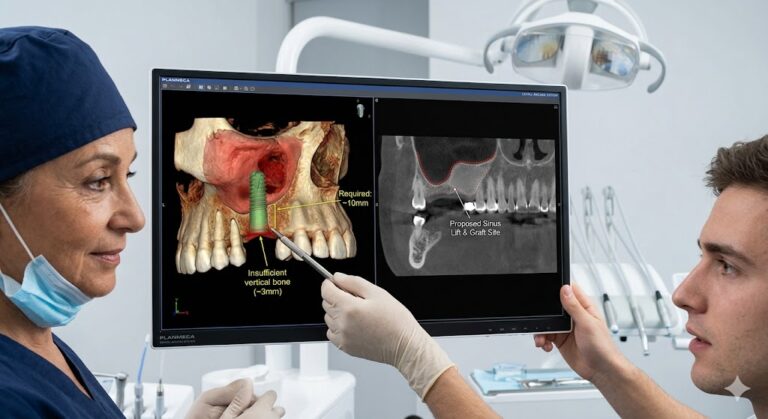
- Imaging like CBCT scans (3D X-rays).
- Anesthesia (local or IV sedation).
- Temporary teeth while you heal.
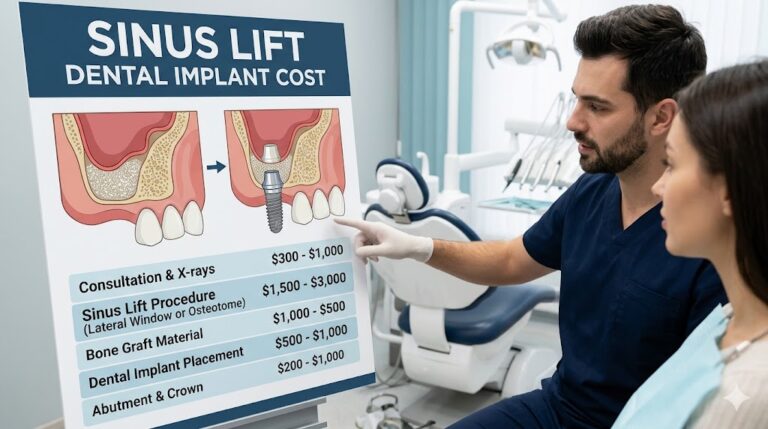
- Any extra procedures (bone graft, sinus lift).
Different patients need different combinations of these items. That is why a simple implant in healthy bone is much cheaper than a complex case with bone loss.
Important Note: If a price sounds too good to be true—like $999 for a complete implant—read the fine print. It often excludes the crown, the abutment, or the surgical fee. Always ask for a “total out-of-pocket” estimate.
Average Cost of Dental Implants in the United States (2026)
Prices below are national averages based on real patient reports, dental fee surveys, and cost databases. Your local prices may be higher or lower depending on where you live.
| Procedure | Average Cost (Without Insurance) |
|---|---|
| Single implant (post + abutment + crown) | $3,000 – $6,000 |
| Implant-supported bridge (3–4 units) | $6,000 – $12,000 |
| Full arch fixed implant bridge (All-on-4, one arch) | $15,000 – $30,000 |
| Full mouth implants (both arches) | $30,000 – $60,000 |
| Snap-on dentures with 2–4 implants (per arch) | $7,000 – $15,000 |
| Bone graft (small, per site) | $300 – $800 |
| Sinus lift (one side) | $1,500 – $3,000 |
| CBCT scan | $250 – $500 |
| Extraction of remaining tooth | $150 – $400 |
These ranges are for standard private practice fees in medium to large cities. Rural clinics or dental schools may charge less. High-cost areas (NYC, LA, Boston) often sit at the higher end.
Single Tooth Implant: Realistic Breakdown
A single missing tooth is the most straightforward case. Here is what a typical $4,500 implant might include:
- Consultation and CBCT scan – $350
- Extraction (if needed) – $250
- Implant post placement – $1,800
- Healing abutment – $300
- Final crown fabrication and placement – $1,800
Total = $4,500. If you need a bone graft, add another $500–$800.
Some clinics bundle everything into one flat fee. Others itemize. Always ask: “Does this quote cover the final crown?” Many lower quotes stop at the implant post.
Full Mouth Implants: Why They Reach $60,000+
Replacing all your teeth with implants is complex. You are not buying 28 individual implants. Instead, most patients receive 4 to 8 implants per arch, which support a fixed bridge or removable denture.
All-on-4 (one arch) typical costs:
- 4 titanium implants – $6,000 – $10,000
- Fixed acrylic hybrid bridge – $7,000 – $12,000
- Surgical guides and planning – $1,000 – $2,000
- Temporary prosthesis during healing – $1,500 – $3,000
That adds up to roughly $15,000 – $27,000 for one arch. Two arches double the price, but many dentists offer a small discount for full mouth work ($30,000 – $50,000 total).
Why not do 14 implants per arch? Overkill. Most jaws cannot support that many implants, and it drives the price above $80,000 without real benefit.
Hidden Costs You Need to Know About
Even honest dentists sometimes forget to mention these extras. Do not be caught off guard.
- Failed implant removal – If an implant does not fuse with bone (rare, 2–5% of cases), removal costs $500 – $1,000.
- New crown for a failed implant – If your crown was made for a specific implant brand that is no longer available, you may need a new crown ($1,500+).
- Relining snap-on dentures – Over years, your gums change. Relining costs $300 – $600 every 2–5 years.
- Surgical guide fabrication – Some dentists use 3D-printed guides for accuracy. This can add $500 – $1,500.
- Travel and parking – Multiple visits mean multiple costs. For full mouth implants, plan for 5–10 appointments.
Reader Tip: Ask your dentist for a “treatment plan with all contingencies.” A good clinic will list “possible additional procedures” and their costs before you start.
Dental Implant Prices by Country (For Medical Tourists)
Traveling abroad for implants is popular. You can save 50–70%, but you also take on risks. Here are real average prices (post + abutment + crown, one tooth).
| Country | Average Cost (USD) | Typical Healing Time On-Site |
|---|---|---|
| Mexico (border cities) | $900 – $1,800 | 1–2 weeks |
| Costa Rica | $1,000 – $1,800 | 1–2 weeks |
| Colombia | $1,200 – $2,000 | 1–2 weeks |
| Thailand | $1,500 – $2,500 | 2–3 weeks |
| Turkey | $800 – $1,500 | 1–2 weeks |
| Hungary | $1,200 – $2,000 | 1–2 weeks |
| Spain | $2,000 – $3,000 | 2 visits total |
| United States | $3,000 – $6,000 | N/A |
Risks to consider:
- No long-term follow-up if complications arise at home.
- Different implant brands (harder to find repair parts locally).
- Language barriers.
- Travel costs for multiple visits (implant placement + crown delivery).
If you choose medical tourism, pick a clinic with international accreditation (JCI or similar) and request digital records (X-rays, surgical reports) you can give to a local dentist.
Does Insurance Cover Dental Implants?
Most standard dental insurance plans do not cover implants. They call them “cosmetic” or “elective.” However, things are slowly changing.
What insurance might pay for:
- Extraction of a damaged tooth (50–80%).
- Bone graft if done for medical reasons (rare).
- Crown on an implant (some PPO plans, 50% after deductible).
- Part of an implant-supported denture (a few Delta Dental plans).
What insurance will not pay for:
- The implant post itself.
- The abutment.
- Sedation or CBCT scan.
A growing number of plans offer an “implant rider” or “enhanced benefits.” Call your insurer and ask: “Does my policy have any coverage for code D6010 (surgical placement of implant body)?”
Average out-of-pocket with “good” insurance:
- Single implant: $2,500 – $5,000 out of pocket (insurance saves $500 – $1,000).
- Full arch: $12,000 – $25,000 out of pocket.
Better alternative: Look into dental discount plans (not insurance). Plans like Careington or Aetna Dental Access reduce implant fees by 20–30% at participating dentists. No waiting periods.
Financing Options: How Real People Pay for Implants
Few people have $5,000 or $50,000 in cash. Here is how most patients actually afford implants.
- CareCredit – Medical credit card. 6, 12, or 18 months interest-free if paid in full. High interest after that.
- Alphaeon Credit – Similar to CareCredit, often longer zero-interest periods (up to 24 months).
- In-house payment plans – Some clinics offer monthly payments directly (no credit check). Rare, but worth asking.
- Dental schools – 30–50% less than private practice. Students work under supervision. Longer appointments, but high-quality care.
- 401(k) loan – Borrow from yourself. You pay yourself back with interest. No credit approval.
- Medical FSA/HSA – Tax-free dollars. You can use these for implants, bone grafts, and even travel to a clinic.
Warning: Avoid “$99 down” implant clinics that use aggressive third-party lenders with 20–30% APR. Always read the interest rate before signing.
Dental Implants vs. Alternatives: Cost Comparison
Not everyone needs implants. Sometimes a cheaper option works perfectly well.
| Option | Average Cost | Lifespan | Pros | Cons |
|---|---|---|---|---|
| Single dental implant | $3,000 – $6,000 | 20+ years | No damage to adjacent teeth | Expensive upfront |
| Traditional bridge | $2,000 – $5,000 | 7–15 years | Faster (3 visits) | Requires shaving healthy teeth |
| Removable partial denture | $700 – $1,800 | 5–8 years | Cheap, no surgery | Can feel bulky |
| Full implant arch (All-on-4) | $15,000 – $30,000 | 20+ years | Fixed, like natural teeth | High cost |
| Conventional full denture | $1,000 – $3,000 | 5–10 years | Most affordable | Movement, bone loss over time |
| Implant snap-on denture | $7,000 – $15,000 | 10–15 years | Stable, easy to clean | Clips may wear out |
A quote from a real prosthodontist:
“I tell patients: an implant is a luxury, not a necessity. If you can afford it and you have good bone, it is the best option. If money is tight, a bridge or good denture will still let you eat and smile. Do not go into debt you cannot handle.”
— Dr. Elena M., DDS, MS (Prosthodontics)
How to Get the Lowest Honest Price for Dental Implants
You can reduce costs without sacrificing safety. Here is how.
- Visit a dental school – Major universities have implant clinics. Prices are 40–60% lower. Wait times may be longer, but work is rigorously checked.
- Ask for a multi-tooth discount – Need two or three implants? Many offices discount 10–15% on the second and third posts.
- Choose a different crown material – Zirconia crowns look great but cost more. High-noble metal crowns (gold alloy) last longer and cost less.
- Skip sedation – Local anesthetic only is safe for most patients. IV sedation adds $500 – $1,000.
- Compare three quotes – Prices vary by thousands. Get an itemized treatment plan from an oral surgeon, a periodontist, and a general dentist.
- Consider immediate loading – Some cases allow a temporary crown on the same day. This reduces one surgical visit, saving $500–$1,000.
Red Flags: When to Walk Away from a “Cheap” Implant
Low prices can be real. But some cheap offers hide serious risks.
Walk away if the dentist says:
- “No X-rays needed” – Impossible. You need CBCT to see nerves and bone.
- *“Same-day full mouth implants for $9,999”* – Not possible without cutting major corners.
- “We only use mystery brand implants from overseas” – No traceability. If it fails, no replacement parts.
- “No bone graft needed” – On a patient with clear bone loss? Dangerous.
- “Pay now, we will schedule later” – High pressure sales. Legit clinics do not push.
Also avoid clinics that refuse to give a written treatment plan before payment. If they will not put it on paper, they will not honor it later.
Long-Term Value: Are Dental Implants Worth the Cost?
Yes, for the right patient.
A $4,500 single implant that lasts 25 years costs $180 per year. A $2,500 bridge that lasts 10 years costs $250 per year. Over decades, the implant is actually cheaper.
Moreover, implants preserve bone. Missing teeth cause the jawbone to melt away. Bridges and dentures accelerate this loss. Implants stop it.
But implants are not for everyone:
- Heavy smokers (failure rate doubles).
- Uncontrolled diabetes.
- Active gum disease (must be treated first).
- People who grind their teeth severely (bruxism).
- Patients who cannot commit to 4–9 months of healing.
If you fall into any of these groups, you might still qualify, but expect higher risk and possibly higher costs (night guards, extra follow-ups).
Frequently Asked Questions (FAQ)
1. How much do dental implants cost with insurance?
With a good PPO plan, a single implant typically costs $2,500 – $4,500 out-of-pocket. Insurance may cover the crown (50%) and extraction (80%), but rarely the implant post.
2. How much do dental implants cost for a full mouth?
Full mouth implants (both arches) range from $30,000 to $60,000. The “All-on-4” technique is the most common. Some clinics offer $15,000 per arch, but that is the low end of realistic.
3. Are cheap dental implants safe?
Cheap implants ($1,000 or less) are safe only if done by a trained dentist using FDA-approved brands (Nobel Biocare, Straumann, Zimmer, Hiossen). Avoid unknown “no-name” implants.
4. How long do dental implants last?
With good oral hygiene and regular checkups, implants last 20+ years. The crown may need replacement after 10–15 years of heavy chewing.
5. Can I get dental implants if I have bone loss?
Yes, but you will likely need a bone graft or sinus lift. That adds $500–$3,000 per site. In severe cases, zygomatic implants (using cheekbone) cost $20,000–$30,000 per arch.
6. Do dental implants hurt?
Placement is done under anesthesia. You feel pressure, not pain. Afterward, discomfort is similar to a tooth extraction (manageable with ibuprofen).
7. Why do some dentists charge $8,000 for one implant?
Higher fees usually reflect specialist training (oral surgeon or periodontist), high-cost city, premium materials (zirconia), and included services like IV sedation, temporary crowns, and unlimited follow-ups.
8. Can I negotiate dental implant prices?
Yes. Many private practices will discount 10–15% if you pay in cash or upfront. Ask: “If I pay the full treatment plan today, can you reduce the total by 10%?”
9. What is the cheapest state for dental implants?
Texas, Florida, Arizona, and Ohio generally have lower fees. Dental schools in these states offer the best rates (e.g., UTHealth Houston, Ohio State).
10. How much do dental implants cost in 2026 compared to 2020?
Prices have risen about 15–20% due to inflation and material costs. In 2020, a single implant averaged $3,000–$5,000. Today, it is $3,500–$6,000.
Additional Resource
For unbiased, updated pricing data and patient reviews of implant dentists near you, visit the American Academy of Implant Dentistry (AAID) patient resource page:
👉 https://www.aaid.com/patients/index.html (opens in new tab)
They offer a “Find a Dentist” tool filtered by implant credentials (Associate Fellow, Fellow, or Master). These are the highest levels of training.
Conclusion
Dental implants cost between $3,000 and $6,000 for a single tooth and $30,000 to $60,000 for a full mouth rebuild. Hidden fees like bone grafts and sedation can add thousands, so always ask for an itemized written quote. While expensive upfront, implants often save you money over 20+ years compared to bridges or dentures.
Disclaimer
Disclaimer: This article provides general informational and educational content only. It does not constitute medical or dental advice. Prices, insurance policies, and clinical practices vary by location and provider. Always consult a licensed dentist or oral surgeon in your area for a personal examination and treatment plan. The author and publisher are not responsible for any decisions made based on this content.