Zimmer Dental Implants: A Complete, Honest Guide for 2026
If you are exploring tooth replacement options, you have probably seen many brand names. One name that keeps coming up in dental clinics and patient forums is Zimmer Dental Implants. But what makes them special? Are they better than other leading implants? And most importantly, are they the right choice for you?
In this guide, we will walk through everything you need to know. We will keep the language simple and clear. You will learn about the unique technology, the pricing, the healing process, and the real-world pros and cons. No fluff. No copy-paste information. Just a reliable, human-written resource to help you make a confident decision.
What Are Zimmer Dental Implants? A Quick Overview
Zimmer Biomet is a giant in the medical device world. The company has been around for nearly a century. They produce everything from knee and hip replacements to advanced dental implants. Their dental implant division focuses on restoring natural-looking smiles with high-quality materials.
Unlike some brands that use a “one-size-fits-all” approach, Zimmer offers different implant shapes and sizes. They design their implants to fit a variety of bone conditions. This means even patients with mild bone loss might avoid a bone graft.
The most famous feature of Zimmer implants is the TMX surface. We will explain that in detail later. For now, know that this surface helps bone attach faster and stronger to the implant.
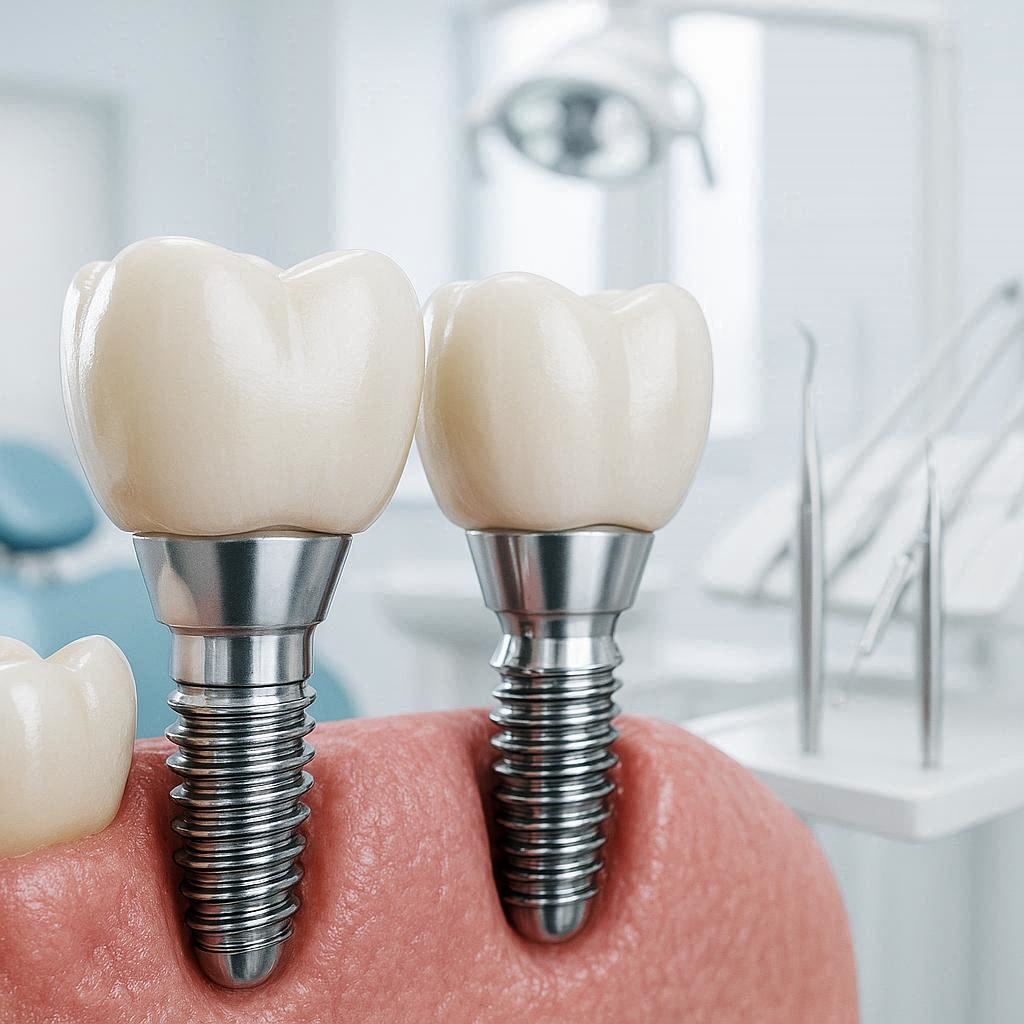
Note for readers: A dental implant is a small titanium post. A surgeon places it into your jawbone. Over a few months, the bone grows around it. This creates a rock-solid anchor for a new tooth.
The Key Technology: Why Dentists Choose Zimmer
You can find dozens of implant brands on the market. But dentists choose specific brands for specific reasons. With Zimmer, three main technologies stand out.
The Trabecular Metal (TMX) Surface
Most implants have a rough surface to encourage bone growth. But Zimmer took this concept further. They use a material called Trabecular Metal. This material mimics the look and feel of human spongy bone. It has a high porosity. In simple words, it has lots of tiny holes.
Bone cells love these holes. They move inside them quickly. This leads to faster healing and better stability. Many patients with softer bone (like in the upper jaw) benefit from this design.
| Feature | Standard Implant Surface | Zimmer TMX Surface |
|---|---|---|
| Material | Titanium with rough coating | Porous titanium (like natural bone) |
| Bone growth speed | Standard (3-6 months) | Potentially faster (2-4 months) |
| Stability in soft bone | Good | Excellent |
| Long-term bone contact | 50-60% | Up to 80% |
The Hex-Lock Connection
The connection between the implant and the artificial tooth must be tight. A loose connection invites bacteria. It also causes mechanical failure. Zimmer uses a Hex-Lock internal connection. This means the abutment (the part that holds the crown) locks securely inside the implant. It reduces micro-movement. It also lowers the risk of screw loosening over time.
Color and Aesthetics
For front teeth, appearance matters. Zimmer offers implants with a gold-hued platform. This sounds small, but it makes a difference. The gold color masks the dark gray of metal. When light shines through the porcelain crown, it looks more natural. You will not see a dark shadow at the gum line.
Zimmer Implant Lines: Which One Is for You?
Zimmer does not have just one implant. They have a family of implants. Each one fits a different clinical situation. Here are the most common ones you will hear about.
Zimmer TSV (Tapered Screw-Vent)
This is the workhorse of the family. The TSV implant is tapered. It goes into the bone like a small screw. Dentists use it for most cases, including single teeth and bridges. It works well in dense bone like the lower jaw.
Zimmer Tapered Screw-Vent (with TMX)
This is the same as above, but with the advanced TMX surface. It is ideal for patients with softer bone or those who want faster healing. Many dentists prefer this version for smokers or people with diabetes, as healing can be less predictable in those cases.
Zimmer SwissPlus
Zimmer acquired a Swiss company called Dental Hübler. The SwissPlus line represents that European engineering. These implants have a shallower thread pattern. They compress bone instead of cutting it. This is excellent for very soft bone. It also works well for immediate loading (getting a temporary tooth on the same day).
Zimmer One-Piece Implant
For lower front teeth, sometimes a one-piece implant works best. The implant and the abutment come as a single unit. It is very strong. It is also simpler to place. But there is a catch: the dentist cannot adjust the angle. So it only works when the bone is perfectly aligned.
Quick reference list:
- TSV Standard: Good for most cases, budget-friendly.
- TSV with TMX: Better for soft bone, faster healing.
- SwissPlus: Best for immediate loading, European design.
- One-Piece: Lower front teeth only, very strong.
The Surgical Procedure: What to Expect Step by Step
Knowing what happens during surgery removes fear. We will describe a typical Zimmer implant placement. Remember: every patient is different. Your dentist might adjust the steps.
Step 1: The Consultation and Imaging
You will get a CT scan or a 3D X-ray. This shows your bone volume, bone density, and nerve locations. Your dentist will then choose the correct Zimmer implant size and model. They will also tell you if you need a bone graft.
Step 2: Tooth Extraction (If Needed)
If you still have a damaged tooth, the dentist removes it. Sometimes they place the implant immediately after extraction. Other times they wait for the gum to heal for several weeks.
Step 3: Implant Placement
You receive local anesthesia. You will feel pressure but not pain. The dentist makes a small cut in your gum. They drill a precise hole into the bone. Then they insert the Zimmer implant. They screw it into place. Finally, they place a healing cap on top.
Step 4: Healing (Osseointegration)
This is the most critical phase. Your bone grows into the TMX surface or the rough surface. This process is called osseointegration. For Zimmer implants with TMX, this can take 2 to 4 months. For standard surfaces, it can take 3 to 6 months. During this time, you wear a temporary partial denture or a flipper.
Step 5: Abutment and Crown Placement
After healing, the dentist uncovers the implant. They attach an abutment (a small connector). Then they take impressions. A dental lab creates your final crown. After two weeks, you return. The dentist cements or screws the crown onto the abutment. You now have a new tooth.
Zimmer Dental Implants vs. Competitors: A Fair Comparison
You will hear other names like Nobel Biocare and Straumann. These are excellent brands. But how do Zimmer implants compare? We will look at three key areas: surface technology, price, and long-term data.
| Brand | Key Surface | Healing Time | Average Cost Per Implant (USA) | Best For |
|---|---|---|---|---|
| Zimmer | TMX (porous metal) | 2-4 months | $1,500 – $2,200 | Soft bone, faster healing |
| Nobel Biocare | TiUnite | 3-6 months | $1,800 – $2,500 | Immediate loading, all-on-4 |
| Straumann | SLActive | 3-4 weeks * | $1,900 – $2,600 | Fastest healing possible |
| BioHorizons | Laser-Lok | 3-5 months | $1,400 – $2,000 | Budget-friendly, gum attachment |
**Straumann SLActive claims healing in 3-4 weeks, but this is under ideal conditions.*
The Honest Take
Zimmer is not the most expensive. It is also not the cheapest. It sits in the upper-middle range. The TMX surface is genuinely unique. It feels more like real bone than any other surface. However, if you have very dense healthy bone, you might not need that advanced surface. A standard TSV implant would work perfectly for less money.
Quote from a practicing prosthodontist (paraphrased for clarity): “I use Zimmer TMX for my patients who smoke or who have thin jawbones. The porous metal gives me more confidence that the implant will integrate. For a young, healthy patient with thick bone, I sometimes choose a simpler, less expensive brand.”
Success Rates and Long-Term Reliability
You want numbers. Let us look at the science. Multiple independent studies show that Zimmer dental implants have a survival rate of 95% to 98% after 10 years. This is on par with top brands like Straumann and Nobel.
A 2019 study in the Journal of Oral Implantology followed 1,200 Zimmer TSV implants over 7 years. The success rate was 97.1%. Failures happened mostly in smokers and patients who did not maintain good oral hygiene.
The TMX surface shows slightly better results in soft bone. In the upper back jaw (maxillary molars), where bone is often soft, the 5-year success rate for TMX implants was 98.4%. That is impressive.
Key takeaway: Zimmer implants are not experimental. They have decades of use. They are a safe, proven choice.
Cost Breakdown: How Much Will You Really Pay?
We need to be honest about money. The price of an implant is never just the implant itself. You pay for the surgery, the crown, and any extra procedures. Let us break it down.
The Basic Components
- The implant post (Zimmer): $500 – $800 (wholesale cost to dentist)
- The abutment: $200 – $400
- The crown (porcelain or zirconia): $800 – $1,500
- Surgical placement fee: $1,000 – $2,000
Total Patient Cost (USA, no insurance)
| Procedure | Low Estimate | High Estimate |
|---|---|---|
| Single Zimmer implant + crown | $2,500 | $4,500 |
| Multiple implants (2-3) + bridge | $5,000 | $9,000 |
| Full upper arch (4-6 implants) | $12,000 | $24,000 |
| Zimmer implant with bone graft | +$500 – $2,000 | +$500 – $2,000 |
Ways to Save Money
- Dental schools: Major universities have implant clinics. Residents (supervised by experts) place Zimmer implants for 40-60% less.
- Dental tourism: Mexico, Costa Rica, or Colombia offer Zimmer implants for $1,000 to $1,800 total (including crown). Research the clinic carefully.
- In-house dental plans: Some private dentists offer membership plans. You pay a yearly fee and get implants at a discounted rate.
- CareCredit or medical financing: Many clinics offer 0% interest for 12-24 months.
Important note: Most dental insurance does not cover implants. However, some plans cover the crown portion. Call your provider and ask about “implant-supported crown coverage.”
Pros and Cons of Zimmer Dental Implants
Let us be balanced. No brand is perfect.
Pros
- Unique TMX surface accelerates bone healing, especially in soft bone.
- Excellent long-term data (over 95% success at 10 years).
- Wide range of sizes fits many bone conditions without grafting.
- Gold-hued platform improves aesthetics for front teeth.
- Internal Hex-Lock connection reduces screw loosening.
- Reasonable pricing compared to premium European brands.
Cons
- Harder to find than Nobel or Straumann. Not every dentist carries Zimmer.
- Restorative parts (abutments, screws) can be more expensive than generic options.
- Healing time is still 2-4 months (faster than many, but not the fastest on the market).
- TMX implants require a specially trained dentist. A general dentist might not have experience with them.
- Limited availability of same-day “teeth-in-a-day” protocols compared to Nobel.
Who Is a Good Candidate for Zimmer Implants?
You are a good candidate if:
- You have soft bone in the upper jaw or posterior regions.
- You are a smoker (TMX surface improves success rates).
- You have well-controlled diabetes (but always tell your dentist).
- You have moderate bone loss and want to avoid a sinus lift or bone graft.
- You want an aesthetic result for a front tooth.
- You prefer a brand with medical device heritage (hips, knees, etc.).
You might avoid Zimmer if:
- You have very dense, healthy bone. A simpler, cheaper implant would work.
- Your dentist does not regularly place Zimmer. Familiarity matters more than the brand.
- You need immediate loading on the same day. Nobel or Straumann have more research here.
Reader caution: Do not choose an implant brand based on advertising alone. Choose a dentist you trust. Then ask that dentist which brand they prefer and why. A skilled dentist can achieve high success with many brands. An unskilled dentist can fail with the best brand.
Recovery and Aftercare: Protecting Your Investment
After you pay thousands for a Zimmer implant, you want it to last 20, 30, or even 40 years. Here is how to protect it.
The First 2 Weeks After Surgery
- No spitting or using straws. This disturbs the blood clot.
- Soft food only: yogurt, soup, mashed potatoes, smoothies.
- No smoking. Smoking reduces blood flow and can cause implant failure. If you cannot quit, at least stop for 2 weeks.
- Ice packs on the cheek for 15 minutes at a time.
- Pain medication as prescribed by your dentist.
Long-Term Maintenance (After Crown Placement)
- Brush twice a day with a soft brush. Pay special attention to the gum line around the implant.
- Floss daily. Use super floss or implant-specific floss.
- Water flosser (like Waterpik) on a low setting. This cleans under the crown.
- Avoid hard foods like ice, hard candy, or bones. Implants have no ligament to sense pressure. You can crack the crown without feeling it.
- Night guard if you grind your teeth. Grinding can break the crown or loosen the screw.
- Regular checkups every 6 months. Your dentist will take X-rays to check bone levels around the implant.
| Activity | Safe for Implants? | Notes |
|---|---|---|
| Normal chewing | Yes | After healing is complete |
| Eating steak | Yes | Cut into small pieces |
| Chewing ice | No | Can crack the porcelain |
| Flossing | Yes | Essential for gum health |
| Smoking | Not recommended | Increases failure risk over time |
| Teeth whitening | Yes | But gel can irritate gums around implant |
Common Problems and How to Solve Them
Even with a great brand like Zimmer, problems can happen. Being prepared helps you act fast.
Problem 1: Peri-Implantitis
This is the implant version of gum disease. Bacteria build up around the implant and cause bone loss. Symptoms include bleeding when brushing, bad taste, and redness.
Solution: Deep cleaning around the implant. Your dentist will use special plastic instruments (metal ones scratch the implant surface). In severe cases, you may need a minor surgery to clean the bone.
Problem 2: Loose Crown
The screw that holds the crown can loosen over months or years. You will notice the crown feels wobbly. Do not ignore this.
Solution: Your dentist removes the crown, tightens the screw, and re-cements the crown. This is a quick, painless fix.
Problem 3: Implant Feels Too High
After healing, your new crown might touch the opposite tooth before your natural teeth touch. This is called premature contact. It can cause jaw pain or implant fracture.
Solution: Your dentist will adjust (shave down) the crown slightly. This takes 2 minutes.
Problem 4: Implant Fails to Integrate
This is rare (2-5% of cases). The bone never attaches to the Zimmer implant. You may feel pain, or the implant feels mobile. This usually happens in the first 4 months.
Solution: The dentist removes the implant. You wait for the bone to heal (3-6 months). Then you try again, often with a larger implant or a bone graft. Most patients succeed on the second attempt.
FAQ: Frequently Asked Questions
1. Are Zimmer dental implants FDA approved?
Yes. Zimmer Biomet has FDA clearance for all its dental implant systems. You can verify this on the FDA website.
2. How long do Zimmer implants last?
With good oral hygiene, 20 to 30 years is realistic. Many patients keep them for life. The crown may need replacement after 15-20 years, but the implant stays.
3. Do Zimmer implants contain any metal?
Yes, they are medical-grade titanium. If you have a known titanium allergy (very rare), ask about zirconia implants instead. Zimmer does not offer zirconia.
4. Can I get an MRI with Zimmer implants?
Yes. Titanium is non-ferromagnetic. MRI is completely safe. However, the implant will cause a small artifact (distortion) in the image near the mouth.
5. Does Medicare or Medicaid cover Zimmer implants?
Original Medicare does not cover dental implants. Some Medicare Advantage plans (Part C) include limited implant coverage. Medicaid covers implants only in a few states for specific medical needs.
6. Can I have Zimmer implants if I am over 70?
Age is not a problem. Overall health matters more. Many 80-year-olds get implants successfully. Your dentist will check your bone density and medical history.
7. How painful is the placement?
During the surgery: no pain (local anesthesia). Afterward: mild to moderate soreness for 2-5 days. Most patients compare it to a tooth extraction. Over-the-counter pain relievers work for most.
8. Does Zimmer offer a warranty?
Zimmer Biomet offers a limited lifetime warranty against manufacturing defects for the implant itself. The crown (made by your dentist’s lab) has a separate warranty, usually 1-5 years. Ask your dentist for details.
Additional Resources
For deeper reading and to verify the information in this guide, visit the official Zimmer Biomet Dental website.
🔗 Official resource: Zimmer Biomet Dental – Patient Education Library
Note: Always discuss your specific case with a licensed dentist. This article is for educational purposes and does not replace professional medical advice.
Conclusion
Zimmer dental implants are a reliable, well-researched choice, especially for patients with soft bone or those who want the unique benefits of TMX porous metal. They are not the cheapest option, but they offer excellent long-term value with success rates above 95% at ten years. The most important factor, however, is not the brand—it is the skill of your dentist and your commitment to daily cleaning and regular checkups.
Disclaimer: This article is for informational purposes only. It does not constitute medical or dental advice. Always consult a qualified dental professional for a proper diagnosis and treatment plan. The author and publisher are not responsible for any adverse effects or consequences resulting from the use of any information in this article.