How to Replace a Missing Tooth Yourself?
Losing a tooth as an adult can feel frustrating. You might feel self-conscious when you smile. You might struggle to chew your favorite foods. And let’s be honest, the thought of expensive dental bills can make anyone feel anxious.
So, you start wondering: can I fix this myself?
You are not alone in asking this question. Thousands of people search for “how to replace a missing tooth yourself” every single month. The internet is full of DIY solutions, from fake teeth bought online to homemade denture kits.
But here is the real question: do those solutions work, or do they create bigger problems?
This guide will give you an honest, realistic answer. You will learn what is possible at home, what you should never try, and how to get a safe, long-lasting solution without breaking the bank.
By the time you finish reading, you will have a clear path forward. No judgment. No confusing medical terms. Just real, helpful information.
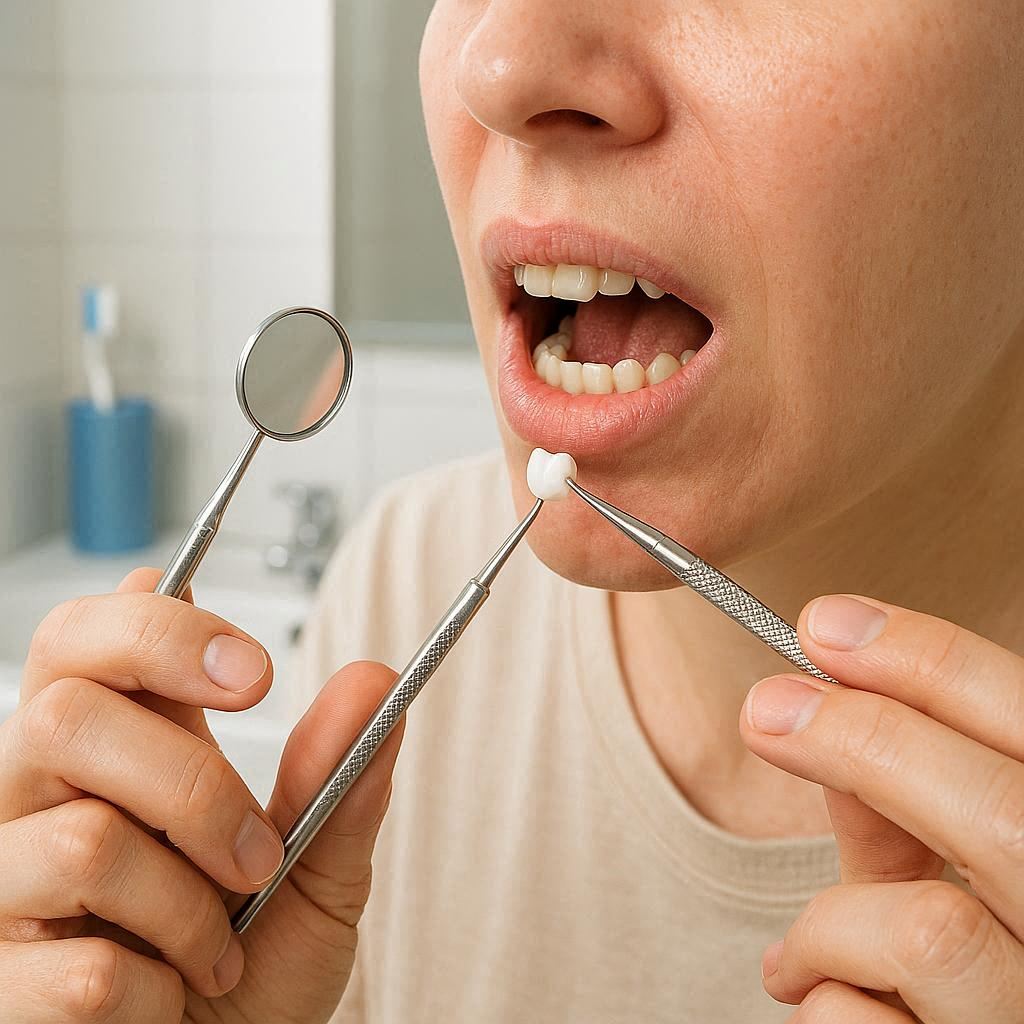
Why People Look for DIY Tooth Replacement (And Why That Makes Sense)
Before we dive into the “how,” let us talk about the “why.” Understanding your motivation helps us find the right solution for you.
The High Cost of Professional Dentistry
Let’s face it: dental care is expensive. A single dental implant can cost between 3,000and6,000. A dental bridge often runs from 2,000to5,000. Even a partial denture can cost $1,500 or more.
When you add in X-rays, consultations, and follow-up visits, the total feels overwhelming. Many people simply do not have that kind of cash sitting around.
Dental Insurance Often Falls Short
You might have dental insurance, but most plans have low annual maximums. The typical plan covers only 1,000to1,500 per year. That barely touches the cost of a single implant.
Plus, many plans have waiting periods for major work. Some exclude implants entirely. You end up paying most of the cost out of pocket anyway.
Fear of the Dentist
Dental anxiety is real. Approximately 36% of people feel some fear of dental visits. About 12% suffer from extreme dental phobia.
The sounds. The needles. The drills. For many, these triggers are enough to avoid the dentist altogether, even when they know they need help.
Embarrassment and Shame
A missing tooth in a visible spot can feel humiliating. You might cover your mouth when you laugh. You might avoid photos. You might even avoid social situations.
This emotional weight pushes people toward any solution that seems quick, cheap, and private. Who wants to explain a missing tooth to a dentist—or anyone else?
The Allure of Quick Fixes Online
A quick search on Amazon or eBay shows dozens of products promising to replace missing teeth at home. Temporary tooth replacement kits. DIY denture molding materials. Snap-on veneers.
These products look convincing. The photos show perfect smiles. The reviews (often fake) promise amazing results. For 30or40, you might think you have found a miracle solution.
Important Note: Feeling tempted by these options does not make you foolish or desperate. It makes you human. Financial pressure, fear, and embarrassment are powerful forces. But the real question is not whether these products exist. The question is whether they actually work safely.
What Happens When You Lose a Tooth? (The Biological Truth)
To understand why DIY tooth replacement is tricky, you need to know what happens inside your mouth after a tooth goes missing. This knowledge will help you make better decisions.
The First Few Weeks
Right after tooth loss, the empty socket begins to heal. Gum tissue grows over the hole. For most people, this healing process feels uncomfortable but manageable.
During this time, the nearby teeth start shifting. They lean into the empty space. Your bite changes, often without you noticing at first.
The First Six Months
Here is where things get serious. The jawbone beneath the missing tooth begins to resorb. This is a fancy way of saying your body reabsorbs the bone tissue.
Why does this happen? Your tooth roots stimulate the jawbone every time you chew. That stimulation tells your body to keep the bone strong and dense. Without a tooth root, your body assumes the bone is not needed.
After six months, you can lose 25% of the bone width in that area. After one year, the loss becomes even more significant.
What Bone Loss Means for You
Bone loss does not just affect your jaw. It changes your entire facial structure. Your cheeks may look sunken. Your lips may appear thinner. Your chin may look more pointed.
This process makes you look older than you are. Many people do not realize that missing teeth cause this effect until it is advanced.
Additionally, bone loss makes future tooth replacement harder. A dental implant needs enough bone to hold it in place. Without that bone, you need expensive bone grafting surgery before you can get an implant.
The Domino Effect on Other Teeth
Your teeth depend on each other for stability. When one goes missing, the neighboring teeth lose support. They tilt into the gap. The opposing tooth (the one above or below the gap) may drift upward or downward out of its socket.
This drifting creates food traps. Food gets stuck between crooked teeth, leading to cavities and gum disease. The shifting also changes your bite, which can cause jaw pain, headaches, and uneven tooth wear.
Key Insight: A missing tooth is not just an aesthetic problem. It is a structural problem. And structural problems rarely have simple, cheap, at-home solutions.
What You Can Actually Do at Home (Honest Self-Care Options)
Now, let us answer the main question honestly. Can you replace a missing tooth yourself? The direct answer is no. Not safely. Not permanently. Not in a way that protects your health.
However, there are several things you can do at home to manage the situation, protect your mouth, and prepare for a professional solution. Let us separate fact from fiction.
What You Should Never Try at Home
Before we discuss safe at-home options, here is a hard rule: never attempt to modify your mouth with non-medical materials.
Do not use:
- Super glue or any household adhesive to stick a fake tooth to your gum or adjacent teeth
- Fishing line or wire to create braces or retainers
- Craft resin or acrylic paint inside your mouth
- Any product not explicitly approved for intraoral use by the FDA or your country’s dental authority
These materials are toxic. They can burn your gums. They can cause severe allergic reactions. They can stick so firmly that a dentist must surgically remove them, damaging healthy teeth in the process.
Warning: Every year, emergency rooms see patients who used super glue to fix a tooth. The results range from chemical burns to swallowed objects to serious infections. Do not become a statistic.
Safe At-Home Actions You Can Take
While you cannot replace a missing tooth yourself, you can take these four actions to protect your mouth and buy time.
1. Maintain Meticulous Oral Hygiene
A missing tooth creates new spaces where food and bacteria hide. Step up your cleaning routine.
- Brush twice daily with fluoride toothpaste
- Floss carefully around the gap
- Use a water flosser to flush out debris
- Consider an antibacterial mouthwash
Clean teeth around the gap stay healthy. Healthy teeth are better candidates for future replacement options.
2. Use a Temporary Cosmetic Solution for Social Situations
Several products can hide a missing tooth for a few hours. These are cosmetic only. They do not restore function or stop bone loss. But they can help you feel confident at a wedding, job interview, or date.
Dental wax or orthodontic wax can fill a small gap temporarily. You roll a small piece into a ball and press it into the space. It looks natural from a distance. You can buy it at any pharmacy for about $5.
Temporary tooth kits (like DenTemp or Tempo) use a moldable plastic material. You heat the beads in hot water, shape them to fit the gap, and let them harden. They last a few days with careful use.
Snap-on smile veneers cover several front teeth. They look like a thin mouthguard. They snap over your existing teeth. Quality ranges wildly, from 30to500.
Important limitations:
- Do not eat hard or sticky foods with these products
- Remove them before sleeping
- Clean them thoroughly after each use
- Do not use the same product for more than a few days in a row
3. Modify Your Diet
While you have a missing tooth, protect your remaining teeth by changing how you eat.
- Cut food into small pieces
- Chew on the opposite side of your mouth
- Avoid sticky candies, hard nuts, and crusty bread
- Skip popcorn (kernels can get stuck in the gap)
- Drink water after every meal to rinse away debris
These changes reduce the risk of food impaction and further damage.
4. Start Saving and Researching
Use your at-home period productively. Research affordable dental options in your area. Call dental schools. Look for community health centers. Start a savings plan, even if you can only put away $20 per week.
Knowledge and money give you options. The more you prepare now, the faster you can act when you find an affordable professional solution.
The DIY Products Marketed for Tooth Replacement (A Critical Review)
Let us examine the most common products sold online for DIY tooth replacement. This section gives you an honest look at what each product claims versus what it actually delivers.
| Product Category | Claimed Benefits | Actual Reality | Safety Rating | Cost Range |
|---|---|---|---|---|
| DIY Denture Kits | “Make professional dentures at home for $50” | Hard, brittle material that cracks easily; poor fit causes sores | Moderate to Dangerous | 30−80 |
| Snap-On Veneers | “Instant smile makeover; no dentist needed” | Bulky, obvious appearance; traps food and bacteria against teeth | Low | 30−500 |
| Moldable Tooth Filler | “Fill gaps and cavities yourself” | Not for missing teeth; only for small chips; can trap decay | Dangerous if misused | 15−40 |
| False Tooth Caps (Flippers) | “Replace any missing tooth; looks completely natural” | Poor fit causes gagging and gum damage; falls out when eating | Moderate | 20−100 |
| Dental Adhesives (OTC) | “Hold loose caps and bridges in place” | Not for creating new restorations; can glue healthy teeth together | Low to Moderate | 8−25 |
Deep Dive: DIY Denture Kits
These kits include molding powder, alginate (a seaweed-based material), and acrylic resin. The instructions tell you to mix the powder with water, press the goop into your mouth to create a mold, then pour acrylic into the dried mold.
The problem: Professional dentures require precise bite registration. They need balanced pressure across all teeth. They need smooth, polished surfaces that do not irritate soft tissue.
DIY versions miss all of these requirements. The resulting denture typically:
- Rubs sores into your gums within hours
- Rocks back and forth when you chew
- Cracks along thin sections
- Absorbs bacteria because the surface is rough
- Looks obviously fake (wrong color, wrong shape, wrong size)
Deep Dive: Snap-On Veneers
These cheap, online-only products have exploded in popularity thanks to social media ads. You see a video of someone covering crooked, gapped, or missing teeth with a single plastic arch.
What they do not show you: Snap-on veneers sit over your existing teeth, not in the missing space. For a missing tooth, the veneer has a blank space that your gum shows through.
The material is usually PETG plastic (the same material as a soda bottle). It is too thick to look natural. It holds bacteria against your teeth, causing cavities. And it can loosen over time, becoming a choking hazard.
Real User Quote: “I bought a snap-on veneer for my two missing front teeth. The first time I ate pizza, the whole thing popped out. I nearly swallowed it. My girlfriend saw my real gap and laughed. Waste of $80.”
Deep Dive: “Flippers” from Online Sellers
A flipper is a removable partial denture for one tooth. Dental offices use them as temporary solutions. Online sellers now offer mail-order flippers.
You take your own impression at home. You mail it to a lab. They send back a finished flipper.
The risks:
- Home impressions almost always have air bubbles or distortions
- A poor impression creates a flipper that does not fit
- A poorly fitting flipper can trap food and cause gum disease
- Without professional adjustment, flippers can damage adjacent teeth
Even professional flippers require multiple adjustments. An online flipper gives you none of that care.
Why Professional Tooth Replacement Is Different (And Worth It)
At this point, you might feel frustrated. You came here hoping for a cheap, easy solution. Instead, you are hearing that professionals do it better.
Let me acknowledge that frustration. It is valid.
But here is the truth: professional dentistry is not expensive because dentists are greedy. It is expensive because replacing a missing tooth correctly is genuinely complex.
What a Dentist Does That You Cannot Do at Home
| Professional Step | Purpose | DIY Equivalent? |
|---|---|---|
| Clinical exam and X-rays | Assess bone health, identify infections, measure space | Impossible |
| Bite analysis | Ensure new tooth does not interfere with jaw movement | Impossible |
| Sterile technique | Prevent life-threatening infections | Impossible at home |
| Material science | Use biocompatible materials that will not trigger allergies or toxicity | No |
| Precision fit | Distribute forces evenly across supporting teeth | No |
| Regular follow-up | Adjust fit as your mouth changes over time | No |
The True Cost of DIY Failure
Let us play out a realistic scenario. You buy a $40 DIY tooth replacement kit. You follow the instructions. For three days, it feels fine.
On day four, you notice a sore spot on your gum. You ignore it. By day seven, the sore has become an open ulcer. Food gets trapped under your DIY appliance. Bacteria multiply.
You develop an infection called periodontal abscess. Your gum swells. The pain becomes severe. You finally visit a dentist.
The dentist must:
- Remove the DIY appliance (10 minutes)
- Drain the abscess (15 minutes)
- Prescribe antibiotics ($25)
- Treat the underlying bone loss caused by the infection (500to2,000)
Your total cost: 575to575to2,065 plus significant pain and wasted time.
The 40kitendedupcostingyouaminimumof575. Plus, you now have less bone to work with for a real replacement.
Financial Reality: Cheaping out on tooth replacement is like cheaping out on a parachute. The upfront savings disappear the moment things go wrong.
Real Professional Solutions for Missing Teeth (With Honest Pricing)
Let us look at actual professional options. These are the only safe, long-term solutions. I will include honest price ranges so you can plan financially.
Option 1: Dental Implant
An implant is a titanium screw placed into your jawbone. It acts as an artificial tooth root. After the bone heals around it (3-6 months), a dentist attaches a crown on top.
Pros:
- Looks and functions like a natural tooth
- Stops bone loss
- Does not affect neighboring teeth
- Lasts 20+ years with good care
Cons:
- Most expensive option
- Requires surgery
- Takes many months to complete
- Requires enough bone volume
Cost range: 3,000−6,000 per tooth
Insurance coverage: Usually 0-50% if any
Option 2: Fixed Dental Bridge
A bridge uses the two teeth next to the gap as anchors. The dentist grinds down those anchor teeth, takes impressions, and creates a three-unit bridge (two crowns + one fake tooth in the middle).
Pros:
- Less expensive than an implant
- Completed in 2-3 weeks
- No surgery
Cons:
- Requires damaging healthy teeth
- Does not stop bone loss
- Harder to clean
- Lasts 10-15 years typically
Cost range: 2,000−5,000 for three units
Insurance coverage: 50-80% after deductible
Option 3: Removable Partial Denture
This is a plastic or metal framework holding one or more fake teeth. It clips onto your remaining teeth. You take it out at night to clean.
Pros:
- Least expensive professional option
- No tooth damage if designed well
- Can replace multiple teeth
- Quick to make (2-4 weeks)
Cons:
- Feels bulky in your mouth
- Can cause gum soreness
- Does not stop bone loss
- May loosen over time
- Less stable than fixed options
Cost range: 1,500−3,000
Insurance coverage: 50-80% typically
Option 4: Resin-Bonded Bridge (Maryland Bridge)
This is a bridge with “wings” that bond to the back of adjacent teeth. It requires minimal grinding.
Pros:
- Least invasive
- Lower cost than full bridge
- Quick procedure
Cons:
- Less durable (bonds often fail)
- Only works for front teeth (low bite force area)
- Not for back teeth
Cost range: 1,500−2,500
Insurance coverage: Varies widely
Comparison Table: Professional Options At a Glance
| Feature | Implant | Fixed Bridge | Partial Denture | Maryland Bridge |
|---|---|---|---|---|
| Cost | $$$$ | $$$ | $$ | $$ |
| Duration of treatment | 6-9 months | 2-4 weeks | 2-4 weeks | 2-4 weeks |
| Stops bone loss | Yes | No | No | No |
| Affects other teeth? | No | Yes | Possibly | Minimal |
| Removable? | No | No | Yes | No |
| Lifespan | 20+ years | 10-15 years | 5-8 years | 5-10 years |
How to Afford Professional Tooth Replacement (Practical Strategies)
Now you know what professional solutions cost. You might still feel stuck. Let me give you actionable strategies to make these treatments affordable.
Strategy 1: Dental Schools
Dental schools need patients for their students to practice on. Supervising faculty dentists check every step.
Typical savings: 50-70% off private practice prices
Example: A 4,000implantmightcost1,500 at a dental school.
Trade-offs: Appointments take 2-3 times longer. You may need more visits. Location may be inconvenient.
How to find one: Search “[your state] dental school clinic” or visit the American Dental Association’s website for accredited schools.
Strategy 2: Community Health Centers
Federally Qualified Health Centers (FQHCs) offer sliding scale fees based on your income. Some have onsite dental clinics.
Typical savings: 30-80% based on income
Example: A 2,000bridgemightcost400 if you qualify for the lowest tier.
How to find one: Search “FQHC dental near me” or call 211 (United Way helpline).
Strategy 3: Dental Discount Plans
These are not insurance. You pay an annual fee (100−150) and get access to negotiated rates. The savings apply immediately with no waiting periods.
Typical savings: 20-40% off standard fees
Example: A 3,000implantmightcost2,100 with a discount plan.
Reputable plans: Careington, Aetna Dental Access, Cigna Savings Plan
Watch out for: Plans with tiny networks or hidden enrollment fees.
Strategy 4: CareCredit and Medical Credit Cards
CareCredit is a healthcare-specific credit card. It offers 6, 12, or 18-month interest-free financing if you pay in full by the deadline.
How it works: Apply online in minutes. Use your credit line immediately. Make monthly payments.
Warning: If you miss the interest-free deadline, you pay deferred interest on the original amount (often 27% APR).
Strategy 5: Crowdfunding
Websites like GoFundMe have medical campaigns. Some people successfully raise money for dental work.
Tips for success:
- Add photos of your missing tooth
- Write honestly about your situation
- Share on social media repeatedly
- Offer small thank-you gifts ($5 coffee card, handwritten note)
Realistic expectation: Most campaigns raise 500−2,000, not the full amount.
Strategy 6: Negotiate with Your Dentist
Many dentists will negotiate, especially if you pay cash upfront.
What to say: “I need a bridge, but my budget is 2,000.Yourpriceis3,000. Can we meet somewhere in the middle if I pay cash today?”
What to expect: Some say no. Many will offer 5-15% off. A few offer payment plans directly.
Maintaining Your Mouth While You Save Money
Let us say you cannot afford any professional solution for six more months. Here is your action plan to keep your mouth healthy during that waiting period.
Monthly Self-Check Protocol
Do this once per month:
- Look at the gap in a mirror. Is the gum red, swollen, or bleeding? Do you see a pimple-like bump?
- Gently press around the gap. Do you feel tenderness?
- Smell your floss after cleaning the gap. Does it have a bad odor (sign of infection)?
- Check the teeth on either side. Do they feel loose?
Red flags: If you see any of these signs, waiting is no longer safe. Find care immediately, even if it means a payment plan or dental school.
Weekly Maintenance Routine
- Brush for two full minutes, paying extra attention to the gap edges
- Floss both sides of the gap daily
- Water floss to remove debris from the gap floor
- Rinse with warm salt water (one teaspoon salt in one cup water) twice per week
- Avoid chewing on that side entirely
When to Stop Waiting and Act Now
Do not delay professional care if you experience:
- Spontaneous tooth pain (without chewing)
- Swelling in your face or neck
- Fever over 101°F (38.3°C)
- Bad taste in your mouth that does not go away
- A loose tooth near the gap
These symptoms indicate infection. Untreated dental infections can spread to your bloodstream (sepsis) or brain. Both are life-threatening. A 200emergencyvisitischeaperthana50,000 ICU stay.
Frequently Asked Questions (FAQ)
Q1: Can I buy a single false tooth online and just put it in myself?
No. A fake tooth needs something to hold it in place. Without a proper retainer, bridge, or implant, it will fall out immediately. You could choke on it.
Q2: Is there any safe temporary tooth replacement I can make at home?
Dental wax or temporary tooth kits (like DenTemp) are safe for cosmetic use for a few hours. Do not eat with them. Do not sleep in them. Do not use them for more than three days straight.
Q3: What happens if I just leave the gap empty?
Your other teeth will shift. Your jawbone will shrink. Your face may change shape. You may develop bite problems, headaches, and TMJ pain. The gap will also collect food, increasing cavity risk in adjacent teeth.
Q4: How long can I safely wait to replace a missing tooth?
For best results, replace it within 3-6 months. After one year, bone loss makes implants more difficult and expensive. That said, waiting is safer than attempting a dangerous DIY fix.
Q5: Can I use my child’s lost baby tooth to fill my adult gap?
Absolutely not. A baby tooth is much smaller than an adult tooth. It will not stay in place. It will rot (baby teeth are not meant for adult mouths). This is extremely unhygienic.
Q6: Are those TV-advertised “as seen on TV” tooth replacement kits any good?
No. Every single one of them has received warning letters from the FDA or the FTC for false advertising. They use actors with natural smiles, not real customers. They are a waste of money at best and dangerous at worst.
Q7: Can a dentist refuse to treat me if I tried a DIY kit?
No ethical dentist will refuse to treat you. However, they may need to first fix damage caused by the DIY attempt. This adds time and cost to your treatment.
Q8: What is the absolute cheapest way to replace a missing tooth professionally?
A removable partial denture from a dental school. Expect to pay 500−800 at many dental schools. Call ahead to confirm pricing.
Q9: Does insurance cover any at-home tooth replacement products?
No. Dental insurance only covers treatments performed by licensed professionals.
Q10: I lost a tooth yesterday. What should I do in the next 24 hours?
Do not try to put it back yourself unless it is a clean, whole tooth. If it is a whole tooth, rinse it gently with milk or saline (not water) and try to reinsert it. Hold it in place with clean gauze. Go to an emergency dentist immediately. Time matters for reimplantation success.
Additional Resources
Link: Find a Federally Qualified Health Center Near You
This official government tool helps you locate community health centers with sliding scale dental fees.
Other helpful resources:
- American Dental Association: MouthHealthy.org
- Dental Lifeline Network (free care for elderly, disabled, medically fragile)
- Your state’s dental association (often has referral lists for low-cost care)
Conclusion
You cannot safely replace a missing tooth yourself at home. DIY kits, snap-on veneers, and online flippers create more harm than good. They cause infections, damage healthy teeth, and waste money you could put toward a real solution.
However, you can take action today. Maintain excellent hygiene. Use temporary cosmetic products for special events. Research affordable professional options like dental schools and community health centers. Start saving, even in small amounts.
A missing tooth does not define you. Your willingness to find a safe solution does. Choose your health over quick fixes. Your future self will thank you.