Cost of Zirconia Dental Implants
When you discover you need a tooth replaced, the first question that usually pops into your head is about money. The second is often about materials. You might have heard about metal-free options and wonder if they are right for you.
Let’s be honest. Dental work is a significant investment. You want something that looks natural, feels safe, and won’t break the bank. In recent years, zirconia implants have become a popular alternative to traditional titanium ones. They are white, biocompatible, and metal-free.
But what does that mean for your wallet?
In this guide, we will break down the cost of zirconia dental implants in a way that makes sense. No confusing dental jargon. No hidden surprises. Just honest, reliable information to help you decide if this path is right for your smile and your budget.
What Exactly Are Zirconia Dental Implants?
Before we discuss pricing, let’s quickly cover what you are actually paying for.
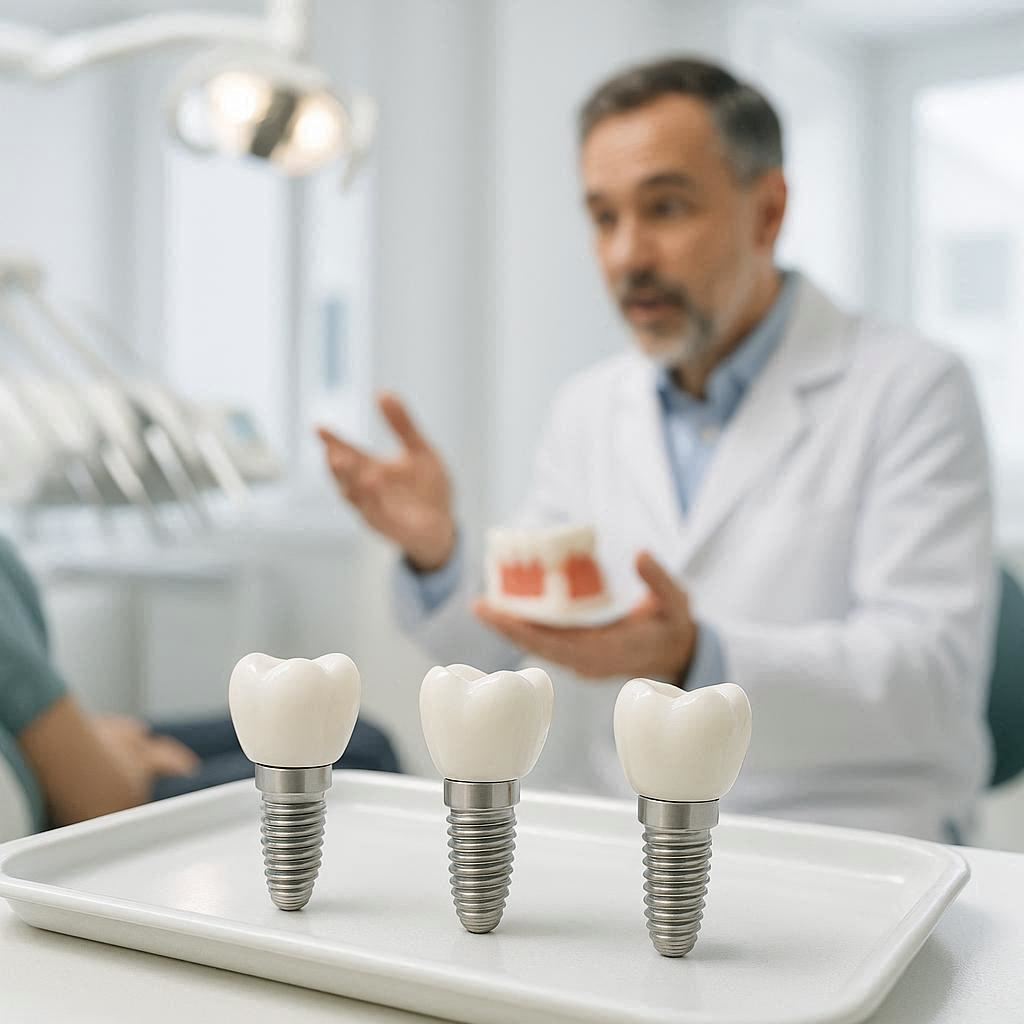
A traditional dental implant has three parts. You have the titanium screw (post) that goes into the jawbone. You have an abutment that connects the post to the crown. Finally, you have the crown itself (the visible tooth). Zirconia implants combine the post and the abutment into one solid piece.
This material, zirconium dioxide, is a ceramic. It is incredibly strong. In fact, it is harder than titanium. Because it is white, there is no gray metal shining through your gums. This is a huge plus for people with thin gum tissue.
Important Note: Not every dentist offers zirconia implants. Because the post and abutment are one piece, the placement surgery requires more precision. The angle must be perfect from the start. You cannot adjust it later like you can with titanium.
Breaking Down the Real Numbers
Now, let’s talk dollars and cents.
The total cost of zirconia dental implants is rarely a single line item on a bill. It is a package. Most patients pay between 3,000and6,500 per implant. On the higher end, in cities like New York or Los Angeles, you might see quotes closer to $7,500.
Why is there such a wide range? Let’s look at the individual components.
The Implant Post and Abutment
This is the screw that goes into your bone. Since zirconia is harder to manufacture than titanium, the material costs are higher. Expect this part alone to range from 1,500to3,000.
The Custom Crown
You need a tooth on top. Because the implant is white, dentists usually pair it with a high-quality zirconia crown. This creates a seamless, all-ceramic look. A custom-milled zirconia crown typically adds another 1,000to2,500.
Surgical Placement
You are paying for the dentist’s time, skill, and technology. If they use a cone beam CT scanner to plan the surgery (which is highly recommended for zirconia), that adds a fee. Surgical fees usually fall between 500and1,500.
Comparison Table: Zirconia vs. Titanium
To give you a clear picture, here is how the average costs compare for a single tooth replacement.
| Service Component | Traditional Titanium Implant | Zirconia Implant (One-Piece) |
|---|---|---|
| Implant Fixture (Post) | 1,200–2,000 | 1,500–3,000 |
| Abutment | 300–600 | Included (part of post) |
| Crown Material | PFM or Emax (800−1,500) | High-strength Zirconia (1k−2.5k) |
| Average Total (Single Tooth) | 2,500–4,500 | 3,000–6,500 |
| Metal in mouth? | Yes (Titanium alloy) | No |
| Surgical flexibility | High (multi-piece) | Low (one-piece) |
Why Zirconia Usually Costs More
You might look at that table and think, “Why pay more for a one-piece system?”
It is a fair question. There are two main reasons for the higher price tag.
First, the manufacturing process is difficult. Zirconia blocks have to be milled in a very specific way to maintain strength. If the process is rushed, microscopic cracks can form. Reliable brands (like Straumann or Z-Systems) invest heavily in quality control. You pay for that reliability.
Second, the skill level required is higher. With a two-piece titanium implant, the dentist can place the post, let it heal, and then take an impression. If the post leans slightly, they can use an angled abutment to fix it. You cannot do that with a one-piece zirconia implant. The placement must be perfect. Only experienced dentists charge for that level of perfection.
Hidden Fees You Need to Ask About
I want to protect you from surprise bills. Many articles list the average cost but forget the “extras.” When you call a dental office, you must ask these specific questions.
1. The CT Scan Fee
Many offices include the 3D scan in the surgical fee. Others do not. A single CT scan can cost 250to500. You need this scan for zirconia implants. Without it, the dentist cannot plan the perfect angle.
2. Bone Grafting
Here is a hard truth. Zirconia implants require about the same amount of bone as titanium. If your jawbone is too thin or too soft, you need a graft. Bone grafting fees range from 500to2,500 depending on how much bone you need. Do not skip this step. An implant placed in weak bone will fail.
3. Temporary Restoration
While the implant heals (usually 3 to 6 months), you need something to fill the gap. If it is a front tooth, you likely want a temporary flipper or partial denture. This can cost 200to500. If it is a back tooth, you might choose to leave the gap empty temporarily to save money.
4. Final Restoration Delivery
After healing, the dentist uncovers the implant and seats the final crown. This visit usually has a “delivery fee” of 150to300. It covers adjustments to your bite and permanent cementation.
How Insurance Handles Zirconia Implants
I need to be realistic with you here. Most dental insurance plans do not cover implants very well. They view them as a cosmetic or elective procedure. However, things are slowly changing.
Here is what you can typically expect.
If your plan covers implants (usually only PPO plans, not HMOs), they might cover 30% to 50% of the cost. But there is a catch. They often cap their annual maximum payout at 1,000to1,500. Since one zirconia implant costs over $3,000, you will still pay a lot out of pocket.
What usually gets covered?
- The crown might be partially covered if you have “major restorative” benefits.
- The extraction of the old tooth is almost always covered.
- Bone grafting might be covered if it is medically necessary for function.
What is rarely covered?
- The higher cost of zirconia vs. titanium.
- The CT scan.
- Sedation or anesthesia.
Pro Tip: Ask your dentist to send a pre-determination of benefits to your insurance company before you start. This is not a guarantee of payment, but it gives you a written estimate of what they might pay. Do this even if you are paying mostly out of pocket. Every dollar helps.
Financing Your Smile: Making It Affordable
If you look at the total cost of zirconia dental implants and feel overwhelmed, take a deep breath. You have options. Most patients do not write a check for $6,500 on the day of surgery.
Dental Savings Plans
These are not insurance. They are discount cards. You pay an annual fee (around 100to150) and get 10% to 20% off most procedures at participating dentists. Some plans specifically offer discounts for ceramic implants. This works well if you do not have insurance at all.
Third-Party Financing (CareCredit)
CareCredit is the most common option in US dental offices. It is a healthcare credit card. You apply for a line of credit. If you pay the balance off within a promotional period (usually 6, 12, or 18 months), you pay zero interest. But be careful. If you are one day late, they charge you all the accrued interest at a high rate (often 27%). Only use this if you know you can pay on time.
In-House Membership Plans
Some private dental offices have stopped accepting insurance. Instead, they offer an in-house “membership plan.” You pay a monthly or yearly fee. In exchange, you get free exams, discounts on X-rays, and a set discount (like 15% off implants). This is becoming more common for zirconia specialists.
Geographic Price Differences
Where you live changes everything. A single zirconia implant in rural Mississippi will cost significantly less than the same implant in downtown San Francisco.
To help you estimate, here is a rough breakdown by US region.
- Northeast (NY, MA, CT): 4,500–7,000 per implant. High overhead costs for rent and staff.
- West Coast (CA, WA, OR): 4,000–6,500 per implant. High demand for metal-free dentistry.
- Midwest (OH, IL, MI): 3,000–5,000 per implant. More competitive pricing.
- South (TX, FL, GA): 3,000–5,500 per implant. Widest range of prices here.
- Rural Areas (Any state): 2,800–4,500 per implant. Lower overhead, but fewer specialists available.
Long-Term Value: Is the Investment Worth It?
Let’s talk about the future. A cheap implant that fails in two years is not cheap at all. It is a waste of money.
Zirconia implants offer specific long-term advantages that justify their upfront price for many people.
Hypoallergenic properties. Some people have a true metal allergy. It is rare, but it happens. For those individuals, titanium causes inflammation, bone loss, and eventually, implant failure. Zirconia solves this. If you have a known allergy to nickel or other metals, zirconia is not a luxury. It is a medical necessity.
Aesthetics that last. Gums recede over time. With titanium, that recession sometimes reveals a dark metal collar at the top of the implant. It looks like a gray shadow at the gumline. Zirconia is white all the way through. Even if your gums recede slightly, everything still looks natural.
No corrosion. Saliva is a salty, acidic environment. Over decades, titanium implants can undergo galvanic corrosion (especially if you have metal fillings). Zirconia is a ceramic. It does not corrode. It does not interact with other metals in your mouth.
The Risks and Downsides You Must Know
I promised you an honest guide. So here is the truth. Zirconia implants are not perfect for every situation. You need to know the risks before you spend your money.
Fracture Risk
Zirconia is very strong under compression (biting down). But it is brittle under tension (twisting or bending). If a titanium implant experiences too much force, it bends slightly. If a zirconia implant experiences too much force, it can crack. In the rare event of a crack, you cannot repair it. The entire implant must be surgically removed.
One-Piece Limitations
Remember that the post and abutment are one unit. This means you cannot submerge the implant completely under the gum during healing. The top of the zirconia implant must stick out through the gum. If you have very thick gum tissue, the dentist might need to perform a gingivectomy (gum trimming) to access it. This adds discomfort and potential cost.
Less Long-Term Data
Titanium implants have been studied for over 50 years. We know they have a 95% success rate at 20 years. Zirconia implants have been used widely for only about 15 years. The early data looks very good (similar success rates to titanium), but we simply do not have the 30-year or 40-year studies yet.
Choosing the Right Provider: What to Look For
Because the surgery requires perfect placement, you cannot go to just any dentist. You need a provider with specific experience.
Look for these three things.
1. Advanced training in zirconia systems.
Do not just ask, “Do you do zirconia implants?” Ask, “Which system do you use (Straumann PURE, Z-Systems, Ceramic Implant Co.) and how many have you placed?” An honest dentist will tell you their numbers. You want someone who has placed at least 50 to 100 zirconia implants.
2. A cone beam CT machine in the office.
If they do not have a CT scanner on-site, they are likely planning your implant using 2D X-rays. That is risky for a one-piece system. Walk away. You want a dentist who uses 3D guided surgery.
3. Before-and-after photos of healed cases.
Any dentist can show you a photo right after they placed the crown. You want to see a photo one year later. Look at the gum health. Is the gum pink and healthy? Or is it red and inflamed around the implant? Healthy gums indicate proper placement.
A Realistic Timeline for Your Investment
Understanding the timeline helps you budget your time and your money. You do not pay everything at once. Most offices use a phased payment plan.
Month 1 (Consultation and Planning): 300–500 for exam and CT scan. You discuss treatment options and sign a financial agreement.
Month 2 (Surgery Day): 50% to 100% of the surgical and implant fee is due on the day of placement. This is usually 2,000to4,000.
Months 3 to 6 (Healing): No payments to the dentist. But you might pay for a temporary flipper if you want one (200–500).
Month 6 (Final Crown Delivery): You pay the remaining balance for the crown and delivery fee. This is usually 1,000to3,000.
List: 5 Questions to Ask Before You Agree to Treatment
Print this list. Take it with you to your consultation.
- “What is the total all-inclusive cost for this single tooth from start to finish?” (Make sure they include the CT scan, surgery, implant body, abutment, crown, and any revisions if the crown breaks.)
- “Do I need bone grafting? If yes, how much will that add to my final bill?”
- “What is your policy on a failed implant? Do you replace it for free, or do I pay again?” (Reputable offices offer a 1- to 5-year warranty on the implant itself.)
- “Can you show me an example of a zirconia implant in a similar tooth position to mine?”
- “Do you accept CareCredit or offer an in-house payment plan?”
The Cost of Doing Nothing
Sometimes, we focus so much on the price of treatment that we forget the price of neglect. If you are missing a tooth and you do nothing, you still pay.
Your adjacent teeth will drift into the empty space. The opposing tooth (the one that used to bite against the missing tooth) will grow out of its socket. Your bite changes. You might develop TMJ pain or headaches. Eventually, you lose more bone in that area, making future implant placement more expensive because you need a bigger bone graft.
Ignoring a missing tooth is the most expensive option in the long run.
How to Save Money Without Cutting Corners
You want the benefits of zirconia, but you have a strict budget. Here are realistic ways to reduce the final number.
Option A: Choose a single-piece implant from a value brand.
Not all zirconia brands cost the same. A Nobel Biocare zirconia implant will cost more than a NextGen or Z-Systems implant. Ask your dentist if they offer a “value” zirconia option. The material is still biocompatible and white, but the brand recognition is lower.
Option B: Travel to a dental school.
Major universities like Loma Linda (CA) or NYU College of Dentistry have advanced implant programs. A qualified resident places your implant under the supervision of a prosthodontist. The cost is often 40% to 60% less than a private office. The only downside is time. Appointments take longer, and the schedule is less flexible.
Option C: Combine treatment.
If you need multiple implants, the per-unit cost drops. The CT scan is a one-time fee. The surgical setup fee is spread across multiple implants. You might pay 6,000foronezirconiaimplant,butonly5,000 each for two, and $4,500 each for four.
Final Checklist Before You Book Your Surgery
You have done your research. You understand the cost of zirconia dental implants. You have a few quotes in hand. Now, take one final step.
- Verify the dentist is a prosthodontist or an oral surgeon (not a general dentist with a weekend course). General dentists can do good work, but for one-piece zirconia, a specialist is safer.
- Read Google reviews specifically for “implant” and “pain management.”
- Confirm the office uses sterile, single-use surgical kits (not reprocessed ones).
- Ask about sedation costs. IV sedation adds 400to800. If you are anxious, you need that. If you are calm, stick to local anesthesia.
- Get the final payment schedule in writing before you let them numb your mouth.
Conclusion
Choosing a zirconia dental implant is a decision that balances aesthetics, health, and budget. The cost of zirconia dental implants typically ranges from 3,000to6,500 per tooth, which is 15% to 30% higher than titanium. This premium pays for a metal-free, corrosion-resistant, and highly aesthetic result. While insurance offers limited help, financing plans and dental schools make the treatment accessible. Remember to prioritize an experienced provider and a detailed written quote to avoid unexpected fees.
Frequently Asked Questions (FAQ)
1. Do zirconia implants hurt more than titanium?
No. The surgical procedure feels identical. Both involve drilling into bone under local anesthesia. Post-operative soreness is similar for both materials.
2. How long do zirconia implants last?
With proper oral hygiene and regular dental checkups, studies suggest a success rate of over 95% at the 10-year mark. Long-term data beyond 15 years is still being collected.
3. Can I have an MRI if I have a zirconia implant?
Yes. Zirconia is completely non-metallic. It does not interfere with MRI or CT scans. This is a major advantage over titanium, which creates significant artifact (distortion) on MRI images.
4. Are zirconia implants safe for people with autoimmune diseases?
Generally, yes. Because zirconia does not release metal ions into the body, it is considered more biocompatible. However, you must discuss your specific condition with both your physician and your dentist.
5. Can I replace my old titanium implant with a zirconia one?
Yes, but it is a complex surgery. The dentist must remove the old titanium implant, allow the bone to heal (usually 4 to 6 months), and then place the new zirconia implant. You will pay for two surgeries.
6. Why do some dentists refuse to place zirconia implants?
Usually because of the lack of adjustability. If a one-piece implant is placed at a slightly wrong angle, the crown looks tilted. Some dentists prefer the safety net of a two-piece titanium system.
Additional Resource
For a current, searchable list of dentists who specialize in metal-free zirconia implants in your state, visit the American Academy of Implant Dentistry’s patient referral page.
👉 AAID Find a Dentist Tool (External link – opens in new tab)
Disclaimer: The information provided in this article is for general informational purposes only and does not constitute medical or financial advice. Dental implant costs vary significantly based on geographic location, provider expertise, and individual patient needs. Always consult with a licensed dental professional for a personalized treatment plan and accurate cost estimate. The author and publisher are not liable for any decisions made based on the content of this guide.