Dental Implants in Brushy Creek
If you live in Brushy Creek, you know the value of a strong, healthy smile. But when a tooth goes missing, it can feel like more than just a cosmetic issue. Eating becomes tricky. You might hide your laugh. Over time, your other teeth start shifting.
You have options. And one of the most reliable, long-term solutions is the dental implant.
This guide is for regular people. We will not use confusing medical terms. We will not sell you a fantasy. Instead, you will learn exactly what dental implants are, how they work in Brushy Creek, what they cost, and whether they are right for you.
What Exactly Is a Dental Implant?
A dental implant is not a magic trick. It is a small, strong screw made of titanium. A dentist places this screw into your jawbone. Over a few months, the bone grows around the screw. This creates a rock-solid anchor.
On top of that anchor, the dentist attaches a crown. That crown looks, feels, and acts like a real tooth.
Think of it this way:
- Natural tooth = root + crown
- Dental implant = titanium root + artificial crown
Simple, right?
Why Are Dental Implants So Popular in Brushy Creek?
Brushy Creek is a vibrant community. People here are active. They hike, bike, chat with neighbors, and enjoy local coffee shops. When you live an active life, you need teeth that stay put.
Unlike dentures, implants do not slip. Unlike bridges, they do not damage healthy neighboring teeth.
Here in Brushy Creek, local dentists have noticed a clear trend: more residents are choosing implants over older methods. Why?
- Reliability – Implants can last 20+ years.
- Comfort – They feel like your own teeth.
- Convenience – No special cleaning routines.
- Bone health – Implants keep your jawbone strong.
Note for readers: If you have been told you are “too old” for implants, that is usually not true. Many healthy adults in their 70s and 80s in Brushy Creek get implants successfully.
The Main Components of a Dental Implant
To understand the process, you need to know the three parts. Each part has a specific job.
| Component | Material | Function |
|---|---|---|
| Implant fixture (the screw) | Medical-grade titanium | Fuses with jawbone. Acts as the root. |
| Abutment | Titanium or zirconia | Connects the screw to the crown. |
| Prosthetic crown | Porcelain or ceramic | The visible “tooth.” Matches your natural color. |
These three pieces work together. If one piece is low quality, the whole implant fails. That is why choosing an experienced local dentist matters.
Who Is a Good Candidate for Dental Implants in Brushy Creek?
Not everyone qualifies immediately. And that is okay. Honesty here saves you time and money.
Good candidates usually have:
- One or more missing teeth
- Healthy gums (no active gum disease)
- Enough jawbone density
- Non-smoking or willing to quit temporarily
- No uncontrolled chronic illnesses (like diabetes)
You might not be ready if:
- You have severe gum disease (this can be treated first)
- Your jawbone is too thin (bone grafting can help)
- You are a heavy smoker
- You are pregnant (wait until after delivery)
The best way to know? Visit a local Brushy Creek dentist for a simple exam. Most offer a free or low-cost initial consultation.
The Step-by-Step Process of Getting Dental Implants
Let us walk through the entire journey. From the first visit to biting into a crispy apple again.
Step 1: Initial Consultation and Imaging
You sit down with a dentist. They look at your mouth. They take X-rays or a CBCT scan (a 3D image of your jaw). This is painless.
The dentist checks:
- Bone level
- Sinus position (for upper implants)
- Nerve locations
Step 2: Treatment Plan
You receive a written plan. It includes:
- Number of implants
- Need for bone grafting or not
- Estimated timeline
- Total cost
Ask questions. A good dentist explains everything in plain English.
Step 3: Tooth Extraction (If Needed)
If the damaged tooth is still there, the dentist removes it. They may place a bone graft at the same time. You leave with a small stitch. Healing takes 4–12 weeks.
Step 4: Implant Placement Surgery
This sounds scary. It is not.
The dentist numbs your mouth completely. You feel pressure but no pain. They make a small cut in the gum. They drill a precise hole. They insert the titanium screw. Then they stitch the gum closed.
Most single implants take 30–60 minutes.
Step 5: Osseointegration (A Fancy Word for Healing)
This is the most important phase. Your jawbone grows tightly around the titanium screw. This takes 3 to 6 months.
Important note: Do not rush this. If you put a crown on too early, the implant will fail. Patience pays.
Step 6: Abutment Placement
Once the screw is solid, the dentist reopens the gum slightly. They attach a small metal connector (the abutment). This sticks out just above the gum line.
Step 7: Crown Creation
The dentist takes an impression of your teeth. A lab builds your custom crown. It matches the shape, size, and color of your natural teeth.
Step 8: Crown Attachment
Finally, the dentist screws or cements the crown onto the abutment. You look in the mirror. It looks like your original tooth never left.
Types of Dental Implants Available in Brushy Creek
Not all implants are the same. Local dentists offer several types. The right one depends on your situation.
| Type | Best for | Healing time | Notes |
|---|---|---|---|
| Single implant | One missing tooth | 3–6 months | Most common |
| Implant-supported bridge | Two or three missing teeth in a row | 3–6 months | Avoids multiple implants |
| All-on-4 | Full arch (all upper or lower teeth) | Same day to 6 months | Four implants support a full set |
| Mini implants | Small teeth or narrow bone | 2–3 months | Less strong. Not for molars. |
Local trend: Many Brushy Creek residents aged 50+ choose All-on-4. It fixes all teeth in one arch for a predictable price.
Bone Grafting: What You Need to Know
Sometimes, your jawbone is too thin or soft. That is common. Especially if you lost the tooth years ago.
In those cases, the dentist performs a bone graft. They add bone-like material to your jaw. This material comes from:
- Your own body (usually from the chin or shin)
- A cow or cadaver (processed and sterilized)
- Synthetic bone material
Do not let this scare you. Bone grafting is routine. It adds 3–9 months to your timeline. But it makes the implant possible.
Without a graft, the implant would wobble and fail.
Note: If a dentist says you need a graft, believe them. Do not look for a second opinion just to avoid it. Skipping a needed graft is a waste of money.
Pain, Recovery, and What to Really Expect
People worry about pain. Let us be real.
During surgery: Zero sharp pain. Numbness is complete. You might feel pushing or vibrating.
First 24 hours after: Some discomfort. Think of a deep bruise. Over-the-counter ibuprofen usually works. Prescription painkillers are rarely needed.
First week: Swelling and mild soreness. Soft foods only. No strenuous exercise.
Months 1–3: No pain. You forget the implant is there. But the bone is still healing underneath.
Most patients in Brushy Creek return to work the next day. Only complex cases require time off.
Cost of Dental Implants in Brushy Creek (Realistic Numbers)
Let us talk money. Dental implants are an investment. Cheap ones usually fail. Expensive ones are not always better.
Here are real, average prices in the Brushy Creek area (2025–2026 estimates).
| Service | Average cost (without insurance) |
|---|---|
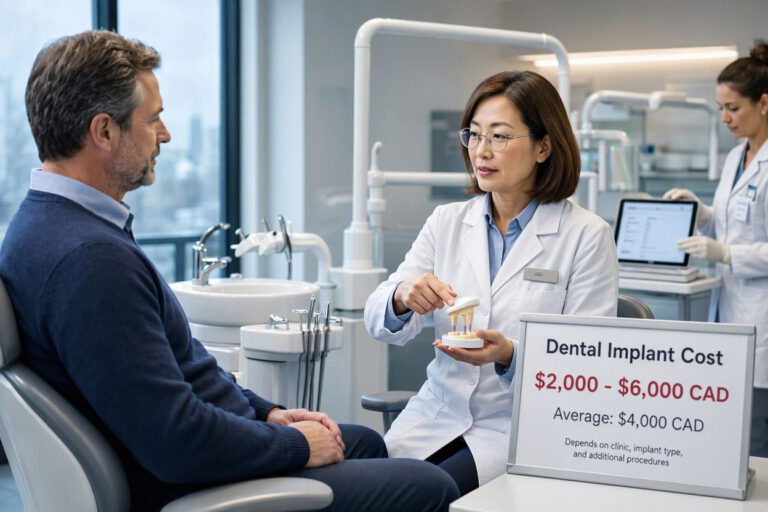
| Consultation and CBCT scan | 150–350 |
| Single implant (screw only) | 1,500–2,500 |
| Abutment | 300–600 |
| Porcelain crown | 1,200–2,000 |
| Total single implant completed | 3,000–3,000–5,000 |
| Bone graft (if needed) | 400–1,200 per site |
| All-on-4 (per arch) | 15,000–25,000 |
| Mini implants (each) | 1,000–1,800 |
Does insurance cover implants?
Sometimes. Many dental insurance plans cover the crown (50% or more). Few cover the implant screw fully. Medical insurance may cover implants if the tooth loss is from an accident or tumor.
Financing options in Brushy Creek:
- CareCredit
- LendingClub
- In-house payment plans (ask your dentist)
Note for readers: Be cautious of “$999 implants” ads. Those prices almost never include the crown. Read the fine print.
Dental Implants vs. Alternatives
Let us compare implants to other options. This will help you decide.
| Feature | Dental Implant | Fixed Bridge | Removable Denture |
|---|---|---|---|
| Looks like a real tooth | Yes | Usually | Sometimes |
| Feels natural | Yes | Mostly | No |
| Affects neighboring teeth | No | Yes (shaved down) | No |
| Prevents bone loss | Yes | No | No |
| Average lifespan | 20+ years | 7–15 years | 5–10 years |
| Initial cost | Higher | Medium | Lower |
| Long-term cost | Lower | Medium | Higher (replacements) |
Implants cost more upfront but save money over 20 years. They also save your healthy teeth.
Risks and Complications (Honest Section)
No medical procedure is perfect. Implants have a 95–98% success rate. That is excellent. But failures happen.
Possible risks:
- Infection at the implant site
- Nerve damage (rare – causes tingling in lip or chin)
- Sinus problems (upper back implants)
- Implant rejection (very rare – your body fights the titanium)
- Failure to fuse (often from smoking or grinding teeth)
Signs of a failing implant:
- The crown feels loose
- You see red, swollen gums around it
- Pain when chewing months after surgery
- The implant wiggles
If any of these happen, call your dentist immediately. Early intervention can save the implant.
How to Choose a Dentist for Implants in Brushy Creek
You have choices. Here is a simple checklist.
Look for:
- Experience (how many implants per year?)
- Before/after photos of real patients
- Transparent pricing (written estimate)
- Modern equipment (CBCT scanner on site)
- Clean, friendly office
Ask these questions:
- “What happens if my implant fails? Do you offer a warranty?”
- “Do you do the surgery and the crown in-house?”
- “Can I speak to a past patient?”
- “What is your policy on follow-up visits?”
Red flags:
- Pricing that seems too good to be true
- Rushing you into surgery without a CT scan
- No clear answer on who handles complications
Local tip: Brushy Creek residents often travel to nearby Round Rock or Austin for specialists (periodontists or oral surgeons). That is fine. Just ensure your general dentist coordinates care.
Caring for Your Dental Implant After Placement
Here is the best news. Implants do not need special products. You care for them exactly like natural teeth.
Daily routine:
- Brush twice a day (soft bristle brush)
- Floss once a day (use regular floss or implant-specific floss)
- Use a water flosser if you like (optional but helpful)
What to avoid:
- Chewing ice or hard candy
- Using your teeth as tools (opening packages)
- Smoking (major cause of implant failure)
- Skipping dental cleanings
Professional maintenance:
Visit your dentist every 6–12 months. They will check the implant tightness and clean around it. There are no “implant specials” – just good oral hygiene.
Living in Brushy Creek: Local Convenience
One advantage of living in Brushy Creek is access to quality healthcare. You are close to:
- Brushy Creek Family Dentistry
- Smile Ranch (Round Rock – 10 minutes away)
- Austin Oral Surgery (multiple locations)
Most appointments are short. The long healing periods happen at home. You can work, exercise (gently), and live normally.
Many local clinics offer Saturday hours for consultations. This is perfect if you work a 9-to-5 job.
Frequently Asked Questions (FAQ)
1. How long does the whole implant process take?
From extraction to final crown: 5 to 12 months. Simple cases are faster. Bone grafts add time.
2. Are dental implants painful?
The surgery is not painful due to numbing. The first few days feel sore but manageable with ibuprofen.
3. Can I get an implant if I smoke?
Yes, but your failure risk doubles or triples. Many dentists ask you to quit for 2 weeks before and 2 months after surgery.
4. Will my insurance pay for implants in Brushy Creek?
Some plans pay for the crown. Few pay for the screw. Call your provider and ask for “implant restoration coverage.”
5. What if I wait too long to replace a missing tooth?
Your neighboring teeth will tilt. Your opposite tooth may grow longer. Your jawbone will shrink. Implants become harder (and more expensive) over time.
6. Can I have an implant the same day as extraction?
Sometimes. This is called “immediate implant placement.” It depends on infection and bone quality. Not everyone qualifies.
7. Do implants ever get cavities?
No. Titanium and porcelain do not decay. However, the gum around them can get infected (peri-implantitis). That is why cleaning is still necessary.
8. Are dental implants safe for seniors?
Yes. Age alone is not a problem. General health matters more.
9. What is the success rate in Brushy Creek?
Local dentists report 95–98% for non-smokers with healthy bone.
10. Can I eat normally after an implant?
After full healing (6 months), you can eat everything: steak, apples, corn on the cob.
Additional Resource
For unbiased, research-backed information on dental implants, visit the American Academy of Implant Dentistry (AAID) public education page:
Resource link: www.aaid.com/public/patient-information
This site covers implant types, dentist qualifications, and real patient stories. It is not a sales page. It is a professional body focused on safety and standards.
Conclusion
Dental implants in Brushy Creek offer a strong, long-lasting solution for missing teeth. The process takes several months and costs between 3,000and5,000 per tooth. But the result is a natural-looking, stable smile that can last over 20 years with simple daily care. Always choose an experienced local dentist, follow healing guidelines, and maintain good oral hygiene for the best outcome.
Disclaimer: This article is for informational purposes only and does not constitute medical advice. Always consult a licensed dental professional in Brushy Creek for a personal evaluation and treatment plan. Individual results and costs vary.