Dental Implant Restoration in Modesto CA
Losing a tooth can feel overwhelming. You might worry about your appearance, your ability to chew, or even your long-term oral health. Fortunately, modern dentistry offers a solution that looks, feels, and functions like a natural tooth.
If you live in the Central Valley, you have likely heard about dental implants. But what happens after the implant is placed? That process is called restoration.
This guide walks you through everything you need to know about dental implant restoration in Modesto CA. We will cover the steps, the costs, the benefits, and how to choose the right dentist for your smile. No confusing jargon. Just honest, practical advice.
What Exactly Is Dental Implant Restoration?
Many people confuse the implant with the restoration. Let us clear that up right away.
- The dental implant is a small titanium post. A surgeon places this post into your jawbone. It acts as a new artificial tooth root.
- The restoration is the visible part. It is the crown, bridge, or denture that attaches to the implant. This is what gives you back your beautiful smile.
Think of it like building a house. The implant is the concrete foundation. The restoration is the actual house you live in. Both parts are essential. But without the restoration, the implant serves no purpose.
In Modesto, most general dentists focus on the restoration part. They work closely with oral surgeons or periodontists who place the implant. This teamwork ensures you get the best possible result.
Note: A restored implant is the closest thing to a natural tooth you can get. Unlike a bridge, it does not require shaving down healthy teeth.
Why Choose a Restored Implant Over Other Options?
You have choices for replacing a missing tooth. A fixed bridge, a removable partial denture, or an implant. Here is a quick comparison to help you see the difference.
| Feature | Dental Implant Restoration | Traditional Bridge | Removable Partial Denture |
|---|---|---|---|
| Looks | Very natural | Good | Fair (visible metal clips) |
| Feels | Like a real tooth | Bulky sometimes | Loose or unstable |
| Impact on other teeth | None | Requires grinding adjacent teeth | Can cause gum irritation |
| Bone health | Prevents bone loss | No effect | No effect |
| Lifespan | 20+ years to a lifetime | 7–15 years | 5–10 years |
| Cleaning | Brush and floss normally | Requires special floss threaders | Must remove to clean |
When you consider the long-term value, implants often win. They protect your jawbone. They keep your facial structure looking young. And they let you eat steak, apples, and nuts without worry.
Residents of Modesto lead active lives. You need a tooth replacement that can keep up. Implant restorations do exactly that.
The Step-by-Step Process for Restoration in Modesto
Every patient is unique. However, the journey to a restored smile usually follows a similar path. Here is what you can expect locally.
Step 1: The Initial Consultation
Your journey begins with an exam. A restorative dentist in Modesto will:
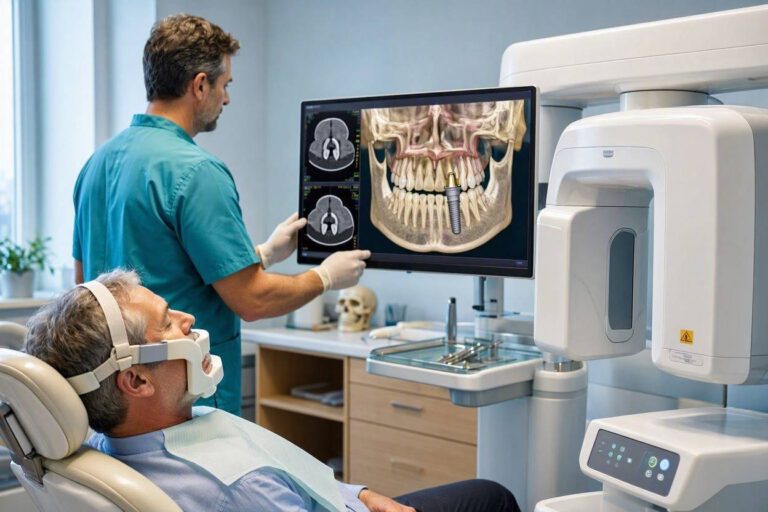
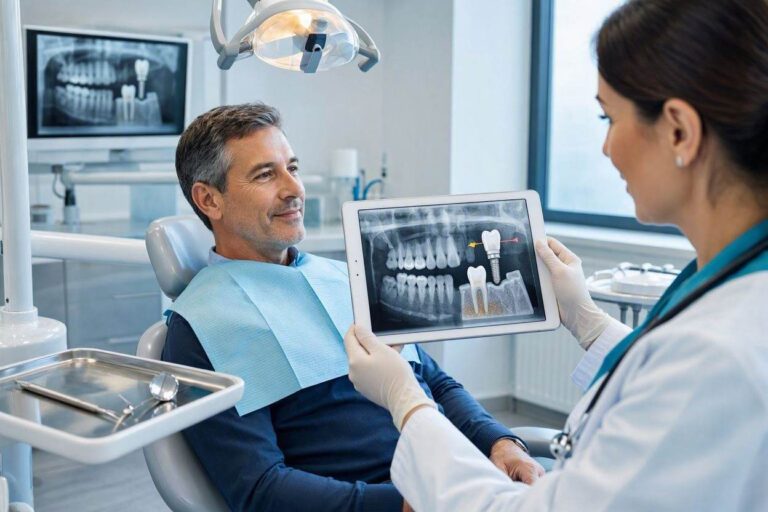
- Take X-rays or a 3D CT scan of your jaw.
- Check the health of your remaining teeth and gums.
- Discuss your medical history.
- Determine if you need a single crown, a bridge, or an implant-supported denture.
This is also the time to ask questions. How long will it take? How much will it cost? What happens if there is not enough bone?
Step 2: The Surgical Placement (The Implant)
Most restorative dentists do not perform the surgery. Instead, they refer you to a local specialist. This could be an oral surgeon or a periodontist in Modesto.
The surgeon places the titanium post into your jaw. This is a minor surgical procedure. It usually takes one to two hours. You will receive local anesthesia or sedation to stay comfortable.
After surgery, you wait. The bone needs to grow around the implant. This is called osseointegration. It sounds complicated, but it is just nature doing its job. This healing period typically lasts three to six months.
Step 3: Attaching the Abutment
Once the implant is stable and healed, you return to your dentist. They attach a small connector piece to the implant. This is the abutment. It sits just above the gumline. The abutment acts as the base for your new crown.
Step 4: The Restoration Appointment (The Crown or Bridge)
This is the exciting part. Your dentist takes impressions of your mouth. They send these impressions to a dental lab. Skilled technicians use them to craft your custom restoration.
Modern technology allows for same-day restorations in some Modesto offices. However, most high-quality ceramic crowns require two to three weeks in a lab. You will wear a temporary restoration during this time.
Step 5: Final Placement
When your permanent restoration is ready, you return for the final visit. Your dentist checks the fit, the color, and your bite. They make tiny adjustments to ensure you close your teeth comfortably.
Then, they cement or screw the restoration onto the abutment. That is it. You walk out with a fully restored, functional tooth.
Typical total timeline: 4 to 9 months from start to finish.
Types of Implant Restorations Available in Modesto
Not all restorations are the same. Depending on how many teeth you are missing, your dentist will recommend a specific type.
Single Tooth Implant Restoration
This is for one missing tooth. It consists of one implant post and one dental crown. It is the most common type. The result is a standalone tooth that does not touch your neighbors.
Implant-Supported Bridge
If you are missing two or three teeth in a row, you do not need an implant for each gap. Two implants can support a three-unit bridge. This saves money and reduces surgery time.
Implant-Supported Dentures
For patients missing all teeth in an arch (upper or lower), this is a life-changer.
- Fixed (non-removable): Often called “All-on-4” or “All-on-6.” Four to six implants hold a full arch of teeth. You cannot take this out at home. It feels like having natural teeth again.
- Removable (overdenture): Two to four implants snap into a specially made denture. You take it out to clean it at night. It is much more stable than a regular denture.
Same-Day Implants (Teeth in a Day)
Some Modesto offices offer immediate loading. This means you get a temporary restoration on the same day as the surgery. It is convenient, but not everyone is a candidate. You need excellent bone density and no infection.
| Type | Best for | Number of Implants Needed | Removable? |
|---|---|---|---|
| Single Crown | One missing tooth | 1 | No |
| Implant Bridge | 2–3 missing teeth in a row | 2 | No |
| Fixed Full Arch | All teeth missing | 4 to 6 | No |
| Overdenture | All teeth missing (budget option) | 2 to 4 | Yes |
The Real Cost of Dental Implant Restoration in Modesto CA
Let us talk money. This is often the biggest concern for patients. Dental implants are an investment. They cost more upfront than a bridge or denture. But they last much longer.
Average Price Breakdown in Modesto
- Implant surgery (specialist fee): 1,500–3,000 per implant
- Abutment: 300–500
- Restoration (crown/bridge): 1,500–3,000 per unit
- CT scan and X-rays: 200–500
Total for a single tooth: Approximately 3,500to6,500.
Remember: These are estimates. Prices vary by office. They also vary based on your specific needs. If you need a bone graft or sinus lift, add 1,000to3,000.
Does Insurance Cover Restoration?
Dental insurance is confusing. Here is the simple truth:
- Most plans do not fully cover implants. They call them “cosmetic” or “major services.”
- However, many plans cover the restoration part (the crown) at 50%.
- Some plans cover the abutment.
- Very few plans cover the actual implant surgery.
What to do: Call your insurance company before booking anything. Ask: “Do I have implant benefits? What is my annual maximum?” Many Modesto dentists offer third-party financing like CareCredit or in-house payment plans.
Are There Affordable Options in Modesto?
Yes. Look for:
- Dental schools: The nearest one is University of the Pacific in San Francisco. It is a drive, but costs are 30-50% less.
- Membership plans: Some local offices offer in-house discount plans if you do not have insurance.
- Phased treatment: Do one implant at a time over two years.
Warning: Be careful with “cheap implants” advertised online. Low prices often mean low-quality materials or inexperienced providers. A failed implant costs more to fix than the initial savings.
Signs You Might Need a Restoration Repair or Replacement
Dental implant restorations are durable. But they are not invincible. The crown or bridge can wear out or break over time. The implant itself usually lasts forever. The porcelain on top might not.
Look for these warning signs:
- Chipped or cracked porcelain: Your tongue feels a sharp edge.
- Food trapping: Floss no longer slides easily between the crown and neighboring teeth.
- Loose feeling: The crown wiggles slightly. This could mean the screw loosened.
- Dark line at the gum: Older metal-ceramic crowns show a dark metal margin.
- Bad taste or smell: Bacteria is leaking under the restoration.
If you notice any of these, call a Modesto restorative dentist. Do not wait. A small repair now can prevent a complete remake later.
How to Choose the Best Restorative Dentist in Modesto
Not all dentists are comfortable with implant restorations. Some prefer to do only fillings and cleanings. You need a professional who does this work every week.
Here is how to find the right provider for your dental implant restoration in Modesto CA.
Ask These Questions During a Consultation
- “How many implant restorations do you complete each month?” (Look for someone who does 5+ monthly).
- “Do you use a local lab or a national lab?” (Local labs are easier for adjustments).
- “Which implant systems do you work with?” (Avoid dentists who only work with one obscure brand).
- “Can I see before and after photos of your actual patients?”
- “What happens if the restoration breaks in the first year?” (Good offices offer a 1-2 year warranty).
Credentials to Look For
- DDS or DMD: Any general dentist can do restorations.
- FAGD (Fellow of the Academy of General Dentistry): This means they take extra continuing education.
- Membership in the American Academy of Implant Dentistry (AAID): Not required, but a good sign of advanced training.
Local Reputation Matters
Read Google reviews. But focus on the specific mentions of implants. Look for words like “crown,” “abutment,” “fit,” and “bite adjustment.” A dentist who is great at cleanings might still struggle with complex implant cases.
Implant Restoration vs. Mini Implants: What Is the Difference?
You might see advertising for “mini implants” in Modesto. These are smaller-diameter implants. They are not the same as traditional implants.
| Feature | Traditional Implant | Mini Implant |
|---|---|---|
| Diameter | 3.5mm – 5mm | 1.8mm – 3mm |
| Strength | Very high | Moderate |
| Restoration type | Permanent crowns or bridges | Usually denture stabilization |
| Longevity | 20+ years | 5–10 years |
| Bone requirement | Needs good bone density | Works with thinner bone |
Verdict: Mini implants are okay for securing a lower denture. They are not ideal for single tooth crowns, especially on molars. If a dentist offers mini implants for a back tooth, get a second opinion.
Living with Your Restored Implant: Daily Care Tips
The best part about implant restorations is the easy maintenance. You do not need special soaks or adhesives. Just brush and floss like you would with natural teeth.
Do This Every Day
- Brush twice a day with a soft-bristle brush. Use non-abrasive toothpaste. Avoid “whitening” pastes with harsh grit.
- Floss around the implant. Use regular floss or super floss. The goal is to clean the gum area.
- Use a water flosser on a low setting. This is excellent for cleaning under bridges.
Do This Every Year
- Visit your Modesto dentist for checkups. They will take X-rays to check the bone level around the implant.
- Your hygienist will use special tools. Plastic or titanium scalers protect the implant surface from scratches. Never let a hygienist use a metal curette on your implant.
What to Avoid
- Chewing ice or hard candy. Porcelain can fracture.
- Using your teeth as tools. Do not open packages with your restoration.
- Smoking. It reduces blood flow to the gums and increases the risk of implant failure.
Important note: Peri-implantitis is the #1 cause of implant failure. It is inflammation around the implant caused by bacteria. Prevent it with excellent daily hygiene and regular professional cleanings.
Frequently Asked Questions (FAQ)
How painful is the restoration process?
The surgery has mild discomfort, but the restoration appointments (impressions and fitting) are completely painless. Most patients say the recovery is easier than a tooth extraction.
Can I get an implant restoration if I have bone loss?
Yes, but you might need a bone graft first. A surgeon adds synthetic or natural bone to your jaw. After 4-6 months of healing, you can receive an implant.
How long does a restored implant crown last?
With proper care, 15-20 years or more. The crown might need replacement due to wear, but the implant itself can last a lifetime.
Do implant restorations look natural?
Absolutely. Modern zirconia and layered ceramic crowns are virtually indistinguishable from natural teeth. Even a skilled dentist cannot tell the difference without an X-ray.
Is the restoration process covered by Medicare or Medi-Cal?
Standard Medicare does not cover dental implants. Medi-Cal (Medicaid in California) covers implant restorations only in very limited cases, usually for trauma or congenital defects. Most adults pay out of pocket.
Can I eat normally after the final restoration?
Yes. Wait 24 hours for the cement to fully set. After that, eat normally. Many patients forget they even have an implant.
What if my implant crown feels too high?
Call your dentist immediately. A “high bite” puts excess pressure on the implant. This can cause bone loss or screw fracture. It is a simple 5-minute adjustment.
Realistic Expectations: The Pros and Cons
No treatment is perfect for everyone. Here is an honest look at the trade-offs.
Pros:
- Protects jawbone and facial structure.
- Does not damage adjacent teeth.
- Superior chewing power (90-95% of natural tooth).
- Permanent solution.
Cons:
- Higher upfront cost than bridges or dentures.
- Longer treatment time (months, not weeks).
- Requires surgery.
- Not ideal for uncontrolled diabetics or heavy smokers.
If the cons scare you, talk to a Modesto dentist. They can help you decide if a mini implant or traditional bridge makes more sense for your specific situation.
Additional Resources for Modesto Residents
You do not have to navigate this alone. Use these local resources to make an informed decision.
- Stanislaus County Dental Society: Find a list of member dentists in Modesto who follow ethical guidelines. Visit their website for a referral directory.
- CDA (California Dental Association) “Find a Dentist” tool: Search specifically for implant restorative services.
- Modesto Junior College Dental Hygiene Clinic: Low-cost X-rays and cleanings for existing implant patients. A great option for maintenance care.
Link to external resource: For official data on implant success rates and safety, visit the American Academy of Implant Dentistry at aaid.com (external link).
Conclusion
Dental implant restoration is the final, rewarding step in replacing missing teeth. It transforms a metal post into a beautiful, functional crown.
To summarize this guide:
- The restoration is the visible crown or bridge attached to the implant.
- The process takes 4-9 months and involves healing, impressions, and final placement.
- Costs in Modesto range from 3,500to3,500to6,500 per tooth, but financing is available.
- Daily brushing and annual checkups keep your restoration lasting for decades.
Your smile is worth the investment. Take the first step today. Schedule a consultation with a trusted restorative dentist in Modesto, and ask them the ten questions listed above.
Disclaimer: This article is for informational purposes only and does not constitute medical advice. Always consult with a licensed dentist in Modesto, CA, for a personal diagnosis and treatment plan. Individual results vary based on health history, bone density, and oral hygiene. The author and publisher are not responsible for any actions taken based on this content.