Dental Implants Olympia: Your Complete Guide to a Natural, Lasting Smile
Losing a tooth can feel unsettling. You might worry about your smile, your ability to chew, or even your long-term oral health. The good news is that modern dentistry offers a solution that looks, feels, and functions like a natural tooth.
That solution is the dental implant.
If you live in Olympia or the surrounding South Sound area, you have access to skilled professionals who place dental implants every day. But you probably have questions. How much do they cost? Does the procedure hurt? How long do they last?
This guide answers everything. No fluff. No unrealistic promises. Just honest, practical information to help you make a confident decision about dental implants in Olympia.
What Exactly Are Dental Implants? A Simple Explanation
Let’s start with the basics.
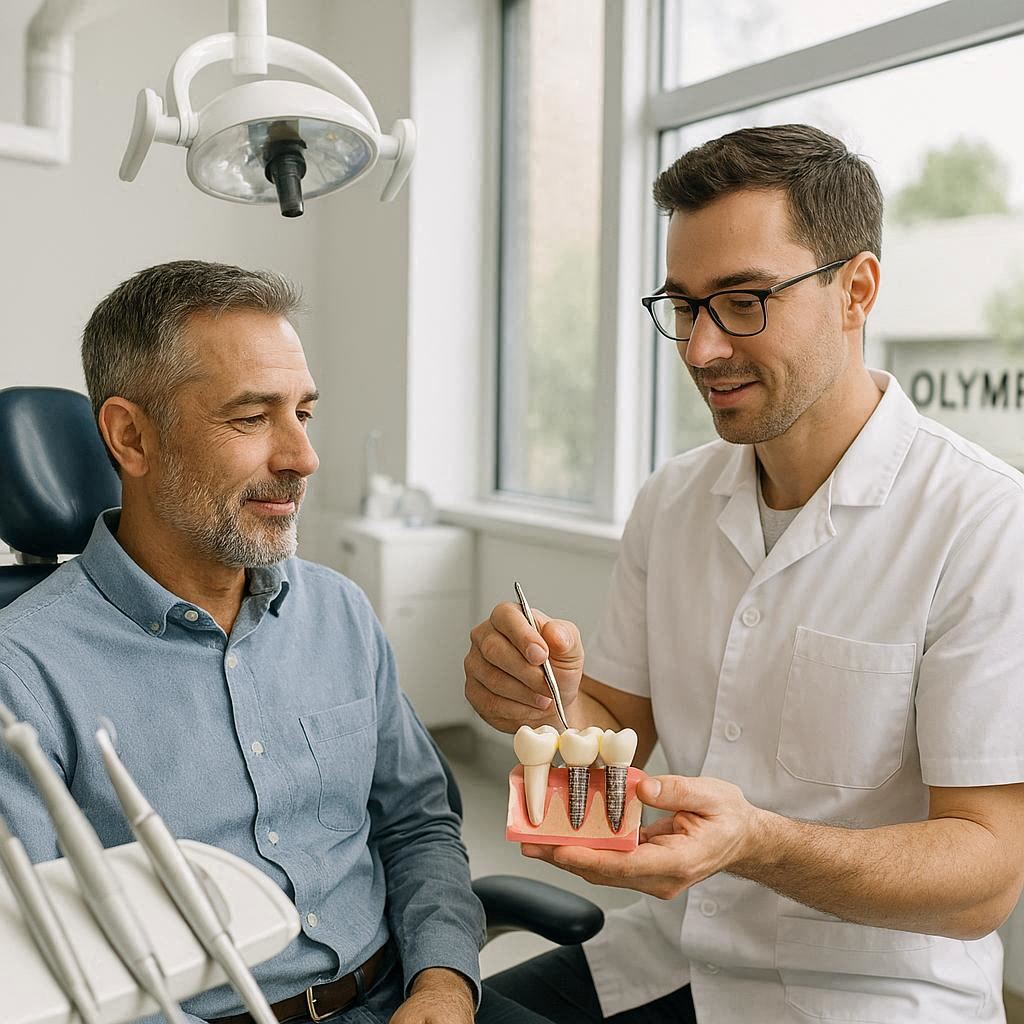
A dental implant is a small, screw-like post made of medical-grade titanium. A dentist or oral surgeon surgically places this post into your jawbone. Over time, the bone grows around the implant, locking it firmly in place. This process is called osseointegration.
Once the implant is stable, the dentist attaches an abutment (a small connector) and then a custom-made dental crown. The crown is the visible part that looks like your natural tooth.
So, a dental implant replaces both the root and the crown of a missing tooth. That is why implants are so strong and durable.
Note: Unlike bridges or dentures, implants do not rely on adjacent teeth for support. They stand alone, preserving your natural tooth structure.
Why Choose Dental Implants Over Other Options?
You have choices when replacing a missing tooth. In Olympia, many dentists offer bridges, partial dentures, full dentures, and implants. So why pick implants?
Let’s look at a clear comparison.
| Feature | Dental Implants | Traditional Bridge | Removable Denture |
|---|---|---|---|
| Looks like a natural tooth | Yes | Sometimes | Rarely |
| Prevents bone loss | Yes | No | No |
| Requires adjacent tooth alteration | No | Yes (shaving down healthy teeth) | No |
| Removable | No | No | Yes |
| Average lifespan | 20+ years to lifetime | 5–15 years | 5–10 years |
| Comfort level | Feels like natural teeth | Moderate | Can slip or irritate gums |
As you can see, implants offer unique long-term benefits. They keep your jawbone healthy. They do not harm neighboring teeth. And once healed, you forget you even have an implant.
Who Is a Good Candidate for Dental Implants in Olympia?
Most healthy adults with missing teeth are candidates for implants. However, a few factors matter.
Ideal candidates usually:
- Have one or more missing teeth
- Have a fully grown jawbone (typically over age 18)
- Have enough bone density to support the implant
- Have healthy gums without active periodontal disease
- Do not smoke heavily (smoking slows healing)
- Are committed to good oral hygiene
What if you lack enough bone?
Do not worry. Many Olympia dental practices offer bone grafting procedures. A bone graft rebuilds the jawbone so it can support an implant. This adds time and cost, but it makes implants possible for almost everyone.
Important note: Certain medical conditions (uncontrolled diabetes, autoimmune diseases, or cancer treatments) may affect implant success. Always share your full medical history with your dentist.
The Complete Step-by-Step Process of Getting Dental Implants
Understanding the process reduces fear. Here is exactly what happens when you get dental implants in Olympia.
Step 1: Initial Consultation and Imaging
Your journey begins with a thorough exam. The dentist will:
- Review your dental and medical history
- Take 3D scans or X-rays of your jaw
- Discuss your goals and budget
- Create a personalized treatment plan
This visit usually takes 60 to 90 minutes.
Step 2: Preparatory Procedures (If Needed)
If you need a bone graft, tooth extraction, or gum disease treatment, that happens now. Healing from a bone graft takes several months.
Step 3: Implant Placement Surgery
This is a minor surgical procedure. Most Olympia dentists perform it right in their office with local anesthesia. You remain awake but feel no pain. Some patients choose sedation dentistry for extra comfort.
The dentist makes a small incision in your gum, drills a precise hole in the bone, and inserts the titanium implant. Then they stitch the gum closed over or around the implant.
The entire surgery for a single implant takes about 60 to 90 minutes.
Step 4: Healing and Osseointegration
Now comes the waiting period. Your jawbone grows around the implant over 3 to 6 months. During this time, you wear a temporary partial denture or flipper to hide the gap.
Step 5: Abutment Placement
Once the implant is fully fused to the bone, the dentist reopens the gum and attaches a small metal abutment. This part sticks out slightly above the gum line. Another 2 weeks of gum healing follow.
Step 6: Crown Fabrication and Placement
Your dentist takes impressions of your mouth. A dental lab creates a custom crown that matches the color, shape, and size of your natural teeth. About 2 to 3 weeks later, you return to have the crown screwed or cemented onto the abutment.
That is it. You now have a new tooth.
Dental Implant Costs in Olympia: What to Expect
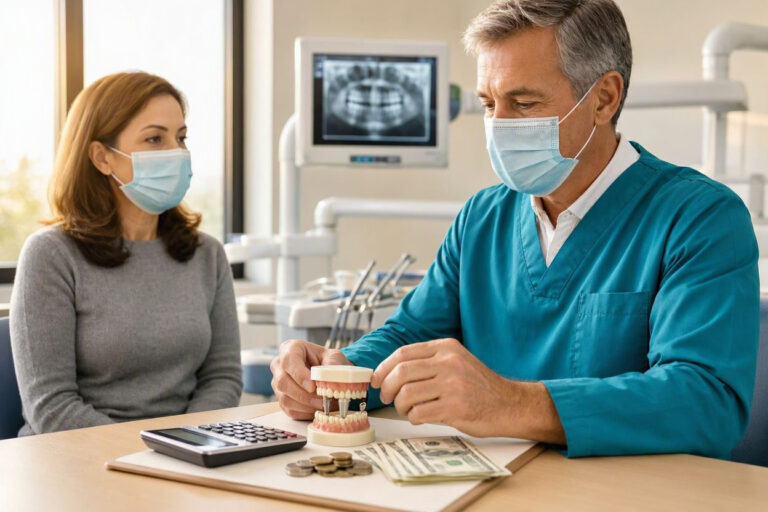
Let’s talk numbers. Dental implants are an investment. But understanding the costs helps you plan.
Average prices in Olympia (per tooth):
| Procedure | Estimated cost range |
|---|---|
| Initial exam and CT scan | 150–350 |
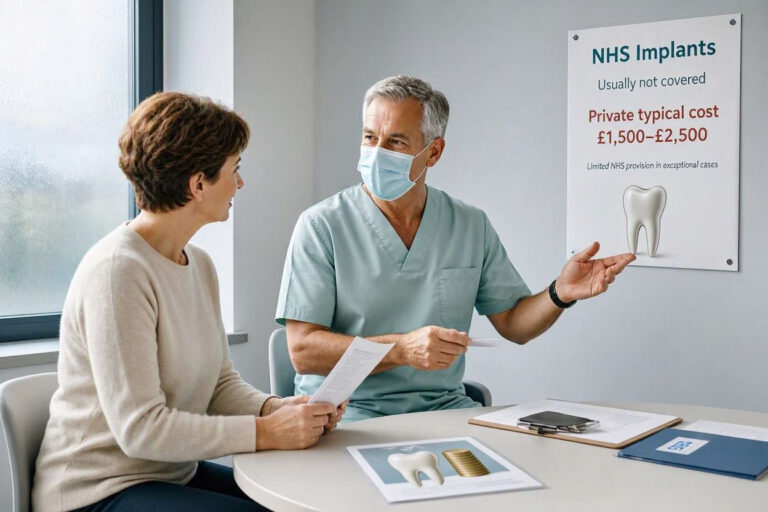
| Single implant placement (surgery only) | 1,500–2,500 |
| Abutment | 300–600 |
| Custom dental crown | 1,000–2,000 |
| Bone graft (if needed) | 500–1,200 per site |
| Tooth extraction (if needed) | 200–400 |
Total for one implant with crown:
3,000to5,500 on average in Olympia.
Full mouth implants (All-on-4 or similar):
- 15,000to30,000 per arch (upper or lower)
Note: These are estimates. Actual costs vary by provider, materials used, and your specific needs.
Does insurance cover dental implants?
Some dental insurance plans cover part of the cost, especially the crown. Many consider the implant itself “major restorative” and cover 30% to 50% after a waiting period. Call your provider and ask about your implant benefits.
Financing options in Olympia
Most local dental offices offer:
- CareCredit (medical credit card)
- In-house payment plans
- Third-party financing (LendingClub, Proceed Finance)
Never let cost stop you from asking. Many practices offer free consultations where you can discuss budget-friendly solutions.
How Long Do Dental Implants Last? (Realistic Expectations)
Here is the honest truth.
The implant itself (the titanium post) can last a lifetime if your bone remains healthy. The crown on top wears down like a natural tooth. With excellent care, a crown lasts 15 to 25 years.
What shortens an implant’s life?
- Poor oral hygiene
- Smoking or tobacco use
- Grinding or clenching your teeth (bruxism)
- Skipping regular dental checkups
What extends an implant’s life?
- Brushing twice daily
- Flossing around the implant daily
- Wearing a night guard if you grind
- Visiting your Olympia dentist every 6 months
Quote from a local Olympia dentist:
“I have patients with implants that are over 30 years old and still perfect. They treat their implants like natural teeth—and they come in for regular cleanings. That is the secret.”
Immediate Load Implants vs. Traditional Implants
You may hear about “teeth in a day” or immediate load implants. Are they the same as regular implants? No. Here is the difference.
| Feature | Traditional Implants | Immediate Load Implants |
|---|---|---|
| Healing time before crown | 3–6 months | Same day |
| Temporary crown needed | Yes | No |
| Suitable for everyone | Yes | No (requires excellent bone quality) |
| Success rate | 95–98% | Slightly lower (85–95%) |
| Best for | Single or multiple missing teeth | Full arch reconstruction |
Most people in Olympia get traditional implants. The success rate is higher, and the process is more forgiving. Immediate load is usually reserved for specific cases, like full-mouth restorations.
Finding the Best Dental Implant Provider in Olympia
Not all dentists are the same. Some place one implant a month. Others place dozens. Here is how to choose wisely.
Look for these credentials:
- DDS or DMD degree (both are equivalent)
- Post-graduate training in implantology (like from the AAID or ICOI)
- Years of experience placing implants
- Before-and-after photos of actual patients
- Sedation options (if you feel nervous)
Questions to ask during your consultation:
- How many implants do you place each year? (Look for 50+)
- What is your success rate?
- Do you use 3D imaging for planning?
- What brand of implants do you use? (Leading brands: Nobel Biocare, Straumann, Zimmer, Hiossen)
- Who makes the crowns? (On-site lab vs. external lab)
- What happens if the implant fails? (Reputable dentists offer a warranty or replacement policy)
Types of providers in Olympia:
| Provider type | Best for |
|---|---|
| General dentist with implant training | Single implants, simple cases |
| Periodontist (gum specialist) | Implants with gum issues or aesthetics |
| Oral surgeon | Complex cases, bone grafts, full arch |
| Prosthodontist | Full mouth reconstruction, complex crowns |
For a single missing tooth, a skilled general dentist is often perfectly fine. For multiple missing teeth or major bone loss, see a specialist.
Recovery and Aftercare: What Feels Normal vs. What Is Not
Many patients worry about pain. Let’s set realistic expectations.
Day 1 to 3 after surgery:
- Mild to moderate swelling (use ice packs)
- Some bleeding or oozing (normal)
- Soft food diet only (yogurt, smoothies, soup)
- Take prescribed or OTC pain relievers
Day 4 to 7:
- Swelling goes down
- Bruising may appear (normal)
- You can return to work or light activities
- Continue saltwater rinses (no spitting)
Week 2 to 4:
- Gum tissue heals
- Most discomfort disappears
- You may forget the implant is there
Signs of a problem (call your dentist):
- Severe pain not controlled by medication
- Fever or chills
- Pus or foul taste (possible infection)
- Implant feels loose (very rare in healing phase)
Remember: Smoking and drinking through a straw increase the risk of implant failure. Avoid both for at least 2 months after surgery.
Foods to Eat and Avoid After Dental Implant Surgery
Healing requires good nutrition. But your mouth needs gentle foods at first.
First week (soft and cool):
- Greek yogurt
- Mashed potatoes
- Scrambled eggs
- Smoothies (no straw!)
- Applesauce
- Cottage cheese
- Well-cooked oatmeal
Second week (slightly firmer):
- Soft pasta
- Steamed fish
- Bananas
- Avocado
- Pancakes
- Soups with soft veggies
Avoid for 2 to 3 months:
- Nuts and seeds
- Popcorn
- Hard candies
- Ice cubes
- Crusty bread
- Steak or tough meats
After the crown is permanently placed, you can eat normally again. Many patients forget which tooth was replaced.
Frequently Asked Questions (FAQ) About Dental Implants in Olympia
Q: Are dental implants painful?
A: The surgery itself is not painful because of local anesthesia. Afterward, most patients compare the discomfort to a tooth extraction. Over-the-counter pain relievers usually suffice.
Q: How long does the entire process take?
A: From consultation to final crown, expect 4 to 9 months. Bone grafting adds additional months.
Q: Can I get dental implants if I have gum disease?
A: Not until the gum disease is treated. Active infection dramatically increases implant failure risk. Your Olympia dentist will treat the gums first.
Q: Do dental implants look natural?
A: Yes. Modern crowns use high-quality ceramics that reflect light like natural enamel. Most people cannot tell which tooth is an implant.
Q: What is the success rate of dental implants?
A: 95% to 98% for lower jaw, slightly lower for upper jaw. With proper care, success is even higher.
Q: Can seniors get dental implants?
A: Absolutely. Age is not a barrier. Many Olympia residents in their 70s and 80s successfully receive implants. Health status matters more than age.
Q: Are dental implants covered by Medicaid in Washington?
A: Washington Apple Health (Medicaid) covers dental implants only in very limited cases (usually trauma or congenital defects). Most adults pay out-of-pocket or use private insurance.
Q: What happens if an implant fails?
A: The dentist removes it, allows the bone to heal (3–6 months), and places a new implant. Some practices offer a free replacement within a certain timeframe. Ask about their policy.
Pros and Cons of Dental Implants: An Honest Summary
Pros:
- Permanent and stable
- Preserve jawbone and facial structure
- No damage to adjacent teeth
- High success rate
- Comfortable like natural teeth
- No dietary restrictions once healed
Cons:
- Higher upfront cost than bridges or dentures
- Requires surgery (minor risk of infection or nerve injury)
- Longer treatment timeline (months vs. weeks)
- Not suitable for heavy smokers or uncontrolled diabetics
For most people, the pros heavily outweigh the cons. But it is a personal decision based on your health, budget, and goals.
How to Maintain Your Dental Implants for Life
Here is the simplest advice you will ever read.
Treat your implant exactly like a natural tooth. That means:
- Brush twice a day for two minutes
- Floss daily (use implant-specific floss or a water flosser)
- Visit your Olympia dentist every six months for cleanings
- Wear a night guard if you grind your teeth
- Do not chew ice, pens, or hard objects
That is it. No special potions. No expensive gadgets. Just consistent, gentle care.
Note: Dental implants cannot get cavities. However, the gum tissue around them can still develop inflammation (peri-implantitis). This is like gum disease for implants. Flossing prevents it.
Real Patient Story: A Local Olympia Resident’s Experience
“I lost my upper right molar in my 40s. I lived with the gap for three years because I was scared of the cost and the surgery. Finally, I went to a dentist in downtown Olympia. They explained everything. The implant surgery took less than an hour. I will be honest—the first week was tender. But after that? I completely forgot about it. Now I chew steak on that side. My only regret is waiting so long.”
— Mark, Olympia
Stories like Mark’s are common. Fear of the unknown holds people back. Once they get the implant, they realize it was not nearly as bad as they imagined.
Additional Resource: Where to Learn More
For unbiased, research-backed information about dental implants, visit the American Academy of Implant Dentistry (AAID) official website.
👉 Recommended link: AAID – Dental Implant Patient Information
Note: This resource is independent of any specific Olympia practice and provides general educational content.
Conclusion: Your Next Step Toward a Complete Smile
Dental implants in Olympia offer a reliable, long-lasting solution for missing teeth. They preserve your jawbone, protect adjacent teeth, and restore your ability to eat and smile with confidence. The process takes several months and requires an investment, but the result is the closest thing to a natural tooth.
If you are missing one tooth or many, schedule a consultation with a qualified Olympia implant dentist. Ask questions. Review your budget. Then make the choice that serves your health for decades to come.
Disclaimer: This article is for informational purposes only and does not constitute medical or dental advice. Always consult a licensed dentist in Olympia, Washington, for a personal evaluation and treatment recommendations. Individual results vary. The author and publisher are not responsible for any actions taken based on the content of this guide.