Dental Implants in Glenview
Losing a tooth can feel frustrating. Maybe you hide your smile in photos. Maybe chewing has become a careful chore. You are not alone. Many adults in Glenview face the same situation.
The good news? Dental implants offer a solution that looks, feels, and functions like natural teeth. But let’s be honest—the world of implants comes with confusing terms, high price tags, and plenty of opinions.
This guide strips away the noise. You will learn exactly what dental implants in Glenview involve, how to prepare for them, what they cost, and how to find a trustworthy provider. No hype. No fake promises. Just clear, realistic information.
What Exactly Are Dental Implants? (And Why They Work)
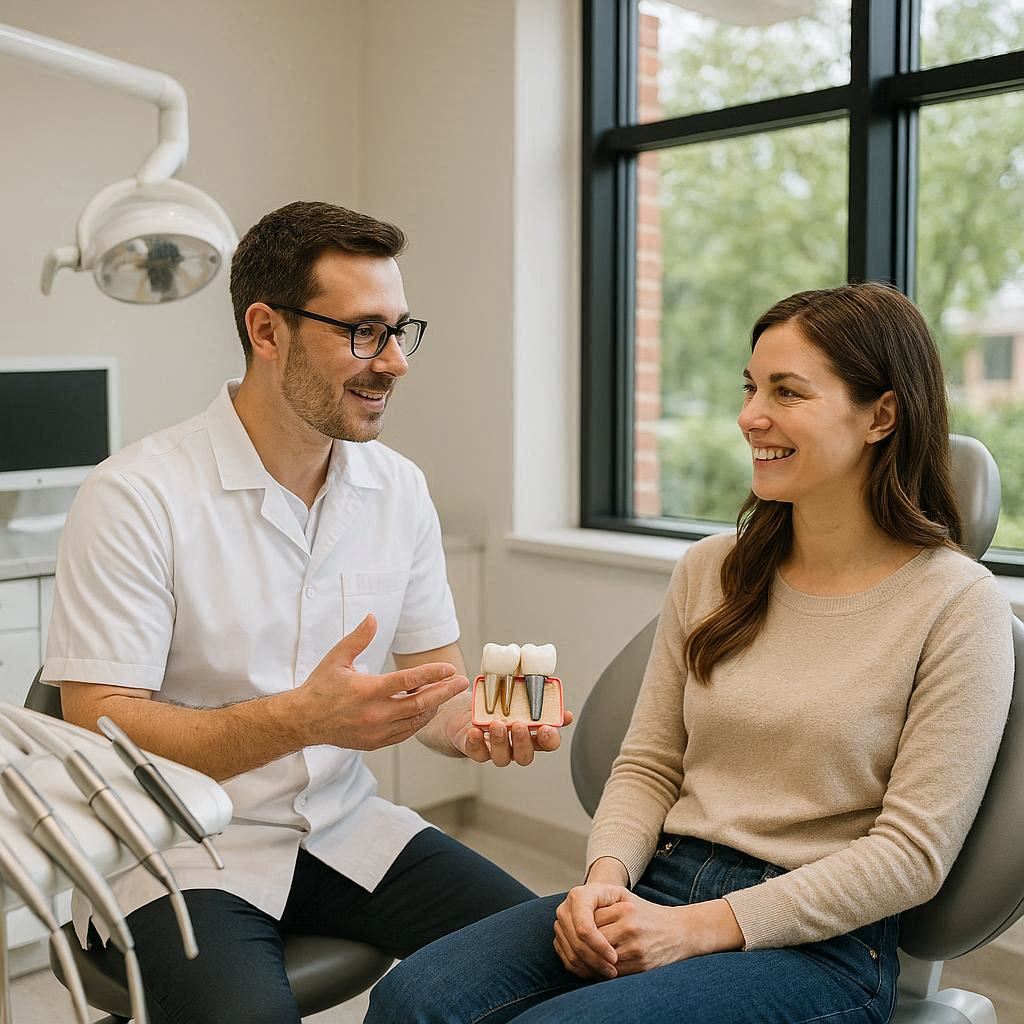
Let’s start with the basics. A dental implant is not a tooth. It is a replacement for the tooth root.
The three main parts of a dental implant system
| Component | What it does | Material |
|---|---|---|
| Implant post | Acts like a root; fuses with jawbone | Medical‑grade titanium or zirconia |
| Abutment | Connects post to the crown | Titanium or ceramic |
| Crown | The visible “tooth” | Porcelain or ceramic |
Think of it like a desk lamp. The post is the heavy base. The abutment is the stem. The crown is the lampshade that everyone sees.
How implants differ from bridges and dentures
- Bridges rely on neighboring teeth for support. Those teeth must be shaved down.
- Dentures rest on the gums. They can slip, click, or cause sore spots.
- Implants stand alone. They do not touch other teeth. They stay put because bone grows around them.
“The closest thing to a natural tooth root is a dental implant. Nothing else on the market mimics biology as well.” – Dr. Elena Reyes, prosthodontist
The science in simple words: Osseointegration
When a titanium post is placed into your jawbone, your body does something remarkable. It does not reject the metal. Instead, bone cells attach directly to the titanium surface. This process is called osseointegration. It takes a few months, but once it happens, the implant becomes part of your body.
That is why implants feel solid. That is why they can last decades.
Why Residents of Glenview Choose Dental Implants
Glenview is a community that values quality. Whether you live near The Glen, downtown, or East Glenview, you likely want a solution that saves time and trouble in the long run.
Key benefits specific to suburban lifestyles
- Eat normally again – No more avoiding corn on the cob or steak. Implants handle biting forces similar to real teeth.
- Speak clearly – No denture clicking or slurring. Your words come out clean.
- Stop hiding your smile – Implants look so natural that friends may not notice.
4 Protect your jawbone – Missing teeth lead to bone loss over time. Implants stop that erosion. - Keep your other teeth healthy – No grinding down healthy neighbors like you do for a bridge.
A realistic comparison: Implants vs. alternatives
| Feature | Implant | Fixed Bridge | Removable Denture |
|---|---|---|---|
| Looks like a real tooth | Yes | Usually | Sometimes |
| Prevents bone loss | Yes | No | No |
| Requires special cleaning | No (brush normally) | Yes (floss threaders) | Yes (soaking) |
| Longevity | 20+ years typical | 7–15 years | 5–8 years |
| Affects adjacent teeth | No | Yes (shaving down) | No |
| Initial cost range (per tooth) | Higher | Medium | Lower |
Who is a good candidate?
You might think you need perfect health. Not true. Most healthy adults are candidates. Specific factors include:
- Enough jawbone density (if not, bone grafting can help)
- Healthy gums without active disease
- Non‑smoker or willing to quit during healing
- Commitment to daily brushing and flossing
- Realistic expectations about the timeline
Even if you have been missing teeth for years, do not assume it is too late. Many Glenview patients in their 70s and 80s receive implants successfully.
The Step‑by‑Step Process of Getting Dental Implants in Glenview
Understanding the process removes fear. Here is what actually happens, from the first phone call to the final smile.
Step 1: Initial consultation (60–90 minutes)
You meet with an implant dentist or oral surgeon. They will:
- Examine your mouth visually
- Take a 3D CBCT scan (low‑radiation, very detailed)
- Discuss your medical history
- Ask about medications (especially blood thinners or bisphosphonates)
- Give you a treatment plan with costs
What you should bring: Insurance card, list of medications, any recent dental X‑rays.
Step 2: Treatment planning (1–2 weeks)
The dentist studies your scan to measure bone height and width. They determine:
- The exact implant position
- Whether bone grafting is needed
- Which implant brand to use
- The type of crown (screw‑retained vs. cement‑retained)
Step 3: Preparatory procedures (if required)
Some patients need extra steps before the implant:
- Tooth extraction – If a damaged tooth remains, it comes out first.
- Bone grafting – Adds synthetic or natural bone to thin areas.
- Sinus lift – For upper back teeth, the sinus floor may need elevation.
- Gum disease treatment – Healthy gums are mandatory.
Healing from these prep steps takes 3–9 months.
Step 4: Implant placement surgery (60–90 minutes per implant)
This sounds scary, but it is routine. Here is what happens:
- Anesthesia – Local numbing (like a filling). Sedation available for nervous patients.
- Incision – A small cut in the gum to expose bone.
- Drilling – A precise series of drills create a hole.
- Placement – The titanium post is screwed into the hole.
- Stitching – The gum is closed over or around the implant.
Most patients report pressure but no pain. You drive yourself home if you only had local anesthesia.
Step 5: Osseointegration healing period (3–6 months)
Now the magic happens. Your jawbone grows tightly around the implant. During this time:
- You eat soft foods on that side
- You wear a temporary partial denture or flipper (if needed)
- You avoid chewing directly on the implant
Step 6: Abutment placement (minor procedure)
Once the implant is solid, the dentist uncovers it and attaches a small metal post (the abutment). This takes about 15 minutes with local freezing.
Step 7: Crown fabrication (2–4 weeks)
The dentist takes impressions or a digital scan. A dental lab custom‑makes your crown to match the color, shape, and size of your natural teeth.
Step 8: Final crown attachment
You return for a short visit. The dentist screws or cements the crown onto the abutment. They check your bite and make tiny adjustments.
Congratulations—you have a new tooth that feels like your own.
The Real Costs of Dental Implants in Glenview (2026 Update)
Let’s talk money openly. Prices vary, but here are realistic ranges for the Glenview area.
Average costs per component
| Procedure | Low range | Mid range | High range |
|---|---|---|---|
| Consultation & CBCT scan | $150 | $250 | $400 |
| Single implant placement (surgeon fee) | $1,500 | $2,000 | $2,800 |
| Abutment | $300 | $500 | $800 |
| Porcelain crown | $1,200 | $1,600 | $2,200 |
| Total single implant (all in) | $3,150 | $4,350 | $6,200 |
Additional possible costs:
- Bone graft: 500–2,000 per site
- Sinus lift: 1,500–3,000
- Tooth extraction: 200–500
- Sedation (if desired): 300–800
Why such a wide range?
Several factors explain the differences:
- Implant brand – Premium brands like Nobel Biocare or Straumann cost more than generics.
- Provider experience – Board‑certified periodontists charge more but often have better outcomes.
- Location – Practices near The Glen or Glenview Road may have higher overhead.
- Technology – Same‑day 3D printing or guided surgery adds to fees.
- Crown material – Layered zirconia looks better but costs extra.
Does insurance cover dental implants?
Here is the honest answer: most dental insurance plans consider implants “cosmetic” or “major restorative.” Many cover 0% of the implant post. However, they often cover parts of related procedures:
- Extraction – 50%–80% after deductible
- Crown – 50% for the “restoration”
- Bone graft – Sometimes covered under oral surgery benefits
Tip: Ask your Glenview dentist for a predetermination of benefits. This shows exactly what insurance will pay before you start.
Financing options in Glenview
- CareCredit – Healthcare credit card; 6–12 months interest‑free
- LendingClub – Fixed monthly payments
- In‑house membership plans – Some local offices offer annual plans with discounts
- HSA/FSA – Use pre‑tax dollars if you have a health savings account
“A patient asked me to compare implant costs across five Glenview offices. The lowest quote was 3,200.Thehighestwas3,200.Thehighestwas7,100 for the same tooth. Always ask what’s included. Some quotes skip the abutment or temporary crown.” – Dr. Mark Chen, general dentist
Important note for readers
Be wary of “same‑day implants” advertised for $1,999. That price almost never includes the final crown. You may end up spending double what you expected. Read every line of the estimate.
How to Choose the Right Implant Provider in Glenview
You have choices. Glenview has general dentists who place implants, plus specialists. Which one is right for you?
Types of providers
| Provider type | Best for | Typical training |
|---|---|---|
| General dentist with implant CE | Single, straightforward cases | Weekends courses (100–300 hours) |
| Oral surgeon | Complex cases, bone grafting, wisdom teeth | 4‑year surgical residency |
| Periodontist | Gum health, soft tissue, esthetic zones | 3‑year gum specialty |
| Prosthodontist | Full mouth rehab, multiple implants | 3‑year restorative specialty |
Questions to ask during your consultation
Do not feel shy. A good provider welcomes questions. Ask these:
- “How many implants have you placed in the last year?” (Look for 50+)
- “What is your success rate for single implants?” (Should be 95%+)
- “Do you use guided surgery (3D planning)?”
- “What brand of implants do you use, and why?”
- “If the implant fails, do you replace it at no cost?” (Some offer a warranty)
- “Can I speak to a past patient?” (Many say yes)
- “Are you available for emergencies on weekends?”
Red flags to avoid
- The “all in one day” guarantee – Except for specific cases, rushing osseointegration is risky.
- No CBCT scanner – 2D X‑rays miss important anatomy. Walk away.
- Vague pricing – “Around $3,000” is not an estimate. Get an itemized quote.
- High pressure sales – “This price expires Friday” is a tactic. Real professionals give you time.
Reputable Glenview clinics to consider (examples only)
Disclaimer: This is not an endorsement. Always do your own research.
Based on patient reviews and credentials, these are frequently mentioned:
- Glenview Dental Associates – Known for digital workflow
- North Shore Implant & Periodontics – Specialist‑only practice
- The Glen Dental Center – Offers sedation options
- Family Dental of Glenview – Good for budget‑conscious patients
Check Google Reviews, Healthgrades, and the American Academy of Implant Dentistry (AAID) database.
Recovery, Aftercare, and Long‑Term Maintenance
You have the implant. Now protect your investment.
What to expect after surgery (day by day)
Day 1: Numbness wears off. Mild bleeding is normal. Bite on gauze for 30 minutes. Use ice packs on your cheek (20 minutes on, 20 off). Eat yogurt, smoothies, or soup – nothing hot.
Days 2–3: Swelling peaks. You may see bruising. Take over‑counter ibuprofen or prescribed medication. Rinse gently with warm salt water after 24 hours. No spitting – let the rinse fall out.
Days 4–7: Swelling goes down. Stitches may dissolve or require removal. You can eat soft foods like scrambled eggs, mashed potatoes, or pasta.
Weeks 2–4: Most discomfort is gone. Avoid chewing on the implant side. Brush carefully with a soft toothbrush.
Cleaning your implant (it is easy)
Unlike a bridge, an implant cleans just like a natural tooth. But there is one extra tool:
- Regular toothbrush – Twice daily
- Floss – Once daily. Use unwaxed tape or implant‑specific floss.
- Water flosser – Optional but helpful for deep cleaning around the abutment
- No metal scrapers – Never use a metal dental pick near an implant (scratches the surface)
Routine professional checkups
See your dentist every 6 months. They will:
- Take X‑rays every 12–24 months to check bone levels
- Test the crown for loosening
- Measure gum pockets around the implant (should be 3mm or less)
Expected lifespan
- Implant post: Often 25+ years to lifetime
- Crown: 10–20 years (may need replacement due to wear or chipping)
- Abutment screw: Can be retightened if loosens (rare)
Habits that shorten implant life
- Smoking – Major risk factor for bone loss
- Teeth grinding (bruxism) – Can crack crowns; ask about a nightguard
- Poor oral hygiene – Leads to peri‑implantitis (gum infection around the implant)
- Chewing ice or hard candy – Same risk as natural teeth
“I have patients with implants from 1998 that still look perfect. I also see failures from 2022 where the person never flossed. The implant doesn’t decay, but the gum around it absolutely can get infected.” – Dr. Sarah Lin, periodontist
Risks, Complications, and Honest Realities
No medical procedure is 100% risk‑free. A responsible guide talks about downsides.
Common (but usually minor) issues
| Complication | How often? | Fix |
|---|---|---|
| Post‑op pain | Very common | Ice, ibuprofen, time |
| Swelling | Very common | Resolves in 5–7 days |
| Minor bleeding | Common | Gauze pressure |
| Bruised gum | Common | Heals on its own |
Less common but serious
- Implant failure (early) – Implant does not fuse to bone. Rate: 2%–5%. Replaceable.
- Implant failure (late) – Years later due to infection or overloading. Rate: 1%–3% after 10 years.
- Nerve injury – Numbness in lip or chin. Rare with CBCT planning. Usually temporary.
- Sinus perforation – Upper implants poking into sinus. Usually heals with medication.
- Peri‑implantitis – Gum infection around implant. Requires deep cleaning or surgery.
Who should think twice about implants?
- Uncontrolled diabetics (high blood sugar slows healing)
- Patients on IV bisphosphonates (osteoporosis meds; risk of jaw necrosis)
- Heavy smokers (quit for 2 weeks before and 2 months after)
- People with untreated gum disease
- Teenagers (jaw still growing)
The honest timeline most websites won’t tell you
From first consultation to final crown:
- Simple case (no bone graft, healthy gums): 4–5 months
- With bone graft: 8–10 months
- With sinus lift + bone graft: 10–12 months
- Same‑day implant (immediate load): Only works in specific front teeth with excellent bone. Not for everyone.
Do not trust anyone who promises a fully finished implant in two weeks. It is biologically impossible.
Case Examples from Glenview (Realistic Scenarios)
Let’s walk through three typical patients. Names are fictional, but situations are real.
Case 1: Lisa, 52 – One missing molar (tooth #19)
Situation: Lisa lost her lower left molar five years ago. She has been chewing on the right side. Her jawbone has thinned a bit but still enough for a standard implant.
Treatment plan:
- CBCT scan + consult
- Implant placement (Straumann brand)
- 4 months healing
- Abutment + zirconia crown
Total cost (in‑network discount applied): $4,100
Total time: 5 months
Outcome: Lisa eats nuts and apples again. Forgets she has an implant.
Case 2: James, 68 – Multiple missing teeth, lower denture
Situation: James hates his lower denture. It rocks when he talks. He has significant bone loss from wearing the denture for 12 years.
Treatment plan:
- Two implants placed in the front of the lower jaw
- 5 months healing with his existing denture (soft reline)
- “Locator” attachments added to denture
- Denture now snaps onto implants
Total cost: $6,800 (two implants + attachment denture conversion)
Total time: 6 months
Outcome: James says, “I can eat a sandwich without holding my denture in with my tongue.”
Case 3: Maria, 45 – Replacing a failed bridge (teeth #8,9,10)
Situation: Maria’s three‑unit bridge from 2011 failed. The supporting teeth are now damaged. She wants individual implants for three upper front teeth.
Treatment plan:
- Extract remaining bridge teeth
- Bone graft to all three sites (thin bone in front)
- 7 months healing
- Three implants placed
- 4 months osseointegration
- Three custom crowns
Total cost: $15,200 (includes grafting, implants, crowns)
Total time: 12 months
Outcome: Maria cries happy tears. Her smile looks better than before her original tooth loss.
Frequently Asked Questions (FAQ)
1. Does getting a dental implant hurt?
Most patients report less pain than a tooth extraction. The procedure is done with local anesthesia. Afterward, over‑the‑counter pain relievers manage the soreness.
2. How long do dental implants last?
The implant post can last 25 years or more. The crown typically lasts 10–20 years before needing replacement due to normal wear.
3. Can I get a dental implant if I have gum disease?
No. Active gum disease must be treated first. Once your gums are healthy, you can proceed with implants.
4. Are dental implants covered by Medicare or Medicaid?
Original Medicare does not cover dental implants. Some Medicare Advantage plans (Part C) include limited implant benefits. Illinois Medicaid covers implants only for specific medical necessity (e.g., congenital defects, cancer).
5. What is the success rate for dental implants?
95%–98% for lower jaw. 90%–95% for upper jaw. Success depends on your health, smoking status, and oral hygiene.
6. Can I have an MRI with a dental implant?
Yes. Titanium is not magnetic. However, the crown may create a small artifact (blurring) in images of the face or brain. Tell the MRI technician you have implants.
7. How soon can I return to work after surgery?
Next day for desk jobs. 2–3 days for physical work. Swelling is the main reason to rest.
8. What is the alternative if I don’t have enough bone?
Bone grafting from your own bone, donor bone, or synthetic materials. This adds 3–9 months to the timeline but makes implant placement possible.
9. Do implant crowns stain like real teeth?
Porcelain and zirconia crowns resist staining very well. However, the gum line can accumulate stains from coffee, tea, or smoking.
10. Can implants be done on the same day as extraction?
Sometimes. It is called “immediate implant placement.” It works best for single‑rooted teeth (front teeth) with no infection. Your dentist will decide based on the CBCT scan.
Additional Resource: Glenview-Specific Support
Link: https://www.aaid.com/ – The American Academy of Implant Dentistry’s “Find a Dentist” tool. Filter by zip code 60025 or 60026 to find AAID‑credentialed implant providers near Glenview.
Local resource: Glenview Public Library offers free access to the “DentalPlans” comparison tool (available at the reference desk). You can compare discount dental plans valid at local implant offices.
Conclusion
Dental implants in Glenview offer a reliable, long‑lasting way to replace missing teeth without damaging neighboring teeth. The process takes several months and costs between 3,000–6,000 per tooth, but the natural feel and function make it a worthwhile investment for most adults. Always choose a provider who uses CBCT scanning, gives an itemized quote, and discusses both risks and success rates honestly.
Disclaimer: This article is for informational purposes only and does not constitute medical or dental advice. Always consult a licensed dentist or oral surgeon in Glenview for a personal examination and treatment plan. Individual results vary based on health, anatomy, and compliance with aftercare instructions.