Dental Implants in Fort Mill SC: A Realistic Guide to Replacing Missing Teeth
Losing a tooth can feel frustrating. Maybe it happened suddenly. Maybe you have dealt with discomfort for years. Whatever your story, you are not alone. Many people in Fort Mill face this same decision.
You want a solution that looks natural. You want something that lasts. And you want to understand what actually happens during treatment.
That is where dental implants come in.
But let us be honest. The internet is full of scary stories and overly simple promises. Some websites make implants sound magic. Others make them sound terrifying.
Neither is true.
This guide gives you the real picture. No fluff. No pressure. Just clear, friendly facts about Dental Implants in Fort Mill SC to help you decide what is right for your smile and your budget.
What Exactly Is a Dental Implant? (The Simple Version)
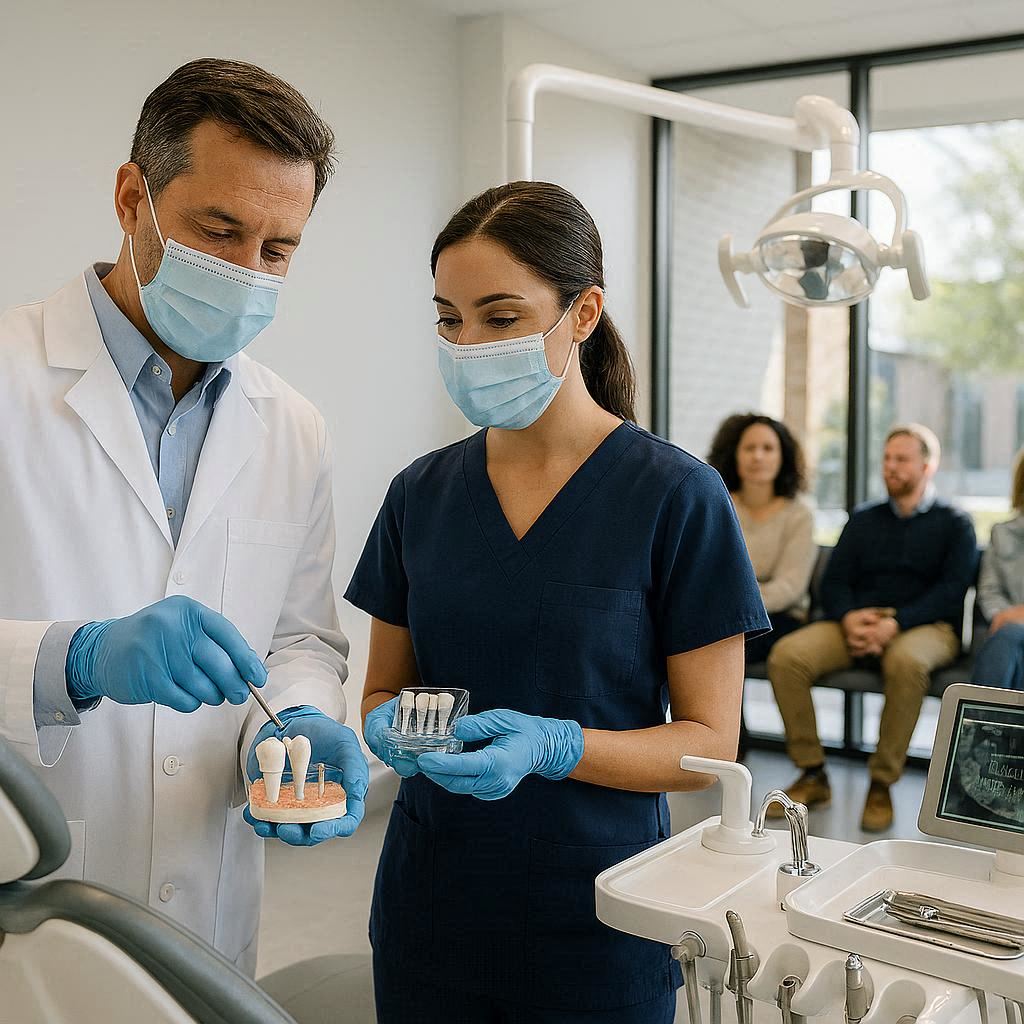
Think of a dental implant like a man-made tooth root.
Your natural tooth has two parts: the root (below the gum) and the crown (the part you see). An implant works the same way.
The implant is a small screw made of medical-grade titanium. A dentist places this screw into your jawbone. Over time, your bone grows tightly around it. This creates a super strong foundation.
Once the implant is secure, the dentist attaches an abutment (a small connector). On top of that goes your new crown. That crown looks, feels, and functions like a real tooth.
Important note: Dental implants are not for everyone. But for the right person, they offer a permanent solution that bridges and dentures simply cannot match.
Why Consider Dental Implants in Fort Mill SC?
People choose implants for many reasons. Here are the most common ones.
You Want to Eat Normally Again
Missing teeth make chewing hard. You avoid steak. You skip apples. Implants restore about 90% of your original chewing power. Dentures give you only about 20 to 30%.
You Want to Stop Hiding Your Smile
A gap in your smile affects confidence. You might cover your mouth when you laugh. Implants fill that gap permanently. No one will ever know it is not your real tooth.
You Want to Protect Your Other Teeth
When a tooth goes missing, the nearby teeth shift. They tilt into the empty space. This causes bite problems and makes cleaning harder. Implants keep everything in its proper place.
You Want to Stop Bone Loss
Your jawbone needs stimulation from tooth roots to stay strong. When a tooth is missing, the bone in that area slowly melts away. Implants provide that stimulation again. This keeps your face shape natural and youthful.
You Tried Other Options and Were Not Happy
Maybe you have a bridge that traps food. Maybe your denture clicks or slides. Implants eliminate those frustrations completely.
A Quick Comparison: Implants vs. Bridges vs. Dentures
Let us see how implants stack up against traditional options.
| Feature | Dental Implant | Fixed Bridge | Removable Denture |
|---|---|---|---|
| Looks and feels like a real tooth | Yes | Partially | No |
| Requires cutting down healthy teeth | No | Yes (adjacent teeth) | No |
| Prevents bone loss | Yes | No | No |
| Restores chewing power | 90% | 70% | 20-30% |
| Lifespan | 20+ years to a lifetime | 5-15 years | 5-10 years |
| Special cleaning required | No (brush and floss normally) | Yes (special floss) | Yes (soaking and adhesives) |
| Cost over 20 years | Moderate to high initially, low later | Moderate upfront, plus replacements | Low upfront, but frequent replacements |
Reader tip: Many people focus only on the upfront price. Look at the long-term picture. A cheap denture that needs replacement every five years often costs more than an implant that lasts decades.
The Step-by-Step Process of Getting Dental Implants in Fort Mill SC
Knowledge lowers fear. Here is exactly what happens from your first phone call to your final smile.
Step 1: The Consultation (What to Expect)
You call a local Fort Mill implant dentist. You schedule a visit.
At this appointment, the dentist examines your mouth. They take x-rays. They might do a 3D CT scan. This shows the bone level in your jaw.
Real talk: Some people have low bone density. This does not mean you cannot get implants. It might mean you need a bone graft first. We talk about that later.
The dentist discusses your goals. They explain options. They give you a written treatment plan with costs. Ask every question you have. No question is silly.
Good questions to ask:
- How many implants have you placed?
- What is your success rate?
- Do you offer sedation?
- What happens if an implant fails?
- Is there a warranty?
Step 2: Preparatory Work (Bone Grafts and Extractions)
Not everyone needs this step. But many people do.
If you have missing teeth for months or years, your bone may have shrunk. A bone graft rebuilds that area. The dentist places graft material (usually synthetic or from a donor) into your jaw. Then you wait three to six months for new bone to grow.
If you have a damaged tooth still in place, the dentist removes it first. Sometimes they place the implant immediately after extraction. Other times they wait for healing. It depends on infection and bone quality.
Step 3: Implant Placement Surgery
This sounds scary. It is actually very routine.
The dentist numbs your mouth completely. You feel pressure but not pain. Most people describe it as similar to a filling but longer.
The dentist makes a small cut in your gum. They drill a precise hole into the bone. They place the titanium implant into that hole. Then they close the gum over it or attach a healing cap.
The whole process takes 30 to 90 minutes depending on how many implants you get.
Important note: Many Fort Mill dentists offer sedation. You can take a pill, breathe laughing gas, or even sleep through the procedure. Talk to your dentist about what they offer.
Step 4: Osseointegration (The Waiting Game)
This is the most critical phase. And you do almost nothing.
Osseointegration is the process where your bone grows tightly around the implant. It takes three to six months.
During this time, you eat soft foods. You keep the area clean. You avoid putting direct pressure on the implant site. But you live normally otherwise.
Do not skip this healing period. Rushing leads to failure.
Step 5: Abutment Placement
Once the implant is fully fused to your bone, the dentist uncovers it.
They make a small opening in the gum. They attach the abutment. This little metal post sticks up above the gum line. It connects the implant to your crown.
Your gums need about two weeks to heal around the abutment.
Step 6: The Final Crown
Your dentist takes impressions of your mouth. They send those to a dental lab. A skilled technician crafts your custom crown. They match the color, shape, and size to your natural teeth.
This takes two to three weeks. Sometimes your dentist offers same-day crowns using computer design and milling. Ask if this is an option.
When the crown is ready, your dentist cements or screws it onto the abutment. You look in the mirror. And you see a complete smile again.
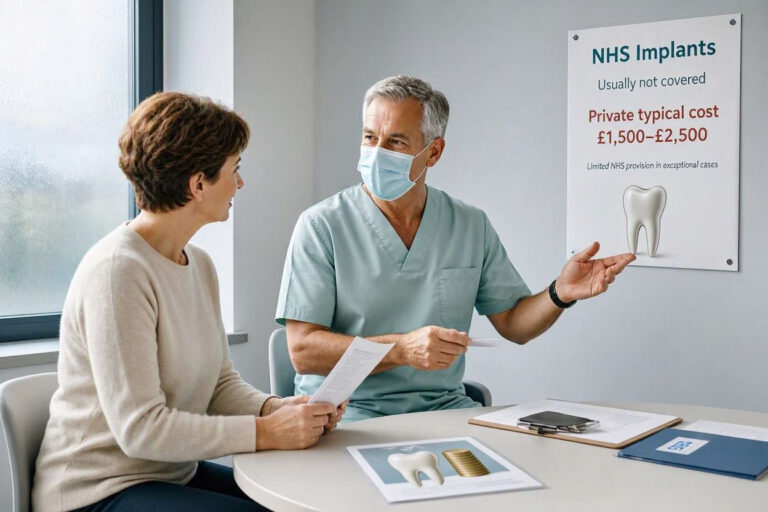
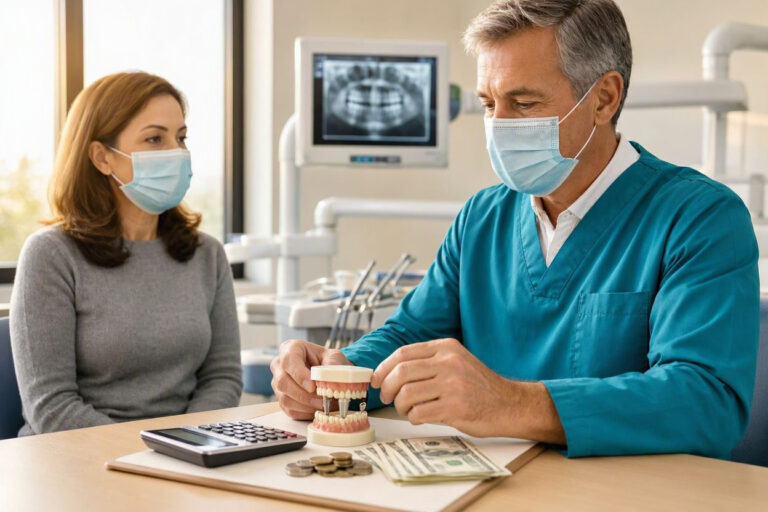
How Much Do Dental Implants Cost in Fort Mill SC?
This is the question everyone asks. Here is a realistic breakdown.
Average Prices in the Fort Mill Area
| Procedure | Typical Cost Range (per implant) |
|---|---|
| Consultation and CT scan | 150−500 |
| Extraction (if needed) | 200−600 |
| Bone graft (if needed) | 300−1,500 |
| Implant placement surgery | 1,500−2,500 |
| Abutment | 300−600 |
| Crown | 1,000−2,500 |
| Total without graft or extraction | 2,800−2,800−5,600 |
| Total with graft and extraction | 3,300−3,300−7,700 |
These are per-tooth costs. Many people need multiple implants. A full set of implants for an entire arch (upper or lower jaw) can cost 15,000to30,000 or more.
Why Such a Big Range?
Several factors affect price:
- Dentist experience – Specialists cost more but have higher success rates.
- Materials – Premium crowns look more natural.
- Technology – 3D-guided surgery costs more but is more precise.
- Location – Fort Mill prices differ from Charlotte or Rock Hill.
Does Insurance Cover Implants?
Most dental insurance plans do not cover implants fully. Some cover part of the crown. Some cover the extraction. A few premium plans cover a portion of the implant itself.
However, if you lost teeth due to an accident, your medical insurance might help. Always submit claims to both dental and medical plans.
Financing Options in Fort Mill
Most implant dentists offer payment plans. Look into:
- CareCredit – A healthcare credit card with promotional financing.
- LendingClub – Patient financing for dental work.
- In-house plans – Some Fort Mill dentists offer no-interest or low-interest payment plans.
Do not let cost stop you from consulting. Many people afford implants by spreading payments over 12 to 24 months.
Pain, Recovery, and What to Really Expect
Let us talk honestly about discomfort.
Does It Hurt?
During the procedure: No. You are completely numb. With sedation, you may not remember anything.
After the numbing wears off: Yes, you feel sore. But it is manageable.
Most people compare implant recovery to having a tooth pulled. You take over-the-counter pain relievers like ibuprofen for two to three days. Some need prescription medication. By day four or five, most feel fine.
Quote from a real patient (name withheld for privacy): “I was terrified. I put it off for two years. The recovery was easier than my wisdom teeth removal. I wish I had done it sooner.”
Recovery Timeline
- Day 1: Go home and rest. Bite on gauze. Do not spit or use straws. Eat cold, soft foods like yogurt or smoothies.
- Days 2 to 3: Swelling peaks. Use ice packs. Eat mashed potatoes, scrambled eggs, soup. Take pain medication as needed.
- Days 4 to 7: Swelling goes down. You feel much better. Switch to warm salt water rinses. Avoid chewing on the implant side.
- Weeks 1 to 2: Most people return to work the next day or after a weekend. Stitches dissolve or get removed. You eat soft-to-medium foods.
- Weeks 2 to 6: You forget the implant is there. But your bone is still healing deep inside. Follow your dentist’s restrictions on chewing hard foods.
- Months 3 to 6: Osseointegration finishes. You get your crown. You eat normally again.
Signs of Trouble
Call your dentist if you experience:
- Severe pain not controlled by medication
- Bleeding that does not stop with pressure
- Fever over 101°F (38.3°C)
- The implant feels loose
- Pus or unusual discharge
Most implant surgeries go smoothly. But your dentist wants to know about problems early.
Success Rates: How Often Do Implants Fail?
Here is the good news.
Dental implants have a success rate of 95% to 98% over ten years. For lower jaw implants, success rates often hit 98% or higher.
But failure happens. About 2 to 5 out of every 100 implants fail.
Common Reasons for Failure
- Smoking – Heavy smokers have failure rates up to 20%. Nicotine restricts blood flow to healing bone.
- Poor bone quality – If your bone is too soft or thin, the implant cannot grip well.
- Infection – Peri-implantitis is gum disease around the implant. It destroys bone.
- Grinding teeth – Clenching and grinding (bruxism) puts extreme pressure on implants.
- Medical conditions – Uncontrolled diabetes, autoimmune diseases, and radiation therapy to the jaw increase risk.
- Poor oral hygiene – Implants need cleaning just like real teeth.
What Happens If an Implant Fails?
Do not panic. Failure does not mean you lose your money and hope.
Your dentist removes the failed implant. This is usually easier than placing it. The site heals for a few months. Then the dentist tries again, often with a wider or longer implant.
Most failed attempts succeed on the second try. Some dentists offer a warranty or reduced fee for replacement. Ask about this before you start.
Different Types of Dental Implants (You Have Options)
Not all implants are the same. Your Fort Mill dentist may recommend different types based on your situation.
Endosteal Implants
This is the standard type. The implant goes directly into your jawbone. It looks like a small screw. Most people get endosteal implants.
Subperiosteal Implants
These sit on top of your bone but under your gum. A metal framework rests on the bone. Posts poke through the gum to hold the teeth.
Subperiosteal implants are rare today. They are used when a person cannot have bone grafting and does not have enough bone for standard implants.
All-on-4 or All-on-6
This is for people missing all teeth on an arch.
The dentist places four or six implants in strategic positions. They attach a full bridge of 10 to 14 teeth to those implants. You never remove it. It looks and works like natural teeth.
All-on-4 is faster and often cheaper than placing eight to ten individual implants. But it is harder to clean underneath.
Implant-Supported Dentures
This is a hybrid. Two to four implants snap into a special denture. You can remove the denture for cleaning, but it stays firmly in place while eating and talking.
This option costs less than All-on-4. It also makes cleaning easier.
Mini Implants
These are smaller diameter implants. They are sometimes used for small teeth or to stabilize lower dentures.
Mini implants are less strong. They are not recommended for molars or heavy chewing areas. But they are less invasive and cost less.
How to Choose the Right Dentist in Fort Mill SC
You have choices. Here is how to pick a great implant dentist.
Look for Training and Experience
Dental implants require special skills beyond regular dentistry.
Ask about:
- Years placing implants – More is usually better.
- Number of implants placed – Hundreds is good. Thousands is excellent.
- Specialty – Oral surgeons and periodontists (gum specialists) focus on surgery. General dentists can also place implants with training. Both can be great.
Read Real Patient Reviews
Check Google, Yelp, and Healthgrades. Look for patterns, not perfect scores.
Good signs: Patients mention clear communication, gentle care, and good follow-up.
Warning signs: Multiple reviews about failed implants, billing surprises, or rudeness.
Tour the Office
A modern office is not required. But cleanliness and organization matter.
Ask to see where the surgery happens. Is it a separate room? Is equipment covered and sterile?
Ask About Technology
3D CT scanning and guided implant surgery improve accuracy. Not every dentist has these. But those who do can often place implants more predictably.
Get a Second Opinion
Never feel guilty about getting another quote. A second opinion confirms the treatment plan and price.
Most Fort Mill dentists charge a small consultation fee. Some waive it if you proceed with treatment.
Daily Life With Dental Implants: What Changes?
You might wonder how implants feel day to day. Here is the honest truth.
Eating
Once healed, you eat anything. Steak. Nuts. Crusty bread. Caramel. Nothing is off limits.
But be smart. Do not use your implant to crack nuts or open bottles. Treat it like a real tooth. Avoid very hard things like ice or hard candy.
Cleaning
This surprises many people. Implants are easier to clean than bridges but slightly harder than natural teeth.
You brush normally. You floss normally. But you should also use a water flosser or special implant floss to clean around the abutment area.
Important note: Implants cannot get cavities. But they can get gum disease. And gum disease around an implant (peri-implantitis) is serious. It destroys bone and leads to failure. So keep those gums healthy.
Talking
Some people worry implants will change their speech. The opposite happens.
Dentures can slip and cause clicking or slurring. Implants stay fixed. Most people speak more clearly after implants.
Travel and Sports
Implants make life easier. No soaking overnight. No adhesive creams. No special cases.
You travel like a person with natural teeth. Brush, pack floss, and go.
If you play contact sports, wear a mouthguard. The implant itself is strong, but the crown can chip or break just like a real tooth.
Pros and Cons: An Honest List
Let us put everything side by side.
Pros of Dental Implants
- Permanent solution – Lasts decades or a lifetime.
- Preserves bone – Keeps your jaw strong and face shape natural.
- Protects adjacent teeth – No drilling on healthy teeth.
- Natural feel – You forget it is not real.
- High success rate – 95 to 98%.
- Eat anything – No food restrictions.
- Easy cleaning – Brush and floss normally.
- Confidence – No hiding your smile.
Cons of Dental Implants
- Higher upfront cost – More expensive than bridges or dentures.
- Surgery required – Some people fear any procedure.
- Healing time – Three to six months before final crown.
- Not for everyone – Some medical conditions or heavy smoking lower success.
- Possible complications – Infection, nerve issues, or failure (rare but real).
- Insurance coverage – Most plans pay little to nothing.
Frequently Asked Questions About Dental Implants in Fort Mill SC
Q: How long do dental implants last?
A: With good care, implants often last 20 to 30 years or longer. The crown may need replacement after 10 to 15 years from normal wear. But the implant screw itself can last a lifetime.
Q: Am I too old for dental implants?
A: Age is not a barrier. Healthy adults in their 80s and 90s get implants successfully. The real question is your overall health and bone density, not your age.
Q: Can I get implants if I smoke?
A: Yes, but your risk is higher. Smokers have failure rates around 15 to 20% compared to 2 to 5% for non-smokers. Quitting for two weeks before and after surgery helps. Long-term, smoking remains a risk.
Q: How long does the whole process take?
A: From initial consult to final crown, plan on 4 to 9 months. Complex cases with bone grafting can take 12 months or more. Rush jobs often fail.
Q: Do dental implants hurt more than a root canal?
A: Most patients say no. Root canals often cause more post-procedure pain. Implant recovery is typically mild to moderate.
Q: Can my body reject a dental implant?
A: True rejection (immune reaction) is extremely rare. Titanium is biocompatible. Failure is almost always due to infection, poor bone quality, or overloading, not rejection.
Q: What if I need implants for all my teeth?
A: You have options. All-on-4 uses four implants per arch. Implant-supported dentures use two to four implants. Traditional individual implants need eight to ten per arch. Your dentist helps you choose based on budget and bone.
Q: How do I clean implant crowns?
A: Brush twice daily. Floss once daily. Use a water flosser on a low setting around the gum line. See your dentist every six months for professional cleaning with special implant-safe tools.
Q: Is there any reason I cannot get implants?
A: Yes. Uncontrolled diabetes, active cancer radiation to the jaw, severe immune disorders, active gum disease, heavy smoking, and some bisphosphonate medications (bone drugs) can rule out implants. Your dentist reviews your medical history carefully.
Q: What is the cheapest dental implant option?
A: Mini implants or implant-supported dentures cost less than individual implants for every missing tooth. But cheaper does not always mean better value. Discuss long-term costs with your dentist.
Tips for Keeping Your Implants Healthy for Decades
You invested in your smile. Protect that investment.
Do This Every Day
- Brush gently around the implant crown.
- Floss using implant-specific floss or superfloss.
- Use a water flosser on the lowest effective pressure.
- Rinse with an alcohol-free, antibacterial mouthwash.
Do This Every Six Months
- See your dentist for checkups and cleanings.
- Ask for a peri-implant exam (checking gum pockets around the implant).
- Get digital x-rays to check bone levels.
Do This As Needed
- Wear a nightguard if you grind your teeth.
- Wear a mouthguard for sports.
- Call your dentist if the crown feels loose or chipped.
Avoid These Things
- Chewing ice, hard candy, or bones.
- Using your teeth as tools (opening packages, holding nails).
- Skipping dental cleanings.
- Ignoring bleeding gums around the implant.
Reader tip: Think of your implant like a luxury car. It needs regular maintenance. Neglect costs you more in the long run.
Realistic Expectations: What Implants Cannot Do
Let us stay honest. Implants are amazing. But they are not magic.
Implants cannot:
- Stop you from getting gum disease on other teeth.
- Whiten stained neighboring teeth.
- Reverse existing bone loss elsewhere.
- Work properly if you refuse to clean them.
- Last forever if you smoke heavily for decades.
Implants also require commitment. The healing phase demands patience. You cannot rush bone growth. You cannot skip post-op instructions.
But for the right person who follows the rules, implants change lives.
Conclusion
Dental implants in Fort Mill SC offer a permanent, natural-looking solution for missing teeth. They restore chewing power, prevent bone loss, and protect your remaining teeth. The process takes four to nine months and costs between 2,800and7,700 per tooth on average. Success rates are excellent at 95% to 98% for non-smokers with good health.
Implants are not for everyone. But for those who qualify, they outperform bridges and dentures in comfort, function, and long-term value. Talk to a local Fort Mill implant dentist. Get a consultation. Ask about financing. And take the first step toward smiling without hesitation again.
Additional Resource
For a deeper look at implant costs, insurance tips, and a checklist of questions to ask your dentist, visit the American Academy of Implant Dentistry’s patient education page:
👉 https://www.aaid.com/patients
Disclaimer
This article provides general information about dental implants in Fort Mill SC. It does not constitute medical or dental advice. Every patient’s situation is unique. Always consult a licensed dentist in Fort Mill, South Carolina, for a personal examination and treatment plan. The author and publisher are not responsible for any actions taken based on this content.