Dental Implants in Clifton NJ
Losing a tooth can feel frustrating. You might worry about your smile, your ability to chew, or even your long-term oral health. The good news is that modern dentistry offers a reliable solution. You have likely heard about dental implants. But what does getting them in Clifton, NJ actually involve? Let’s walk through everything, step by step.
If you live in Passaic County or anywhere near Clifton, you have access to excellent dental care. This guide is for regular people who want honest facts. No overly complex words. No hype. Just practical information to help you decide if dental implants are right for you.
What Exactly Are Dental Implants?
Let’s start with the basics. A dental implant is not the same as a bridge or dentures. It is a small, screw-like post made from titanium. A dentist places this post directly into your jawbone. Over time, the bone grows around the implant. This creates a very strong foundation.
Think of the implant as an artificial tooth root. Once the implant heals and fuses with your bone, your dentist attaches a crown on top. That crown looks and functions like a natural tooth.
The Three Main Parts of a Dental Implant
It helps to understand the different pieces involved.
- The Implant Fixture: This is the titanium screw that goes into your jawbone. It is not visible above the gum line.
- The Abutment: A small connector piece that attaches to the top of the implant. It sits at or just above the gum line.
- The Prosthesis: This is the part you see. It is usually a crown, but can also be a bridge or denture.
Note: Sometimes people refer to the whole thing as an “implant.” But knowing the three parts helps you talk to your dentist in Clifton more clearly.
Why Choose a Dental Implant Over Other Options?
Many people in Clifton ask this question. Why not just get a bridge or wear a partial denture? Each option has its place. But implants offer unique benefits that other solutions cannot match.
| Feature | Dental Implant | Fixed Bridge | Removable Denture |
|---|---|---|---|
| Bone Preservation | Prevents bone loss | No effect | Accelerates bone loss |
| Adjacent Teeth | No alteration needed | Requires shaving down healthy teeth | No alteration needed |
| Stability | Very stable (fused to bone) | Stable but relies on other teeth | Can slip or click |
| Longevity | Can last 20+ years | 7–15 years | 5–8 years |
| Cleaning | Floss and brush normally | Requires special floss | Needs soaking and adhesive |
You can see that implants do more than replace a missing tooth. They actively protect your jawbone and keep your face shape intact. This is a big deal over the long run.
A Realistic Look at the Downsides
Honesty matters. Implants are not perfect for everyone. Here are some points to consider.
- Cost: Implants have a higher upfront cost than bridges or dentures.
- Time: The process takes months, not weeks.
- Surgery: You need a minor surgical procedure. This can feel intimidating.
- Health Requirements: You need healthy gums and enough bone density.
For many people in Clifton, the benefits outweigh these downsides. But you should never feel pressured. Talk openly with your dentist about your situation.
The Step-by-Step Process for Dental Implants in Clifton NJ
Every patient’s journey is a bit different. But most follow a similar path. Let’s break down what you can expect from the first phone call to your final smile.
Step 1: The Initial Consultation
Your first visit is all about information. The dentist will examine your mouth. They will take X-rays or a 3D CT scan. This helps them see your jawbone, nerves, and sinuses.
During this visit, you should ask questions. Here is a good list to get you started.
- How many implants have you placed?
- What type of implant system do you use?
- Will I need a bone graft?
- What is the total estimated cost?
- Do you offer sedation options?
The dentist will also review your medical history. Certain conditions, like uncontrolled diabetes or heavy smoking, can affect healing. Be honest. Your safety comes first.
Step 2: Preparatory Procedures (If Needed)
Not everyone has enough bone to support an implant. This is common. The good news is that your dentist can often fix this with a bone graft.
A bone graft adds new bone material to your jaw. It comes from different sources:
- Your own bone (from another area of your mouth or body)
- Donor bone (human, animal, or synthetic)
After a graft, you need several months of healing. This waiting period is essential. Rushing leads to failure. Many patients in Clifton get bone grafts without major issues.
Step 3: The Implant Placement Surgery
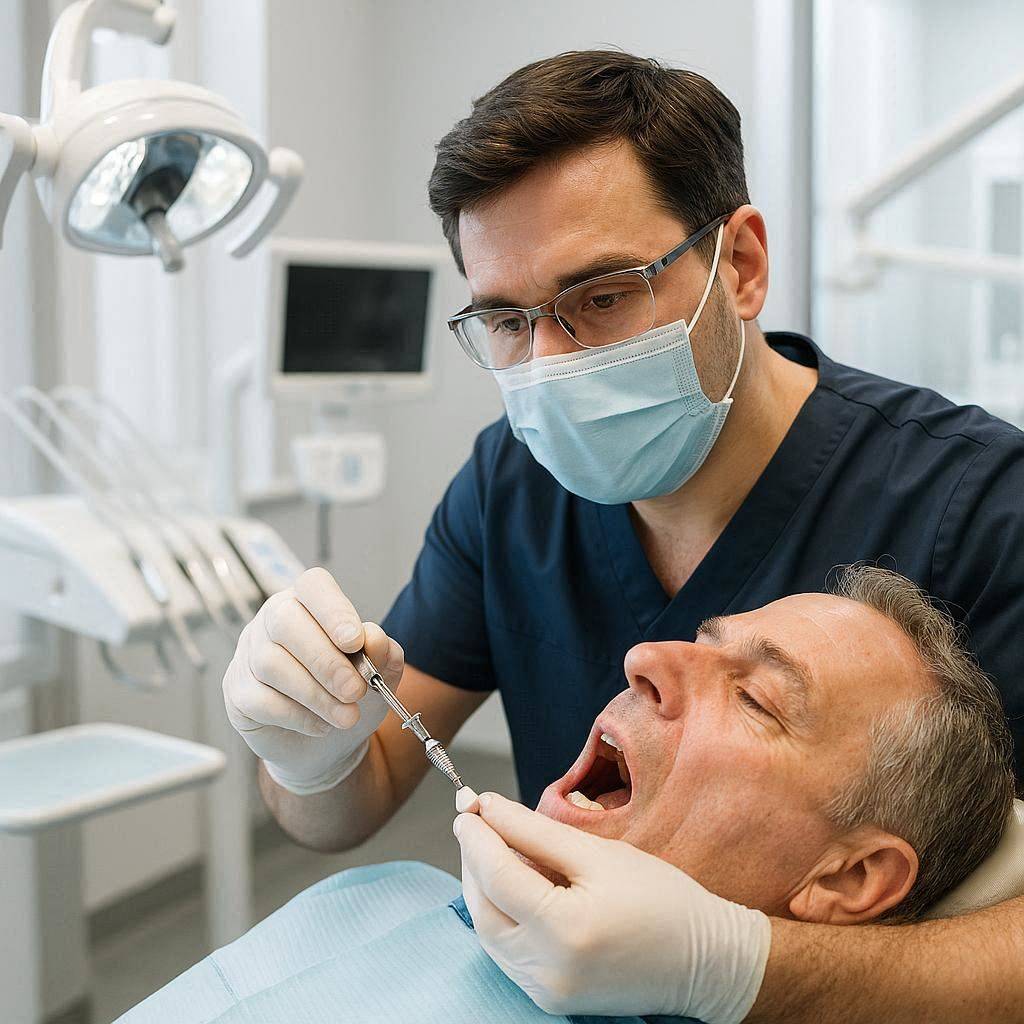
This is the main event. The dentist makes a small cut in your gum to expose the bone. Then they carefully drill a hole and place the titanium implant. Finally, they stitch the gum closed over or around the implant.
Most people get local anesthesia to numb the area. You are awake but feel no pain. For nervous patients, sedation options like nitrous oxide or oral medication are available.
The surgery itself usually takes 60 to 90 minutes per implant. You can drive yourself home if you only had local anesthesia. If you took sedation, you need a ride.
Step 4: Osseointegration – The Healing Phase
This is the most critical step. Osseointegration is the process of your jawbone growing tightly around the implant. It takes time. Typically, you wait 3 to 6 months.
During this phase, you eat soft foods. You keep the area clean. You avoid putting pressure on the implant site. Your dentist will schedule follow-up visits to check progress.
Many patients worry that something is wrong because they feel nothing. No news is good news. Most healing happens without any signs.
Step 5: Placing the Abutment
Once your implant is fully integrated, you return for a minor procedure. The dentist reopens the gum to expose the top of the implant. Then they attach the abutment. This small piece acts as a connector.
You will need another 2 weeks of healing. This allows your gum to shape itself around the abutment. In some modern implant systems, the dentist places the abutment at the same time as the implant. Ask your Clifton dentist about this option.
Step 6: Creating and Placing Your Crown
The final step is the fun part. Your dentist takes impressions of your mouth. A dental lab uses these molds to create your custom crown. They match the color, size, and shape to your natural teeth.
This process usually takes 2 to 3 weeks. In the meantime, you may wear a temporary crown. When the permanent crown arrives, your dentist cements or screws it onto the abutment.
You now have a complete, beautiful, and functional tooth.
How Much Do Dental Implants Cost in Clifton NJ?
Let’s talk about money. This is often the biggest concern for people. Implants are an investment in your health. But they are not cheap.
Average Price Breakdown
Here is a realistic range for a single implant in Clifton, NJ. Remember that your exact cost depends on your specific needs.
| Service | Typical Cost Range |
|---|---|
| Consultation and CT Scan | 150–350 |
| Bone Graft (if needed) | 300–1,200 per site |
| Implant Placement Surgery | 1,500–2,500 |
| Abutment | 300–600 |
| Custom Crown | 1,000–2,500 |
| Total for One Implant | 3,250–3,250–7,150 |
A full set of implant-supported dentures can cost 20,000to45,000 per arch. These numbers seem high. But think about the long term. A bridge might need replacement every 10 years. A well-cared-for implant can last a lifetime.
Does Insurance Cover Implants in Clifton?
The answer is “it depends.” Many dental insurance plans still classify implants as cosmetic. However, this is changing slowly.
Some plans cover part of the crown or the abutment. Others cover the implant itself if a tooth was lost due to an accident. Very few cover the full procedure.
Your best move is to call your insurance company. Ask these specific questions:
- Does my plan have a dental implant benefit?
- What is my annual maximum?
- Do you cover bone grafts?
- Which local dentists are in-network?
If your plan covers little to nothing, do not panic. Many Clifton dental offices offer payment plans. CareCredit and similar healthcare credit cards are also popular options.
Important note: Never choose a dentist solely because they are cheap. Implant failures are expensive to fix. Look for experience and good reviews first.
Who Is a Good Candidate for Dental Implants?
Most healthy adults are candidates. But your dentist needs to check a few things first.
Good Signs You Are a Candidate
- You have one or more missing teeth.
- Your jawbone is fully grown (no one under 18).
- You have enough bone density to support the implant.
- Your gums are healthy (no active periodontal disease).
- You do not smoke heavily (smoking slows healing).
- You are willing to wait several months for the process.
Signs You Might Need Extra Care
Some situations do not rule out implants, but they require more planning.
- Diabetes: Well-controlled diabetes is fine. Uncontrolled diabetes raises infection risks.
- Smoking: You can get implants as a smoker. But the failure rate is higher. Consider quitting or cutting back before surgery.
- Bruxism (teeth grinding): You may need a night guard to protect your implants.
- Osteoporosis medications: Some drugs (bisphosphonates) can increase complication risks. Tell your dentist everything you take.
Comparing Clifton NJ Dentists for Implants
You have many choices in Clifton and nearby towns like Passaic, Nutley, and Montclair. How do you pick the right one? Use this checklist.
Questions to Ask Before Booking Surgery
- “How many implant procedures do you perform each year?”
Look for a dentist who does at least 50 to 100 per year. Experience matters. - “What is your success rate?”
Most good dentists report a 95% or higher success rate for single implants. - “Do you use a CT scan for planning?”
Yes is the correct answer. 3D imaging is the modern standard. - “Who will place the crown?”
Some general dentists place the implant and make the crown. Others refer out. Both can work fine. - “What happens if the implant fails?”
A confident dentist will have a clear answer. Many offer a warranty or a free replacement for early failures.
Types of Implant Providers in Clifton
- General Dentist with Implant Training: Good for single, straightforward cases. Often more affordable.
- Periodontist (Gum Specialist): Excellent for complex cases or patients with gum disease.
- Oral Surgeon: Best for difficult extractions, big bone grafts, or multiple implants.
- Prosthodontist: The restoration specialist. Excellent for full mouth reconstructions and implant dentures.
You do not always need a specialist. A skilled general dentist can handle many cases perfectly. But if your situation is complex, do not hesitate to see a specialist.
Recovery and Aftercare: What Is Normal?
Recovery is usually easier than people expect. Most patients are back to normal activities within 2 or 3 days. But proper aftercare is crucial.
The First 24 Hours
- Bite on gauze to stop bleeding.
- Use ice packs on your face (15 minutes on, 15 minutes off).
- Do not spit, rinse, or use a straw.
- Eat only cold or lukewarm soft foods.
- Take prescribed or recommended pain relievers before numbness wears off.
The First Two Weeks
- Rinse gently with warm salt water after 24 hours.
- Brush your other teeth normally, but be gentle near the surgery site.
- Avoid hard, crunchy, or sticky foods.
- Do not smoke or use tobacco products.
- Avoid exercise or heavy lifting for the first 72 hours.
Long-Term Care for Your Implant
Here is great news. You care for an implant exactly like a natural tooth.
- Brush twice a day.
- Floss daily (special implant floss or a water flosser helps).
- Visit your dentist every 6 months for cleanings.
- Wear a night guard if you grind your teeth.
There is no special magic. Good oral hygiene is all you need. Implants cannot get cavities, but they can develop gum disease around them. This is called peri-implantitis. It is preventable with good home care.
Common Fears and Myths About Implants
Let’s clear up some confusion. You may have heard scary stories. Here is the truth.
Myth: The Surgery Is Extremely Painful
Truth: Most patients report less pain than a tooth extraction. Local anesthesia blocks pain during surgery. Over-the-counter ibuprofen usually handles post-op discomfort. Severe pain is rare and should prompt a call to your dentist.
Myth: Implants Look Fake
Truth: Modern crowns look incredibly natural. Your dentist matches the color and translucency of your other teeth. Unless you tell someone, they will never know.
Myth: Implants Fail Often
Truth: Success rates are 95% to 98% for healthy patients. Most failures happen early due to poor healing or infection. Late failures are uncommon.
Myth: You Cannot Get Implants if You Are Older
Truth: Age does not matter. Many people in their 70s, 80s, and even 90s get implants. Your overall health matters more than your birthday.
What About Same-Day Implants?
You may see advertisements for “Teeth in a Day” or immediate load implants. This is a real technique, but it is not for everyone.
In same-day implants, the dentist places the implant and attaches a temporary crown all in one visit. It sounds great. But there are conditions.
- You need excellent bone quality.
- The temporary crown cannot touch your other teeth when you bite.
- You must follow a very soft diet for months.
For most people, the traditional approach with a healing period is safer and more predictable. Do not choose same-day implants just for convenience. Ask your Clifton dentist if you are truly a good candidate.
Realistic Timeline from Start to Finish
Let’s put everything on a calendar. This is a typical schedule for a straightforward case.
| Stage | Time Required |
|---|---|
| Consultation and CT scan | 1 day |
| Bone graft (if needed) | 1 day, plus 4–6 months healing |
| Implant placement surgery | 1 day |
| Osseointegration healing | 3–6 months |
| Abutment placement | 1 day, plus 2 weeks healing |
| Crown fabrication | 2–3 weeks |
| Final crown placement | 1 day |
Total time for a simple case without graft: 4 to 7 months.
Total time with a bone graft: 8 to 13 months.
Patience pays off. Rushing leads to problems. Use this waiting time to save money, improve your oral hygiene, or quit smoking.
Life After Dental Implants: What Changes?
You might wonder how daily life feels with an implant. For most people, things get better.
Eating and Drinking
You can eat everything you used to enjoy. Steak, apples, corn on the cob, nuts, and sticky candies are all fine. The implant is firmly anchored in your bone. You do not need to baby it.
Speaking
Some denture wearers struggle with clicking or slipping. Implants eliminate this completely. You will speak clearly and confidently from day one after crown placement.
Confidence
This is the biggest change for many patients. You stop hiding your smile. You stop worrying about a gap showing. The psychological benefit is real and powerful.
Financing Dental Implants in Clifton NJ
We covered costs earlier. Now let’s talk about how to pay.
Options to Explore
- Dental Savings Plans: Not insurance, but a discount plan. You pay an annual fee and get 10–20% off procedures from participating dentists.
- CareCredit: A healthcare credit card with promotional financing (often 6, 12, or 18 months no interest if paid in full).
- In-House Payment Plans: Some Clifton dental offices offer monthly payment plans directly. Ask the front desk.
- Health Savings Account (HSA) or Flexible Spending Account (FSA): Implants are a qualified medical expense. Use pre-tax dollars to save 20–40%.
- Dental Schools: The Rutgers School of Dental Medicine is not far from Clifton. Advanced students perform implant work under supervision at lower costs.
What to Avoid
Be careful with “too good to be true” deals. A $1,500 complete implant is likely a bait-and-switch. You will pay extra fees later. Always get a written estimate before starting.
Maintaining Your Implant for Decades
You want your investment to last. Here is a simple routine that works.
Daily Home Care
- Use a soft toothbrush.
- Floss under the crown where it meets the gum.
- Consider a water flosser once a day.
- Avoid chewing ice or hard objects.
Professional Maintenance
See your dentist or hygienist every 6 months. They will:
- Check the crown for wear or loosening.
- Probe around the implant to check for bone loss.
- Clean areas your brush cannot reach.
Think of it like owning a car. You do not change the oil every week, but you do it regularly. Same idea here.
When Implants Are Not the Best Choice
Despite all the benefits, implants are not for everyone. A good dentist will tell you honestly if another option is better.
Situations Where a Bridge or Denture Might Be Better
- You have severe uncontrolled medical conditions.
- You are unwilling to stop smoking.
- You cannot afford the upfront cost and have no financing options.
- You do not want to wait several months.
- You have very limited bone and refuse a graft.
None of these are moral failings. Life is complicated. A bridge or a good set of dentures can still give you a functional smile. Do not let anyone make you feel guilty for choosing a different path.
Preparing for Your First Consultation in Clifton
Walking into a new dental office can feel uncomfortable. Preparation helps. Here is what to bring.
Items to Take With You
- Your insurance card and a photo ID.
- A list of medications and supplements you take.
- Any recent X-rays from another dentist.
- A written list of your questions.
- A notepad to write down answers.
What to Expect
The dentist will examine your mouth. Then you will have a conversation. A good dentist will not push you to decide that day. They will explain the pros and cons. They will give you a written treatment plan with costs.
Take that plan home. Sleep on it. Compare it with another office if you want. This is your health and your money.
The Importance of Bone Health in Clifton Patients
Your jawbone needs stimulation to stay strong. When you lose a tooth, the bone in that area starts to melt away. This happens quickly in the first year.
This is why time matters. If you lost a tooth years ago, you likely have less bone than someone who lost a tooth last month. That does not mean implants are impossible. It means you are more likely to need a bone graft.
Signs You Might Need a Bone Graft
- You lost the tooth 12+ months ago.
- You have worn a denture over that area for years.
- You have periodontal disease with past bone loss.
- A previous dentist told you that you have thin bone.
Do not let a bone graft scare you. The procedure is routine. Hundreds of Clifton patients get bone grafts every year with great results.
Sedation Options for Nervous Patients
Fear of dental work is real and common. Do not let shame stop you from getting implants. Modern sedation makes the experience comfortable.
Your Choices Explained
| Sedation Type | How It Feels | Recovery |
|---|---|---|
| Local anesthesia only | You feel pressure but no pain | Drive yourself home |
| Nitrous oxide (laughing gas) | Relaxed and floaty, but awake | Normal within 5 minutes |
| Oral sedation (pill) | Drowsy, may fall asleep | Need a ride home |
| IV sedation | Deeply relaxed, little memory of procedure | Need a ride home; rest of day off |
Talk to your Clifton dentist about your anxiety. They have heard it before. They want to help.
Comparing Clifton to Nearby Cities for Implant Costs
Prices vary across North Jersey. Here is a general comparison. Note that these are averages for a single implant without a graft.
| Location | Average Cost |
|---|---|
| Clifton, NJ | 4,500–6,500 |
| Passaic, NJ | 4,200–6,200 |
| Paterson, NJ | 4,000–6,000 |
| Montclair, NJ | 5,000–7,000 |
| Wayne, NJ | 4,800–6,800 |
| New York City (across the river) | 6,000–9,000 |
Clifton offers a sweet spot. You get access to skilled professionals without the Manhattan price premium.
Real Patient Scenarios (Based on Common Experiences)
These are not real people, but they represent situations I see often in Clifton.
Maria, Age 52
Maria lost a back molar 10 years ago. She ignored it. The adjacent teeth shifted. Now she has food traps and gum issues. Maria needs a bone graft and an implant. Total cost is $6,200. She uses CareCredit with 12-month financing. Her only regret is waiting so long.
James, Age 68
James wears a lower denture that floats and clicks. He is tired of adhesive. His dentist recommends 4 implants to snap his denture in place. Cost is $18,000. James uses savings and his HSA. Recovery takes 6 months, but he says it is worth every penny.
Lisa, Age 34
Lisa lost a front tooth in a biking accident. She wants the most natural look possible. Her dentist places a single implant with a zirconia crown. Total cost is $5,800 with no graft needed. Lisa loves her smile and forgets she ever had an accident.
Frequently Asked Questions (FAQ)
1. Are dental implants safe?
Yes. They have been used for over 50 years with an excellent safety record.
2. How long does the implant last?
With good care, 20 years to life. The crown may need replacement after 10–15 years.
3. Can I get implants if I smoke?
Yes, but your failure risk is higher. Quitting before surgery greatly improves your chances.
4. Will my insurance cover any part?
Some plans cover the crown portion. Call your provider for exact details.
5. Is the procedure painful?
Most patients say no. The numbing works well. Post-op soreness is usually mild.
6. How do I find the best implant dentist in Clifton?
Read Google reviews. Ask about experience. Get a second opinion. Trust your gut feeling.
7. Can implants be done in one day?
Sometimes, but only if you have excellent bone. Most patients need the traditional multi-month approach.
8. What happens if an implant fails?
Your dentist can usually remove it, let the bone heal, and try again.
9. Can I get implants if I have gum disease?
Only after treatment. Active gum disease must be controlled first.
10. Are implants covered by Medicare or Medicaid?
Traditional Medicare does not cover dental implants. NJ Medicaid may cover basic extractions but rarely implants.
Additional Resource
For more independent information on dental implants, including clinical studies and patient guides, visit the American Academy of Implant Dentistry’s public education page:
https://www.aaid.com/patients/index.html
Conclusion
Dental implants in Clifton, NJ offer a dependable, long-term solution for missing teeth. The process takes several months and requires a significant upfront investment, but the result is a natural-looking, functional tooth that can last a lifetime. By choosing an experienced local dentist, understanding the realistic timeline, and committing to good oral hygiene, you can confidently restore your smile.
Disclaimer: This article is for informational purposes only and does not constitute medical or dental advice. Always consult with a licensed dentist in Clifton, NJ, for a proper diagnosis and treatment plan tailored to your specific health needs.