Dental Implants in Clarksville TN
Losing a tooth is never fun. It can make you feel self-conscious when you laugh, struggle to chew your favorite foods, or even notice your other teeth starting to shift.
You might have heard about dental implants, but you probably have a lot of questions. Are they painful? How long do they last? What does the process actually look like?
This guide walks you through everything you need to know about dental implants in Clarksville TN. No fluff, no confusing medical jargon. Just honest, clear, and helpful information to help you make the best decision for your health and your wallet.
What Exactly Is a Dental Implant?
Let’s start with the basics.
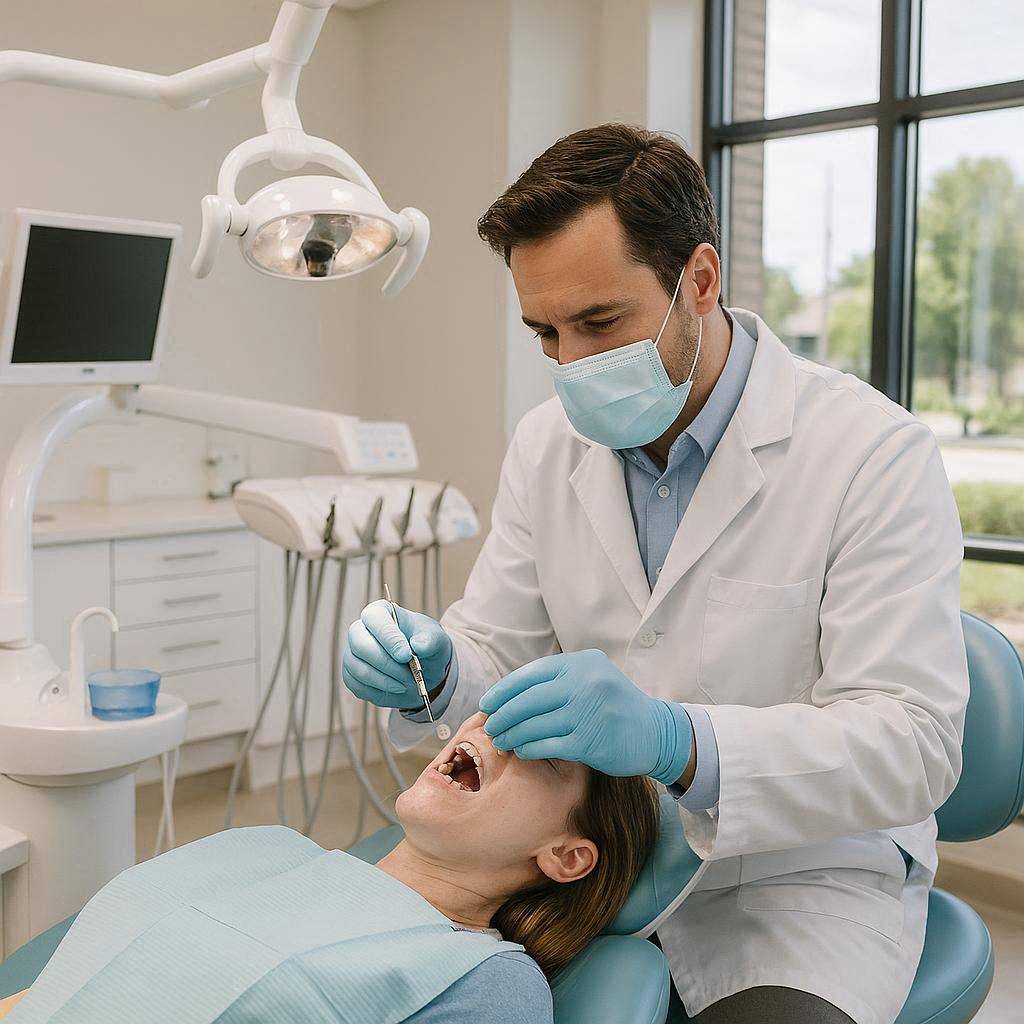
A dental implant is not a fake tooth in the way you might think. It is actually a small, strong screw—usually made of titanium—that a surgeon places into your jawbone. This screw acts like the root of your natural tooth.
Once the implant heals and fuses with your bone, your dentist attaches a custom-made crown on top. The result looks, feels, and functions like a real tooth.
The Three Main Parts of a Dental Implant
To understand the process better, you need to know the three pieces that make up a complete implant.
| Component | What It Is | Purpose |
|---|---|---|
| Implant Fixture | Titanium screw placed in the jawbone | Acts as the artificial tooth root |
| Abutment | Small connector piece | Joins the implant to the crown |
| Prosthesis (Crown) | The visible false tooth | Provides natural look and chewing function |
Most people in Clarksville only notice the final crown. But the secret to a great implant is what happens under the gumline.
Important Note: Not everyone needs a crown. Some patients receive implant-supported dentures or bridges. Your situation determines the right type of prosthesis.
Why Choose Dental Implants Over Other Options?
You have other ways to replace a missing tooth. Bridges and dentures are common. But implants offer unique benefits that many patients in Clarksville find worth the investment.
Compare Your Options
| Feature | Dental Implants | Traditional Bridge | Removable Denture |
|---|---|---|---|
| Looks like a natural tooth | Yes | Often yes, but visible metal sometimes | Not really |
| Prevents bone loss | Yes | No | No |
| Affects healthy teeth | No (keeps them intact) | Yes (shaves down adjacent teeth) | No |
| Removable | No | No | Yes |
| Average lifespan | 20+ years to lifetime | 5–15 years | 5–10 years |
| Cleaning difficulty | Same as natural teeth | Requires special flossing | Takes time and care |
The Lifestyle Benefits
Beyond the comparison table, implants change daily life in small but meaningful ways.
- Eat normally again. Steak, corn on the cob, apples. No slipping or strange chewing motions.
- Speak clearly. No worries about dentures clicking or moving when you talk.
- Smile with confidence. The crown matches your other teeth perfectly.
- Preserve your jawbone. Your bone stays healthy because the implant stimulates it just like a natural root.
- Protect your other teeth. You do not need to file down healthy teeth to support a bridge.
A local Clarksville patient once told me, “I forgot I even had an implant after six months. That is the best part. It just feels like me again.”
Who Is a Good Candidate for Implants?
This is one of the most common questions. The short answer is: most healthy adults can get implants. But your dentist needs to check a few things first.
Ideal Candidate Checklist
Your Clarksville implant dentist will look for:
- Healthy gums (no active gum disease)
- Enough jawbone to support the implant
- Good general health (chronic conditions like diabetes should be well-managed)
- Non-smoker or willing to quit temporarily during healing
- Commitment to good oral hygiene
What If You Lack Bone?
Many patients worry about bone loss. This often happens when a tooth has been missing for a long time. Without a root, the bone slowly shrinks.
Good news: You may still qualify for implants.
Your dentist can perform a bone graft before the implant procedure. This involves adding bone material to the weak area. After a few months of healing, you have a solid foundation for the implant.
Note: A bone graft adds time and cost to your treatment. But it opens the door for patients who were previously told they could not get implants.
Age Is Not a Barrier
Teenagers usually need to wait until their jaw stops growing (around age 18 for girls, 20–22 for boys). But older adults in Clarksville get implants all the time.
Many patients in their 70s, 80s, and even 90s successfully receive implants. As long as you are healthy enough for a simple dental procedure, age alone does not stop you.
The Step-by-Step Process of Getting Dental Implants in Clarksville TN
Understanding the timeline helps reduce anxiety. Here is exactly what happens from start to finish.
Step 1: Initial Consultation (Day 1)
You meet with a Clarksville implant dentist. They will:
- Examine your mouth
- Take X-rays or a 3D CT scan
- Review your medical history
- Discuss your goals and budget
- Create a custom treatment plan
This visit usually takes 60–90 minutes. Come with questions. Write them down beforehand.
Step 2: Preparatory Work (If Needed)
Some patients need extra steps before the actual implant surgery.
- Tooth extraction – If the damaged tooth is still in place
- Bone graft – If your jawbone is too thin or soft
- Sinus lift – For upper back molars near the sinus cavity
Healing from these procedures takes 2 to 9 months. Do not rush this phase. Good preparation prevents failure later.
Step 3: Implant Placement (Surgery Day)
The big day arrives. Here is what to expect.
Before the procedure: You receive local anesthesia to numb the area. You remain awake but feel nothing. For nervous patients, sedation options are available.
During the procedure: The surgeon makes a small cut in your gum. They drill a precise hole into the bone. Then they place the titanium implant into that hole. Finally, they close the gum tissue over the implant.
How long? One implant takes about 30–60 minutes. Multiple implants take longer.
Pain level? You should not feel sharp pain during surgery. Some pressure is normal. Most patients describe it as less intense than a tooth extraction.
Step 4: Osseointegration (The Healing Phase)
This is the most critical part of the entire process.
Osseointegration is a fancy word for your jawbone growing around the implant and locking it in place. Think of it like a tree’s roots growing into the soil.
Healing time: 3 to 6 months on average
What you do: Eat soft foods. Keep the area clean. Avoid putting pressure on the site. Do not smoke.
What happens if you rush? If you attach a crown too early, the implant may fail because the bone is not ready.
During this time, you may wear a temporary partial denture or a flipper to fill the gap.
Step 5: Abutment Placement (Minor Second Surgery)
Once your implant is fully fused to the bone, your dentist reopens the gum to attach the abutment.
This is a much smaller procedure than the initial implant placement. Some dentists even do it without any cutting.
Healing after the abutment takes about 2 weeks.
Step 6: Crown Fabrication and Placement
Your dentist takes impressions of your mouth. A dental lab uses those molds to create your custom crown.
Matching your other teeth: The lab matches the color, shape, and size of your natural teeth. You approve the look before final placement.
The final appointment: Your dentist screws or cements the crown onto the abutment. They check your bite to make sure it feels comfortable.
Congratulations. You now have a new tooth.
Total Timeline Summary
| Phase | Typical Duration |
|---|---|
| Consultation & planning | 1 day |
| Preparatory work (if needed) | 2–9 months |
| Implant surgery | 1 hour |
| Osseointegration | 3–6 months |
| Abutment & crown | 2–3 weeks |
| Total (simple case) | 4–7 months |
| Total (with bone graft) | 9–12+ months |
Important Note: Every case is unique. Some Clarksville dentists offer same-day implants (like All-on-4). That is different from single-tooth replacement. Always ask your dentist what timeline to expect for your specific situation.
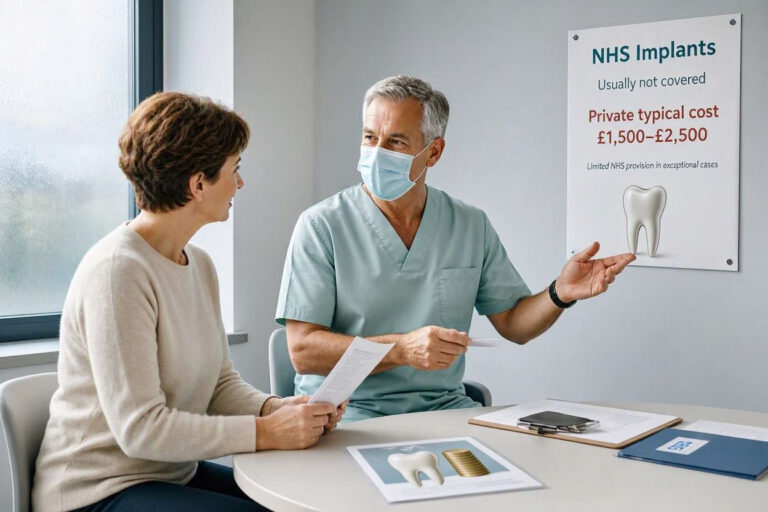
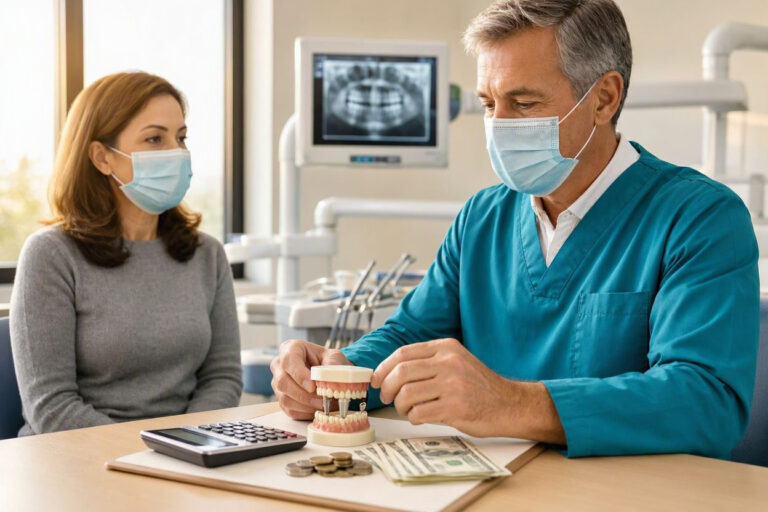
How Much Do Dental Implants Cost in Clarksville TN?
Let’s talk money. This is usually the biggest concern for patients.
The honest truth: dental implants cost more upfront than bridges or dentures. But they often cost less over a lifetime because they rarely need replacement.
Average Price Breakdown
These are typical ranges for Clarksville TN. Your exact price depends on your dentist, your bone health, and the type of crown.
| Service | Typical Cost Range |
|---|---|
| Consultation & CT scan | 150–500 |
| Single implant placement | 1,500–2,500 |
| Abutment | 300–600 |
| Custom crown | 1,000–2,000 |
| Total for one implant + crown | 2,800–2,800–5,000+ |
Additional Possible Costs
- Tooth extraction: 200–500
- Bone graft: 500–1,500 per area
- Sinus lift: 1,000–2,500
- Sedation (if desired): 300–800
Multiple Teeth or Full Arch Implants
- Implant-supported bridge (replace 3–4 teeth): 5,000–10,000
- All-on-4 (full upper or lower arch): 15,000–25,000 per arch
- Full mouth implants: 30,000–50,000+
Does Insurance Cover Implants?
This varies widely. Many dental insurance plans call implants a “cosmetic” procedure and pay nothing. However, more plans now offer partial coverage.
What insurance may cover:
- The crown portion (as a standard tooth replacement)
- Extractions
- Bone grafts (if medically necessary)
What insurance rarely covers:
- The implant fixture itself
- The abutment
Pro tip: Call your insurance company before your consultation. Ask specifically: “What is my coverage for dental implant procedure code D6010?” Write down their answer.
Financing Options in Clarksville TN
Do not let the price scare you away. Many local dental offices offer payment plans.
- CareCredit – A healthcare credit card with promotional financing
- In-house payment plans – Some Clarksville dentists offer monthly installments
- Dental savings plans – Not insurance, but discounts for members
- FSA/HSA accounts – Use pre-tax dollars for implant costs
Always ask the front desk about financial options. Most offices want to help you afford treatment.
Finding the Right Implant Dentist in Clarksville
Not all dentists place implants. You need a professional with specific training and experience.
Types of Implant Providers
| Provider Type | What They Do | Best For |
|---|---|---|
| General Dentist | May place and restore implants | Simple, single-tooth cases |
| Oral Surgeon | Places implants, handles complex bone issues | Difficult anatomy, multiple implants |
| Periodontist | Gum and bone specialist | Patients with gum disease or thin gums |
| Prosthodontist | Focuses on crowns, bridges, and dentures | Complex restorative cases |
Many Clarksville patients see an oral surgeon for the implant placement and their regular dentist for the crown. This works well if both communicate clearly.
Questions to Ask Before Choosing a Dentist
Do not feel shy. Good dentists expect and welcome these questions.
- “How many implants have you placed?”
- “What is your success rate?”
- “Do you use 3D CT imaging for planning?”
- “What happens if my implant fails?”
- “Can you show me before-and-after photos of your patients?”
- “Who handles the emergency if something goes wrong after hours?”
Red Flags to Avoid
- Too-good-to-be-true prices – Extremely low fees often mean low-quality materials or insufficient training.
- No pre-surgical CT scan – Placing implants without 3D imaging is risky. Avoid it.
- Pressure to decide immediately – A trustworthy dentist gives you time to think.
- Unclear about the warranty – Ask what happens if the implant fails within a year.
Note: Read online reviews for Clarksville implant dentists. Look for repeated comments about pain management, wait times, and follow-up care.
Recovery and Aftercare: What to Expect
You will have some downtime after implant surgery. Knowing what is normal versus a problem helps you heal faster.
The First 24 Hours
Normal:
- Minor bleeding (pink saliva)
- Swelling of the cheek or gum
- Mild to moderate discomfort
- Bruising around the jaw
What to do:
- Bite gently on gauze for 30 minutes
- Apply ice packs to your face (20 minutes on, 20 off)
- Rest with your head elevated
- Take prescribed or OTC pain relievers
What to avoid:
- Spitting or using a straw
- Smoking (seriously, do not smoke)
- Hot liquids or hard foods
- Strenuous exercise
Days 2 to 7
Swelling usually peaks around day 2 or 3, then slowly goes down. You can switch from ice to warm compresses after 48 hours.
Stick to soft foods:
- Yogurt, applesauce, smoothies
- Mashed potatoes, scrambled eggs
- Soup (cooled down), pasta
- Protein shakes
Rinse gently with warm salt water (1/2 teaspoon salt in 8 ounces of water) after meals. Do not swish hard. Just tilt your head.
Weeks 1 to 2
Most patients return to work within 2–4 days. But heavy lifting or contact sports should wait 1–2 weeks.
Your stitches may dissolve or require removal. Your dentist will tell you which type you have.
You can slowly add firmer foods back into your diet. Chew on the opposite side of your mouth.
Months 3 to 6 (Osseointegration Phase)
Your implant is healing quietly under the gum. You cannot see it, but it is working hard.
Your job during this time:
- Brush normally (be gentle around the implant area)
- Floss your other teeth as usual
- Visit your dentist for checkups
- Wear any temporary appliance as directed
- Do not chew directly on the healing site
Signs of a Problem
Call your dentist immediately if you experience:
- Severe pain not controlled by medication
- Bleeding that soaks through gauze after 24 hours
- Fever over 100.5°F (38°C)
- Unpleasant taste or pus (signs of infection)
- Feeling that the implant is loose
- Swelling that worsens after day 3
Most patients have smooth recoveries. But problems are easier to fix when caught early.
How Long Do Dental Implants Last?
This is one of the best parts about implants. With proper care, they can last 20 years, 30 years, or even a lifetime.
Lifespan of Each Component
| Part | Expected Lifespan | Needs Replacement? |
|---|---|---|
| Titanium implant | 30+ years to lifetime | Rarely |
| Abutment | 20+ years | Sometimes if damaged |
| Crown | 10–20 years | Yes, due to normal wear |
The crown is the most likely part to eventually need replacement. But that is similar to a natural tooth needing a new filling or a new crown. The implant itself stays solid.
How to Make Your Implant Last Longer
Your implant cannot get cavities. But it can develop a condition called peri-implantitis. That is inflammation and infection around the implant. If left untreated, it leads to bone loss and implant failure.
Daily habits for implant success:
- Brush twice a day (including the implant area)
- Floss daily – use special implant floss or a water flosser
- Avoid chewing ice, hard candy, or pens
- Wear a nightguard if you grind your teeth
- Do not smoke (smoking dramatically increases failure risk)
Professional maintenance:
- See your dentist every 6 months
- Get regular X-rays to check the bone level
- Have professional cleanings that include the implant
What Causes Implant Failure?
Most implants succeed. The average success rate is 95–98%. But failures do happen.
Common causes:
- Smoking – The number one risk factor
- Poor oral hygiene – Leads to infection
- Uncontrolled diabetes – Slows healing
- Teeth grinding (bruxism) – Puts excessive force
- Medical conditions like autoimmune diseases or osteoporosis medications
- Injury – A hard hit to the face can fracture the implant
If an implant fails early (first 6 months), it is usually a healing problem. If it fails later, it is often from infection or overload.
The good news: most failed implants can be removed and replaced. You do not lose your ability to try again.
Advantages and Disadvantages: An Honest Look
You deserve to know both sides. Implants are excellent, but they are not for everyone.
Advantages
- Permanent solution – One surgery, decades of use
- Protects jawbone – Prevents the sunken look of bone loss
- No damage to other teeth – Keeps healthy teeth untouched
- Comfortable – Feels like your own tooth
- Convenient – No soaking, adhesives, or removal
- High success rate – 95–98% in healthy patients
Disadvantages
- Higher upfront cost – More expensive than bridges or dentures
- Surgery required – Some patients dislike any procedure
- Long timeline – Several months from start to finish
- Not for heavy smokers – Success rate drops significantly
- Requires healthy bone – Bone grafts add time and cost
- Rare complications – Infection, nerve injury, or sinus problems
“I wish I had done it sooner. But I also wish someone had told me how long the waiting period really felt. The surgery was easy. The waiting was hard.” – Clarksville patient, 3 years post-implant
Types of Dental Implants Available in Clarksville
Most patients receive the standard endosteal implant (inside the bone). But you may hear other terms.
By Size and Shape
- Standard (4–6 mm wide) – For most single-tooth replacements
- Mini (1.8–3 mm wide) – Smaller and less invasive, often used for lower denture stabilization
- Wide-diameter – For back molars or weak bone
By Procedure
- Two-stage – Traditional method with implant buried under gum during healing
- One-stage – Abutment attached immediately after implant placement (less common)
- Same-day teeth – Immediate loading with a temporary crown (only for select patients)
By How Many Teeth Replaced
- Single implant – One missing tooth
- Implant-supported bridge – Two or more missing teeth in a row
- Implant-supported denture – Snaps onto 2–4 implants for stability
- All-on-4 – Full arch of teeth on just 4 implants
Your dentist helps you choose the right type based on your bone, budget, and goals.
Common Questions Patients Ask in Clarksville (FAQ)
Does getting a dental implant hurt?
The procedure itself is not painful because of anesthesia. Afterward, most patients describe soreness similar to a tooth extraction. Over-the-counter pain relievers usually handle it. By day 3, most people feel fine.
Can I get an implant years after losing a tooth?
Yes, but you may need a bone graft first. The longer you wait, the more bone loss occurs. Still, many Clarksville patients successfully get implants decades after losing a tooth.
Are dental implants covered by Medicare or TennCare?
Original Medicare does not cover dental implants. Some Medicare Advantage plans offer limited dental benefits. TennCare (Tennessee Medicaid) covers extractions but not implants for adults. Check your specific plan.
How do I clean my implant?
Brush it like a natural tooth. Floss around it daily. Many patients love water flossers because they are gentle and effective. Your dentist may recommend special implant floss or interdental brushes.
What happens if I wait too long to replace a missing tooth?
Your neighboring teeth may tilt into the empty space. Your opposite tooth may drift downward. You lose bone volume. And your bite changes over time. Replacing sooner is almost always better.
Can I have an MRI with a dental implant?
Yes. Titanium is not magnetic. Dental implants are safe for MRIs and CT scans. Always tell the technician you have implants, but they do not cause problems.
Do celebrities get dental implants?
Many do. While celebrities rarely announce it, implants are the gold standard for tooth replacement. That natural, seamless smile you see on screen? Often made possible by implants.
Realistic Expectations: When Implants Are Not the Right Choice
Sometimes implants are not the best path forward. And that is okay. A good dentist tells you the truth, even when it is not what you want to hear.
Implants may be a poor fit if:
- You have untreated gum disease (needs treatment first)
- You are a heavy smoker unwilling to quit
- You have severe bone loss and refuse a bone graft
- You take certain bisphosphonate medications (like for osteoporosis)
- You have had head and neck radiation therapy
- You are very young (jaw still growing)
- You have uncontrolled chronic illness
In these cases, a traditional bridge or well-made denture may serve you better. You can always revisit implants later if your situation changes.
Note: Always disclose your complete medical history and medication list to your dentist. Do not hide anything. Your safety is the priority.
A Sample Timeline for a Clarksville Patient
Let’s follow “Sarah,” a 52-year-old Clarksville resident. She lost tooth #19 (lower left first molar) three years ago. She wants an implant.
Month 1: Consultation and CT scan. Dentist finds moderate bone loss. Recommends bone graft.
Month 2: Bone graft procedure. Healing period begins.
Month 5: Follow-up X-ray shows good bone growth.
Month 6: Implant placement surgery. Titanium screw goes in.
Month 7–11: Osseointegration. Sarah eats soft foods and wears a temporary flipper.
Month 12: Abutment placed. Two weeks of gum healing.
Month 13: Final crown attached. Sarah has her new tooth.
Total time: 13 months. Total cost (with graft): $4,800.
“Sarah” is thrilled. She says she would do it again without hesitation.
Local Resources for Dental Implants in Clarksville TN
When you are ready to take the next step, here are practical ways to start.
- Tennessee Dental Association – Find a list of licensed implant dentists in Clarksville
- Clarksville Dental Society – Local referral network
- Meharry Medical College School of Dentistry – Academic option in nearby Nashville (sometimes lower fees)
- Blanchfield Army Community Hospital – For military families stationed at Fort Campbell
You can also ask friends, coworkers, or your regular dentist for a trusted referral. Personal recommendations carry weight.
Final Tips Before You Schedule
You have read a lot of information. Here are four final takeaways before you pick up the phone.
- Do not choose based on price alone. A cheap implant that fails will cost you more in the long run.
- Get a second opinion if anything feels off. This is major medical treatment. You have the right to shop around.
- Write down your questions. Bring them to your consultation. Do not rely on memory.
- Be patient with the timeline. Rushing increases failure risk. Trust the process.
Conclusion
Dental implants in Clarksville TN offer a permanent, natural-looking solution for missing teeth. They protect your jawbone, preserve healthy adjacent teeth, and restore your ability to eat and smile with confidence. While the upfront cost and treatment timeline are higher than other options, the long-term benefits often make implants the wiser investment for your oral health.
Additional Resource
For a deeper dive into implant technology and patient stories, visit the American Academy of Implant Dentistry’s patient education page at https://www.aaid.com/patients/index.html (no affiliation, purely informational).
Disclaimer
This article provides general educational information about dental implants. It is not a substitute for professional medical or dental advice, diagnosis, or treatment. Always consult a licensed dentist in Clarksville TN to evaluate your specific situation. Individual results vary. The author and publisher assume no liability for any actions taken based on the contents of this guide.