Dental Implant In Westminster: A Complete, Honest Guide to Restoring Your Smile
Losing a tooth can feel frustrating. Maybe you feel self-conscious when you laugh. Perhaps chewing has become a daily challenge. You are not alone. Millions of adults face tooth loss every year. The good news is that modern dentistry offers a permanent solution: the dental implant.
If you live near Westminster or the surrounding areas, you have excellent options. This guide walks you through everything you need to know about getting a dental implant in Westminster. We focus on real information, honest facts, and practical advice. No hype. No false promises. Just a reliable roadmap to help you make a confident decision.
What Exactly Is a Dental Implant?
A dental implant acts like an artificial tooth root. A surgeon places a small titanium post into your jawbone. Over time, your bone grows around this post. This creates a strong, stable foundation. Finally, your dentist attaches a natural-looking crown on top.
Think of it as building a house. The implant is the concrete foundation. The crown is the beautiful room you see and use.
The Three Main Parts of a Dental Implant
To understand the process better, you need to know the three components:
- The Implant Fixture (Post): This titanium screw goes into your jawbone. Titanium is biocompatible, meaning your body accepts it easily.
- The Abutment: This connector piece sits on top of the implant. It sticks out slightly above your gum line.
- The Prosthesis (Crown): This is the visible tooth. Your dentist custom-makes it to match your natural teeth in color, shape, and size.
Important Note: Not everyone needs a crown. Some patients receive implant-supported bridges or dentures. Your specific situation determines the best prosthesis for you.
Why Consider a Dental Implant in Westminster?
Westminster residents enjoy access to world-class dental care. But why choose an implant over other options? Let us compare.
Dental Implant vs. Bridge vs. Denture
| Feature | Dental Implant | Traditional Bridge | Removable Denture |
|---|---|---|---|
| Longevity | 20+ years (often lifetime) | 5–15 years | 5–8 years |
| Bone Preservation | Yes (stimulates bone) | No | No |
| Impact on Adjacent Teeth | None | Requires filing down healthy teeth | None |
| Stability | Fixed (does not move) | Fixed | Can slip or click |
| Comfort | Feels like natural tooth | Good | Can cause sore spots |
| Cost (Initial) | Higher | Moderate | Lower |
As the table shows, implants require a larger upfront investment. However, they often save you money over time. You avoid replacing the device frequently. You also prevent future bone loss and related dental issues.
Three Real Benefits You Will Notice
- You will chew normally again. Steak, apples, nuts—nothing is off limits. Implants restore about 90% of your natural biting force.
- You will smile with confidence. No one will know you have an implant. The crown looks and feels real.
- You will protect your facial shape. When you lose a tooth, your jawbone shrinks. This can make your face look older. Implants stop this process.
Who Is a Good Candidate for a Dental Implant?
Most healthy adults qualify for implants. However, your dentist will check a few key factors first.
Essential Requirements
- Healthy gums: You should have no active gum disease.
- Adequate jawbone density: Your bone must be thick enough to hold the implant.
- Good overall health: Conditions like uncontrolled diabetes or heavy smoking can affect healing.
- Commitment to oral hygiene: Implants need daily cleaning, just like natural teeth.
What If You Lack Enough Bone?
Do not worry. Many patients hear “not enough bone” and think implants are impossible. That is rarely true. You may simply need a bone graft first.
A bone graft adds bone material to a thin or soft jaw area. This procedure takes a few months to heal. After that, you can proceed with the implant. Most Westminster dental clinics offer bone grafting in-house.
Note for Smokers: Smoking significantly increases implant failure risk. If you smoke, be honest with your dentist. They may ask you to quit or reduce smoking before and after surgery. This gives you the best chance of success.
The Step-by-Step Procedure for a Dental Implant in Westminster
Understanding the timeline reduces anxiety. Most implant treatments take between three and nine months. Below is a realistic breakdown.
Step 1: Initial Consultation (1–2 hours)
Your journey begins with a thorough exam. The dentist will:
- Take 3D X-rays (CBCT scan)
- Review your medical history
- Discuss your goals and budget
- Create a personalized treatment plan
What to ask at this visit:
“How many implants have you placed?”
“What is your success rate?”
“Do you offer sedation options?”
Step 2: Preparatory Work (Varies)
Some patients need extra procedures first:
- Tooth extraction (if the damaged tooth is still present)
- Bone grafting
- Gum disease treatment
- Sinus lift (for upper back teeth)
These steps add time but ensure a strong foundation.
Step 3: Implant Placement Surgery (1–2 hours)
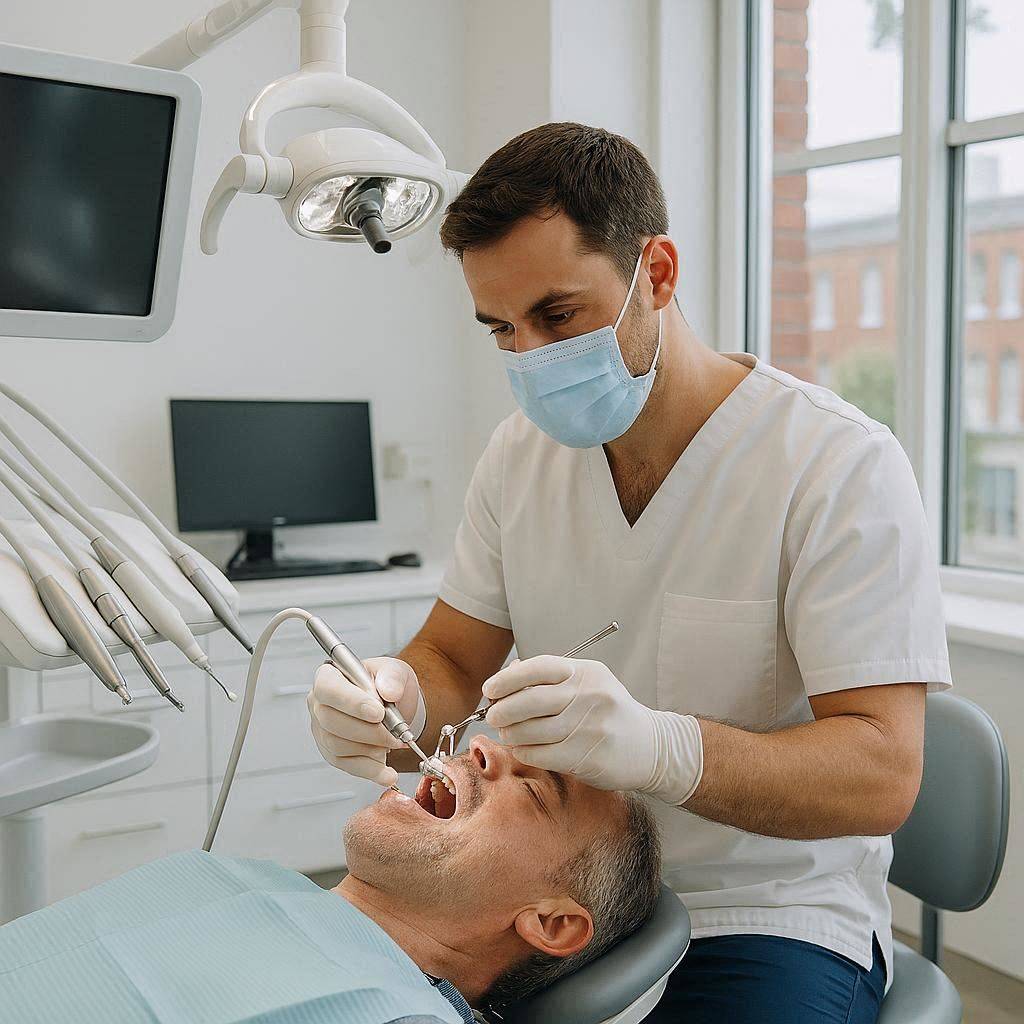
On surgery day, your dentist numbs the area completely. Many clinics offer sedation if you feel anxious. The surgeon makes a small cut in your gum. They drill a precise hole into the bone. Then they insert the titanium post. Finally, they stitch the gum closed.
You go home the same day. Most patients describe the discomfort as mild, like having a tooth removed.
Step 4: Osseointegration (3–6 months)
This is the waiting period. Your bone grows around the implant. This process is called osseointegration. It is the secret to the implant’s strength. You cannot rush this step. During this time, you wear a temporary tooth or denture.
Step 5: Abutment Placement (30 minutes)
Once the implant fuses with your bone, your dentist reopens the gum slightly. They attach a small metal piece (the abutment). This piece connects the implant to the crown. Your gum heals around the abutment for two weeks.
Step 6: Crown Fabrication and Placement (2–3 weeks)
Your dentist takes impressions of your mouth. A dental lab creates your custom crown. When ready, your dentist screws or cements the crown onto the abutment. You walk out with a complete, beautiful smile.
Complete Timeline Example
| Stage | Duration | What Happens |
|---|---|---|
| Consultation | 1 day | Exam, X-rays, plan |
| Bone graft (if needed) | 4–6 months healing | Add bone material |
| Implant surgery | 1–2 hours | Place titanium post |
| Osseointegration | 3–6 months | Bone grows around implant |
| Abutment | 30 minutes + 2 weeks healing | Attach connector |
| Crown placement | 1 hour | Final tooth attached |
How Much Does a Dental Implant in Westminster Cost?
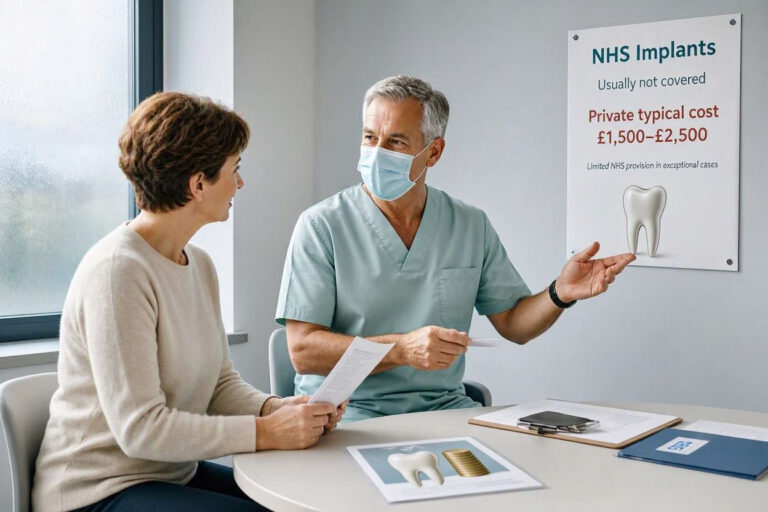
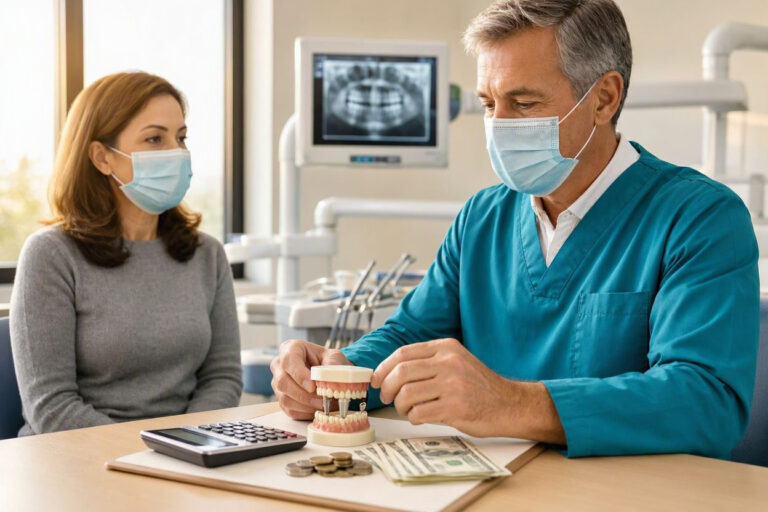
Let us talk about money honestly. Dental implants are an investment. In Westminster, prices vary based on the clinic, your needs, and the materials used.
Typical Price Breakdown (Single Tooth)
- Consultation and X-rays: 100–250 (often free if you proceed)
- Implant placement surgery: 1,500–3,000
- Abutment: 300–600
- Custom crown: 1,000–2,500
- Bone graft (if needed): 300–1,200
Total estimated cost for one implant: 3,100to7,300
Why Such a Wide Range?
Several factors affect pricing:
- Location of the tooth: Front teeth require more aesthetic skill.
- Material quality: Premium ceramic crowns cost more.
- Surgeon’s expertise: A prosthodontist or oral surgeon charges more than a general dentist.
- Clinic technology: 3D-guided surgery adds precision but increases cost.
- Sedation options: IV sedation adds 300–700.
Does Insurance Cover Dental Implants?
Traditional dental insurance rarely covers the full implant. However, many plans help with certain parts:
- Crown portion: Often covered at 50%
- Extraction or bone graft: May be covered
- Implant post: Usually not covered
Check your policy carefully. Some Westminster clinics offer in-house membership plans or financing. Ask about CareCredit or similar medical credit options.
Realistic Advice: Do not choose an implant based on price alone. A cheap implant that fails costs more in the long run. Look for value, experience, and transparent pricing.
Risks and Complications: What You Need to Know
No medical procedure is 100% risk-free. A responsible guide must discuss potential problems. The good news is that implant success rates exceed 95% in healthy patients. Still, you should know what can go wrong.
Common but Manageable Issues
- Swelling and bruising: Normal for 3–5 days. Ice packs help.
- Minor bleeding: Stops within 24 hours.
- Discomfort: Over-the-counter pain relievers usually suffice.
Less Common but Serious
- Infection: Occurs in about 1–2% of cases. Antibiotics resolve most infections.
- Nerve damage: Rare (less than 1%). Can cause temporary numbness in lip or chin.
- Implant failure: The bone rejects the implant. Smoking and poor hygiene increase this risk.
- Sinus problems: Upper jaw implants can protrude into sinus cavities. A sinus lift prevents this.
Signs of a Failing Implant
Watch for these red flags, especially in the first year:
- Persistent pain or throbbing
- The implant feels loose
- Pus or discharge around the site
- Gum recession showing metal threads
If you notice any of these, call your dentist immediately. Early intervention can save the implant.
How to Choose the Right Dentist for Your Dental Implant in Westminster
Your choice of provider directly impacts your outcome. Here is how to find a skilled, trustworthy professional.
Three Types of Providers
- General Dentist with Implant Training: Good for single, straightforward cases.
- Oral Surgeon: Best for complex cases, extractions, or bone grafts.
- Prosthodontist: Specializes in restoration and aesthetics, especially for multiple implants.
Questions to Ask Before Booking
- “How many implant procedures have you performed?”
- “What is your success rate for patients like me?”
- “Do you handle the entire process, or will I need a separate specialist?”
- “What happens if my implant fails? Do you offer a warranty?”
- “Can you show me before-and-after photos of your work?”
Red Flags to Avoid
- Clinics that guarantee 100% success (impossible)
- Prices that seem too good to be true (often are)
- Dentists who refuse to discuss risks
- No written treatment plan or cost estimate
Recovery and Aftercare: Protecting Your Investment
Your implant can last 30 years or more. However, this depends entirely on how you care for it. Think of it like a luxury car. Regular maintenance keeps it running perfectly.
The First 48 Hours After Surgery
- Apply ice packs (15 minutes on, 15 minutes off)
- Eat soft foods only (yogurt, soup, smoothies)
- Do not spit, rinse vigorously, or use a straw
- Avoid hot liquids and alcohol
- Take prescribed medications as directed
Weeks 1–2
- Rinse gently with warm salt water (after 24 hours)
- Brush normally but avoid the surgical site
- Do not smoke or use tobacco
- Avoid crunchy or sticky foods
Long-Term Maintenance (For Life)
| Task | Frequency | Why It Matters |
|---|---|---|
| Brushing | Twice daily | Prevents gum inflammation |
| Flossing (special implant floss) | Once daily | Removes plaque around abutment |
| Professional cleaning | Every 6 months | Dentist checks implant health |
| Avoid chewing ice or hard candy | Always | Protects crown from cracking |
| Night guard (if you grind teeth) | Nightly | Prevents excessive force |
Important: Implants cannot get cavities. However, they can develop peri-implantitis. This is a gum infection that destroys bone around the implant. It is preventable with good hygiene.
Alternatives to a Dental Implant
Implants are not the only solution. Depending on your situation, another option might suit you better.
Alternative 1: Fixed Dental Bridge
A bridge uses two healthy teeth as anchors. Your dentist files down these teeth and places crowns on them. The false tooth sits in between.
Pros: Faster (3 weeks total), lower upfront cost.
Cons: Damages healthy teeth, does not prevent bone loss, lasts 5–15 years.
Alternative 2: Removable Partial Denture
A plastic or metal framework holds one or more false teeth. You take it out at night.
Pros: Least expensive, non-invasive.
Cons: Uncomfortable for some, can click or slip, accelerates bone loss.
Alternative 3: Do Nothing
You can leave the gap empty.
Pros: No cost, no procedures.
Cons: Adjacent teeth shift, bone shrinks, chewing difficulty, potential for future tooth loss.
Quick Decision Guide
Ask yourself these three questions:
- “Do I want a permanent solution?” → Implant
- “Is my budget very tight right now?” → Bridge or denture (temporary)
- “Am I willing to sacrifice healthy teeth?” → Bridge
Frequently Asked Questions (FAQ)
1. Is a dental implant painful?
Most patients report less discomfort than a tooth extraction. The procedure uses local anesthesia. Afterward, over-the-counter pain relievers manage soreness effectively.
2. How long does a dental implant last?
With proper care, many implants last 30 years to a lifetime. The crown may need replacement after 10–15 years due to normal wear.
3. Can I get a dental implant in one day?
In very specific cases, yes (immediate loading). However, most patients require the multi-step process described above. Be wary of clinics promising “teeth in a day” without a thorough exam.
4. What is the age limit for implants?
There is no upper age limit. Healthy 80 and 90-year-olds receive implants successfully. The lower limit is around age 18 for females and 20 for males (when jaw growth stops).
5. Can I have an MRI with a dental implant?
Yes. Titanium is non-ferromagnetic, meaning MRI machines do not affect it. However, always tell the technician about your implant.
6. Do dental implants look fake?
No. Modern crowns use high-grade ceramic that mimics natural tooth enamel. Your dentist matches color, translucency, and shape to your existing teeth.
7. How do I clean under an implant?
You cannot clean “under” it because the implant fuses to bone. You clean around the gum line using special floss, interdental brushes, or a water flosser.
8. What if my body rejects the implant?
True rejection is extremely rare because titanium is biocompatible. Most “failures” are due to infection or failed osseointegration. A different implant type or location often succeeds.
Additional Resources
For more trusted information, visit the American Academy of Implant Dentistry’s patient education page:
🔗 aaid-implant.org/patient-resources
This resource offers dentist directories, procedure videos, and the latest research summaries.
Conclusion
A dental implant in Westminster offers a reliable, long-term solution for missing teeth. You will regain natural chewing ability, protect your jawbone, and smile without hesitation. The process takes several months and requires a financial investment, but the success rate exceeds 95% for healthy patients. Choose an experienced dentist, follow aftercare instructions strictly, and your implant can serve you for decades.
Disclaimer: This article provides general information and does not constitute medical advice. Every patient’s situation is unique. Consult a licensed dental professional in Westminster for a personal evaluation before making any treatment decisions.