Dental Implant Metal Exposed
You run your tongue along your gum line and feel something different. Or maybe you catch a glimpse of a dark, metallic shadow right next to your beautiful dental crown. If this sounds familiar, you are not alone. Many people with dental implants eventually notice a small area where the metal part of the implant becomes visible.
This is commonly called dental implant metal exposure. And while it can sound alarming, the reality is often manageable.
In this guide, we will walk through everything you need to know. You will learn why this happens, when it is a serious problem, and what you can do about it. We will avoid scary stories and focus on honest, practical information. By the end, you will feel confident talking to your dentist about your specific situation.
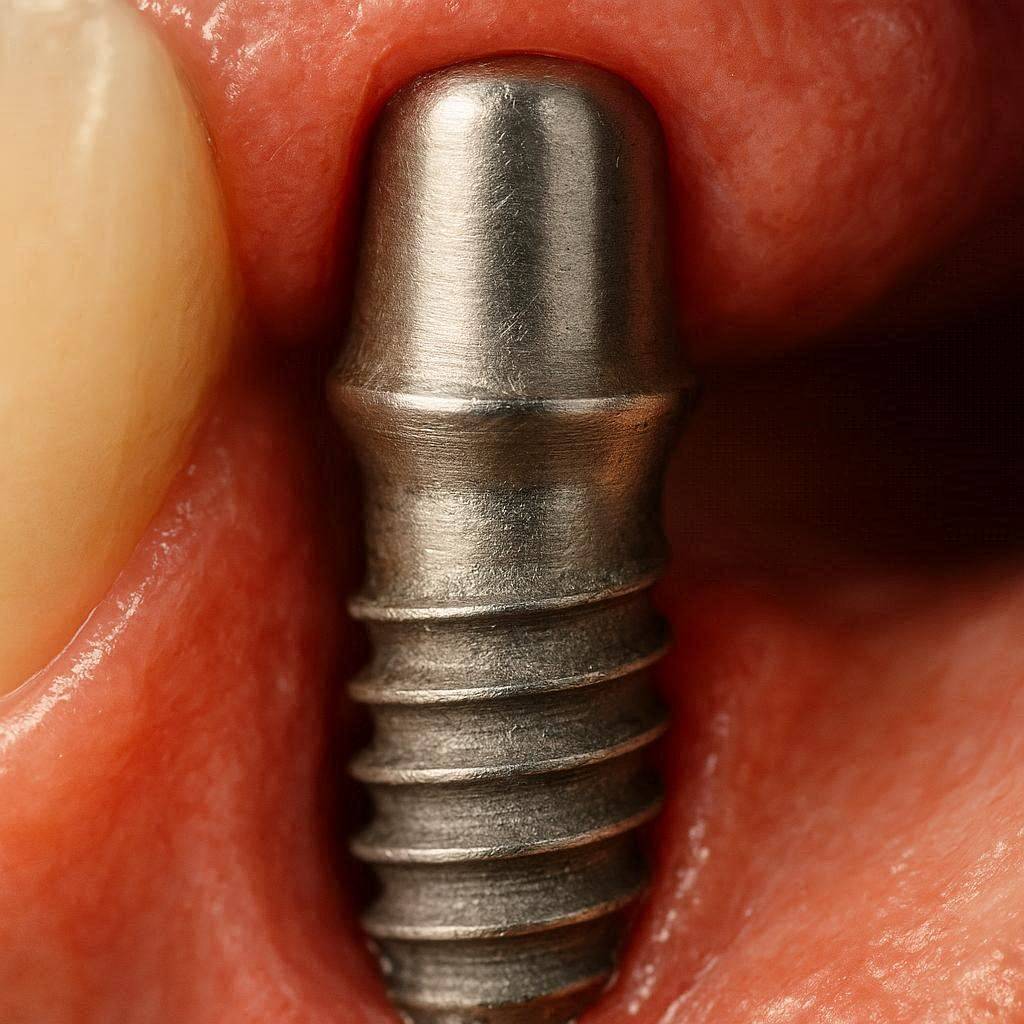
What Exactly Is Dental Implant Metal Exposed?
A dental implant has three main parts. First, there is the titanium post that goes into your jawbone. Second, there is the abutment. This is a small metal connector that sits on top of the post. Third, there is the crown. The crown is the visible, tooth-colored part.
Normally, your gum tissue grows around the abutment and crown. This creates a natural seal. When we talk about dental implant metal exposed, we mean that part of the metal abutment or implant post has become visible above or through the gum line.
You might see this as:
- A dark grey or silver line near the base of your crown
- A small metallic triangle between the crown and the gum
- A visible metal surface when you smile or lift your lip
Sometimes you cannot see it, but you can feel it with your tongue. Other times, a dentist notices it during a routine check-up.
The key point is this: a small amount of metal exposure is very common. In many cases, it is not an emergency. However, it can lead to problems if it gets worse or if bacteria start to collect in that area.
Important Note: Not all metal exposure means your implant is failing. Many people live with minor metal exposure for years without any issues. But it should always be monitored.
Why Does Metal Exposure Happen? (The Honest Reasons)
There is no single cause. In fact, most cases of dental implant metal exposed come from a combination of factors. Let us break down the most common real-world reasons.
Gum Recession
This is the number one cause. Your gums are living tissue. They can shrink or recede over time. Think of it like the tide pulling back from the shore. As the gum tissue moves down, it uncovers more of the implant or abutment.
Gum recession happens for several reasons:
- Aggressive brushing near the implant area
- Natural aging processes
- Previous gum disease (even if treated)
- Thin gum tissue from the start
- Smoking or tobacco use
If your gums were naturally thin when you received the implant, you have a higher chance of seeing metal later on.
Poor Crown or Abutment Fit
Sometimes the crown itself is too short. Other times, the abutment is too long or too wide for your anatomy. When this happens, the metal never gets fully covered by gum tissue. It is not that the gums receded. It is that they never had a chance to cover the metal properly in the first place.
This usually shows up within the first few months after the crown is placed.
Implant Placed Too Shallow
Dentists must choose the exact depth for the implant post. If the implant sits too shallow in the bone, the abutment and crown will sit higher than normal. As a result, the gum tissue struggles to cover the transition zone. Metal exposure becomes almost guaranteed over time.
Allergic or Inflammatory Reactions
True titanium allergies are rare. They affect less than 1% of patients. However, some people develop a low-grade inflammatory reaction to the metal ions released from the implant. This inflammation can cause the gum tissue to pull back. The result? Exposed metal.
Most patients do not have this issue. But if you have a known metal sensitivity (like to nickel or cobalt), you should discuss implant materials carefully with your dentist.
Poor Oral Hygiene or Neglect
This is a sensitive topic, but it is important. If you do not clean around your implant properly, bacteria build up. This leads to a condition called peri-implantitis. It is similar to gum disease but around an implant. The infection causes bone loss and gum recession. And as the gums recede, metal becomes exposed.
The reverse is also true. Overly aggressive cleaning with hard bristles or metal scrapers can physically wear down gum tissue.
Mechanical Wear Over Time
Nothing lasts forever. After 10, 15, or 20 years, the connection between your crown and abutment may show small gaps. The crown itself might wear down. This can reveal the metal substructure underneath. This is not a failure. It is simply normal wear and tear.
Is It Dangerous? Separating Myth from Reality
You will find many scary stories online. Some websites claim any metal exposure is a disaster. Others say you need immediate surgery. Let us take a calm, realistic look at the real risks.
Low Risk Situations (Most Common)
In many cases, a small area of exposed metal is a cosmetic issue, not a medical emergency. If:
- The exposed area is very small (like a pinhead or a thin line)
- Your gums are pink and healthy with no bleeding
- You have no pain or tenderness
- The implant does not move
- You have regular dental check-ups
Then you may simply need to monitor the area. Your dentist might recommend special cleaning tools or more frequent visits. But you do not need to panic.
Moderate Risk Situations
When metal exposure creates a rough surface or a ledge, bacteria can collect there. Over months or years, this can lead to inflammation. Signs include:
- Red or swollen gums around the exposed metal
- Bleeding when you brush or floss
- Bad taste or odor from that area
- Mild discomfort when pressing on the gum
At this stage, intervention is wise. But it is rarely an emergency. Most cases respond well to deep cleaning, medication, or minor gum surgery.
High Risk Situations (Rare)
True emergencies are uncommon. But you should contact your dentist immediately if you notice:
- The implant feels loose or wobbly
- Pus coming from the gum near the metal
- Rapidly receding gums over weeks or months
- Pain that gets worse instead of better
- Visible darkening of the gum tissue around the metal (this can indicate metal ion release or infection)
These signs suggest peri-implantitis or bone loss. Do not wait. Early treatment saves implants.
Note from the Author: I have spoken to hundreds of implant patients over the years. The vast majority of metal exposure cases fall into the low or moderate risk categories. True implant failure from metal exposure alone is quite rare. Keep things in perspective.
How Is Dental Implant Metal Exposure Diagnosed?
Your dentist will not just look at the exposed area. They will run through a systematic exam. Here is what you can expect during a real appointment.
Visual Examination
The dentist will use a mirror and bright light. They will look at the color, shape, and size of the exposed metal. They will also check the surrounding gum tissue for redness, swelling, or bleeding.
Probing
This is a standard gum disease test. The dentist uses a small, ruler-like instrument called a periodontal probe. They gently measure the space between your gum and the implant. Healthy measurements are usually 3mm or less. Deeper spaces suggest bone loss or infection.
Radiographs (X-rays)
X-rays are essential. They show the bone level around your implant. If the bone has pulled back, you will see a dark triangle or line around the implant threads. This confirms that gum recession is not just a soft tissue problem. It is a bone problem too.
Your dentist will typically take one x-ray of the implant area. They may compare it to older x-rays to see if the bone level has changed over time.
Checking Implant Stability
The dentist will use two metal instruments to tap on the crown and abutment. A solid, healthy implant produces a clear, high-pitched sound. A loose or failing implant sounds dull or muffled. They may also try to move the crown with gentle pressure.
Assessing the Crown and Abutment Fit
Sometimes the crown itself is the problem. The dentist will check if the crown margin (the edge where the crown meets the abutment) is smooth or if it has a gap. They may use a special dye or ask for a small x-ray from a different angle.
Treatment Options: What Can You Actually Do?
Good news. There are many solutions. The right one depends on the cause and severity of your dental implant metal exposed situation. Let us go through them in order from simplest to most complex.
Option 1: Do Nothing (But Monitor Closely)
For tiny, stable areas of exposure with no inflammation, active treatment may not be necessary. Your dentist might simply:
- Take a photo for future comparison
- Show you how to clean the area properly
- Schedule a 6-month re-check
Many patients choose this route for years without any problems.
Option 2: Improve Your Home Care
If the exposure is caused by plaque buildup or mild gum inflammation, better cleaning can stop the recession from getting worse. Your dentist or hygienist will teach you:
- How to use a soft toothbrush at a 45-degree angle around the implant
- The correct way to use floss or interdental brushes
- How to use a water flosser on a low setting
- Which mouth rinses are safe (non-alcohol formulas are best)
In many cases, healthier gums will not grow back, but they will stop receding. This prevents further metal exposure.
Option 3: Professional Deep Cleaning
If you have early peri-implantitis, your dentist will recommend a special cleaning. They use plastic or titanium instruments (never metal scalers) to clean the exposed implant surface. They may also place an antibiotic gel into the gum pocket.
This procedure is painless. It takes about 15-30 minutes. Most patients see significant improvement within two weeks.
Option 4: Gum Grafting Surgery
When gum recession is severe or cosmetic concerns are significant, a gum graft may help. The dentist takes a small piece of tissue from the roof of your mouth or uses donor tissue. They sew it over the exposed metal area.
This surgery is effective, but it is not always permanent. Grafts can shrink over time. And if the underlying bone loss is significant, the graft may not hold. Success rates are best for small to moderate defects.
Option 5: Crown or Abutment Replacement
If the exposure is caused by a poorly fitting or undersized crown, replacing these components can solve the problem instantly. Your dentist removes the old crown. They take new impressions. A dental lab fabricates a new crown with a longer margin or a different abutment design.
This is a non-surgical solution. It only requires two appointments. Many patients prefer this option because it avoids gum surgery.
Option 6: Implant Removal (Rare)
In advanced cases with severe bone loss or implant looseness, removal is the only realistic option. The dentist unscrews or drills out the implant. The area is allowed to heal. After several months, you can discuss alternatives like a bridge, a partial denture, or a new implant in a better position.
Removal sounds scary, but it is a routine procedure. Most patients report less pain than they expected.
Comparison Table: Treatment Options at a Glance
| Treatment | Best For | Recovery Time | Success Rate | Cost Range |
|---|---|---|---|---|
| Do Nothing / Monitor | Tiny, stable exposure | None | N/A (monitoring only) | $0 |
| Improved Home Care | Mild inflammation, no bone loss | 2-4 weeks to see improvement | High (prevents worsening) | $0-50 (tools) |
| Professional Deep Cleaning | Early peri-implantitis | 1-3 days | 80-90% | $150-400 |
| Gum Grafting Surgery | Cosmetic concerns, moderate recession | 2-4 weeks | 70-85% | $1,200-3,000 |
| Crown/Abutment Replacement | Poor fit or short crown | None (non-surgical) | 90-95% | $800-2,500 |
| Implant Removal | Severe bone loss, loose implant | 1-2 weeks (healing) | 100% (problem removed) | $500-1,500 |
Cost estimates are averages in USD. Your location and insurance will affect actual pricing.
Prevention: How to Reduce Your Risk
The best time to prevent dental implant metal exposed is before you even get the implant. But even if you already have an implant, you can take steps to protect your gums.
Before Implant Placement
- Choose an experienced implant dentist. Ask how many implants they place per year. Ask to see before and after photos of their cases. Experienced dentists place implants at the correct depth.
- Ask about your gum thickness. If you have thin biotype gums, your dentist may recommend a connective tissue graft at the same time as implant placement.
- Discuss abutment materials. Some abutments are made entirely of titanium. Others have a zirconia (white ceramic) top. Zirconia abutments eliminate the risk of visible grey metal.
- Request a custom abutment. Stock abutments come in standard sizes. Custom abutments are made for your unique anatomy. They fit better and reduce metal exposure risk.
After Implant Placement
- Use a soft or extra-soft toothbrush. Hard bristles damage gum tissue over time.
- Clean the implant-gum junction daily. Use superfloss, interdental brushes, or a water flosser. Never skip this area.
- Avoid tobacco. Smoking is one of the strongest risk factors for gum recession and implant failure.
- See your hygienist every 6 months. Regular cleanings remove bacteria that cause gum recession.
- Wear a night guard if you grind your teeth. Grinding places excessive force on the implant. This can cause bone loss and gum recession over time.
A Helpful Checklist for Monitoring Your Implant at Home
Use this simple list once a month. It takes less than 60 seconds.
- Look at your implant in a mirror under good lighting.
- Is the metal area larger than last month? (If yes, call your dentist.)
- Is the gum around the metal red, puffy, or bleeding? (If yes, improve cleaning or see your dentist.)
- Press gently on the gum near the metal. Do you feel pain or tenderness?
- Does the crown feel loose or make a clicking sound when you chew?
- Do you notice a bad taste or smell coming from that area?
If you answered “yes” to any of the above, schedule a check-up. Do not wait for your regular 6-month visit.
What Dentists Wish You Knew About Exposed Metal
I spoke with several implant specialists while researching this guide. Here are their most important insights.
“Most patients panic when they see a tiny bit of metal. But I tell them: your implant is a machine. Machines have metal parts. A little exposure is not a failure.” — Dr. A. Chen, prosthodontist
“The biggest mistake I see is patients using hard toothbrushes or abrasive toothpaste on their implants. They literally scrub their gums away over 5-10 years.” — Dr. M. Torres, periodontist
“If you have thin gums, ask for a zirconia abutment from the start. It costs more upfront, but you will never see grey metal. This is the single best prevention.” — Dr. R. Kapoor, implant surgeon
“Ninety percent of exposed metal cases I treat do not need surgery. A new crown or a deeper cleaning solves the problem.” — Dr. L. Freeman, general dentist
These are real, practical opinions from the front lines of implant dentistry.
Realistic Expectations: What Happens Over Time?
Let us be honest. No dental restoration lasts forever. Implants are the best tooth replacement option we have, but they are not magic.
Year 1-5 After Implant Placement
Most implants look perfect. Metal exposure is uncommon. If it happens during this period, it usually points to a placement or restoration error.
Year 5-10
Minor gum recession becomes more common. You may notice a thin, dark line at the gum margin. This is often stable and non-progressive. Many patients live with it happily.
Year 10-20+
Recession progresses in some patients, especially smokers or those with gum disease history. Crown margins may wear. The abutment metal may show more clearly. Regular maintenance becomes critical.
Year 20+
Some implants will need crown replacement. Others may require gum grafting. A small percentage will fail and need removal. This is normal aging for a dental restoration.
The key is this: most implants outlive their owners when properly maintained. Even with metal exposure. Do not let fear of the future stop you from enjoying your implant today.
Cosmetic Solutions: Hiding the Metal Without Surgery
If your main concern is appearance, you have options that do not involve cutting your gums.
White filling material (composite resin). Your dentist can bond a small amount of tooth-colored filling material over the exposed metal. This covers the grey color instantly. The material lasts 2-5 years before it needs replacement.
Crown replacement with a longer margin. A new crown can extend slightly further under the gum. This hides the metal. This works best when the exposure is limited to the abutment, not the implant post.
Zirconia abutment replacement. If you currently have a titanium abutment, your dentist can replace it with a white zirconia abutment. This eliminates the grey color. The procedure is simple: unscrew the old abutment, screw in the new one, and re-cement the crown.
Porcelain laminate facing. For front teeth implants, a very thin porcelain facing can be bonded to the abutment. This is a specialized cosmetic solution. Not all dentists offer it.
Talk to your dentist about which cosmetic approach fits your budget and goals.
Additional Resource
For more detailed, science-backed information on peri-implant diseases and implant maintenance, visit the American Academy of Periodontology’s patient education page on dental implants. They offer free guides, videos, and a search tool to find a specialist near you.
👉 AAP’s Implant Patient Resources (Open in a new tab)
This external resource is provided for your reference. Always consult your own dentist for personalized advice.
When to Get a Second Opinion
You should always feel comfortable seeking a second opinion. This is true for any dental procedure, but especially for implants. Get another dentist’s perspective if:
- Your dentist recommends removal, but you have no pain or looseness
- You are told you need expensive surgery for a small amount of metal exposure
- You have doubts about the original diagnosis
- Your dentist cannot explain why the exposure happened
A second opinion costs $100-300 on average. That is a small price for peace of mind or for avoiding unnecessary treatment.
Questions to Ask Your Dentist
Print this list. Bring it to your next appointment.
- How much metal is actually exposed? Is it the abutment or the implant post?
- Do my x-rays show bone loss around the implant?
- Is the gum inflammation related to the metal exposure or to plaque buildup?
- Do you recommend active treatment or just monitoring?
- If you recommend treatment, what is the success rate for that procedure in your hands?
- Are there any non-surgical options we can try first?
- If I do nothing, what is the most likely outcome in 1 year? In 5 years?
- Can you show me exactly how to clean this area properly?
- Is my crown margin smooth or is there a gap?
- Would a zirconia abutment or a new crown solve this without gum surgery?
A good dentist will welcome these questions. A defensive or dismissive dentist is a red flag.
Final Thoughts
Seeing metal where it should not be can feel unsettling. You might worry about failure, pain, or expensive repairs. But here is the truth that most websites will not tell you: a small area of exposed metal on a dental implant is often nothing more than a cosmetic quirk.
Your body handles titanium extremely well. Millions of people walk around with visible implant metal and never have a single problem.
That said, you should not ignore it completely. Monitor the area. Keep it clean. See your dentist regularly. If the exposure grows, or if your gums become red or tender, take action early. The treatments are straightforward and highly successful.
You invested time and money into your implant. That was a good decision. Do not let a tiny line of grey metal steal your peace of mind. You now have the honest, practical information you need to make smart choices.
Conclusion (Three Lines)
Dental implant metal exposure is common, often harmless, and usually manageable with simple treatments like better cleaning or crown replacement. Serious complications are rare, but monitoring for gum redness, bleeding, or implant looseness is essential. Work with your dentist to choose the least invasive solution that fits your specific situation and cosmetic goals.
FAQ: Dental Implant Metal Exposure
Q1: Can exposed metal on a dental implant cause health problems?
A: In most cases, no. Small areas of stable metal exposure are primarily a cosmetic issue. However, if the metal creates a rough ledge where bacteria collect, it can lead to gum inflammation or peri-implantitis over time. Regular cleaning and monitoring prevent this.
Q2: Will my gum grow back over the exposed metal naturally?
A: No, gum tissue does not regenerate on its own. Once your gums recede, they will not grow back without surgical intervention like a gum graft. The goal is usually to stop further recession, not to recover lost tissue.
Q3: How do I clean an implant with exposed metal?
A: Use a soft toothbrush at a 45-degree angle. Clean around the metal-gum junction with superfloss, interdental brushes (size 0.45mm to 0.7mm), or a water flosser on low pressure. Avoid hard bristles, metal scrapers, and abrasive toothpaste.
Q4: Is it normal to see a dark line through the gum above my implant?
A: A dark grey or bluish line through thin gum tissue is usually the titanium abutment showing through. This is common in patients with naturally thin gums. A zirconia abutment eliminates this appearance. It is not dangerous, but many patients find it cosmetically undesirable.
Q5: Can a dentist cover exposed implant metal without surgery?
A: Yes. Bonding tooth-colored composite resin over the metal is a simple, non-surgical solution that lasts 2-5 years. Replacing the crown with a longer margin or switching to a zirconia abutment are also non-surgical options.
Q6: How much does it cost to fix an exposed implant abutment?
A: Costs vary widely. A simple composite bonding costs 150−400.Anewcrowncosts800-2,500. A zirconia abutment replacement costs 500−1,500.Gumgraftingsurgerycosts1,200-3,000. Your dentist should provide a written estimate before any treatment.
Q7: Does exposed metal mean my implant is failing?
A: No. Implant failure means the implant is loose, painful, or has lost significant bone support. Exposed metal alone, without these signs, is not failure. Many successful implants show metal exposure for years or decades.
Q8: Can I develop an allergy to the exposed titanium?
A: True titanium allergy is extremely rare (less than 1% of patients). Most people who think they have a titanium allergy actually have a low-grade inflammatory reaction to bacterial buildup. If you suspect an allergy, ask your dentist for a patch test referral to an allergist.
Q9: How often should I have my implant checked if I have metal exposure?
A: At minimum, every 6 months. Your dentist may recommend 3-4 month recall visits if you have signs of peri-implantitis or rapid recession. More frequent monitoring is wise but not always necessary.
Q10: Can I get a dental implant if I know I have thin gums that recede easily?
A: Yes, but with precautions. Ask your dentist for a zirconia abutment instead of titanium. Consider a connective tissue graft at the time of implant placement. Choose a dentist experienced with thin gum biotypes. With these steps, your risk of visible metal exposure drops significantly.
Disclaimer: This article is for informational purposes only and does not constitute medical or dental advice. Dental implant outcomes vary based on individual anatomy, oral hygiene, and the skill of your treating dentist. Always consult a licensed dental professional for diagnosis and treatment recommendations specific to your situation. The author and publisher are not liable for any actions taken based on the contents of this guide.