Dental Implant Fell Out After 2 Weeks
You have been through the surgery. You endured the healing. You paid for the procedure. And now, just two weeks later, you felt that strange looseness. Then came the metallic taste. Finally, you looked in the mirror and saw an empty space where your dental implant used to be.
If your dental implant fell out after 2 weeks, you are likely feeling a mix of panic, confusion, and frustration. Is this normal? Did your dentist make a mistake? Can it be fixed?
Take a deep breath. You are not alone, and this situation is not as rare as you might think. While a failed implant is never the expected outcome, understanding why this happens is the first step to fixing it.
In this guide, we will walk through every possible reason for early implant loss. We will give you a clear, step-by-step action plan. We will also answer the most important question of all: can the implant be placed again?
Important Note for Readers: This article is for informational purposes only. It does not replace professional medical advice. Dental implants are complex medical devices. Always consult with your dentist or an oral surgeon immediately if your implant falls out.
First, Do Not Panic: Immediate Steps to Take
Let us pause the “why” for a moment. Right now, you need to focus on what to do next. Time is a factor, but panic is not your friend.
Step 1: Retrieve the Implant (Carefully)
If the implant has fallen out completely onto your bathroom counter or into your sink, retrieve it. Do not scrub it. Do not scrape it. Simply pick it up by the top (the crown portion) and rinse it gently with lukewarm water or saline solution. Do not use soap, alcohol, or hydrogen peroxide.
Wrap the implant in a clean, damp piece of gauze or place it in a small container of your own saliva or milk. This keeps the surface cells viable if your dentist decides to reinsert it immediately.
Step 2: Rinse Your Mouth
Gently rinse your mouth with warm salt water (one teaspoon of salt in a cup of warm water). This helps reduce bacteria in the surgical site. Do not swish aggressively. You do not want to disturb any remaining tissue.
Step 3: Control Bleeding and Swelling
It is normal to see some light bleeding or oozing from the socket where the implant was. Bite down on a clean, damp gauze pad for 20–30 minutes. If you do not have gauze, use a damp, clean tea bag. The tannic acid in tea can help constrict blood vessels and stop bleeding.
Apply an ice pack to the outside of your face near the area for 15 minutes on, then 15 minutes off. This keeps swelling down.
Step 4: Call Your Dentist or Surgeon Immediately
This is the most critical step. You need to call the office where the implant was placed. If it is after hours, call the emergency number. Tell them clearly: “My dental implant fell out two weeks after placement.”
Do not wait for a regular appointment. Early implant loss requires urgent evaluation.
Why Did My Dental Implant Fall Out After Only 2 Weeks?
An implant falling out at the two-week mark is classified as early implant failure. This is different from late failure (which happens years later). Early failure means the bone never started to fuse with the implant surface. This process is called osseointegration, and it normally takes 3 to 6 months.
When osseointegration fails before it even begins, the implant has no anchor. It remains a foreign object in your jaw, and your body either pushes it out or the bone never grabs hold.
Let us break down the real, evidence-based reasons why this happens.
Reason 1: Overheating of the Bone During Surgery
This is one of the most common technical causes of early implant loss. When your surgeon drills the hole for the implant, friction creates heat. Bone cells are extremely sensitive. If the temperature rises above 47°C (117°F) for more than one minute, the bone dies. This is called osteonecrosis.
Dead bone cannot integrate with an implant. Your body will recognize the implant as a problem and begin to reject it. At two weeks, the necrotic bone tissue breaks down, and the implant simply falls out.
Why does overheating happen?
- The surgeon drilled too fast without enough irrigation (cooling water).
- The drill bits were dull.
- The bone was very dense (like in the lower jaw), and the surgeon did not adjust technique.
Reason 2: Insufficient Primary Stability
Primary stability means how tightly the implant is locked into the bone immediately after placement. Think of it like screwing a hook into a wall. If the wall is soft and crumbly, the hook will not hold.
For an implant to succeed, the bone must grip it firmly from day one. If the implant is loose at placement, or if the bone quality is poor (soft, low-density bone), micromovement occurs. Every time you chew, speak, or even swallow, that tiny movement prevents bone cells from attaching. By two weeks, the implant is spinning freely or has fallen out.
Signs your surgeon may have known primary stability was low:
- They mentioned using a “smaller implant than planned.”
- They placed a “healing abutment” but seemed unsure.
- You were told to wear a denture that does not touch the implant area.
Reason 3: Infection (Peri-Implantitis or Pre-Existing Infection)
Infection is a silent killer of implants. If you had a tooth extracted and an implant placed immediately (immediate placement), any leftover bacteria from the old infection can contaminate the implant surface.
Similarly, if you have untreated gum disease (periodontitis) in other teeth, bacteria can travel through your saliva to the new implant site. The body attacks the bacteria, but in doing so, it also attacks the bone around the implant. Within two weeks, that bone can dissolve just enough for the implant to lose its grip.
Red flags you might have missed:
- Persistent bad taste in your mouth after surgery (beyond day 5).
- Pus coming from the gum around the implant.
- A pimple-like bump on the gum near the area.
Reason 4: Medical Conditions and Medications
Your body’s ability to heal bone is not the same as everyone else’s. Some medical conditions dramatically increase the risk of early implant failure.
| Condition | How It Affects Implants |
|---|---|
| Uncontrolled Diabetes | High blood sugar slows healing and increases infection risk. Bone does not grow properly. |
| Osteoporosis | Bone is less dense. Primary stability is hard to achieve. |
| Autoimmune Diseases (Lupus, Rheumatoid Arthritis) | The body’s immune system may attack the implant as a foreign object. |
| Chemotherapy or Radiation (especially to the jaw) | Bone becomes weak and may not heal at all. |
| Bisphosphonate Medications (Fosamax, Boniva, Actonel) | These drugs (for osteoporosis) can actually stop bone from healing after implant surgery. This is a major red flag. |
Important Note: Taking bisphosphonates does not automatically disqualify you from implants, but your dentist must know. If you did not tell your dentist about these medications before surgery, that could explain why your implant fell out after 2 weeks.
Reason 5: Overloading the Implant Too Soon
Your implant needs a rest period. After surgery, the bone is healing, not weight-bearing. If you received a temporary crown or bridge that was attached to the implant immediately, you might have been chewing on it without realizing the damage.
Even soft foods create pressure. If you have a habit of clenching or grinding your teeth (bruxism), the constant micromotion from nighttime grinding can destroy the fragile bone-implant interface. By week two, the bone gives up, and the implant loosens.
Reason 6: Poor Surgical Technique (Including Wrong Angle or Depth)
Implant placement is not a simple “drill and screw” procedure. The implant must be placed at the correct depth (not too deep, not too shallow) and at the correct angle to align with the forces of your bite.
If the implant is placed too shallow, the bone above it will not cover the threads. If placed too deep, it can invade the sinus cavity in the upper jaw or the nerve canal in the lower jaw. If the angle is off by even 10 degrees, the mechanical forces from chewing are directed sideways instead of vertically. Sideways forces kill integration.
Reason 7: Contamination of the Implant Surface
Implants come in sterile packages. The surface is specially treated to attract bone cells. If the dentist touches the surface with a glove (talc powder contaminates it), or if it touches saliva before placement, or if it is dropped on a non-sterile surface, that surface is compromised. Bone cells will not attach to a contaminated surface. The implant will either fail to integrate or be rejected as a foreign body.
Comparative Table: Early Failure vs. Normal Healing
It helps to see the difference between what should happen and what happened to you.
| Timeline | Normal Healing (Osseointegration) | Early Failure (Implant Fell Out) |
|---|---|---|
| Day 1-3 | Mild swelling, slight discomfort, no mobility. | Severe pain, implant feels “wiggly.” |
| Week 1 | Gums healing over the implant. No movement. | Increasing mobility. You might hear a clicking sound. |
| Week 2 | Implant is solid. No pain when tapping it. | Implant spins, moves, or falls out entirely. |
| Gum Appearance | Pink, firm, no bleeding when touched. | Red, swollen, possibly with pus or a bad taste. |
| X-ray | Bone is stable around the implant threads. | Dark spaces (radiolucency) around the implant. |
Can the Same Implant Be Reinserted?
This is the question everyone asks. You have the implant in your hand. Can your dentist just clean it off and screw it back in?
The honest answer: It depends, but usually no.
Here is why. Once an implant has been in the mouth and has failed, its surface is no longer sterile or clean. Microscopic bacteria and body fluids have adhered to the threads. Even if you boil it (do not do that), the surface chemistry that promotes bone growth is destroyed.
However, there are two scenarios where reinsertion might work:
- The implant fell out completely clean. There is no blood, no tissue, and no odor on it. You saw it drop immediately after the healing abutment came loose. This is extremely rare.
- Your dentist uses a specialized ultrasonic cleaner and sterilizer to remove all contaminants and then repackages it. Most dental offices will not do this because the success rate drops significantly.
In the vast majority of cases, your dentist will discard the old implant and place a new implant (often a slightly larger diameter) after the site has healed.
What Will Your Dentist Do Next? (Step-by-Step Clinical Plan)
When you walk into the dental office with your retrieved implant, your dentist will follow a specific protocol. Here is what to expect.
Step 1: Clinical Examination
The dentist will look at the socket where the implant was. They will check for:
- Remaining bone.
- Signs of active infection.
- How much soft tissue is present.
Step 2: X-Ray (CBCT Scan Preferred)
A standard x-ray is not enough. Your dentist will likely take a CBCT scan (3D x-ray of your jaw). This shows:
- The volume and density of remaining bone.
- Whether you have bone loss since the original surgery.
- If the sinus or nerve was involved.
Step 3: Diagnosis of the Failure Cause
Your dentist will tell you why they believe the implant failed. If they cannot give you a clear answer, ask for a second opinion. An honest dentist will say one of the following:
“The bone quality was too poor. We should have done a bone graft first.”
“There was an undiagnosed infection. We need to treat that before trying again.”
“The implant was overloaded. We need to adjust your bite or make a night guard.”
Step 4: Treatment Plan Options
Based on the diagnosis, your dentist will offer one of three paths:
| Option | When It Is Used | Success Rate |
|---|---|---|
| Immediate Reimplantation | Only if the site is pristine, no infection, and the implant is sterile. Rare. | Low (under 50%) |
| Site Debridement + Bone Graft + New Implant Later | Infection or bone loss is present. The socket is cleaned, filled with bone graft material, and left to heal for 4-6 months. Then a new implant is placed. | High (90%+ after grafting) |
| Different Type of Implant (Wider or Longer) | The original implant failed due to poor primary stability. A wider implant can grip better. | Good (85%+) |
Step 5: Refund or Replacement Policy
This is a sensitive topic. Most implant warranties do not cover early failure caused by medical conditions or patient non-compliance (smoking, poor oral hygiene). However, many reputable dentists will replace the implant at no charge for the implant body itself if the failure was due to surgical error or material defect.
You will likely still pay for:
- The new surgical appointment fee.
- The new crown (if the old one was attached).
- Any bone grafting required.
Always ask for a written estimate before proceeding.
Can You Prevent This From Happening Again?
Absolutely. Once you know the cause, you can fix the underlying problem. Below is a practical checklist for your second attempt.
Before Your Next Implant Surgery
- Get a CBCT scan of the area. Do not rely on old x-rays.
- Stabilize any medical conditions. If you have diabetes, get your HbA1c below 7.0. If you take bisphosphonates, talk to your prescribing doctor about a “drug holiday” (not always possible).
- Quit smoking completely. Smokers have a 20% higher failure rate. Even nicotine gum or patches affect bone healing.
- Treat all gum disease first. You need healthy gums before you place a new implant. This may take 2-3 months.
- Ask your dentist about guided implant surgery. This uses a 3D-printed surgical guide to place the implant at the perfect angle and depth. It reduces human error dramatically.
During the Healing Phase (First 3 Months)
- Do not chew on that side. Stick to soft foods for at least 6 weeks.
- Wear a night guard if you grind your teeth. This is non-negotiable.
- Use a chlorhexidine mouthwash (prescribed by your dentist) for the first two weeks.
- Do not smoke or vape. No exceptions.
- Take any prescribed antibiotics exactly as directed. Do not stop early.
What If You Decide NOT to Replace the Implant?
That is a valid choice. Not everyone wants to go through surgery again. Here are your alternative options for replacing the missing tooth.
- Removable Partial Denture (RPD): A plastic or metal framework with a fake tooth. It clips onto adjacent teeth. It is inexpensive but can be uncomfortable and affects taste.
- Dental Bridge: The two teeth on either side of the gap are shaved down, and a three-unit bridge is cemented in place. It does not replace the root, so the bone under the bridge will slowly shrink over time. Bridges last 10-15 years on average.
- Do Nothing (Leave the Gap): This is free, but it is not risk-free. Adjacent teeth will tilt into the gap. The opposing tooth may erupt (grow downward). This can cause gum disease and bite problems over time.
| Option | Cost (USD Estimate) | Duration | Bone Preservation | Requires Surgery |
|---|---|---|---|---|
| New Implant | 3,000−6,000 | Permanent (with care) | Yes | Yes |
| Dental Bridge | 2,000−4,000 | 10-15 years | No | No (but teeth are shaved) |
| Partial Denture | 500−1,500 | 5-7 years | No | No |
| Leave Gap | $0 | N/A | No | No |
Frequently Asked Questions (FAQ)
1. Is it painful when a dental implant falls out after 2 weeks?
Most patients report very little pain when the implant actually falls out. The lack of pain is due to the fact that the bone never truly bonded to the implant. You may feel a dull ache or see bleeding, but sharp pain is uncommon. If you have severe pain, see a dentist immediately.
2. Can my body reject a dental implant like an organ transplant?
No. Dental implants are made of titanium, which is biocompatible. True “rejection” in the immunological sense does not happen. What we call “failure” is actually a failure of bone to grow onto the surface. It is a healing problem, not an immune rejection.
3. How long do I have to wait before trying a new implant?
Typically, you will wait 3 to 6 months after the failure. This allows the bone to fill in the socket (if it was cleaned and grafted). Your dentist will take an x-ray to confirm the bone is ready. Placing a new implant too soon leads to another failure.
4. Will my insurance cover a second implant?
Most dental insurance plans have a “once per lifetime” clause for implants per tooth location. However, many plans make an exception for early failure if you can prove it was not your fault (e.g., surgical error). You will need a narrative letter from your dentist. Call your insurance provider before scheduling anything.
5. I smoke marijuana or use CBD oil. Is that a problem?
Yes. Any form of smoking (cigarettes, marijuana, vaping) introduces heat and carbon monoxide into your bloodstream. Carbon monoxide binds to your red blood cells and reduces oxygen delivery to healing bone. CBD oil taken orally is less risky, but there is limited research. Tell your dentist about all substances you use.
6. What does a failed implant look like when it falls out?
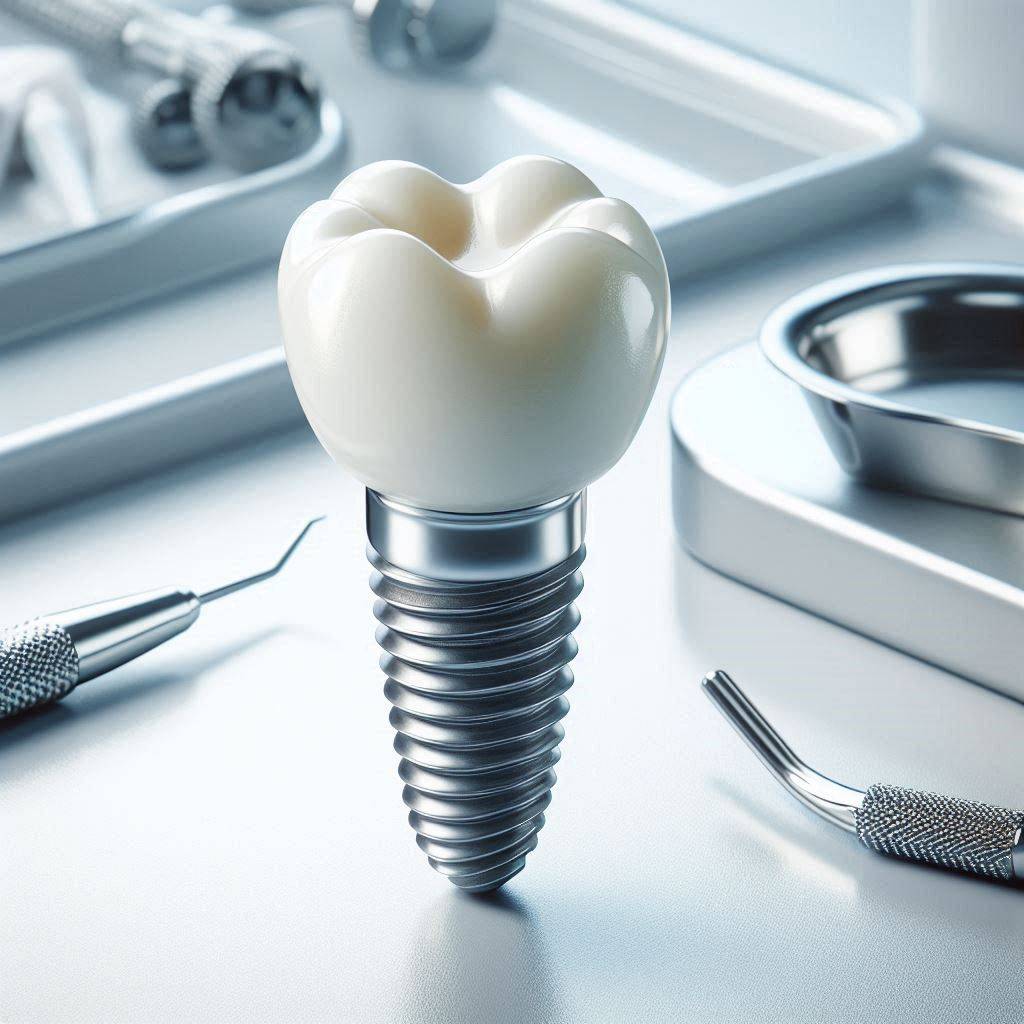
You will see a metal screw (the implant body) that is approximately 10-15mm long. It may have threads that look clean or covered in a thin layer of bloody tissue. It will NOT have a white cap on it (that is the healing abutment or crown). If only the top part fell off, your implant may still be in the bone.
Clarification: If a white tooth-shaped piece fell out, that is the crown, not the implant. In that case, your implant is still in your jaw, and the problem is much easier to fix. Call your dentist to have the crown re-cemented or re-screwed.
Additional Resources
For more reliable, science-based information on dental implants and bone healing, we recommend the following external resource:
- American Academy of Implant Dentistry (AAID) – Patient Education Library
Link:https://www.aaid.com/patients/
This resource offers verified guides, videos, and a “find a specialist” tool to help you choose a qualified implant surgeon for your next attempt.
Conclusion: Your Implant Failed, But Your Smile Has Not
Discovering your dental implant fell out after only 2 weeks is a disorienting and discouraging experience. You invested time, money, and hope. However, early implant failure is rarely the end of the road. It is a detour.
Most failed implant sites can be successfully retreated with bone grafting and a new implant placed by an experienced surgeon. The key is to understand why the failure occurred and to address that root cause—whether it is infection, medical management, or surgical technique. Do not blame yourself. Do not give up. Call your dentist today, bring your implant with you, and start the conversation about your second chance.
Disclaimer: This article is for general informational purposes only and does not constitute medical or dental advice. Individual results vary. Always consult with a licensed dental professional for diagnosis and treatment of any dental condition. The author and publisher are not liable for any actions taken based on the content of this article.