Can You Have Dental Implants If You Have Gum Disease
If you are missing one or more teeth, dental implants often feel like the perfect solution. They look natural, feel strong, and can last a lifetime. But what happens when your gums are not in perfect shape? Maybe you have noticed bleeding when you brush. Perhaps your gums look red or feel tender. You might even have been told by a dentist that you have gum disease.
This leads to a very common and important question: Can you have dental implants if you gum disease?
The short answer is yes, but not right away. And certainly not without proper treatment first.
Let me be honest with you. Placing dental implants into unhealthy gums is like building a beautiful house on a shaky foundation. Eventually, problems will show up. However, millions of people with a history of gum disease enjoy successful dental implants every year. The difference is that they followed the right steps.
In this guide, I will walk you through everything you need to know. We will look at what gum disease really is, how it affects implants, what treatment looks like, and what you can expect along the way. No confusing medical jargon. Just clear, practical, and realistic advice.
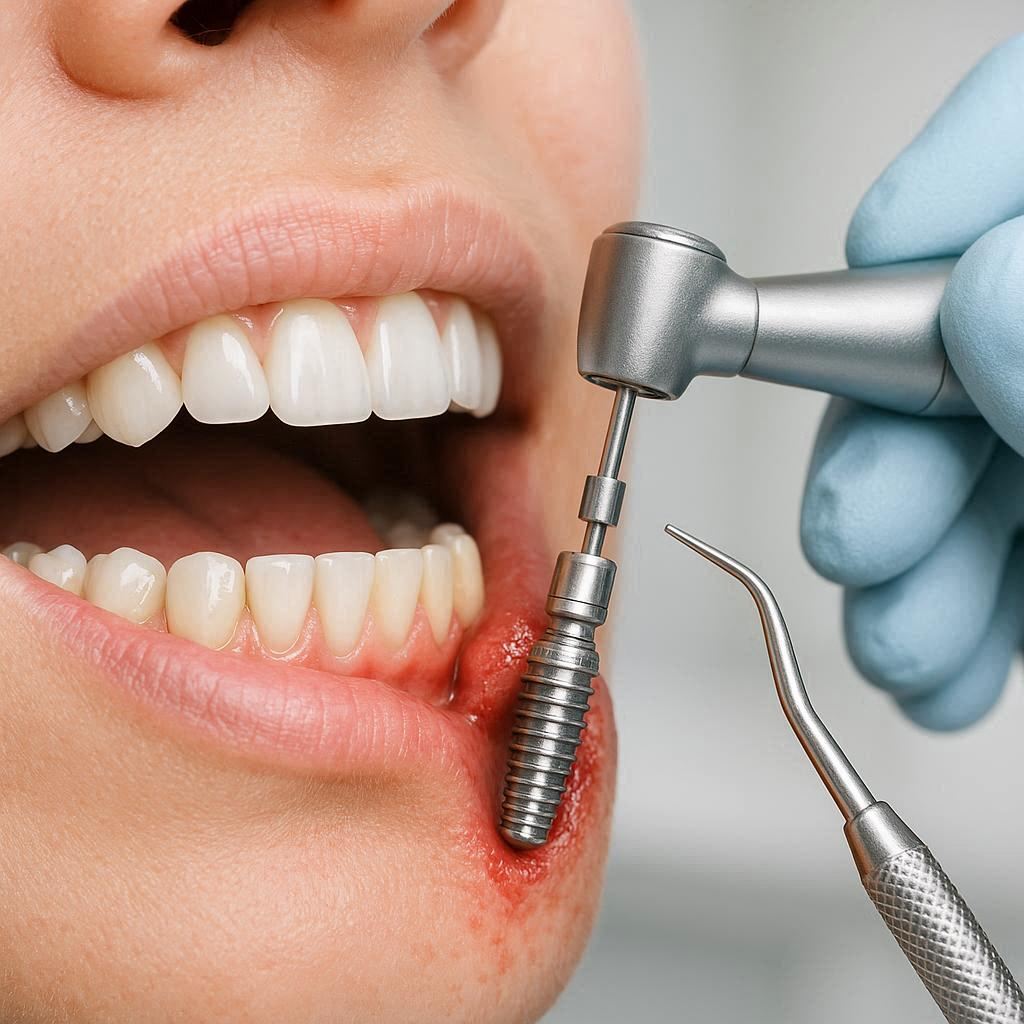
Understanding Gum Disease: The Basics You Need to Know
Before we talk about implants, we need to understand the condition that might stand in your way. Gum disease is incredibly common. In fact, the Centers for Disease Control and Prevention (CDC) estimates that nearly half of adults over 30 have some form of it.
But common does not mean harmless.
What Exactly Is Gum Disease?
Gum disease, also called periodontal disease, is an infection of the tissues that hold your teeth in place. It is usually caused by poor brushing and flossing habits. When you do not remove plaque from your teeth, it hardens into tartar. Bacteria love tartar. They multiply and slowly destroy your gum tissue and the bone underneath.
Think of your gums and jawbone as a snug collar around each tooth. When that collar gets infected, it starts to pull away. The bone shrinks. The tooth becomes loose.
The Two Main Stages of Gum Disease
Gum disease does not happen overnight. It develops in stages. Knowing which stage you have makes a huge difference in your implant options.
| Stage | Name | Key Signs | Reversible? |
|---|---|---|---|
| Stage 1 | Gingivitis | Red, swollen gums that bleed when brushing | Yes, with good oral hygiene |
| Stage 2 | Periodontitis | Gum recession, pockets form, bone loss starts | No, but can be managed |
Gingivitis is the mildest form. Your gums might bleed when you floss. They may look puffy or darker red than usual. The good news? Gingivitis is completely reversible. A professional cleaning and better home care often fix it within a few weeks.
Periodontitis is more serious. The infection has moved below the gum line. Your body’s immune system fights the bacteria, but in doing so, it also breaks down the bone and tissue that support your teeth. Pockets (spaces) form between your teeth and gums. These pockets trap more bacteria, and the cycle continues. Periodontitis is not reversible, but it is manageable.
How Gum Disease Affects Your Jawbone
Here is the part that matters most for implants. Your dental implant does not sit in your gum. It sits in your jawbone. The implant fuses with the bone through a process called osseointegration. That fusion gives you a strong, stable tooth replacement.
Gum disease destroys bone. When periodontitis progresses, the bacteria eat away at the bone that holds your teeth. The same bone that would need to hold your implant.
If you have active, untreated gum disease with significant bone loss, placing an implant would be like trying to plant a tree in sand. It will not stay upright for long.
Important note: You can have gum disease and still get implants later. But you must first bring the disease under control and address any bone loss.
Can You Get Dental Implants with Active Gum Disease?
Let me give you a clear, direct answer: No, responsible dentists will not place dental implants while you have active, untreated gum disease.
I want you to understand why. This is not because dentists want to complicate your life or charge you for extra treatments. There are very real medical reasons.
The Immediate Risks of Placing Implants in Infected Gums
If a dentist were to place an implant into a mouth with active periodontitis, several bad things could happen:
- Peri-implantitis: This is gum disease, but around an implant instead of a natural tooth. It causes inflammation, bone loss, and ultimately implant failure. Treating peri-implantitis is much harder than treating natural gum disease.
- Failed osseointegration: The implant needs to fuse with your bone. Active infection prevents that fusion. Bacteria create an environment where bone cells cannot heal properly.
- Infection spread: The surgical site for an implant is an open wound. Bacteria from surrounding gum disease can easily invade that wound, leading to severe infections.
- Long-term chronic issues: Even if the implant initially seems successful, ongoing gum disease will eventually attack the bone around it. You might lose the implant after a year or two, wasting your time and money.
What the Research Says
Multiple clinical studies show that patients with untreated periodontitis have significantly higher implant failure rates. One long-term study found that implant survival rates drop from about 95% in healthy patients to around 80% or lower in those with active, uncontrolled gum disease.
Those numbers are too low for most reputable implant dentists. They want to see success rates above 95% for their work.
A Realistic Analogy
Imagine you have a leaky roof. Water drips into your attic. Mold starts growing on the wooden beams. Now, imagine you want to install new, expensive lighting fixtures in that attic.
Would you install the lights first? Of course not. You would fix the roof, remove the mold, and let the wood dry. Only then would you install new fixtures.
Dental implants are the same. Your gum disease is the leaky roof. Treat the disease first. Then you create a healthy, stable environment for your new implants.
Treating Gum Disease Before Implants: Your Roadmap
So you have gum disease, but you really want implants. Do not lose hope. Thousands of people have walked this path before you. The journey typically takes several months, but the result is worth it.
Here is your realistic roadmap from diagnosis to implant placement.
Step 1: Professional Evaluation
Your first visit will be with a periodontist (a gum specialist) or an implant dentist. They will:
- Measure the pockets around your teeth (using a small probe)
- Take X-rays to see bone levels
- Check for bleeding and inflammation
- Determine whether you have gingivitis or periodontitis
Step 2: Scaling and Root Planing (The Deep Cleaning)
For most people with mild to moderate periodontitis, the first treatment is scaling and root planing. This is not your regular cleaning.
Scaling removes plaque and tartar from above and below the gum line. Root planing smoothes the root surfaces so your gums can re-attach to your teeth.
This procedure is usually done with local anesthesia. You might feel sore for a few days afterward.
What to expect:
- One to four appointments depending on severity
- Each session lasts about 45 to 60 minutes
- Follow-up visit at 4 to 6 weeks to check healing
Step 3: Reevaluation and Additional Treatments
After 4 to 6 weeks, your dentist will re-measure your gum pockets. For many people, the pockets shrink significantly. Gums become pink and firm again. Bleeding stops.
If your pockets remain deep (5mm or more), your dentist may recommend further treatments:
- Antibiotic gels placed directly into pockets
- Laser therapy to kill bacteria and promote healing
- Flap surgery (also called pocket reduction surgery) – more on this below
Step 4: Surgical Treatments for Advanced Cases
If you have severe periodontitis with deep pockets (6mm or more) and significant bone loss, non-surgical cleaning may not be enough. Your periodontist might recommend one of these surgical procedures before implants can be considered.
| Procedure | What It Does | Recovery Time |
|---|---|---|
| Flap surgery | Lifts gums to remove tartar from deep pockets | 1-2 weeks |
| Bone grafting | Replaces lost bone with graft material | 3-9 months healing |
| Guided tissue regeneration | Encourages bone and tissue regrowth | 4-6 months |
Flap surgery sounds scarier than it is. Your periodontist makes small cuts in your gum to lift it back. Then they clean the tooth roots and the bone underneath. After cleaning, they stitch the gums back in place, now tighter around your teeth.
Bone grafting for gum disease is often done during flap surgery. The dentist places graft material (from a donor, animal, or synthetic source) into areas where bone has been lost. Over several months, your body replaces the graft with new, living bone.
Note: Do not rush this phase. Proper healing now determines whether your future implants succeed or fail.
Step 5: A Period of Stability
Here is where many people get impatient. You need to prove that your gum disease is truly under control before any dentist will place an implant.
Most specialists want to see:
- No bleeding on probing – all gums healthy and pink
- Pocket depths reduced – ideally 3mm or less
- No active inflammation
- Excellent home care – you have shown you can keep your gums clean
This stabilization period usually lasts 3 to 6 months. For severe cases, some dentists wait a full year. During this time, you will have regular maintenance cleanings every 3 months.
Only when you reach this stable, healthy state can you move forward with implants.
Dental Implants After Gum Disease: What Changes?
Congratulations. You have treated your gum disease. Your gums are pink, firm, and healthy. Your pockets are shallow. Your bone levels are stable.
Now you can get dental implants. But your journey will look slightly different from someone who never had gum disease.
You Are Now a Higher Risk Patient
This is not meant to scare you. It is meant to prepare you. Once you have had periodontitis, your immune system remains more sensitive to bacteria around teeth and implants. You are more likely to develop peri-implantitis than someone with no history of gum disease.
Your dentist will treat you accordingly. That means:
- More frequent follow-ups – every 3 to 4 months instead of every 6 to 12 months
- Stricter home care – special brushes, water flossers, and possibly antibacterial rinses
- Lower tolerance for missed cleanings – skipping an appointment is riskier for you
Choosing the Right Implant Dentist
Not all dentists have the same experience with gum disease patients. When you are ready for implants, look for a dentist who:
- Has advanced training in periodontics or implantology
- Places and restores implants (does the whole process)
- Uses 3D imaging (CBCT) to plan implant placement
- Has treated many former periodontitis patients
- Is honest with you about risks and success rates
Ask directly: “How many implants have you placed in patients with a history of gum disease?” A good dentist will answer openly.
Bone Grafting Before Implants
Many people with a history of periodontitis have lost some jawbone. You may need a bone graft before you can receive an implant.
A bone graft rebuilds the lost bone. Your dentist places graft material into the area where the implant will go. Then you wait several months for new bone to grow.
Typical timeline:
- Bone graft surgery – day 1
- Healing period – 4 to 9 months
- Implant placement – after graft has integrated
- Another 3 to 6 months for implant to fuse with bone
- Final crown placement
Yes, this is a long process. But each step protects your long-term success.
Smoking and Gum Disease History – A Dangerous Combination
If you have a history of gum disease and you smoke, your implant failure risk rises dramatically. Studies show that smokers with treated periodontitis have failure rates 2 to 3 times higher than non-smokers.
Smoking reduces blood flow to your gums. Less blood means less oxygen and fewer healing cells. Your body simply cannot fight off bacteria or heal wounds effectively.
If you smoke, talk to your dentist honestly. Many will still place implants, but they will strongly encourage you to quit. Some may require you to stop smoking for a period before surgery.
Long-Term Success: Living with Implants After Gum Disease
Getting the implants is only half the battle. Keeping them healthy for decades is the real victory.
Here is what your long-term maintenance will look like.
Your New Home Care Routine
You cannot treat your implants like natural teeth. Natural teeth have a ligament that attaches them to bone. That ligament has a blood supply and some natural defenses. Implants do not have that ligament. They are directly fused to bone, which means bacteria can travel deeper, faster.
Essential tools for implant owners with gum disease history:
- Soft-bristled toothbrush
- Interdental brushes (small brushes that go between teeth)
- Water flosser (irrigator) set to a medium setting
- Non-abrasive toothpaste (no baking soda or heavy grit)
- Antibacterial mouthwash (your dentist may prescribe chlorhexidine for short periods)
Your daily routine should include:
- Brushing twice a day for two full minutes
- Using interdental brushes around each implant
- Water flossing at least once daily
- Regular flossing for natural teeth
Professional Maintenance Schedule
You will need professional cleanings more often than the average person. Many periodontists recommend a 3-month recall schedule for former gum disease patients with implants.
At each cleaning, your hygienist will:
- Measure pocket depths around natural teeth and implants
- Check for bleeding and inflammation
- Use special plastic or titanium instruments (metal scalers can scratch implants)
- Take X-rays once a year to check bone levels
Signs of Trouble to Watch For
Catch problems early, and they are often fixable. Late problems may mean losing your implant.
Contact your dentist immediately if you notice:
- Bleeding when you brush or floss around an implant
- Red or puffy gums around the implant
- Bad taste or odor coming from the implant area
- The implant feels loose or clicks when you bite
- Pain when chewing on that side
Do not wait for your next cleaning. These symptoms suggest peri-implantitis. Early treatment may include deep cleaning around the implant, antibiotics, or minor surgery.
Success Rates for Former Gum Disease Patients
Let me give you realistic numbers. For a healthy person with no gum disease history, implant success rates at 10 years are around 95%.
For someone with successfully treated periodontitis who maintains excellent home care and regular professional cleanings, success rates are about 85% to 90% at 10 years.
For someone with treated periodontitis who smokes or skips cleanings, success rates can fall below 70%.
These numbers come from real clinical research. They are not meant to discourage you, but to empower you. You control your outcome through your daily habits and your commitment to maintenance.
Special Cases and Common Questions
Every mouth is different. Let me address some specific situations you might find yourself in.
What If My Gum Disease Is Mild (Gingivitis)?
If you only have gingivitis (no bone loss, no deep pockets, just bleeding gums), your path is much simpler. A professional cleaning and two weeks of excellent home care usually resolve the inflammation.
Once your gums are healthy, you can proceed with implants like any other patient. You still have a slightly higher risk of future gum problems, but much lower than someone with periodontitis.
What If I Have Already Lost Teeth to Gum Disease?
Many people seeking implants have already lost several teeth to advanced gum disease. This is common.
The same principles apply. You must treat any remaining gum disease in your remaining teeth before placing implants. Your dentist will also evaluate the bone in areas where you are missing teeth. Significant bone loss is likely. You will almost certainly need bone grafting before implants can be placed.
Do not be surprised if this process takes a full year or more. That is normal for complex cases.
Can I Get Same-Day Implants (Teeth in a Day) If I Had Gum Disease?
Same-day implants, where you get the implant and a temporary crown in one appointment, are usually not recommended for patients with a history of gum disease.
The reason is simple. Same-day protocols put stress on the implant immediately. They also require excellent bone quality and quantity. Most former periodontitis patients need bone grafting and slower healing times.
A traditional approach—placing the implant, waiting 4 to 6 months for healing, then adding the crown—gives you much higher success rates.
What If My General Dentist Says Yes But a Specialist Says No?
Listen to the specialist. General dentists are wonderful for routine care, but periodontists spend three additional years training specifically in gum disease and implant surgery.
If a periodontist says you are not ready for implants, they are protecting you from a costly failure. Ask them to explain exactly what needs to improve. Then follow their treatment plan.
Financial Considerations
Treating gum disease and then getting dental implants is not cheap. Pretending you do not have gum disease and getting implants anyway is even more expensive when they fail.
Typical Costs (US Estimates)
| Treatment | Approximate Cost |
|---|---|
| Periodontal evaluation | 150–350 |
| Scaling and root planing (full mouth) | 500–1,500 |
| Flap surgery (per quadrant) | 800–1,500 |
| Bone graft (per site) | 500–1,200 |
| Single dental implant (implant + crown) | 3,000–5,500 |
| Implant maintenance cleaning (every 3 months) | 150–250 |
Many dental insurance plans cover part of periodontal treatment. Most do not cover implants, though some are starting to. Dental discount plans can reduce costs by 20-30%.
Is It Worth the Investment?
Only you can answer that for your situation. But consider this:
A well-maintained dental implant can last 25 years or more. When you spread the cost over two and a half decades, the monthly investment is often lower than you think.
Compare that to a bridge (which may need replacement every 10-15 years) or a denture (which can loosen and damage bone). For many people, the implant becomes the better long-term value.
Frequently Asked Questions (FAQ)
1. Can I get dental implants if my gum disease is cured?
There is no cure for periodontitis, only management. Once you have periodontitis, you always have it. But you can put it into a stable, inactive state. With stable gums and no active disease, you can get implants.
2. How long after gum disease treatment can I get implants?
Most dentists want to see 3 to 6 months of stable, healthy gums before placing implants. For severe cases with bone grafting, expect 9 to 12 months.
3. Will my implants get gum disease?
Yes, implants can get a similar condition called peri-implantitis. It causes bone loss and implant failure if not treated. Your history of gum disease puts you at higher risk, which is why maintenance is critical.
4. Can I get implants if I have receding gums?
Receding gums alone do not prevent implants, as long as you have enough bone. Your dentist may recommend a gum graft before or after implant placement for aesthetic reasons.
5. Is it safe to get implants if I have diabetes and gum disease?
This is complex. Uncontrolled diabetes increases gum disease and slows healing. But with well-controlled diabetes and treated gum disease, many patients successfully get implants. Your dentist will coordinate with your doctor.
6. What happens if an implant fails because of gum disease?
The dentist removes the implant. The area will need to heal, and you may need a bone graft. After healing, a new implant may be possible. Success rates for second implants after a failure are lower, so prevention is key.
7. How do I find a good implant dentist for my situation?
Look for a periodontist or a prosthodontist (specialist in tooth replacement). Read reviews. Ask about their experience with gum disease patients. A free consultation is reasonable to request.
8. Can gum disease come back after implants are placed?
Yes. Gum disease can affect any natural teeth you still have. And peri-implantitis can affect the implants. Regular cleanings and good home care are essential for life.
Additional Resources
For more reliable, science-based information on gum disease and dental implants, visit the American Academy of Periodontology’s patient education page:
This site offers:
- Gum disease risk assessments
- Guides to periodontal treatments
- Find a periodontist near you
- Videos explaining implant procedures
- Printable home care instructions
Conclusion
So, can you have dental implants if you have gum disease? Yes, but only after you treat and stabilize the disease. No responsible dentist will place implants into actively infected gums. However, with scaling, possibly surgery, bone grafting, and a period of healing, most people with gum disease can become good implant candidates.
Your long-term success depends on daily home care, regular 3-month cleanings, and watching for early warning signs. It is a commitment, but for many people, the result—a stable, natural-looking tooth that lasts decades—is absolutely worth the effort.
Disclaimer: This article is for informational purposes only and does not constitute medical advice. Always consult with a licensed dentist or periodontist for diagnosis and treatment recommendations specific to your situation. Individual results vary.