All On 5 Dental Implants: A Realistic Guide to Full-Mouth Restoration
Losing most or all of your teeth is more than a cosmetic issue. It affects how you eat, how you speak, and how you feel when you look in the mirror. Many people assume that dentures are their only option. But there is another path.
Over the last two decades, implant-supported prostheses have changed restorative dentistry completely. Among these solutions, the All-on-5 technique has gained serious attention.
This guide is for anyone who feels overwhelmed by dental jargon and conflicting opinions. We will walk through everything you need to know about All-on-5 dental implants. You will learn how they work, what they cost, how long they last, and whether you might be a good candidate.
No hype. No fake promises. Just honest, practical information to help you make a confident decision.
What Exactly Are All On 5 Dental Implants?
Let us start with a clear definition.
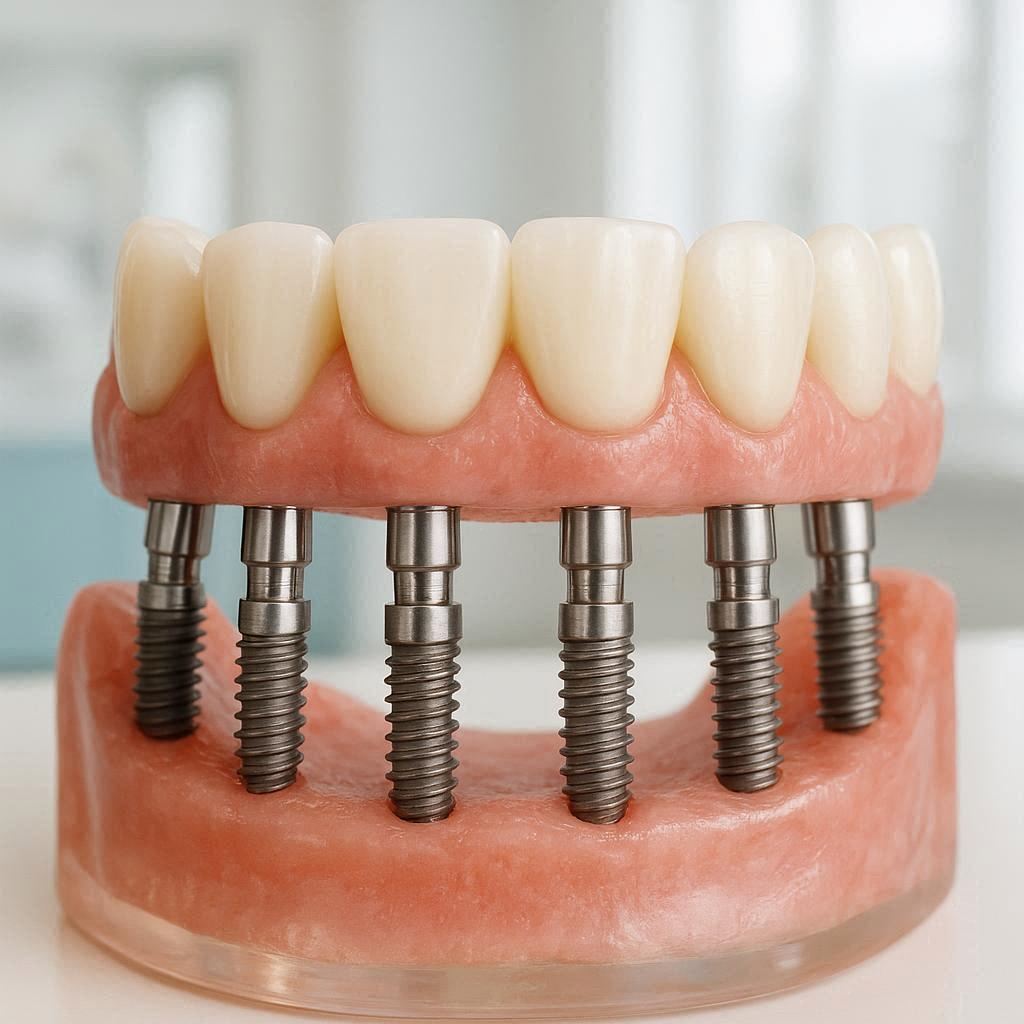
All-on-5 is a technique for replacing a full arch of missing teeth (upper or lower jaw) using only five dental implants. These implants act as anchors. They support a fixed, non-removable bridge that looks and functions like natural teeth.
The name “All-on-5” tells you exactly what to expect:
- All (the entire arch of teeth)
- On (supported by)
- 5 (five titanium posts)
Unlike traditional implants that require one implant per missing tooth, this method uses strategic positioning. The five implants are placed at specific angles to maximize contact with existing bone. This often eliminates the need for bone grafting.
The Key Components of an All-on-5 System
To understand how this works, you need to know the three main parts:
- The Implant Fixtures: Five small titanium screws surgically placed into your jawbone. Titanium is biocompatible, meaning your bone will fuse to it naturally.
- The Abutments: Small connectors attached to the top of each implant. They act as the bridge between the implant and the final teeth.
- The Prosthesis (the bridge): A custom-made, full-arch bridge made of acrylic or zirconia. This is the part that looks like teeth and gums. You cannot take it out at home. Only a dentist can remove it.
Important note: The final prosthesis is fixed. You do not snap it in and out like dentures. It stays in your mouth 24/7.
How All-on-5 Differs from Other Implant Techniques
Many people confuse All-on-5 with other methods. Let us clarify the differences.
All-on-4 vs. All-on-5
This is the most common comparison. All-on-4 uses four implants per arch. All-on-5 uses five.
| Feature | All-on-4 | All-on-5 |
|---|---|---|
| Number of implants per arch | 4 | 5 |
| Primary stability | Good | Excellent |
| Suitable for severe bone loss | Sometimes | More often |
| Distribution of chewing forces | Balanced | More balanced |
| Cost | Lower | Slightly higher |
| Long-term failure risk | Slightly higher | Lower (more redundancy) |
The fifth implant acts as a “safety net.” If one implant fails years later, you still have four supporting the bridge. With All-on-4, a single implant failure can destabilize the entire structure.
Traditional Implants vs. All-on-5
Traditional implant placement requires one implant for each missing tooth. For a full arch (14 teeth), that means 14 implants. This is expensive, invasive, and time-consuming. It also requires excellent bone density everywhere.
All-on-5 uses only five implants. Recovery is faster. The procedure costs significantly less. And you walk away with a fixed set of teeth, not individual crowns.
Removable Dentures vs. All-on-5
| Aspect | Traditional Dentures | All-on-5 Implants |
|---|---|---|
| Stability | Moves and slips | Fixed and stable |
| Speech | Can cause clicking or lisping | Natural speech |
| Taste | Palate covered | Palate uncovered (upper arch) |
| Bone preservation | None (bone shrinks over time) | Stimulates bone, prevents loss |
| Maintenance | Daily removal and soaking | Brush like natural teeth |
| Comfort | Can cause sore spots | Feels like real teeth |
A quote from Dr. Michael Reynolds, prosthodontist: *”Patients who switch from dentures to All-on-5 often describe it as life-changing. They no longer fear laughing in public or eating a steak.”*
The Step-by-Step Procedure: What Actually Happens?
Understanding the process reduces fear. Here is a realistic walkthrough of the entire All-on-5 journey.
Phase 1: Initial Consultation and Evaluation
Your first visit is about information gathering. The dentist will perform:
- A visual exam: Checking your gums, remaining teeth, and overall oral health.
- CBCT scan (3D X-ray): This is crucial. The scan shows bone volume, density, and the location of nerves and sinuses.
- Medical history review: Conditions like uncontrolled diabetes or heavy smoking affect success rates.
- Discussion of expectations: You will see before-and-after photos of similar cases.
If you have active gum disease or tooth infections, those must be treated first. No responsible dentist will place implants into infected tissue.
Phase 2: Treatment Planning
Using the CBCT data, the dentist uses specialized software to plan every implant’s exact position and angle. This digital planning takes hours. It determines the final outcome.
You will also discuss:
- Type of prosthesis (acrylic vs. zirconia)
- Temporary vs. final teeth
- Cost and payment options
Phase 3: Extractions and Implant Placement (Surgery Day)
This is typically done under local anesthesia with sedation options (oral sedation, IV sedation, or general anesthesia). The procedure lasts 2 to 4 hours per arch.
Step-by-step during surgery:
- Any remaining damaged teeth are extracted.
- The surgeon makes small incisions in your gums.
- Five pilot holes are drilled at predetermined angles.
- The titanium implants are placed into the bone.
- Cover screws or healing abutments are attached.
- The gums are sutured closed around the implants.
Most patients report feeling pressure but no sharp pain. The sedation helps you relax or sleep through the procedure.
Phase 4: Placement of Temporary Teeth
Here is where All-on-5 shines. On the same day as surgery, you receive a temporary fixed bridge. You do not leave the clinic toothless.
This temporary prosthesis is made of acrylic. It is softer and less durable than the final version, but it allows you to eat soft foods and smile normally during healing.
The temporary bridge also shapes your gums and helps you adapt to the feel of fixed teeth.
Phase 5: Osseointegration (The Healing Period)
Osseointegration is the process where your jawbone grows into the microscopic pores of the titanium implants. This creates a permanent biological lock.
Healing time: 4 to 6 months for the lower jaw. 5 to 7 months for the upper jaw (bone is softer here).
During this period:
- You eat a soft-food diet.
- You avoid chewing directly on the implant areas.
- You visit the dentist for check-ups.
- You keep the area exceptionally clean.
Phase 6: Final Prosthesis Fabrication
Once osseointegration is confirmed, the temporary bridge is removed. The dentist takes new impressions and records your bite. These are sent to a dental lab.
The lab custom-makes your final bridge. This takes 2 to 4 weeks. You will choose the shape, size, and color of your new teeth.
Phase 7: Delivery of Final Teeth
Your final bridge is screwed onto the five abutments. The screws are torqued to a specific tightness. The screw access holes are filled with composite resin.
At this appointment, you walk out with your permanent smile. You will receive care instructions and a follow-up schedule.
Who Is a Good Candidate for All-on-5?
Not everyone qualifies. Let us be honest about this.
Ideal Candidates
You are likely a good candidate if:
- You are missing all or most teeth in one or both jaws.
- You have sufficient bone volume, or mild to moderate bone loss.
- You do not smoke heavily (or are willing to quit).
- Your general health is good (diabetes, if present, is well-controlled).
- You have realistic expectations.
- You are committed to excellent oral hygiene.
Challenging Candidates
These factors make All-on-5 more difficult but not always impossible:
- Severe bone loss: You may need bone grafting first, which adds time and cost.
- Uncontrolled diabetes: High blood sugar impairs healing.
- Heavy smoking: Nicotine restricts blood flow to the bone.
- Bruxism (teeth grinding): Excessive forces can fracture the prosthesis or loosen implants.
- Certain medications: Bisphosphonates (bone drugs) increase failure risk.
Important note: Age alone is not a barrier. Healthy patients in their 80s and 90s have successfully received All-on-5 implants. What matters is biological health, not calendar age.
When All-on-5 Is Not Recommended
In rare cases, a dentist may advise against All-on-5:
- Active oral cancer or recent radiation to the jaw.
- Severe untreated psychiatric conditions.
- Active drug or alcohol abuse.
- Extremely thin or poor-quality bone that does not respond to grafting.
Advantages of Choosing All-on-5
Why do patients choose this over dentures or other implant methods? Here are the real benefits.
1. Fixed Teeth That Never Come Out
Imagine never worrying about your teeth falling out during a meal or a conversation. That is the reality with All-on-5. The bridge is screwed in place. It does not move.
2. Natural Chewing Ability
Denture wearers often avoid steak, nuts, apples, and crusty bread. All-on-5 restores up to 80-90% of natural chewing power. You can eat almost anything you want.
3. Bone Preservation
When natural teeth are lost, the jawbone begins to resorb (shrink). Implants transmit chewing forces to the bone, exactly like natural roots. This stops bone loss and maintains your facial structure.
4. No Palate Coverage (Upper Arch)
Traditional upper dentures cover the roof of your mouth. This interferes with taste and triggers a gag reflex in some people. All-on-5 upper prostheses leave the palate uncovered. You taste food fully.
5. Improved Speech
Dentures can click, slip, or create a lisp. Implants are stable. Your tongue moves naturally. Most patients report clearer speech within days.
6. Long-Term Cost Effectiveness
Upfront costs are higher than dentures. But dentures need replacement every 5-8 years, plus adhesives, relines, and repairs. Over 20 years, All-on-5 often costs less than maintaining dentures.
7. Psychological Boost
This is under-discussed but critical. Patients report higher self-confidence. They smile more. They laugh without covering their mouth. They stop avoiding social situations.
A patient story: “I had dentures for 12 years. I couldn’t remember the last time I bit into an apple. Now, I eat apples every day. My only regret is waiting so long.” — Margaret, 67
Risks, Complications, and Realistic Downsides
No medical procedure is perfect. Let us look at the potential problems honestly.
Short-Term Risks (First 3 Months)
| Risk | Frequency | Management |
|---|---|---|
| Pain and swelling | Almost all patients | Ice packs, prescribed medication |
| Bruising | Common | Resolves in 1-2 weeks |
| Minor bleeding | Common | Gauze pressure |
| Infection at implant site | 2-5% | Antibiotics |
| Nerve injury (temporary numbness) | Rare (<1%) | Usually resolves in weeks to months |
| Sinus perforation (upper jaw) | 3-8% | Usually heals without additional surgery |
Long-Term Risks
Implant failure: Even with perfect placement, implants can fail. The 10-year success rate for All-on-5 is approximately 94-96%. That means 4-6% of patients experience one or more implant losses over a decade.
Peri-implantitis: This is inflammation and bone loss around an implant. It is similar to gum disease. Causes include poor hygiene, smoking, and genetic factors. It is treatable if caught early.
Prosthesis fracture: The acrylic bridge can crack or chip under extreme force. Zirconia is stronger but can fracture if you grind your teeth.
Screw loosening: The small screws holding your bridge can loosen over time. This is not a catastrophe. Your dentist can retighten them in minutes.
Food trapping: The area where the prosthesis meets the gums can trap food. You must learn to use special floss and water flossers.
What the Industry Does Not Advertise
Some clinics market All-on-5 as “permanent” or “lifetime.” That is misleading. Here is the truth:
- The implants themselves can last 20+ years with excellent care.
- The acrylic bridge typically lasts 5-10 years before needing replacement or repair.
- Zirconia bridges last 10-15+ years but cost significantly more.
- You will need regular maintenance appointments every 6-12 months forever.
This is still vastly better than dentures. But it is not a one-and-done procedure.
All-on-5 Costs: A Transparent Breakdown
Money is often the biggest barrier. Let us break down real-world costs.
Average Price Ranges (USA, 2025)
These are estimates. Prices vary by region, clinic reputation, and material choices.
| Component | Low-end | Average | High-end |
|---|---|---|---|
| Single arch (acrylic final bridge) | $15,000 | $25,000 | $35,000 |
| Single arch (zirconia final bridge) | $25,000 | $35,000 | $50,000+ |
| Both arches (full mouth) | $30,000 | $55,000 | $90,000+ |
What Is Included in the Quote?
Always ask for an itemized estimate. A complete quote should cover:
- Initial consultation and CBCT scan
- Extractions of remaining teeth
- Implant placement surgery (5 implants)
- Sedation or anesthesia fees
- Temporary prosthesis (during healing)
- Final prosthesis fabrication
- Delivery and adjustments
- One year of follow-up care
What Is Usually Not Included
- Bone grafting (adds 1,500−5,000 per arch)
- Sinus lift (adds 2,000−5,000)
- Treatment of active gum disease
- Replacement of a failed implant beyond the warranty period
- Long-term maintenance cleanings
Insurance and Financing
Dental insurance: Most plans cover 10-30% of the cost, but often with a low annual maximum (1,500−2,500). You may need to spread treatment over two calendar years.
Medical insurance: Rarely covers implants unless tooth loss resulted from an accident or tumor removal.
Financing options:
- CareCredit (healthcare credit card)
- LendingClub Patient Solutions
- Alphaeon Credit
- In-house payment plans (some clinics offer 12-24 month interest-free)
Important advice: Be wary of clinics advertising “All-on-5 for $7,999 per arch.” These are almost always bait-and-switch offers. The low price typically excludes extractions, temporary teeth, final bridge material, or includes only cheap, low-quality components. Always read the fine print.
Why Costs Vary So Much
You are paying for:
- The dentist’s training and experience (prosthodontists cost more than general dentists)
- Lab quality (top-tier labs charge more for better aesthetics)
- Material quality (German or Swiss implants cost more than Korean or Brazilian)
- Geographic location (New York City costs more than rural Ohio)
- Included warranty (better clinics offer 5-10 year implant replacement warranties)
Recovery Timeline: What to Expect Week by Week
Knowing what comes next reduces anxiety. Here is a realistic recovery timeline.
Days 1-3 (The Most Intense)
- Swelling: Peaks at 48 hours. Use ice packs 20 minutes on, 20 minutes off.
- Pain: Managed with prescription painkillers or high-dose ibuprofen.
- Diet: Only cold or lukewarm liquids and purees. Think smoothies, yogurt, soups (no chunks), protein shakes.
- Activity: Rest. No exercise. Keep head elevated when sleeping.
- Oral hygiene: No brushing near surgical sites. Use prescribed mouthwash (chlorhexidine) gently.
Days 4-7 (Getting Better)
- Swelling begins to go down.
- Pain reduces to discomfort manageable with over-the-counter medication.
- Diet: Soft foods you can swallow without chewing. Mashed potatoes, scrambled eggs, oatmeal, pudding.
- Activity: Light walking is okay. No heavy lifting or bending over.
Weeks 2-4 (Adapting)
- Sutures may dissolve or be removed.
- Most swelling and bruising are gone.
- Diet: Soft chew foods. Pasta, soft bread, fish, cooked vegetables, bananas.
- You start practicing hygiene with a water flosser on low setting.
- Temporary teeth feel more natural each day.
Months 2-5 (Healing Continues)
- Osseointegration is happening silently. You cannot feel it.
- You continue a soft-to-medium chew diet. Avoid hard, sticky, or crunchy foods.
- Regular check-ups every 4-6 weeks.
- The temporary bridge may need small adjustments.
Month 6+ (Final Restoration)
- Healing is complete.
- Final bridge is delivered.
- You gradually return to normal eating.
- Most patients report feeling fully normal by month 8.
Daily Care and Maintenance: Protecting Your Investment
All-on-5 requires daily commitment. Here is exactly what you need to do.
Daily Hygiene Routine (10-15 minutes per day)
Morning:
- Use a soft-bristled toothbrush (electric recommended) to brush all surfaces of the bridge.
- Use a water flosser (Waterpik) on medium pressure. Aim the tip at the gum line from both the cheek side and tongue side.
- Use super floss or implant-specific floss to clean under the bridge where the water flosser cannot reach.
Evening:
- Repeat the brushing.
- Use a small interproximal brush (like a Proxabrush) to clean around each abutment.
- Rinse with an alcohol-free, antibacterial mouthwash.
Weekly:
- Use a rubber tip stimulator to massage the gums around each implant.
Products Your Dentist Will Recommend
- Non-abrasive toothpaste (avoid whitening pastes with harsh grit)
- Electric toothbrush with a sensitive mode
- Water flosser with a orthodontic or implant tip
- Super floss or implant floss threaders
- Interdental brushes in various sizes
What to Avoid Forever
| Item | Why to Avoid |
|---|---|
| Chewing ice | Can crack the acrylic |
| Hard candies | Same reason |
| Popcorn | Kernels can get stuck under the bridge |
| Sticky caramels | Can pull on the prosthesis |
| Using teeth as tools | Opening packages or bottles can break teeth |
| Smoking | Major risk factor for implant failure |
Professional Maintenance Schedule
- Every 6 months: Cleaning and exam. The dentist will check screw tightness and prosthesis integrity.
- Every 12 months: X-rays to check bone levels around each implant.
- Every 3-5 years: Possible professional polishing and minor adjustments.
- Every 5-10 years: Expect eventual reline or replacement of the acrylic bridge.
All-on-5 vs. Other Full-Arch Solutions: A Detailed Comparison
Let us put everything side by side.
Comparison Table: Full-Arch Tooth Replacement Options
| Feature | Traditional Dentures | Implant-Supported Dentures (Snap-on) | All-on-4 | All-on-5 | Fixed Hybrid (6+ Implants) |
|---|---|---|---|---|---|
| Number of implants | 0 | 2-4 | 4 | 5 | 6-10 |
| Removable? | Yes | Yes (you remove to clean) | No | No | No |
| Palate coverage (upper) | Yes | Partial | No | No | No |
| Bone grafting often needed? | No | Maybe | Less common | Rare | Often |
| Typical cost (per arch) | 1,500−5,000 | 8,000−18,000 | 15,000−30,000 | 20,000−40,000 | 30,000−60,000+ |
| Chewing efficiency | 20-30% | 50-60% | 70-80% | 80-90% | 90-95% |
| 10-year survival rate | N/A (replaced often) | 85-90% | 92-95% | 94-96% | 95-97% |
| Hygiene difficulty | Easy (remove) | Moderate | Moderate | Moderate | More difficult |
Which One Is Right for You?
- Choose dentures if: Budget is extremely tight, or you are not a surgical candidate.
- Choose snap-on dentures if: You want better stability than dentures but cannot afford fixed teeth.
- Choose All-on-4 if: Budget is a primary concern and you have good bone.
- Choose All-on-5 if: You want the best balance of cost, stability, and long-term security. This is the sweet spot for most patients.
- Choose 6+ implants if: Cost is not a concern, and you want maximum longevity and chewing power.
Our take: For the average patient, All-on-5 offers the best value. The extra implant reduces failure risk significantly compared to All-on-4, without the substantial cost jump to six implants.
Frequently Asked Questions (FAQ)
How long do All-on-5 implants last?
The titanium implants can last 20+ years or a lifetime with excellent care. The acrylic bridge typically lasts 5-10 years. Zirconia bridges last 10-15+ years. Regular maintenance is essential.
Is the procedure painful?
During surgery, you will be numb or sedated, so you feel no sharp pain. Afterward, most patients describe moderate discomfort for 3-5 days, manageable with pain medication. It is less painful than multiple extractions.
Can I get All-on-5 on both upper and lower jaws?
Yes. This is called “full mouth All-on-5” or “dual arch.” Many patients do both at once, though some prefer to do one arch, wait 3-6 months, then do the second.
Will I be without teeth at any point?
No. You receive a temporary fixed bridge on the same day as surgery. You never leave the clinic without teeth unless there is an unusual complication.
Can All-on-5 fail years later?
Yes, though it is uncommon. Peri-implantitis (bone loss around implants) is the main long-term risk. Smoking and poor hygiene are the biggest contributors. Most failures happen in the first year or after 10+ years.
Can I sleep in my All-on-5 teeth?
Yes. They are fixed in place. You never take them out. You sleep, eat, and live with them 24/7.
What happens if one implant fails?
If one of the five implants fails, the bridge is usually still stable on the remaining four. The dentist can often remove the failed implant, graft bone if needed, and place a new implant without remaking the entire bridge.
Does insurance cover All-on-5?
Partially, in many cases. Dental insurance may cover 10-30% of the cost up to your annual maximum. Medical insurance rarely covers implants unless due to an accident. Always get a pre-treatment estimate.
How do I choose a good dentist for this procedure?
Look for a prosthodontist (specialist in replacement teeth) or an experienced implant surgeon. Ask to see before-and-after photos of similar cases. Ask about warranty and what happens if an implant fails. Avoid clinics that pressure you into same-day decisions.
Is bone grafting always required?
No. The angled placement of the five implants often avoids the need for grafting. However, if you have severe bone loss from years of denture wear or periodontal disease, grafting may still be necessary.
Additional Resources
For further reading and verified information, we recommend the following trusted sources:
- American Academy of Implant Dentistry (AAID): www.aaid.com – Find accredited implant dentists and patient education materials.
- American College of Prosthodontists (ACP): www.gotoapro.org – Locate a prosthodontist specialist near you.
Conclusion (Summary in Three Lines)
All-on-5 dental implants offer a fixed, natural-feeling solution for full-arch tooth loss using five strategically placed implants per jaw. While the upfront cost is significant and daily maintenance is required, the benefits in chewing ability, bone preservation, and quality of life far exceed traditional dentures. Consult an experienced implant specialist to determine if you are a candidate for this reliable, long-term restoration.
Disclaimer: This article is for informational purposes only and does not constitute medical or dental advice. Every patient is unique. Always consult with a licensed dental professional before making any decisions about your oral health. The author and publisher are not responsible for any outcomes resulting from the use of this information.